REVIEW · MADRID
Madrid Historic with an architect : Arabs, Austrias and Bourbons
Book on Viator →Operated by architoursmad · Bookable on Viator
Madrid’s walls tell a 12-century story. This architect-led tour uses real buildings and street-level details to explain how Madrid grew—from Arab roots to Austrias and Bourbons—while your guide shares plans and historical photos to make the changes click. You’ll walk a well-paced route that hits major landmarks without pretending they’re all the same era.
Two things I really like: first, the way the route follows the city’s “before and after,” especially in places tied to the Arab past like Plaza de Oriente and the visible remnants of the Arab Wall. Second, the guide is an architect by training (Emilio is the name I heard on the tour vibe), so the explanations stay tied to form—facades, towers, urban squares—not just dates.
One possible drawback: the Royal Palace stop is exterior only. If you’re hoping to go inside rooms, this won’t be that kind of visit, and some stops are intentionally brief (often 5 to 10 minutes), so you need to like moving and looking rather than lingering.
In This Review
- Key points that make this tour worth your time
- A 12-century Madrid route built around facades
- Teatro Real: Opera architecture and public prestige
- Plaza de Oriente: Urban planning from Arab origins to today
- Royal Palace facade focus (and what you won’t do)
- Plaza de Ramales: Ruins, burial links, and art history overlap
- Churches in rotation: Santiago y San Juan Bautista and San Nicolás
- Museo de la Catedral de la Almudena: History explained from viewpoints
- Arab Wall remnants: The 9th-century anchor you can still see
- Plaza de la Villa: Old City Hall and the “big buildings” around it
- Mercado San Miguel: Architecture you can snack on
- Plaza Mayor and Puerta del Sol: The social center and Kilometer 0 finish
- Price and value for a 3–3.5 hour architect walk
- A balanced expectation: history context is part of the design
- Who should book this Madrid Historic with an Architect tour
- Should you book it? My straight recommendation
- FAQ
- How long is the tour?
- Is the Royal Palace interior included?
- What’s the price per person?
- Is there a language option?
- Where does the tour start and end?
- What tickets are included or not included for stops?
- Is this tour private?
- What if the weather is bad?
- Can service animals join?
Key points that make this tour worth your time
- An architect guide, not a script: You get plans and historical photos tied directly to what you’re seeing on the street.
- Arab to Austrias to Bourbons, in walking order: The route is built to show how Madrid layers eras rather than listing them.
- Mudejar details you can actually spot: San Nicolás de las Servitas has a mudejar tower with horseshoe arches.
- Big squares, real civic life: You’ll connect Plaza de la Villa, Plaza Mayor, and Puerta del Sol to how power and everyday life shared space.
- Mercado San Miguel with a practical break: You can grab a drink and tapas in a steel-structured market.
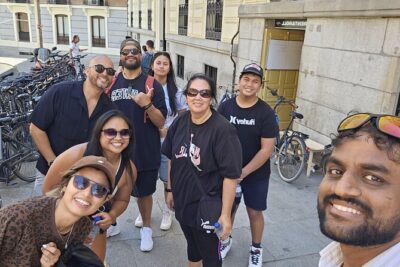
- Private group experience: Only your group participates, so you can ask questions and keep the pace comfortable.
A 12-century Madrid route built around facades
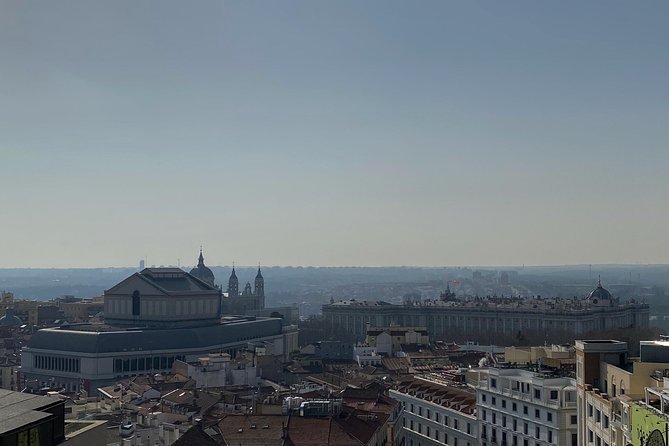
This is the kind of Madrid walk that makes you look up more often. You start in the Teatro Real area, then work your way through the royal core, old church layers, the Arab Wall remnants, and the civic heart of the city. The big idea is simple: architecture is how Madrid remembers—and how each ruling period tried to leave its signature.
The tour also helps you connect “what you see” to “why it looks that way.” Even when a stop is short, you don’t just get a landmark name—you get the role it played in the city’s growth, and how later styles reused or reshaped earlier foundations. It’s a smart use of 3 to 3.5 hours.
You’ll see a mix of grand and quiet. Teatro Real and Plaza Mayor give you the stage-like grandeur. Smaller churches and ruin areas slow the walk down just enough to show how older Madrid survived under newer layers.
You can also read our reviews of more historical tours in Madrid


Teatro Real: Opera architecture and public prestige
Your first major stop is the Teatro Real. Even if opera isn’t your thing, the building matters because it signals Madrid’s relationship with culture and status. You’ll review the theater’s history and why this kind of landmark gets built where it does—so it fits into the city’s larger plan, not just as a stand-alone monument.
This is also a good opener. By the time you leave, you’re already thinking in “era-to-era” mode, which pays off later when you hit places that clearly show older structures and newer ambitions in the same neighborhood.
Plaza de Oriente: Urban planning from Arab origins to today
Next comes Plaza de Oriente, where you’ll learn how the square’s urban development runs a long arc—from Arab influence to the present. This stop is short, but it teaches you the right mental habit: Madrid’s major public spaces weren’t born fully formed. They were shaped by successive eras, each with its own priorities.
It’s one of those moments where the architecture lesson becomes an urban geography lesson. You start to notice how corridors, sightlines, and the placement of institutions create a “the city is organized for power and movement” feeling.
Royal Palace facade focus (and what you won’t do)
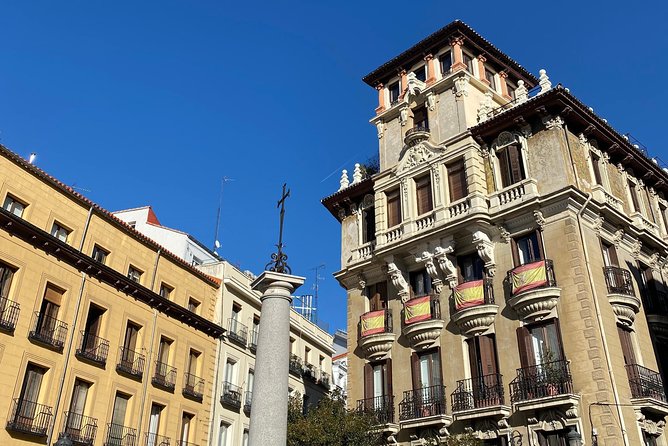
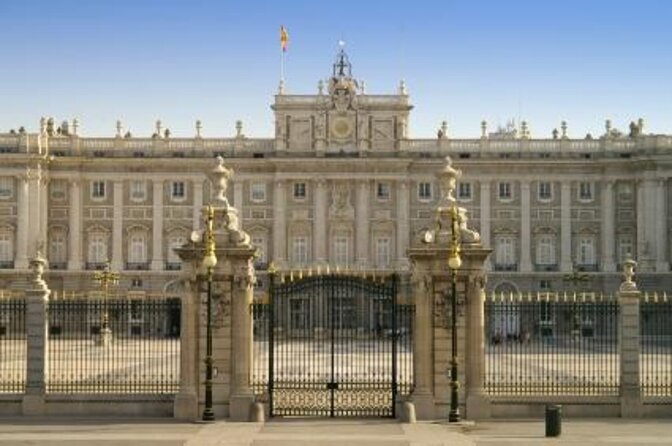
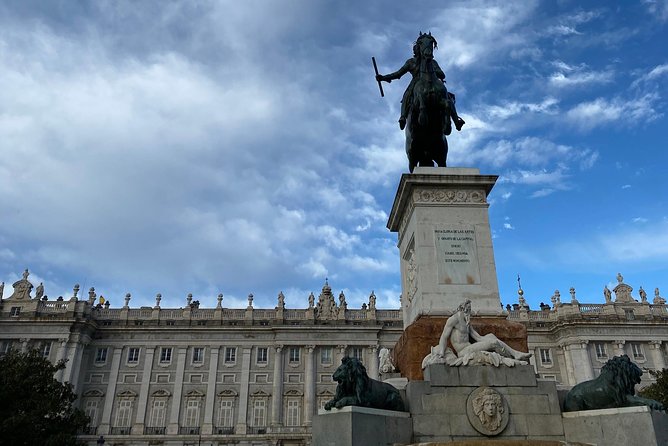
At the Royal Palace of Madrid, the emphasis stays on the facades. You’ll admire the exterior and the different architects and kings involved in the project, but the tour does not include an interior visit.
That’s a key consideration. If you love royal rooms and would rather trade walking for interior artwork, you’ll want a different tour for that. If you’re into design, however, facades are where you learn to read power in stone—scale, symmetry, materials, and the way the building addresses the city.
Also, this is a spot where timing and weather matter. Exteriors reward clear light and comfortable walking shoes, and the overall experience is described as needing good weather.
Plaza de Ramales: Ruins, burial links, and art history overlap
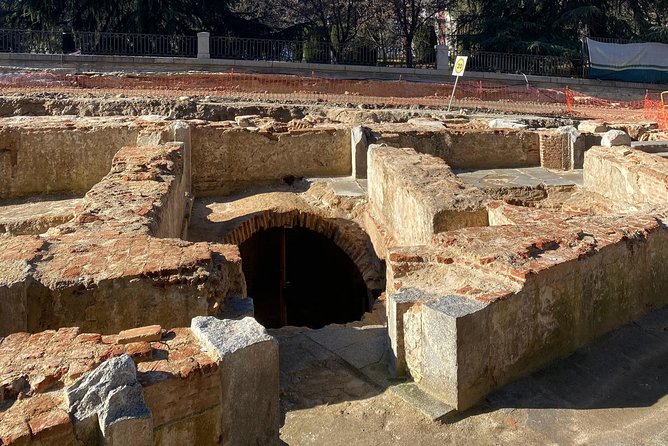
Then you’ll move to Plaza de Ramales and see ruins tied to the Church of San Juan. This is where the tour gains an extra layer of intrigue: you’ll hear about the painter Velázquez and his burial connection.
You’ll also encounter the Church of Santiago nearby. Even without a long on-site lecture, this cluster of religious remnants helps you understand something important about Madrid: architecture here often carries multiple identities at once. A church isn’t only a worship space. It’s also a civic memory bank.
The drawback is that it’s not a “sit and stare” stop. The visit is brief, so you’ll get the story arc more than the deep, lingering look.





Churches in rotation: Santiago y San Juan Bautista and San Nicolás
After the ruins, the route stays grounded in everyday Madrid spirituality. You visit the Real Iglesia Parroquial de Santiago y San Juan Bautista, with quick context that keeps the tour moving through religious architecture layers rather than turning it into a single-church deep dive.
The highlight for me is St. Nicholas of the Servitas (San Nicolás de las Servitas). This stop is short, but it gives you a very specific detail to hunt for: the oldest church in Madrid with a mudejar tower featuring horseshoe arches. That’s the kind of architectural “tell” that makes the whole tour click. You’ll look for shapes, not just styles.
If you like to spot influences visually, this is a great payoff. Mudejar elements aren’t just a label; they change how the tower looks and feels, especially in a city where later styles try to impose their own language.
Museo de la Catedral de la Almudena: History explained from viewpoints
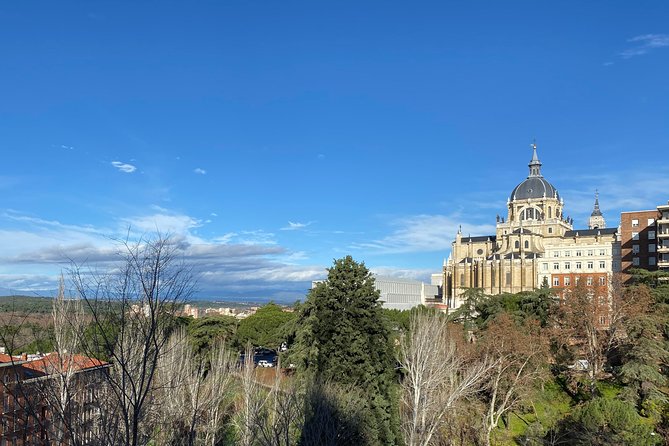
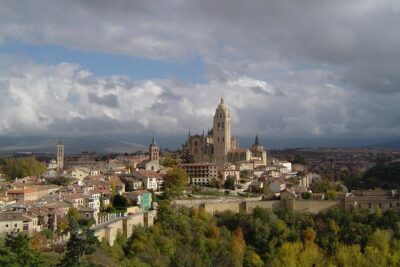
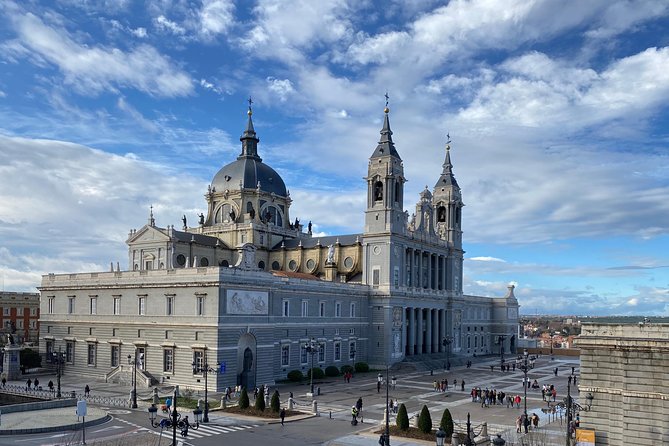
Next you’ll go to the Museo de la Catedral de la Almudena area for a history explanation. The focus is described as coming from a “seaview,” which suggests a viewing angle that helps you understand the cathedral’s story and its place in the broader city.
This is one of the stops where the guide’s architect skill really helps. Even when you’re not doing a museum-style walkthrough, you still get the reasoning behind the location and the role it played—how Madrid built toward landmark institutions over time.
Arab Wall remnants: The 9th-century anchor you can still see
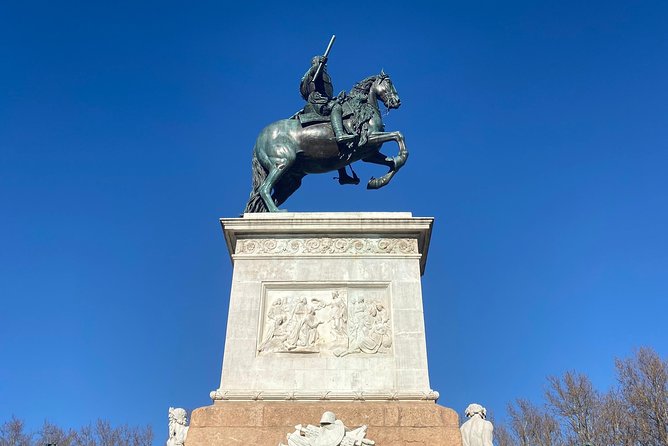
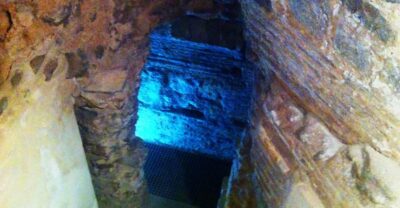
One of the most powerful stops is the Arab Wall. You’ll see the only remains available of old Arab walls built in the 9th century. That’s not just trivia. It’s a physical anchor that makes every later style feel like a conversation with earlier Madrid rather than a total reset.
This is also a stop where good shoes matter. You’ll want to move slowly enough to take in the traces and the surrounding context. Even if the wall remnants are limited, the value comes from recognizing them as survival—proof that the city’s layers are still readable at street level.
Plaza de la Villa: Old City Hall and the “big buildings” around it
Plaza de la Villa brings you back to civic architecture. Here you’ll visit the old City Hall and the buildings that surround the square, including Casa de Cisneros and Casa de los Lujanes.
This part matters because squares are where politics becomes visible. The guide’s context helps you see why these buildings face the square the way they do—how they create a stage for administration, negotiation, and public life.
If you’re the type who likes “what happened here” as much as “what it looks like,” this stop is a strong mid-to-late tour moment.
Mercado San Miguel: Architecture you can snack on
Then you hit Mercado San Miguel. The tour frames it as the only market in Madrid with a structure made of steel. That detail is worth paying attention to because it shows how modern materials shaped a historic city center.
You’ll have time to stop for a drink and tapas. This break is practical: it recharges you before Plaza Mayor and Puerta del Sol. It also gives your brain a rest from architecture reading, so when the tour finishes, the landmarks feel fresher rather than like blur.
Plaza Mayor and Puerta del Sol: The social center and Kilometer 0 finish
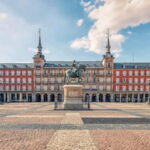
Plaza Mayor is the tour’s social and commercial finish line. You’ll learn why it’s an example square from Castilla and why it shaped the city’s last 400 years of public life.
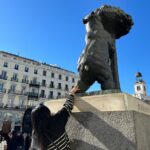
Finally, the tour ends at Puerta del Sol at Kilometer 0. Finishing here is smart because it feels like a reset to the city’s modern navigation rhythm. After tracing eras across churches, walls, theaters, and palaces, you arrive at the point Madrid treats as a reference marker.
You leave with a better sense of how the old center works: not as a museum zone, but as a live network of spaces that still guide people today.
Price and value for a 3–3.5 hour architect walk
The price is $65.89 per person for about 3 to 3.5 hours. That may not be cheap, but you’re not just paying for a walk—you’re paying for an architect-led explanation with plans and historical photos. Those visual aids help you understand transitions between styles without needing to read a book in the street.
You also get a mobile ticket, group discounts, and it’s offered in English. On timing, it’s often booked around 63 days in advance, which tells me the best slots can go quickly—especially in busy seasons.
Overall, the value is strongest if you want a guided way to interpret the city’s architecture. If you mainly want a leisurely sightseeing stroll, you could spend less on a basic walking tour. If you want “why this facade exists” and “how the city built itself layer by layer,” this one earns its keep.
A balanced expectation: history context is part of the design
This tour is titled around architecture, but it doesn’t treat architecture as decoration. It gives political and sociological context for why certain buildings changed, how urban planning shifted, and how successive powers shaped the skyline.
That’s a feature, not a flaw—unless you wanted purely technical architectural talk all the time. If you prefer just materials and stylistic labels, you might feel the tour spends part of its time on the city’s story. In practice, I think that context is what makes the architecture understandable instead of memorized.
Who should book this Madrid Historic with an Architect tour
This is a great fit for you if:
- You like walking with purpose and looking up at details.
- You want Madrid’s Arab, Habsburg (Austrias), and Bourbon layers in one coherent route.
- You enjoy learning with pictures and simple planning maps while you’re actually in front of the building.
- You’re okay with short stops and a moving pace.
You may want to skip or pair it with something else if:
- You need long interior visits (the Royal Palace is exterior only).
- You want a food-first market tour. Mercado San Miguel is a break, not a full culinary program.
- You dislike churches or ruins. They’re a meaningful part of the story here.
Should you book it? My straight recommendation
If you’re spending limited time in Madrid and you want a fast way to understand why the city looks the way it does, I’d book it. The combination of an architect guide, street-level architectural tells (like the mudejar horseshoe arches at San Nicolás), and major civic anchors (Plaza de la Villa, Plaza Mayor, Puerta del Sol) makes this an efficient use of 3 to 3.5 hours.
I’d also consider it the right tour for your first or second day in the center. It gives you mental landmarks so you can explore on your own afterward without getting lost in the names.
One last practical point: since it’s described as needing good weather, plan to check the forecast and have a flexible mindset. If you want to see architecture clearly, gray days can dull details—though a good guide helps you keep the story moving.
FAQ
How long is the tour?
It runs about 3 hours to 3 hours 30 minutes.
Is the Royal Palace interior included?
No. You only visit and review the Royal Palace facades. The interior is not included.
What’s the price per person?
The tour price is $65.89 per person.
Is there a language option?
Yes, it’s offered in English.
Where does the tour start and end?
It starts at Pl. de Isabel II, 4, Centro, 28013 Madrid and ends at Plaza Mayor, Centro, Madrid.
What tickets are included or not included for stops?
Some stops are listed as free admission tickets, while the Royal Palace is listed as not included.
Is this tour private?
Yes. It’s private, and only your group will participate.
What if the weather is bad?
The experience requires good weather. If it’s canceled due to poor weather, you’ll be offered a different date or a full refund.
Can service animals join?
Yes, service animals are allowed.