REVIEW · MADRID
Architecture Tour: Old Historic Madrid with an architect
Book on GetYourGuide →Operated by architoursmad . · Bookable on GetYourGuide
Madrid’s walls tell a layered story. This is an architecture tour that tracks how Madrid grew from its earliest Arab roots into the Habsburg-Austrias era, then onward through the Bourbons and up to today. I love the way the guide connects urbanism, architecture, and politics, not just building facades, and I also love the focus on places you can still read in the street—like the Arab Wall remains and the Austrias-era neighborhood atmosphere. One thing to consider: you’ll see major royal buildings from the outside and the tour does not include the interior of the Royal Palace.
You start in the Royal Theater area and spend a half day moving through the city’s most identity-forming zones—Royal Palace views, cathedral stops, market streets, and big squares that shaped daily life. It’s 3.5 hours with a private group feel, led in English or Spanish, with church entrances included so you get more than just photo ops.
Plan for real walking and outdoor time, with breaks built around short guided segments and photo stops. In summer, bring sun protection and cold water; in winter, you’ll want warm layers.
In This Review
- Key highlights you actually feel on the street
- Why an architect guide changes how you see Madrid
- Starting at Plaza de Isabel II and the Teatro Real photo moment
- Royal Palace area: what you see outside (and why it still counts)
- Almudena Cathedral and the shift from royal power to sacred space
- Spotting the Arab Wall remains and the 12th-century Christian Wall story
- Cava Baja to Plaza de la Villa: where civic life met the city’s older bones
- San Miguel Market: a practical pause with historic framing
- Plaza Mayor: Madrid’s main square as a social and commercial machine
- The big timeline, told through specific buildings and streets
- Price and value for a private architecture session
- Who this tour suits best (and who might prefer something else)
- Practical tips so you enjoy the walk
- Should you book this architecture tour?
- FAQ
- How long is the Old Historic Madrid architecture tour?
- Where do I meet the guide?
- Is the Royal Palace interior included?
- What sites are included for guided visits versus pass-by stops?
- Are church entrances included in the price?
- What languages is the tour offered in?
- Is the tour suitable for wheelchair users?
Key highlights you actually feel on the street
- Architect-led perspective: you learn how power, streets, and buildings evolved together
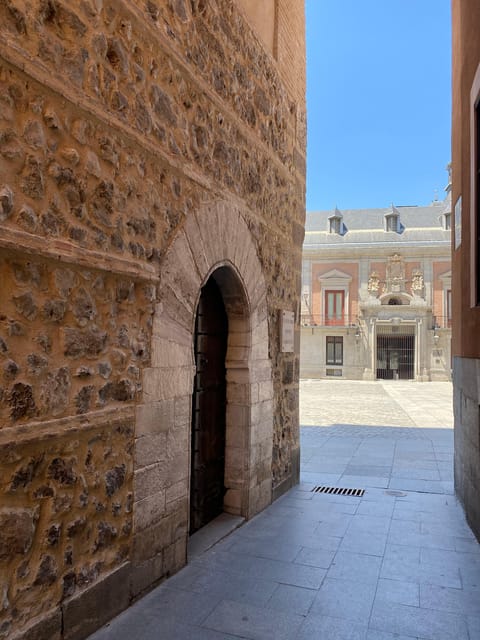
- Arab-to-Christian walls in one route: the Arab Wall and the 12th-century Christian Wall remains connect eras fast
- Habsburg-Austrias splendor: you’ll spot the look of this period while you walk the routes it shaped
- Royal Palace and Royal Theater area: you get context even without going inside
- Cava Baja and old-town squares: tavern street energy plus civic history at Plaza de la Villa and Plaza Mayor
- San Miguel Market stop: a practical place to pause and grab a drink after the sightseeing
Why an architect guide changes how you see Madrid
An architecture tour with a local professional shifts your brain from sightseeing mode to reading mode. Instead of just noting that a building looks old or pretty, you start noticing how the city works: who had power, what they built to show it, and how the street grid and neighborhoods responded.
This route is built around Madrid’s long timeline, from the era when Arabs founded the city at the end of the 9th century, through the conquest by Alfonso VI in the 11th century, and then the moment Felipe II helped set Madrid as the capital. The guide frames all of that through architecture and urban planning—how walls, palaces, churches, theaters, and squares represent control.
And you’ll get a bonus if you’re an architecture fan: the tour isn’t pretending you need a degree to understand the city. It’s structured so you can connect the dots with your own eyes as you walk—especially in the areas where layers are still visible.
You can also read our reviews of more historical tours in Madrid

Starting at Plaza de Isabel II and the Teatro Real photo moment
You meet at the entrance of a Starbucks in one corner of the Royal Theater, Teatro Real, then the tour settles in right away. The first big stop is a quick photo stop and guided look at Teatro Real itself, with enough time to notice details and get the historical context without rushing.
Then you move to Plaza de Oriente. This is one of those spaces where Madrid’s “this is where authority gathers” energy shows up instantly. Even though the stop is short, the guide uses it to help you understand how the royal area creates a stage: the buildings aren’t random landmarks; they’re a planned environment meant to signal state power.
Practical tip: if you’re photographing, arrive ready to shoot quickly. Early stops are built for angles and landmarks more than lingering.
Royal Palace area: what you see outside (and why it still counts)
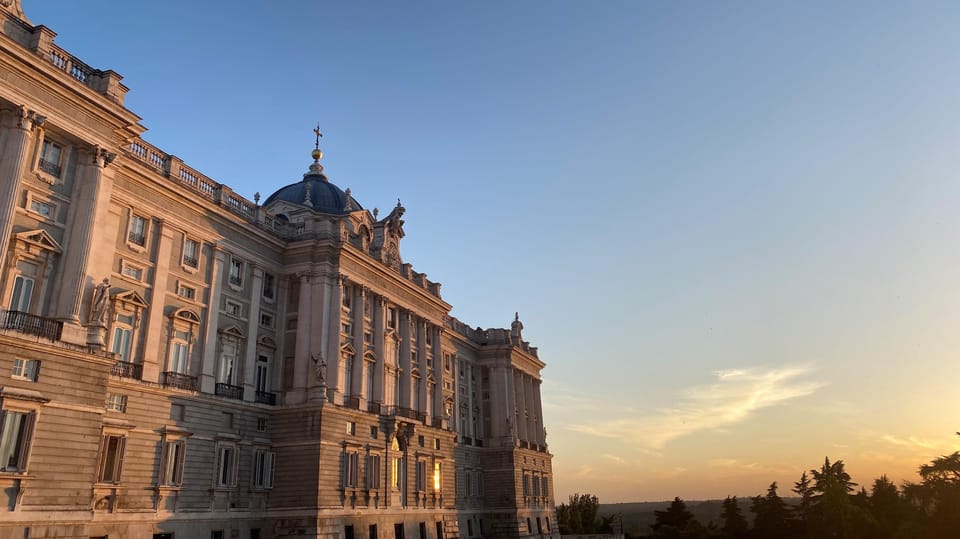
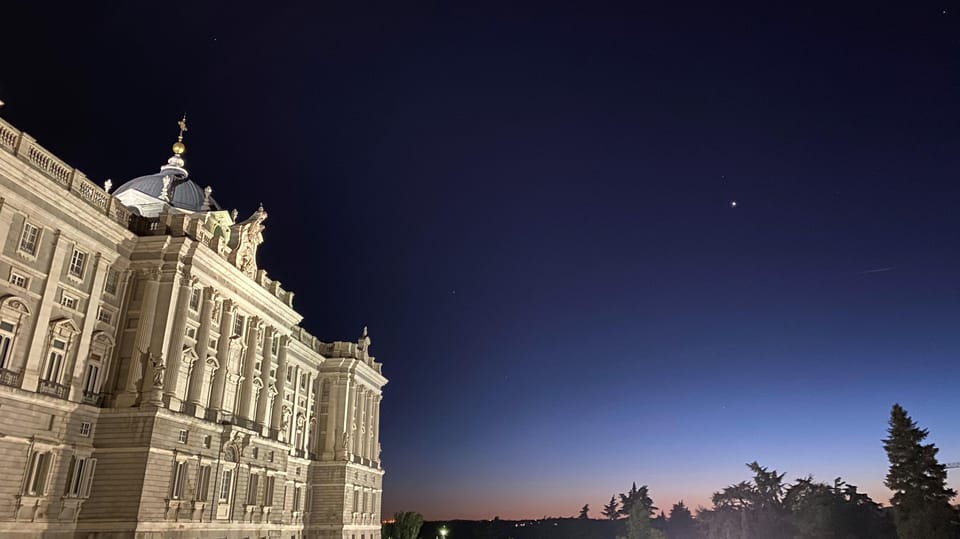
You’ll walk on to the Royal Palace area for a guided segment. This matters because the Royal Palace is tied to a turning point in how Madrid looked and ruled. You’re told the story up to the moment when Felipe V ordered the construction of the Royal Palace as it’s known today.
Even without entering, you can still learn a lot. Looking at the exterior with architectural framing helps you understand scale, symmetry, and the political message of grandeur. It’s also a chance to see how the palace sits within the broader royal district, where the rest of the city’s layers—earlier eras and later additions—cluster around it.
There’s also a smart detail in this tour’s approach: it doesn’t treat the Royal Palace like a standalone monument. It links it to what comes next on the walk, including the Royal Theater area and the later museum complex connected to the period after.
If you were hoping to do the classic inside-the-palace thing, you’ll need to plan a separate visit. This tour is designed for the street-reading version of the story, not the indoor museum circuit.
Almudena Cathedral and the shift from royal power to sacred space
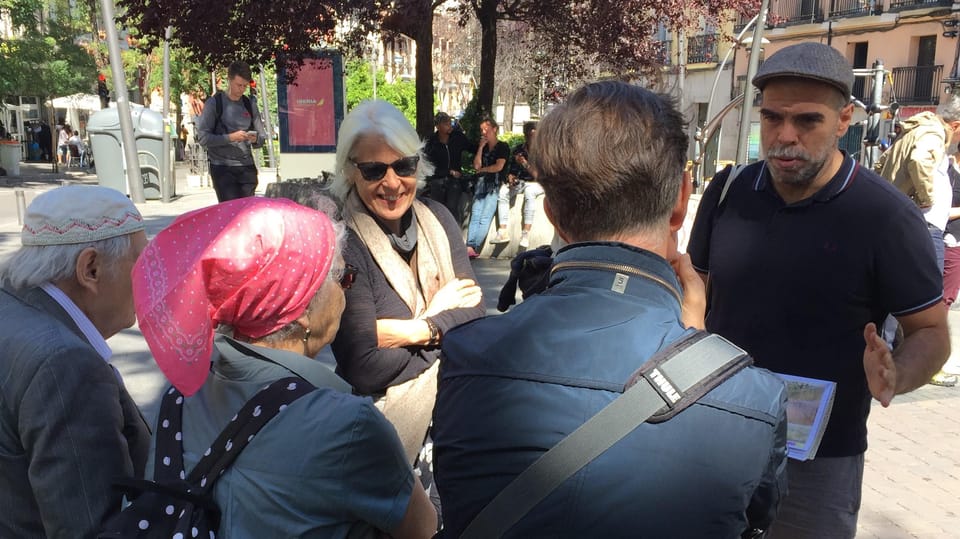
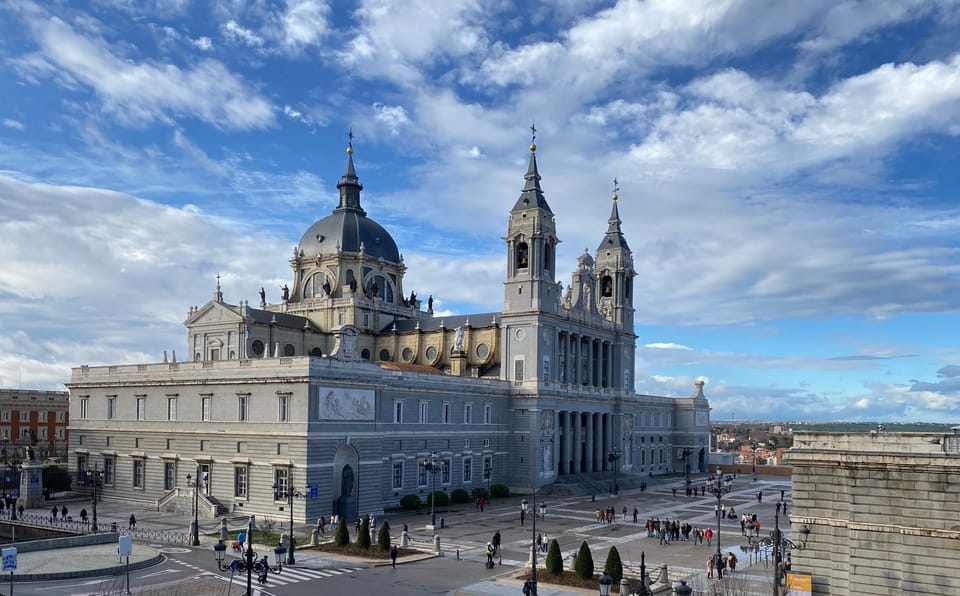
After the royal buildings, the route pivots toward religion and city identity. You pass by Iglesia de San Nicolás, then you go into Almudena Cathedral for a guided stop.
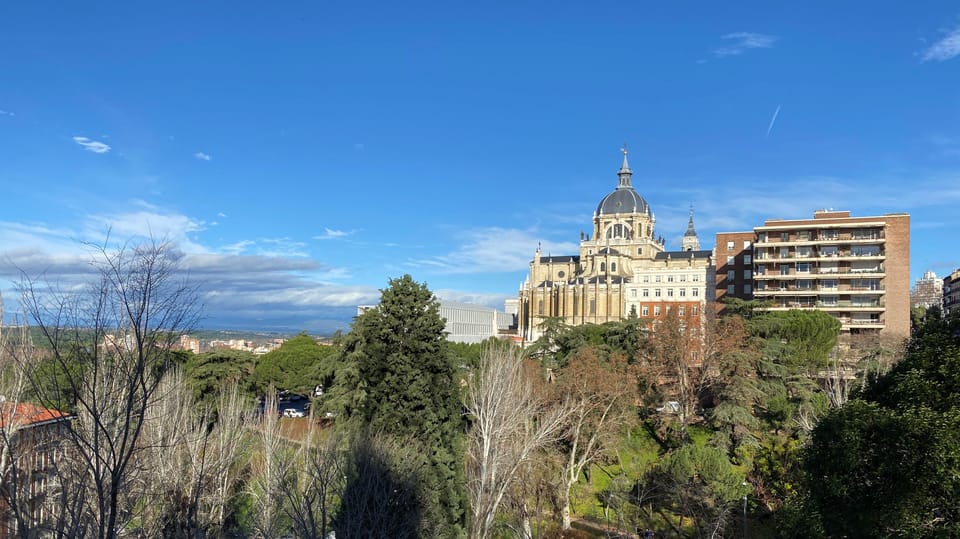
This is where architecture tours start to feel more rewarding, because churches aren’t just places of worship. They’re public statements—about style, belief, legitimacy, and the kinds of communities that needed to feel anchored in a changing capital.
From a practical standpoint, church entrances are included, so you’re not stuck figuring out what you can or can’t access. It’s also a nice rhythm change: you get indoor or semi-covered moments that break up the outdoor walking.
Expect the guide to connect what you’re seeing to the larger political story. When architecture follows power, sacred buildings often become part of the same conversation.
Spotting the Arab Wall remains and the 12th-century Christian Wall story
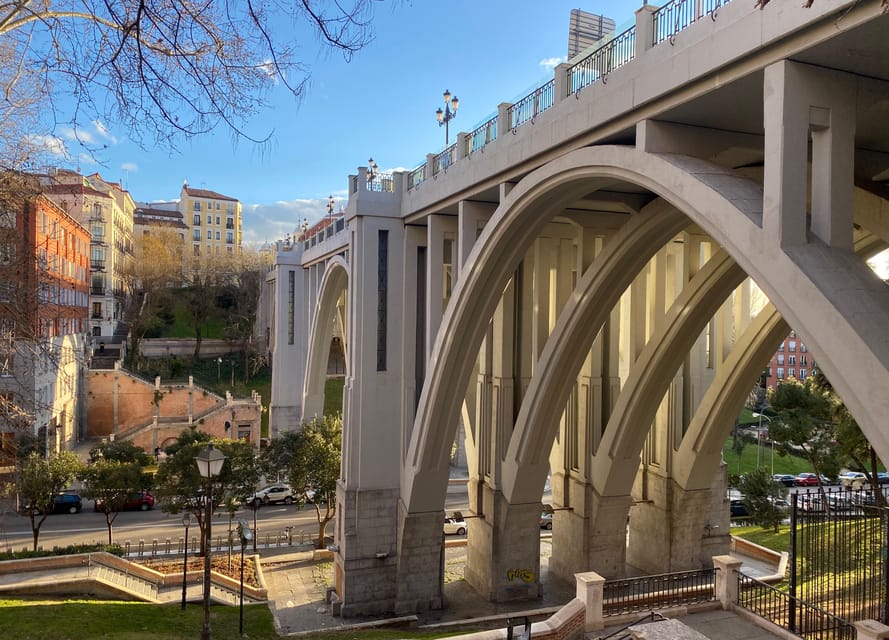
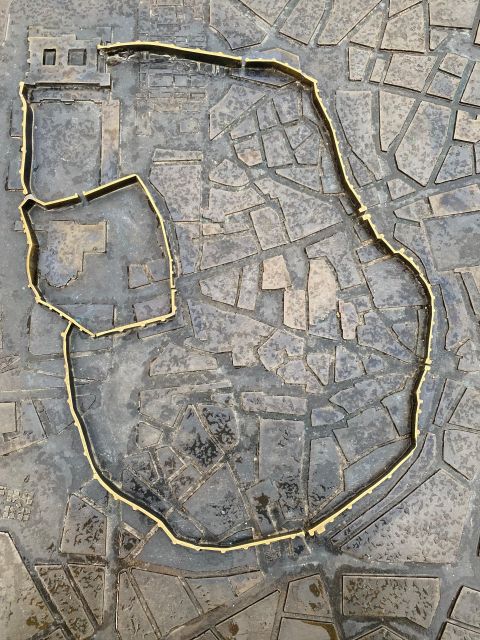
One of the most compelling parts of this route is how it makes the older Madrid visible. You’ll get to see the remains of the Arab Wall, with time set aside for sightseeing.
This stop does something that many tours miss: it reminds you that Madrid wasn’t always built like it is now. The wall remains give you a physical anchor for the city’s earlier defensive and urban logic. Seeing remains in context turns them from random rubble into a clue about how people once lived and organized the city.
Then you continue with the story of the 12th-century Christian Wall remains. The tour also crosses Cava Baja, a street famous for old taverns. That’s important because it’s where you feel how the city’s layers aren’t only historical—they’re still in daily use. Food streets can be history streets.
Practical note: wall remains and historic street segments are often uneven. Wear shoes you trust, especially if you’re visiting in warmer months or after any uneven pavement.





Cava Baja to Plaza de la Villa: where civic life met the city’s older bones
Cava Baja is more than a fun walking street. On this tour, it becomes a bridge between walls and public life. The guide uses it to connect architecture with daily rhythms: how cities grew around defense lines, and how those lines eventually transformed into neighborhood edges and commercial behavior.
From there, you head to Plaza de la Villa, where you walk and get context near the area tied to the old Town Hall. This stop is a great example of why guided architecture tours matter: plazas are not just wide open space for photos. They’re civic engines. They shaped meetings, commerce, and the politics of who had authority.
Even with a short walking segment, you get the feeling of a city that learned to organize itself around certain public rooms—squares, courtyards, and routes that stayed relevant.
San Miguel Market: a practical pause with historic framing
The tour then adds a stop at the Market of San Miguel, with a guided segment included. This is one of the most useful moments in the itinerary, because it sits right in the middle of the biggest “walking and standing” portion of the tour.
Markets are also architecture lessons in disguise. They show you how a city handles flow—entry points, crowd movement, vendors, and the way a historical core stays active over time. On this route, it’s positioned as your chance to reset, then continue to the main square story.
You’ll also appreciate the real-world usefulness: there’s time to grab a drink after visiting the earlier plaza areas. The tour itself doesn’t include drinks, but you’re timed so you can make it part of your day without feeling dragged into a long food break.
Plaza Mayor: Madrid’s main square as a social and commercial machine
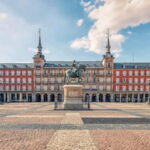
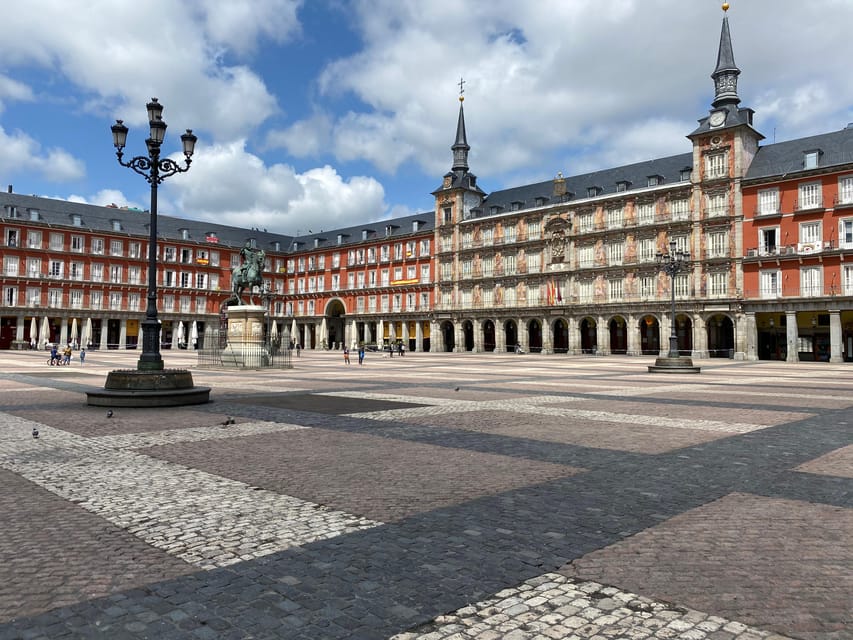
Finally, you reach Plaza Mayor, the city’s main square and a centerpiece of past social and commercial life. The tour finishes here, with a guided segment that helps you understand why this square matters.
Plaza Mayor is one of those places where you can feel history even before you hear it. But the guide makes it more specific: the square is framed as a hub shaped by architecture and by the needs of a capital city—trade, gatherings, and public identity.
If you’ve only ever seen Plaza Mayor as a photo stop, this tour’s approach can change that. You come away seeing the square as a designed stage: built to handle people, ceremonies, and commerce, not just to look old.
The big timeline, told through specific buildings and streets
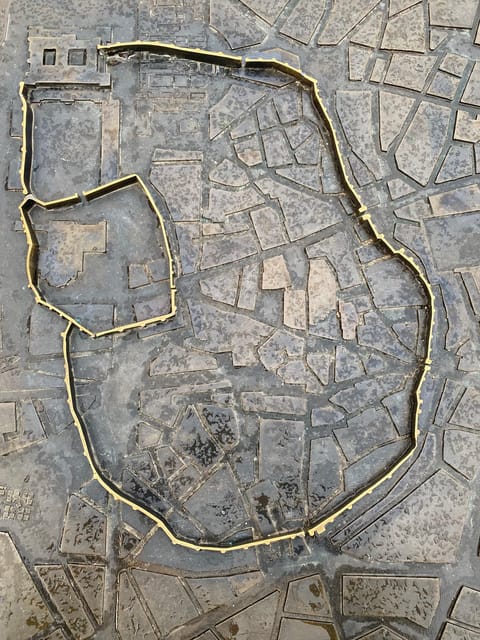
What makes this experience worth your time isn’t any single monument. It’s the way the guide moves you through the city’s eras like a timeline you can walk.
Here’s the thread you’ll likely follow:
- Arab foundations: the story starts with the city’s founding at the end of the 9th century, and you later connect it to what’s left of the Arab wall.
- Alfonso VI and conquest: the narrative references the 11th-century shift, giving you context for why later walls and neighborhoods look different.
- Felipe II and the capital decision: Madrid becomes the stage for power, and you feel it in the royal district and the way buildings relate to each other.
- Habsburg-Austrias splendor: you walk through the atmosphere of this period, where architecture reflects court life and state identity.
- Bourbons onward: Felipe V is tied to the construction of the Royal Palace as you know it today, and later influences are part of the continued city story.
- Modern architecture nearby: you also stop near the new Museum of Royal Collections designed by Tuñón and Mansilla, where you can enjoy views of the Casa de Campo forest.
This combination is a smart choice. You’re not stuck in the past. You’re shown how Madrid kept rebuilding its image—sometimes by preserving old lines, sometimes by replacing them, and sometimes by building a new layer on top.
Price and value for a private architecture session
The price is $387 per group up to 1 for a 3.5-hour private tour. That sounds like a lot if you’re comparing it to group walking tours, but private architecture guidance is different.
Here’s what you’re paying for, based on what the tour includes:
- a local architect guide style approach with enough time per stop to actually notice details
- entrance to churches included, so you’re not paying separate admission fees for the stops that require them
- a structured route that covers multiple eras without wasting time on transfers
- English or Spanish live guidance, tailored to the architecture focus
If you’re traveling with someone who also loves details, it can feel like good value because you’re not rushing through key sites. If you’re a solo traveler and want personal pacing, private time helps a lot.
The main “value consideration” is what’s not included: you won’t go inside the Royal Palace. If you want interior rooms, you’ll need a separate ticket. But if you care most about exteriors, urbanism, and the city’s readable layers, the tour’s format matches that goal.
Who this tour suits best (and who might prefer something else)
This is a strong fit for you if:
- you’re an architecture and history fan, even if your knowledge is casual
- you like guided walking routes where the guide explains how streets and buildings connect
- you want more politics-and-planning context, not just dates
It’s less ideal if:
- you want the full Royal Palace interior experience in one go
- you need wheelchair-friendly access (this tour is not suitable for wheelchair users)
- you dislike walking and standing through outdoor stops for about 3.5 hours
Practical tips so you enjoy the walk
- Wear comfortable shoes. The route includes historic streets and exterior viewing points.
- Bring sun gear in summer: sunglasses, hat/cap, sunscreen, and cold water.
- Bring warm layers in winter. The tour is still mostly outdoors.
- If you want the best photos, keep your phone/camera ready during the short photo stops around Teatro Real and the royal district.
Should you book this architecture tour?
Yes, if you want a guided walk that helps you read Madrid. The architecture-led focus makes the city feel less like a list of sights and more like one long story told through walls, squares, and power buildings. You’ll especially like it if you want the bridge from Arab foundations to Habsburg-Austrias splendor and then the Bourbon-era transformation.
Book it also if you’d rather have smart pacing and architecture explanations than a fast group sweep. It’s private, it includes church entrances, and it ends in the exact kind of place where you can reflect on what you’ve learned.
FAQ
How long is the Old Historic Madrid architecture tour?
It lasts 3.5 hours.
Where do I meet the guide?
You meet at the entrance of the Starbucks located in one corner of the Royal Theater (Teatro Real).
Is the Royal Palace interior included?
No. The tour does not visit the interior of the Royal Palace.
What sites are included for guided visits versus pass-by stops?
The tour includes guided segments at places such as Teatro Real, Plaza de Oriente, the Royal Palace area, Almudena Cathedral, the Arab Wall, Plaza de la Villa, San Miguel Market, and Plaza Mayor. It also includes a pass-by at Iglesia de San Nicolás.
Are church entrances included in the price?
Yes. Entrance to churches is included.
What languages is the tour offered in?
The live tour guide offers English and Spanish.
Is the tour suitable for wheelchair users?
No, it is not suitable for wheelchair users.