REVIEW · MADRID
Madrid: Guided Tour of the Royal Collections Gallery
Book on GetYourGuide →Operated by Fun and Tickets · Bookable on GetYourGuide
Spain’s royal story starts with a portrait. This 2-hour guided visit to Madrid’s Royal Collections Gallery (opened in June 2023) strings together three dynasties in a clear, chronological route, so you see how power, taste, and propaganda changed over time. I especially like the way the tour keeps things organized—Trastámara first, then Habsburg, then Bourbon. I also like that you get skip-the-line entry through a separate entrance, plus an audio guide in English or Spanish.
The one thing to keep in mind: with a tight 2-hour schedule, you’re seeing highlights and key objects—not slow, gallery-by-gallery study. If you want to spend extra time with just one period, plan a follow-up visit on your own.
If you enjoy art and political storytelling hand in hand, this is a smart way to get oriented fast in central Madrid.
In This Review
- Key points before you go
- Royal Collections Gallery in 2023: old power, new museum
- The 2-hour flow: what you’ll actually see
- Trastámara era: Queen Elizabeth I and the power of portraiture
- The Habsburg level: court display that feels like a stage
- Highlights in the Habsburg rooms: Velázquez and La Roldana
- Bourbon level: 18th-century court life and later royal milestones
- Basement archaeology: Islamic Mayrit under the Royal Collections Gallery
- Price and value: is $69 worth it for what you get?
- Who this tour suits best (and who should consider something else)
- Practical tips to get the most from your visit
- Should you book the Madrid Royal Collections Gallery guided tour?
- FAQ
- Where is the meeting point?
- How long is the guided tour?
- Is skip-the-line entry included?
- What languages are available?
- What’s included in the ticket price?
- Is an audio guide provided?
- Is the tour wheelchair accessible?
- What can I expect to see?
- Is free cancellation available?
Key points before you go
- Chronological route across three dynasties: Trastámara → Habsburg → Bourbon
- Trastámara focus includes Queen Elizabeth I’s iconic portrait
- Habsburg room highlights court art and symbolism, including works tied to rulers like Charles I and Philip II
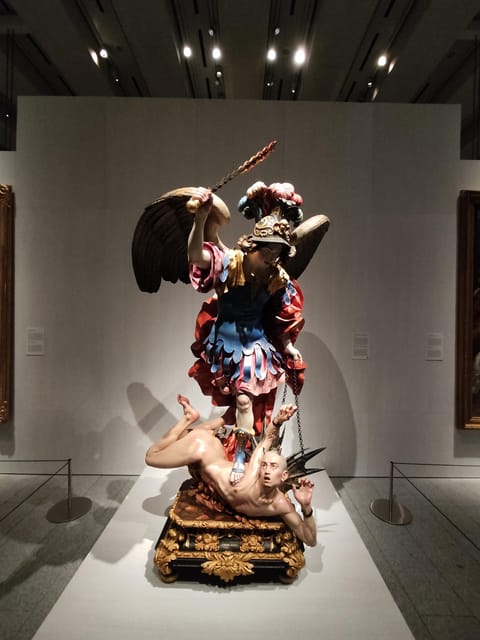
- Must-see objects: La Roldana (Archangel Saint Michael over the devil) and Velázquez’s The White Horse
- Bourbon level leans into daily court life, with furniture, clocks, and 18th-century paintings
- Basement stop shows older Madrid: archaeological remains of Islamic Mayrit
Royal Collections Gallery in 2023: old power, new museum
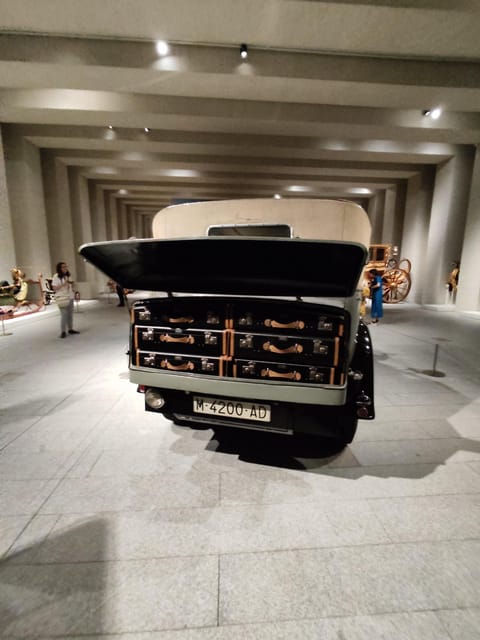
What makes this visit feel worthwhile is the setting. The Royal Collections Gallery opened in June 2023, and it’s built for visitors who want the Spanish Crown story in one place. You’re not bouncing between disconnected rooms or hunting for context. The guide provides the backbone: who ruled, what the court wanted you to notice, and why certain objects mattered.
This is also a museum where you can feel the timeline move. One level points you toward dynastic identity and legitimacy; another brings you into court display and craftsmanship; the basement reminds you that Madrid’s story goes way deeper than the monarchy. The tour’s structure helps you connect those dots without needing an art history degree.
You can also read our reviews of more guided tours in Madrid



The 2-hour flow: what you’ll actually see
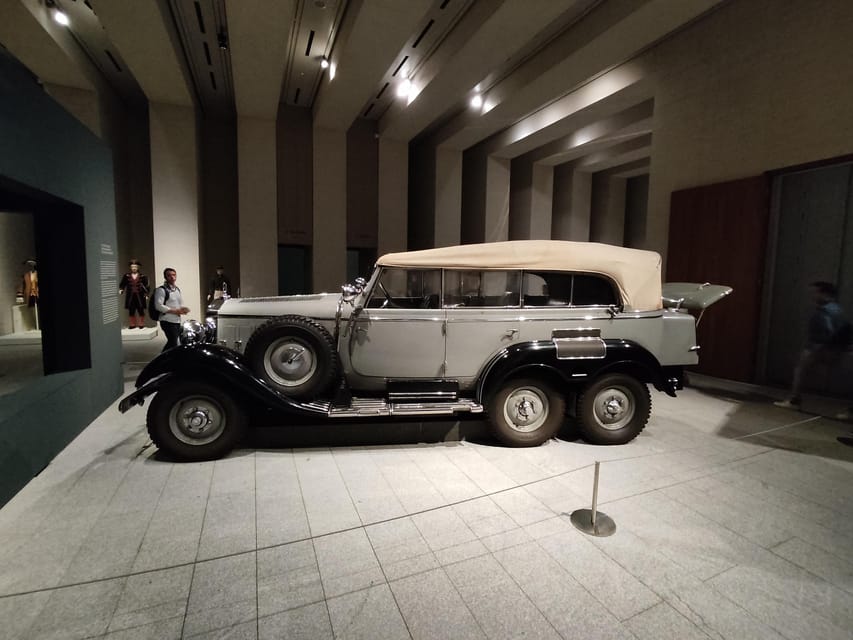
The experience is paced for a guided overview. You meet at Fun And Tickets at Calle Mayor, 43, wait about 20 minutes before the start, and then head into the Royal Collections Gallery.
From there, expect a steady walk through rooms that map onto the major ruling families:
- Trastámara era first, including a strong portrait-focused start
- Habsburg level next, filled with paintings, sculptures, artifacts, and court textiles
- Bourbon level after that, with objects tied to everyday court presence and later royal milestones
- A final basement segment for archaeology tied to Islamic Mayrit
Because the time is limited, your guide focuses on the objects that carry the biggest “why should I care” punch. You’ll leave with a clearer mental map of the museum and a sense of the Crown’s shifting image-making over centuries.
Trastámara era: Queen Elizabeth I and the power of portraiture
You start with the Trastámara section, which sets the tone right away: this is about authority and recognition. The tour brings attention to pivotal figures tied to legitimacy and diplomacy, and the standout mention is Queen Elizabeth I’s iconic portrait.
I like this opening approach because a portrait is never just a person. In royal collections, faces are messages—about lineage, alliance, rank, and control. When you see where the guide puts the emphasis, you understand the museum’s goal: show you how the Crown shaped perception through art.
Even if you’re not a hardcore portrait fan, this part works because it’s the easiest entry point. Portraiture gives you something concrete and human to hold onto, then the tour uses that anchor to build momentum toward the larger court world of tapestries, sculptures, and artifacts.
The Habsburg level: court display that feels like a stage
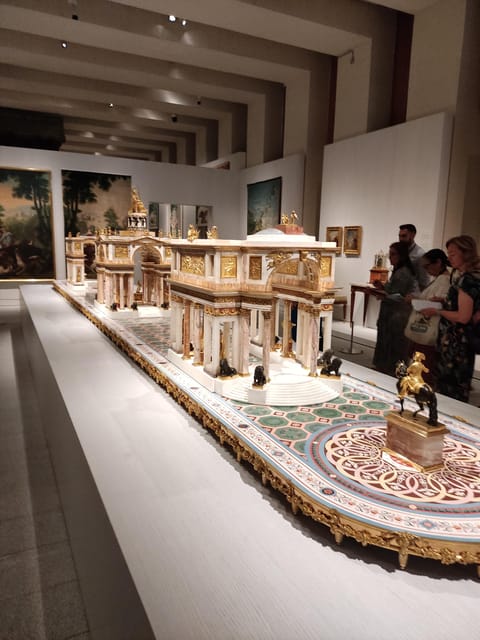
Next comes the Habsburg chamber, and this is where the tour turns into a visual “court in motion.” You’ll encounter a mix of tapestries, paintings, sculptures, and artifacts associated with the reigns of Charles I, Philip II, Philip III, Philip IV, and Charles II.
This stop is valuable because it’s not just a checklist of objects. The guide’s explanations help you notice patterns: what the court chooses to show, how imagery supports rule, and how artistic tastes reflect political identity. In other words, you’re not just looking at art—you’re seeing how a dynasty presents itself to the world.
If you’ve ever wondered why courts spent fortunes on display, this section makes the logic clearer. Court art is doing multiple jobs at once: impressing visitors, reinforcing authority, and creating continuity across generations.
Highlights in the Habsburg rooms: Velázquez and La Roldana
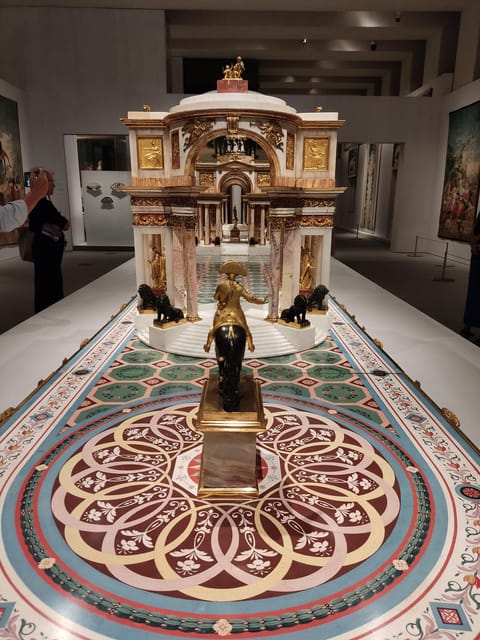
A good guided tour gives you targets, and this one does. In the Habsburg-focused area, you’ll get guided attention to several heavyweight pieces:
One big moment is Diego Velázquez’s The White Horse. The guide points out the painting’s riderless focus—an elegant composition that still feels connected to power. It’s a reminder that royal imagery often communicates status even when a human figure isn’t front and center.
Another major highlight is the sculpture La Roldana, showing Archangel Saint Michael triumphing over the devil. Religious symbolism may sound like a different world from court politics, but in royal collections, it often overlaps with it. The imagery leans into moral authority and victory narratives, which rulers could align with their own worldview.
And then there’s the historical “human proof” element: horse and rider armor once worn by Charles I. Seeing armor mentioned alongside major artworks helps you connect form (metalwork, design, protection) with message (what the ruler wants to signal). That blend is one reason this level works well—art history and material culture sit together.
You can also read our reviews of more museum experiences in Madrid



Bourbon level: 18th-century court life and later royal milestones
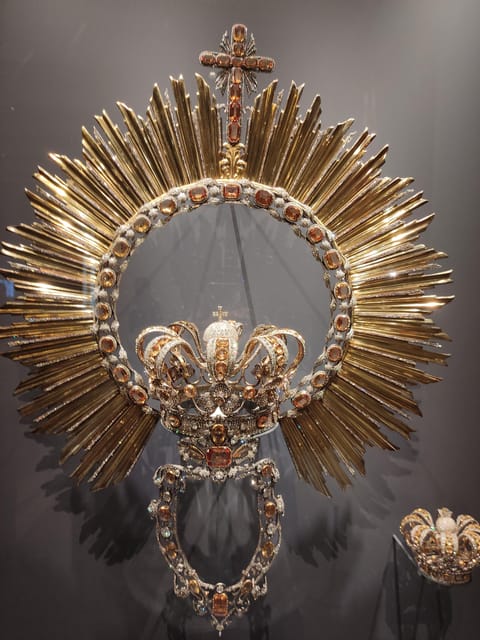
The Bourbon section shifts the mood. Instead of focusing mainly on battle-era or symbolism-heavy displays, you get a broader spread of objects that emphasize taste and daily representation: furniture, clocks, tapestries, and paintings, spanning reigns from Philip V through Ferdinand VII, Isabel II, Alfonso XII, and Alfonso XIII.
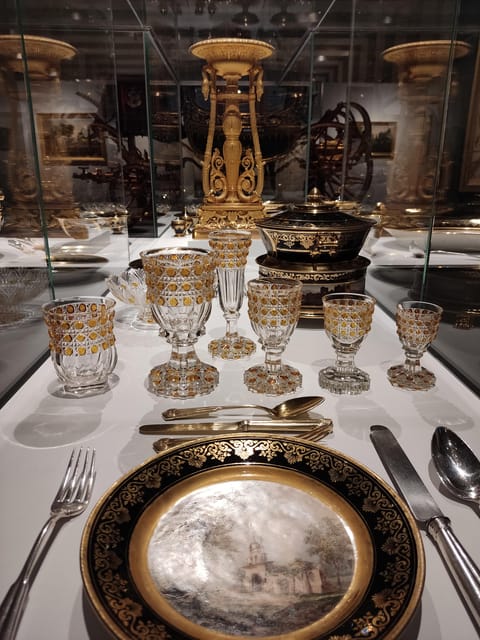
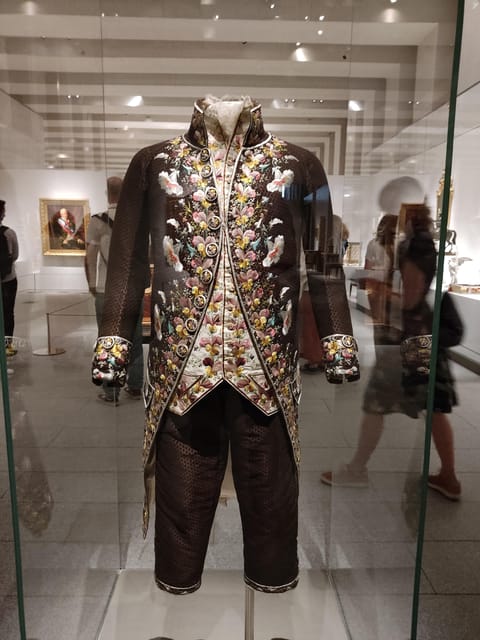
This floor is especially useful if you like objects you can picture in use. Clocks and furniture aren’t just decorative; they’re part of how a court feels in everyday life—rhythms, rooms, display practices, and how wealth is arranged for visitors.
A pair of later highlights adds extra context:
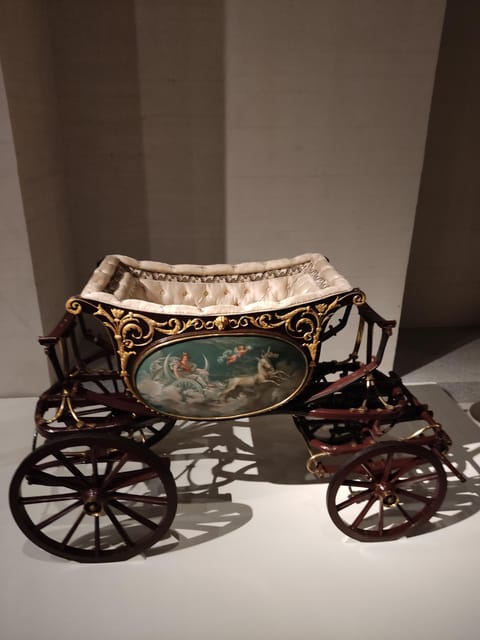
- A splendid 19th-century carriage, which signals how royal presence evolved into a public spectacle
- moving photographs of the Prisoners’ Office, connected to Alfonso XIII and established in the Royal Palace during the First World War
That last item is a smart guide choice because it reminds you that monarchy didn’t stop at portraits and armor. It moved into modern media and institutional roles, even during a period when Europe was changing fast.
Basement archaeology: Islamic Mayrit under the Royal Collections Gallery
The tour ends with a basement stop that adds an unexpected layer: archaeological remains of Islamic Mayrit, uncovered during construction of the Royal Collections Gallery.
This part matters more than it might sound at first. It prevents the museum experience from feeling like a straight line of royal dominance. Instead, you get a tangible reminder that Madrid had earlier chapters, and the site itself holds those traces.
For visitors who want a break from paintings and objects, this basement segment can feel like a breath of fresh perspective. You’re still in the same institution, but the story shifts from royal display to the deeper physical ground beneath it.
Price and value: is $69 worth it for what you get?
At $69 per person for a 2-hour guided tour, the value depends on what kind of visitor you are.
If you like context, this price makes sense. You’re not only getting gallery access; you’re getting a guide visit, an official guide component, and an audio guide in English and Spanish. The guided route is also what makes the museum easier to navigate. Without guidance, it’s easy to get lost in the volume of objects and miss the “why” that ties the dynasties together.
If you’re the type who hates group pacing and prefers to wander, you might feel the time crunch. But if you want a curated map of Spain’s royal storytelling, the structure is the value. Two hours is long enough to build understanding, short enough to keep your schedule flexible.
Who this tour suits best (and who should consider something else)
This guided visit is a great match for:
- Art lovers who also want political and cultural context
- First-time visitors who want to understand the museum fast
- People who like chronological narratives and clear interpretive threads
- Anyone curious about the deeper layers of Madrid beyond the monarchy
It may feel less ideal if:
- You want to spend a full day focusing on only one dynasty or one room
- You prefer completely self-paced museum time without explanations
- You need lots of time to photograph every object (the schedule is tight)
Practical tips to get the most from your visit
A few small choices can make your two hours feel effortless.
First, show up early enough to settle in. You meet at Fun And Tickets on Calle Mayor, 43, and you’ll wait about 20 minutes before the start. Starting on time matters because the guide has a sequence to keep.
Second, pick a language mode you’ll actually use. The guide is available in Spanish and English, and you also get an audio guide in both languages. Use what you prefer, then stick with it instead of switching mid-room.
Third, go into it with a simple goal: leave with three mental labels—Trastámara, Habsburg, Bourbon. If you can connect the artworks you saw to that framework, you’ll feel like the museum “clicks.”
Finally, don’t rush the basement stop. The Islamic Mayrit remains are brief, but they’re a strong reminder that this museum experience is layered, not one-note.
Should you book the Madrid Royal Collections Gallery guided tour?
I’d book it if you want a guided, structured understanding of Spain’s royal collections without wasting hours trying to decode what you’re looking at. The strongest reasons are practical: skip-the-line entry, a 2-hour pace that fits real schedules, and a focus on recognizable anchors like Queen Elizabeth I, Velázquez’s The White Horse, La Roldana, and Charles I armor—plus the basement archaeology of Islamic Mayrit.
If you already know the periods well and want total freedom, you might prefer solo time. But for most visitors, this tour is a smart way to make the Royal Collections Gallery feel navigable, meaningful, and worth your money.
FAQ
Where is the meeting point?
You meet at Fun And Tickets at Calle Mayor, 43, and the guide waits for you about 20 minutes before the start.
How long is the guided tour?
The visit lasts about 2 hours.
Is skip-the-line entry included?
Yes. You use a separate entrance to skip the line.
What languages are available?
The live guide is available in Spanish and English, and the audio guide is also included in English and Spanish.
What’s included in the ticket price?
Included are the ticket to the Royal Gallery, the guided visit, and an official guide, plus an audio guide.
Is an audio guide provided?
Yes. An audio guide is included in English and Spanish.
Is the tour wheelchair accessible?
Yes, the experience is wheelchair accessible.
What can I expect to see?
You’ll see key works and objects connected to the Trastámara, Habsburg, and Bourbon dynasties, and you’ll also visit the basement to see archaeological remains of Islamic Mayrit.
Is free cancellation available?
Yes. Free cancellation is offered up to 24 hours in advance for a full refund.