REVIEW · MADRID
Madrid: Half-Day Spanish Cooking Class
Book on GetYourGuide →Operated by Cooking Point · Bookable on GetYourGuide
Pick paella in the morning or tapas at night, both with your hands in the pan. What makes this Spanish cooking class in Madrid worth your time is that it’s not a sit-and-watch demo: you cook start-to-finish with a live English-speaking chef, then you eat what you made.
Two things I like right away are the hands-on pairing setup (you’ll work at the station with instructions step by step) and the fact that you leave with a recipe booklet you can actually use later. The one catch: there’s no hotel pickup, and the meeting point can vary by option, so you’ll want to plan your arrival.
In This Review
- Key highlights worth clocking
- Paella and a Mercado: the morning route in Madrid
- Cooking the big pan meal: paella, gazpacho, and sangria
- Paella: mixed chicken and seafood
- Gazpacho: the cold tomato soup shortcut
- Sangria: built into the meal
- Tapas at night: how the evening menu adds up to dinner
- Why the tapas format is easier than it sounds
- What you actually learn (beyond just recipes)
- Logistics and practical tips that can save your trip
- Price and value: is $100 in Madrid a fair deal?
- Who should book, and morning vs evening
- Should you book this Spanish cooking class in Madrid?
- FAQ
- How long is the cooking class?
- Are there two different class options?
- What will I cook in the paella (morning) option?
- What will I cook in the tapas (evening) option?
- Is the instructor available in English?
- Is hotel pickup included?
- Do I cook by myself if I book solo?
- Can the class accommodate allergies or dietary needs?
- What’s included in the price?
Key highlights worth clocking
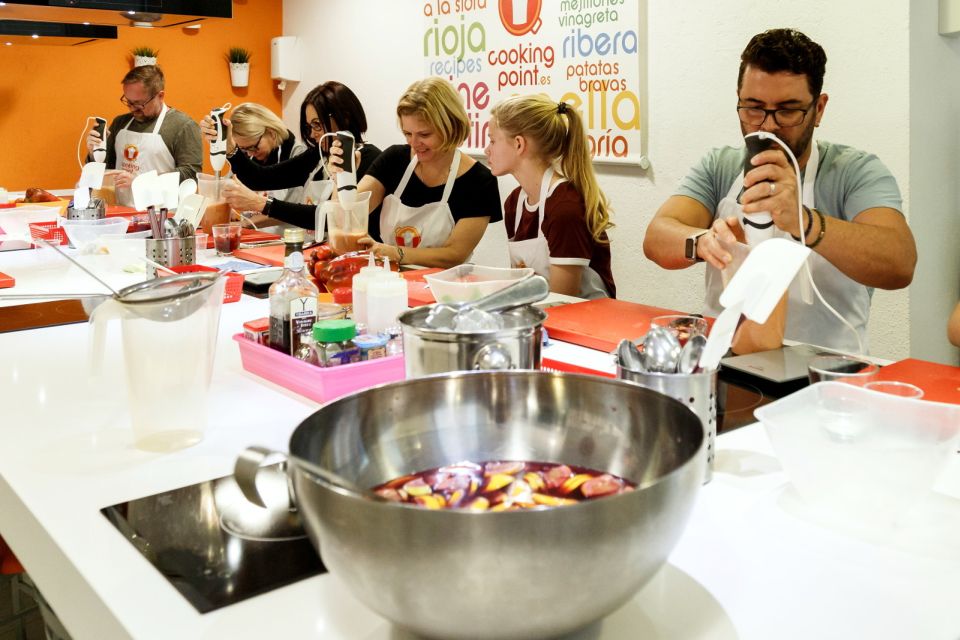
- Choose your menu path: morning paella plus market shopping, or evening tapas plus dessert
- Cook in pairs, even solo: if you go alone, you’ll be assigned a partner at the station
- Real Spanish staples: paella, gazpacho, sangria, and classic tapas like patatas bravas
- English instruction: chefs teach the method and the why behind the flavors
- Sangria and drinks are included: plus you eat your full meal at the table
- Dietary needs can be accommodated: allergies and restrictions are handled when you notify them
Paella and a Mercado: the morning route in Madrid
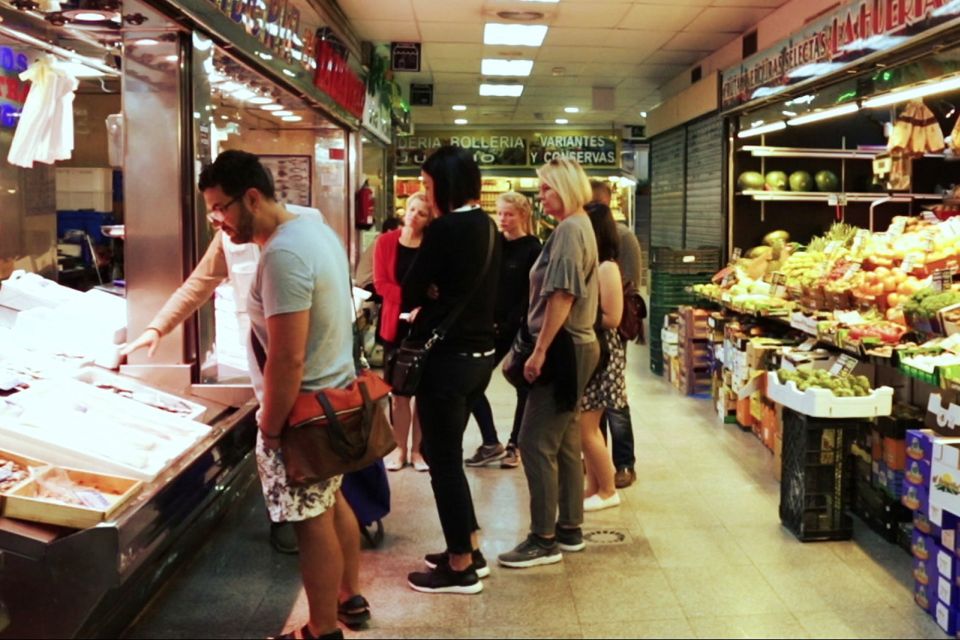
If you love the idea of building your meal from the ground up, the morning version is the one to pick. It starts with a visit to a local market (a Mercado style stop) where you shop for the ingredients used in class. That market time matters because it turns paella from a vague dish into a list of real, touchable ingredients you’ll recognize when you try again at home.
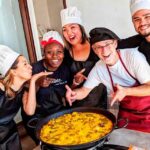
Back at the school, you’ll cook a mixed paella with chicken and seafood, plus gazpacho (cold tomato soup) and sangria. The pairing of foods is smart: paella is your warm, skillet-and-pan centerpiece; gazpacho is the cool reset; sangria gives you the Spanish dinner vibe without needing extra planning.
One more practical plus: the cooking rhythm is paced so you’re active, not just waiting your turn. Even if you’re a novice, you’re usually doing something—chopping, mixing, assembling, and managing steps while the chef keeps the flow moving.
You can also read our reviews of more cooking classes in Madrid
Cooking the big pan meal: paella, gazpacho, and sangria
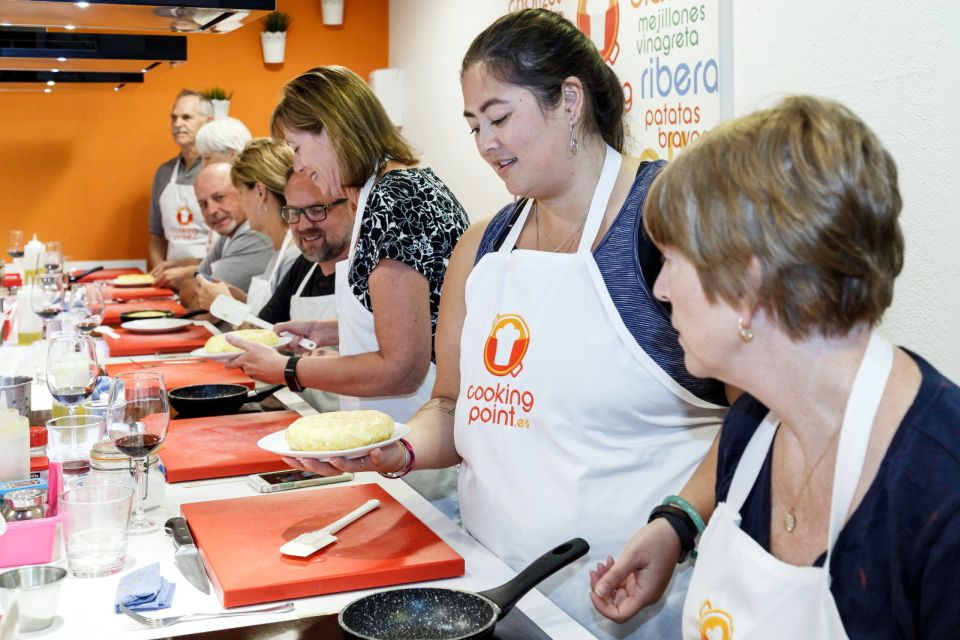
Paella can look intimidating until someone breaks it into manageable moves. Here, you follow the chef’s direction and cook your food through the process yourself. That’s the difference between tasting great paella in Madrid and learning how to produce it elsewhere.
Paella: mixed chicken and seafood
You’ll make a paella that’s specifically geared for learning, not showmanship. Expect instruction on ingredient order and timing—exactly the kind of practical method you want if you’ve ever tried to make paella later and wondered why it didn’t come out right.
One tip you might hear from chefs in these sessions: details matter with seafood prep. For example, Angel is known for offering guidance like how to devein prawns, which is the kind of small step that can make a big flavor difference.
Gazpacho: the cold tomato soup shortcut
Gazpacho is a great counterpoint because it doesn’t require stovetop marathon energy. It also reinforces technique: tasting, balance, and using the right texture—not just throwing ingredients together. You end up understanding gazpacho as more than a “cold soup,” which helps when you’re shopping later for tomatoes and other essentials.
Sangria: built into the meal
Sangria isn’t treated as an afterthought. You’ll make it with the class and then drink what you helped prepare. In real-world terms, that means you’re not hunting for supplies or figuring out what type of sangria works for your group—your class handles it.
And yes, it’s a social meal. You cook, then you sit down and eat together, which turns the last hour into the payoff. Multiple instructors are described as fun, organized, and good at keeping things relaxed, even when the class has a mix of ages.
You can also read our reviews of more tours and experiences in Madrid
Tapas at night: how the evening menu adds up to dinner
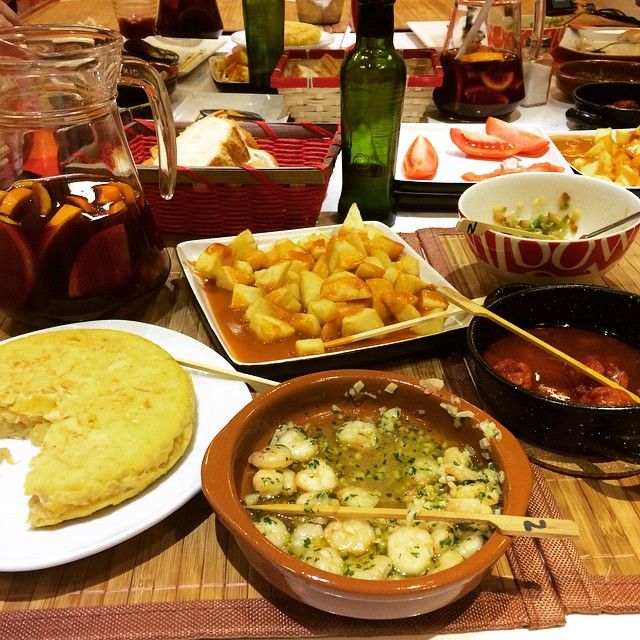
Prefer a casual evening instead of a morning market run? The tapas class is built for that. You’ll cook a menu of 5 tapas, plus one dessert and sangria. Five tapas sounds small until you start cooking, plating, and sharing—then it becomes a full dinner plan.
Here are the tapas you’ll make:
- Spanish potato omelet
- Garlic shrimp
- Chorizo in apple cider
- Patatas bravas
- Tomato bread with ham
And the dessert:
- Catalan crème
This lineup is a strong cross-section of Spanish home-cooking flavors. You get egg-based comfort (the tortilla), seafood and garlic (shrimp), sweet-salty meat notes (chorizo with apple cider), crispy-spicy potatoes (bravas), and a very Spanish bread-and-ham move (tomato bread with ham). It’s a smart way to learn because you’re training different skills: frying, sauce-making, assembling, and getting plating right for that “tapas at the table” feel.
Why the tapas format is easier than it sounds
You’re not trying to make one huge centerpiece. You’re building several small dishes, which means you see variety without cooking nonstop like a commis chef. It also makes the experience more forgiving if you’re new to cooking—mistakes are limited to a small portion, and you keep moving through the menu.
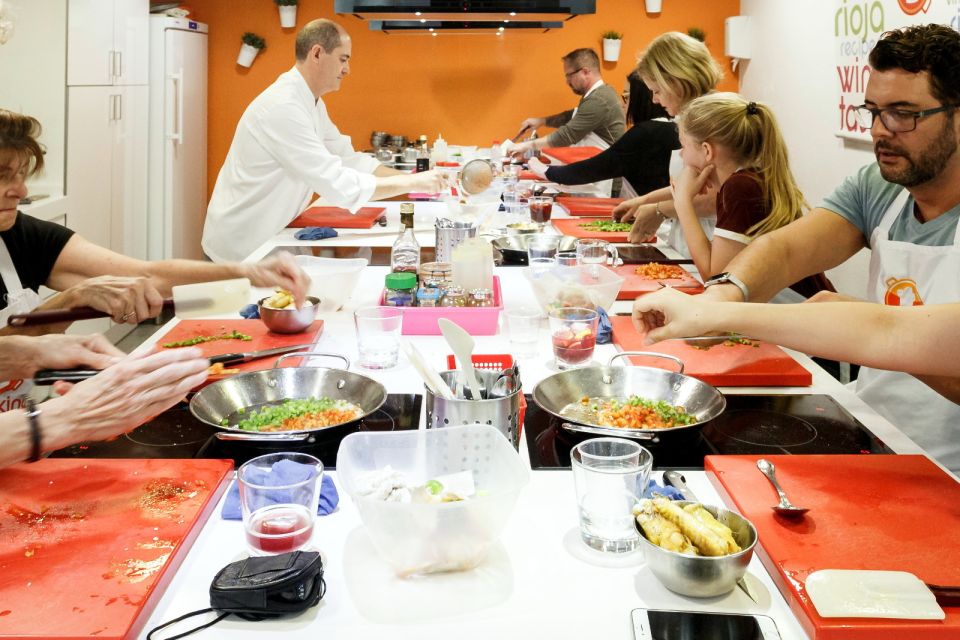
If you go alone, you still cook in pairs. That pairing setup helps here too: one person often handles the prep while the other focuses on cooking steps, and you swap roles as directed.
What you actually learn (beyond just recipes)
The best part of a class like this isn’t only the meal—it’s the mental map you take home. You learn ingredients, habits, and the stories connected to Spanish food. That might sound abstract, but it shows up in small ways: when someone explains why a dish uses certain flavors or how locals shop, you stop copying and start understanding.
Across these sessions, instructors like Angel, Eduardo, Teresa, Elisa, and Maria are repeatedly described as clear and energetic in English. You’re not just handed steps; you’re told how to think about the dish. That’s why people often mention feeling confident to cook again later.
You also get real-world cooking habits. In the paella option, the market stop teaches what to look for and how to shop like a local. In at least one class experience, instructors go as far as explaining things they’d see in a fish shop too, so you understand why seafood prep matters for taste.
And because you’re eating what you made, you learn faster. If gazpacho tastes off, you remember exactly which step led there. If the bravas aren’t crisp enough, you connect it to technique. That feedback loop is the real “value.”
Logistics and practical tips that can save your trip
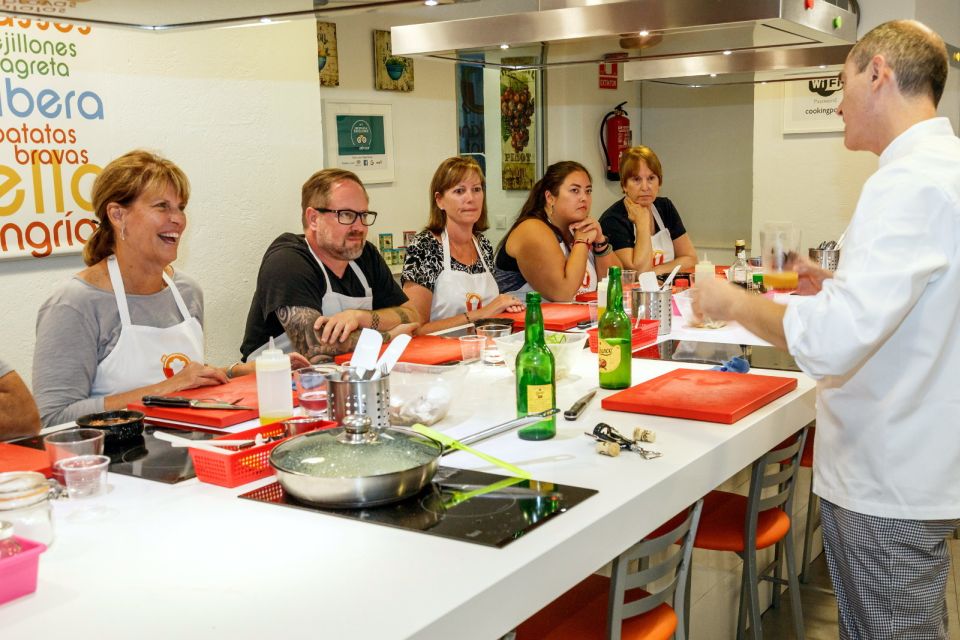
This is a 4-hour class with English instruction. Cooking is done in pairs, so even if you book solo, you’ll be assigned a partner. That’s usually a win: it keeps the pace up and makes the class social, without turning it into a chaos fest.
A heads-up: there’s no hotel pickup, and the meeting point can vary by option booked. So treat this like any hands-on workshop—arrive a few minutes early, and double-check the meeting details tied to your specific session time.
Dietary needs are handled as long as you tell the provider about allergies, intolerances, or dietary requirements in advance. You won’t have to build your own workarounds on the spot.
One more thing that makes this work well for families: the vibe is described as relaxed and fun, and kids are often included without slowing the group down. If you’re traveling with mixed ages, this is a rare “everyone can participate” activity.
Price and value: is $100 in Madrid a fair deal?
At $100 per person for 4 hours, it’s not the cheapest thing you can do in Madrid. But it is priced like an experience where the cost is mostly labor and supplies—and those are doing heavy lifting here.
You get:
- All ingredients and drinks included
- A recipe booklet to take home
- Lunch (paella day) or dinner (tapas day) included
- Market tour included only with the paella morning option
When you price it that way, the math gets more reasonable. You’re paying for a chef-led class, active instruction at the station, and food plus drinks you wouldn’t otherwise get for free. And because you’re cooking and eating as part of the same session, it feels less like an activity and more like you’re hosting yourself at a table where someone else does the planning.
If you’re the type who likes doing one “real skill” thing on a trip, this is a strong candidate. You’re not just collecting photos—you’re collecting methods.
Who should book, and morning vs evening
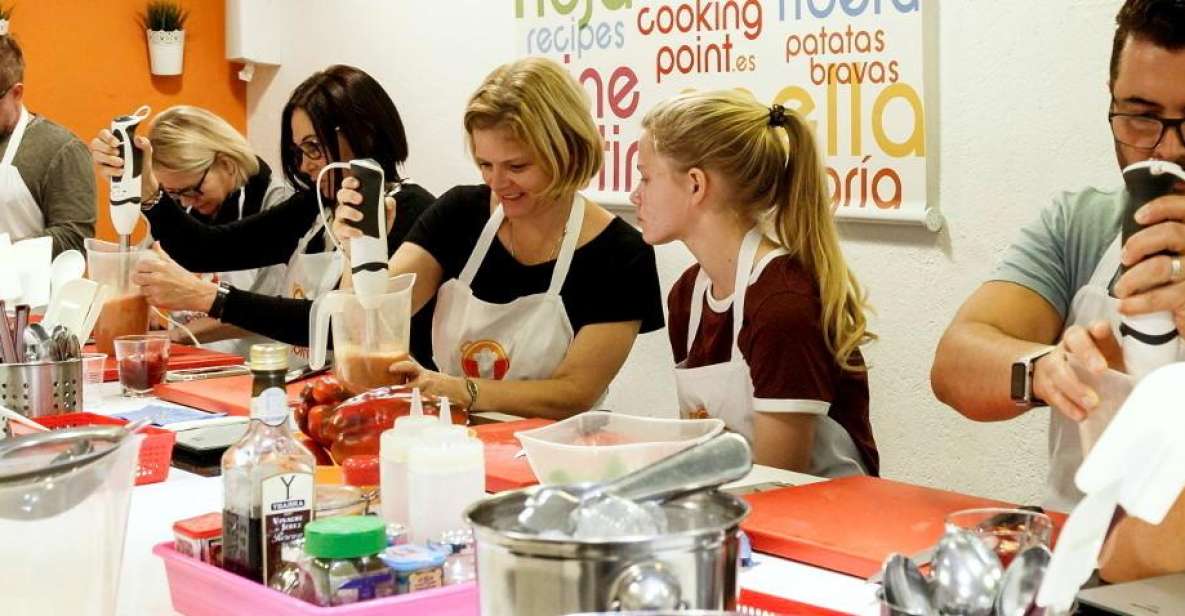
Book the morning paella option if you want:
- The market experience
- The classic “one big Spanish pan” cooking skill
- Paella plus gazpacho and sangria as a complete meal flow
Book the evening tapas option if you want:
- A more dinner-like schedule
- Variety across five different tapas styles
- A hands-on way to learn plating and Spanish table food
This class suits:
- Couples who want a shared project and a shared meal
- Friends who like social cooking
- Families because it’s practical, interactive, and food-centered
- Solo travelers who don’t want to sit out cooking (because you’ll be paired)
If you’re short on time, go with the option that matches your energy—morning for market + paella, evening for tapas + dessert. You can always plan the other one on a return trip.
Should you book this Spanish cooking class in Madrid?
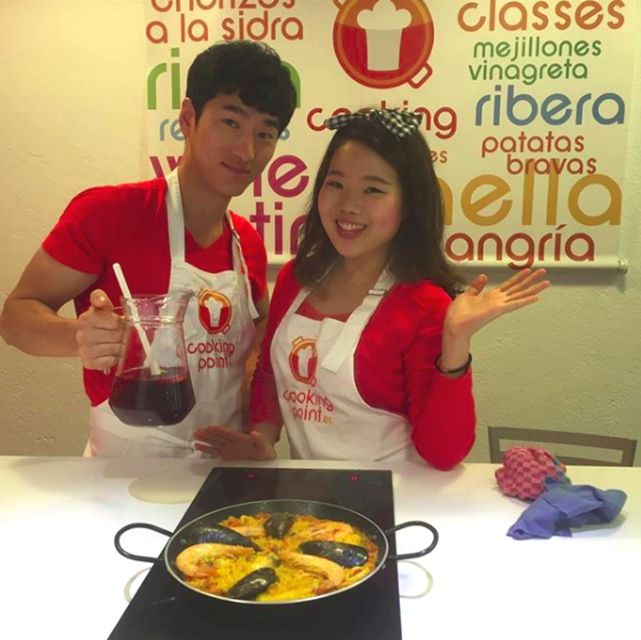
Yes, if your goal is a hands-on Spanish food experience with a clear payoff at the table. It’s a great value for what’s included: ingredients, drinks, instruction in English, and a recipe booklet you can actually use.
Skip it only if you really dislike cooking, or if your schedule can’t handle the lack of hotel pickup and the variable meeting point. Otherwise, this is the kind of activity that makes Madrid feel personal. You’ll leave with skills, not just memories—and with a meal that tastes like you had a plan all along.
FAQ
How long is the cooking class?
The class lasts 4 hours.
Are there two different class options?
Yes. You can choose a morning paella class with a market visit, or an evening tapas class.
What will I cook in the paella (morning) option?
You’ll make mixed paella (chicken and seafood), gazpacho, and sangria.
What will I cook in the tapas (evening) option?
You’ll cook 5 tapas (Spanish potato omelet, garlic shrimp, chorizo in apple cider, patatas bravas, and tomato bread with ham), plus Catalan crème dessert and sangria.
Is the instructor available in English?
Yes, the instructor teaches in English.
Is hotel pickup included?
No, hotel pickup and drop-off are not included.
Do I cook by myself if I book solo?
Cooking is done in pairs. If you book alone, the provider will assign you a cooking partner.
Can the class accommodate allergies or dietary needs?
Yes. Food allergies, intolerances, and dietary requirements can be accommodated.
What’s included in the price?
All ingredients and drinks are included, along with a recipe booklet. The paella option also includes the market tour, and you’ll have lunch or dinner during the class.