REVIEW · MADRID
Avila & Segovia Tour with Tickets to Monuments from Madrid
Book on Viator →Operated by Fun and Tickets · Bookable on Viator
Ávila and Segovia feel like history with their boots on. This day trip pairs big-time sights—Ávila’s near-whole medieval walls, plus Segovia’s Roman aqueduct and fairy-tale Alcázar—with an organized route that keeps you moving without leaving you totally in the dark.
I especially like two things: skip-the-line tickets for Segovia’s major stops, and a radio-guided experience (with provided headphones) so you can hear the story while you pause for photos.
One main drawback to plan for: you’ll do a full day with steep, uneven walking in old-town streets, and it’s not recommended for people with reduced mobility.
In This Review
- Key points I’d circle before you book
- Setting Out From Madrid: The Sierra de Guadarrama Drive Makes It Click
- Ávila’s City Walls and the Cathedral-Fortress Angle
- Basilica de San Vicente: Romanesque Details Without Rushing
- Convento de Santa Teresa: A Carmelite Stop That Adds Personal History
- Segovia’s Roman Aqueduct: Why the Photo Spot Beats the Picture
- Skip-the-Line in Segovia: Cathedral and Alcázar Without the Long Wait
- The Ride Back and Worth-It Comfort Details
- Food on the Route: Ávila Snack and Your Segovia Meal Choices
- Pacing, Radio Headsets, and Walking Reality
- Who This Tour Fits Best (and Who Should Consider Something Else)
- Should You Book This Ávila and Segovia Tour from Madrid?
- FAQ
- FAQ
- How long is the Ávila and Segovia tour?
- What time does the tour start and where do I meet?
- Is the tour offered in English?
- Are monument entry tickets included?
- Do I need to buy tickets for the Alcázar and Segovia Cathedral?
- What food is included?
- Is there a radio guide and headphones?
- How big is the group?
- Is the tour stroller accessible and family-friendly?
- Is the tour suitable for reduced mobility?
- What if I’m late to the meeting point?
Key points I’d circle before you book
- Skip-the-line entry for Alcázar and Segovia Cathedral saves real time
- Radio guide + headphones means you can walk and still follow the commentary
- Ávila wall-to-church sequence gives you medieval context fast
- Roman aqueduct + Gothic cathedral both happen in one tight Segovia block
- Small-ish group (up to 35) keeps logistics smoother than bigger buses
- Stroller accessible, but expect hills and cobbles
Setting Out From Madrid: The Sierra de Guadarrama Drive Makes It Click
The day starts with a comfortable, air-conditioned coach with Wi‑Fi, which matters on a 9-hour outing when you don’t want to waste your energy on motion sickness or cramped seats. You’re also not just traveling point-to-point—you get a geography intro tied to the Sierra de Guadarrama, the mountain range that helps frame central Spain.
This range sits between two other major systems (Sierra de Gredos and Sierra de Ayllón), and the guide’s commentary helps you understand why these cities grew where they did. That small dose of context makes the walls, churches, and castles feel less random and more like a connected story.
You can also read our reviews of more tours and experiences in Madrid



Ávila’s City Walls and the Cathedral-Fortress Angle
Ávila’s main showpiece is its city walls—built between the 11th and 14th centuries, and often described as the most complete fortifications in Spain. Even if you never walk the entire perimeter, just seeing what remains gives you a sense of how protected this place once needed to be.
Right after that, you get a look at the Cathedral of Ávila as a cathedral-fortress: a Catholic cathedral designed in Romanesque and Gothic traditions, with its apse tied into the city wall system. It’s a detail people miss when they only think of cathedrals as spiritual buildings. Here, the architecture clearly had to defend.
Then the tour leans into two focused church visits that balance style and story: Romanesque architecture at Basilica de San Vicente and Saint Teresa’s legacy at Convento de Santa Teresa.
Basilica de San Vicente: Romanesque Details Without Rushing
Basilica de San Vicente (also known as Basilica de los Santos Hermanos Mártires, Vicente, Sabina y Cristeta) is one of Spain’s standout Romanesque examples. You’ll have about 30 minutes here, with admission included.
With a stop this length, you can do the “best of” approach: take a quick exterior look first, then go inside and let the architecture guide you—arches, proportions, and the sturdy feel that defines Romanesque buildings. Because this is Romanesque, the vibe is more grounded and fortress-like than the later soaring Gothic style you’ll see in Segovia.
If you enjoy religious art and medieval architecture, this stop is the kind that rewards being quiet for a few minutes instead of just speed-walking for photos.
Convento de Santa Teresa: A Carmelite Stop That Adds Personal History
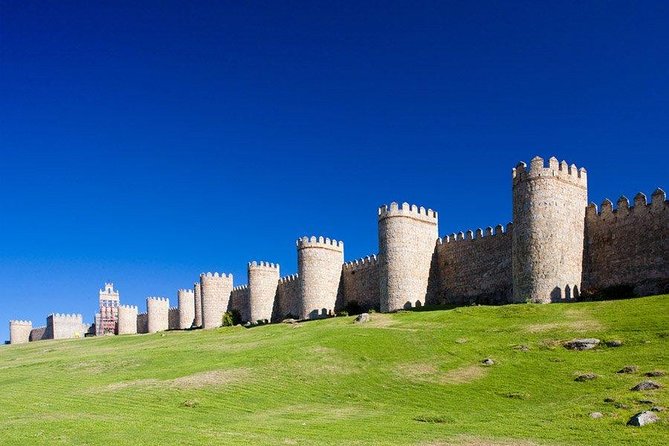
Next is Convento de Santa Teresa (Iglesia-convento de Santa Teresa), built by the Discalced Carmelites in the 17th century, reportedly on the birthplace site of Saint Teresa of Ávila. Like San Vicente, it’s scheduled for about 30 minutes and includes admission.
What I like about this stop is how it turns a medieval city into a more personal timeline. Instead of only thinking in centuries and dates, you start associating the architecture with the human story that shaped it.
Practical tip: wear shoes you can trust on older floors and cobbles. Even when a stop is short, Ávila’s streets and church paths can be uneven, and you’ll be doing this after a full day already.
Segovia’s Roman Aqueduct: Why the Photo Spot Beats the Picture
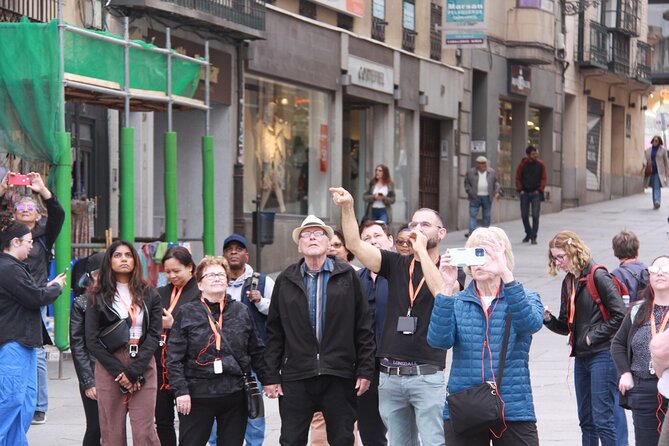
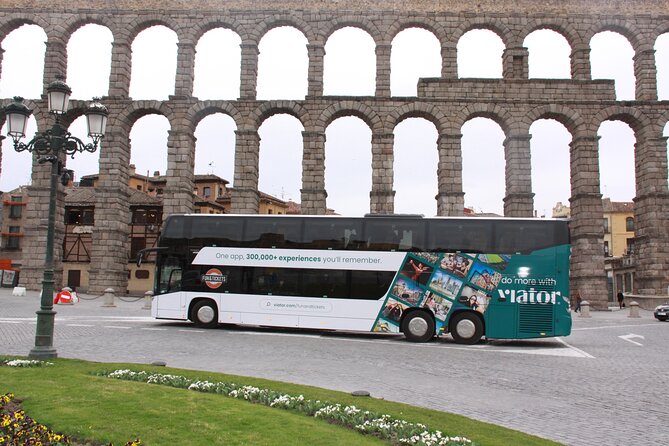
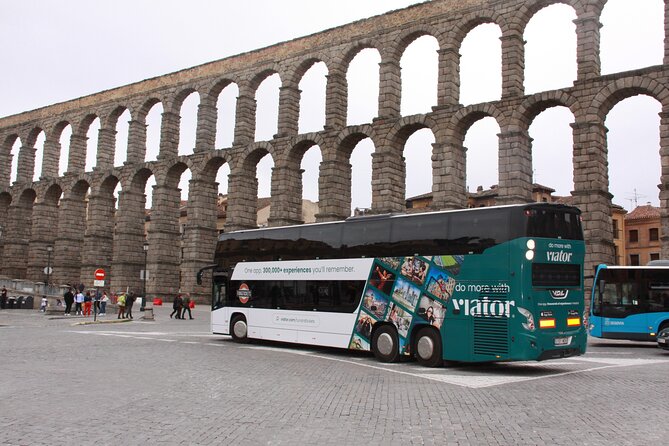
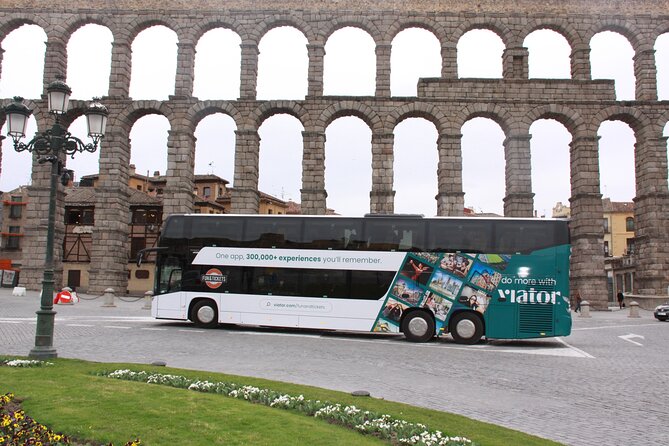
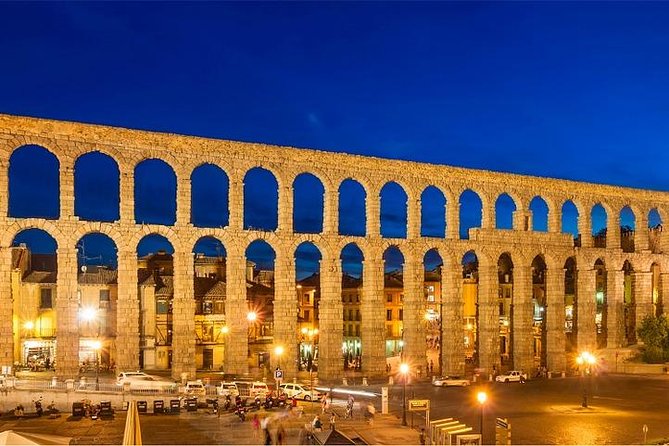
Then you’re in Segovia, and the Roman aqueduct is first up. The Aqueduct of Segovia is one of the best-preserved elevated Roman aqueducts, and it’s a symbol strong enough to show up on the city’s coat of arms.
You get about 30 minutes here, and while that may sound brief, this is one of those sights where a focused time window works. The aqueduct doesn’t need a lecture to impress—you just need a few angles:
- Find a spot where you can see multiple arches at once
- Take a step or two to change the perspective (it’s taller than it looks from far away)
- Keep your camera ready; the light changes the stone color fast
In many cities, “Roman ruin” can mean a few rocks. Here, it reads like Roman engineering left a message and refused to take it back.




Skip-the-Line in Segovia: Cathedral and Alcázar Without the Long Wait
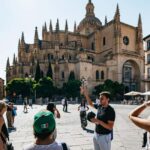
Segovia Cathedral is Gothic and dedicated to the Virgin Mary, built in the mid-16th century. You’ll spend about an hour here with admission included, and this is one of the stops where skip-the-line tickets really matter.
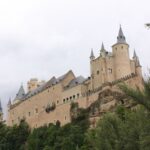
Then comes the Alcázar of Segovia, the medieval alcázar that looks like the bow of a ship and sits on a rocky crag above the confluence of two rivers. You get about an hour, admission included, and again—skip-the-line.
Why the skip-the-line is worth caring about: when you’re doing a full-day route, the real enemy isn’t distance. It’s time lost in lines. By handling timed entry for two of the biggest draws, the tour protects your schedule. That means you’re more likely to see what you came for without watching the day evaporate.
The Ride Back and Worth-It Comfort Details
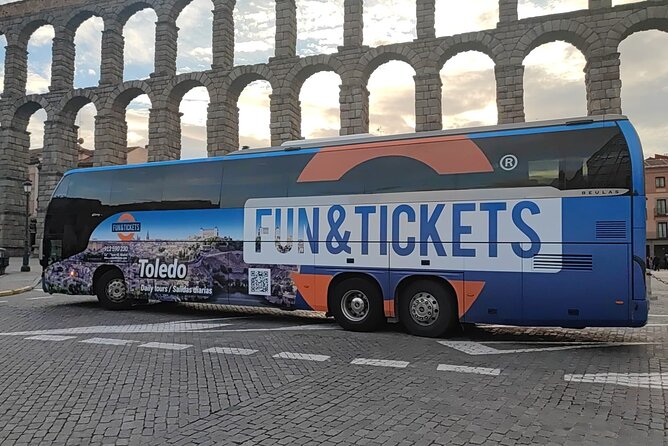
The schedule runs long enough that small comforts matter. The bus is air-conditioned and has Wi‑Fi, and that helps if you’re the kind of traveler who likes pulling up maps, checking train times for later, or just letting your phone act as a camera backup.
On the practical side, note that some people have mentioned the bus restroom being unreliable. That’s not something you can assume either way, so I’d handle it like a cautious person: plan a bathroom stop before you board when possible, and don’t count on having one at any moment.
Also, bring a layer. Central Spain can feel colder than you expect in winter, and you’ll be outside for photo moments between monuments.
Food on the Route: Ávila Snack and Your Segovia Meal Choices
In Ávila, you get a complimentary light bite and drink. It’s not a full lunch, so think of it as a cushion that keeps you from running on empty while you tour.
Your day in Segovia is longer and more concentrated around major architecture, which means meal time is mostly a “take the break when it comes” situation. The tour does include scheduled time to move between sites, so you’ll have a window to eat on your own.
If you’re particular about food, this is the place to be proactive. Pick a simple meal you can find quickly—something you can order confidently—even if it’s not a destination restaurant. The goal is to keep your energy up so the Alcázar and Cathedral don’t feel like a blur.
Pacing, Radio Headsets, and Walking Reality
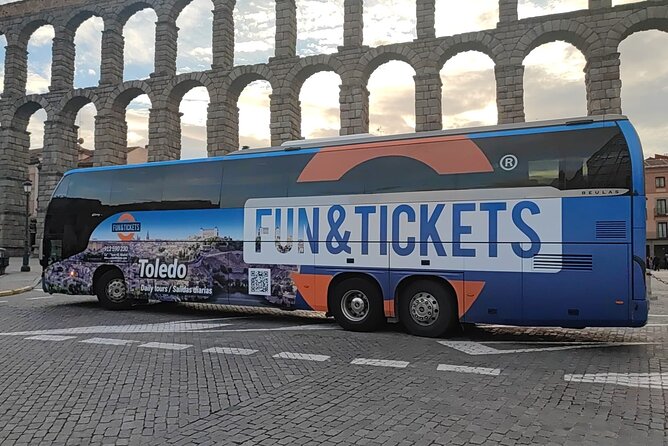
This is a guided route with a radio guide and provided headphones, plus gift headphones. It’s designed so you can hear what’s being said even while you’re taking photos or stepping slightly away from the group.
The key habit: stay in radio range. The tour is family-friendly and stroller accessible, but it’s still old towns with real-world walking conditions—steep hills, uneven streets, and stone steps in places. That combination is what makes the tour fun for most people and tough for some.
Group size is capped at 35, and that tends to reduce chaos. Also, the experience runs with official bilingual guides, with English and Spanish groups. That means you’re generally getting commentary meant for your language rather than translating on the fly.
Who This Tour Fits Best (and Who Should Consider Something Else)
This day trip is a strong fit if you:
- Want to cover both cities in one shot from Madrid
- Like medieval walls, Roman architecture, and Gothic churches
- Appreciate organization: bus + entry tickets + guide narration handled for you
- Travel with kids or want a route that’s stroller accessible (with the usual caveat: hills and cobbles)
It’s less ideal if you:
- Need step-free routes and minimal uneven walking (it’s not recommended for reduced mobility)
- Want lots of free time to wander without a schedule (this itinerary is structured around stops)
- Have trouble hearing accented English—guides are certified in English, but if your listening preferences are very specific, you’ll want that in mind
If you like a “see the big stuff today” plan, this works well. If you want to linger in cafés and get lost for hours, you may feel the schedule keeps tightening.
Should You Book This Ávila and Segovia Tour from Madrid?
I’d book it if your priority is efficient access to the top sights with guide context and less time wasted in queues. The combination of Ávila’s wall-and-church story plus Segovia’s aqueduct and skip-the-line Alcázar/Cathedral is a high hit-rate for one day.
I’d think twice if mobility is a challenge or if you know you’ll be miserable with hills, uneven surfaces, and a packed timetable. In that case, you might prefer a slower, more flexible plan—one where you control your walking pace and spacing.
FAQ
FAQ
How long is the Ávila and Segovia tour?
It runs about 9 hours.
What time does the tour start and where do I meet?
The start time is 9:00 am, and the meeting point is Fun and Tickets / San Bernardo, C. de San Bernardo, 7, Centro, 28013 Madrid.
Is the tour offered in English?
Yes. It’s offered in English, and the guide system uses official bilingual guides for language groups.
Are monument entry tickets included?
Yes. Entry tickets are included for the Basilica de San Vicente, Convento de Santa Teresa de Jesús, Segovia Cathedral, and the Alcázar of Segovia.
Do I need to buy tickets for the Alcázar and Segovia Cathedral?
No. The tour includes skip-the-line admission for both the Alcázar of Segovia and Segovia Cathedral.
What food is included?
You get a complimentary light bite and drink in Ávila. No full lunch is included.
Is there a radio guide and headphones?
Yes. You’ll have a radio guide and the tour provides gift headphones.
How big is the group?
Maximum group size is 35 travelers.
Is the tour stroller accessible and family-friendly?
Yes, it’s described as family-friendly and stroller accessible.
Is the tour suitable for reduced mobility?
It’s not recommended for people with reduced mobility.
What if I’m late to the meeting point?
The operator response states there is a daily waiting time of half an hour for guests who do not arrive at the check-in time.