REVIEW · MADRID
Tour “Barrio de las Letras” Spanish Golden Age
Book on Viator →Operated by Trip Tours Madrid · Bookable on Viator
Madrid’s literary streets turn into a time machine. On this Barrio de las Letras walk, you get a clear, story-led route through the Spanish Golden Age, with stops chosen for how they connect writers, drama, and street-level surprises. I like that the tour feels built for real city walking, not museum marathons, and you move through the neighborhood with a purpose.
Two things I really like: first, the way the guide—Marivic—keeps the group focused with smart, friendly storytelling, so the details don’t feel like trivia dumps. Second, you hit several kinds of “stage craft” along the way, from a trampantojo at Calle de la Cruz to the Corral de Comedias stories around Plaza de Santa Ana, which helps you understand why Madrid’s literature was so tied to performance. One possible drawback: each stop is short (mostly around 10–20 minutes), so if you want long photo stops or deep time inside buildings, you may feel slightly time-pressed.
If you enjoy walking neighborhoods and connecting names like Cervantes, Quevedo, Góngora, and Lope de Vega to physical places, this is a very good fit. You’ll leave with a map in your head of where the famous writers’ world actually happened.
In This Review
- Key things to know before you go
- Why Barrio de las Letras feels different from a normal Madrid walk
- Price and what you get for the $3.47 group rate
- Your 2.5-hour route: Puerta del Sol to Lope de Vega
- Puerta del Sol: the quick Golden Age orientation you actually need
- Calle de la Cruz: spotting a trampantojo and reading the story behind it
- Calle de Álvarez Gato: sperpentos and the shadowy side of literature
- Plaza de Santa Ana: statues, stories, and the Corral de Comedias connection
- Iglesia de San Sebastián: the monument stop that gives the walk weight
- Calle de las Huertas: letters on the street and the lives behind them
- Convento de las Trinitarias Descalzas de San Ildefonso: where Cervantes rests
- Calle de Quevedo: the rivalry story you can feel in the street
- Casa Museo Lope de Vega: the last stop that earns its ending
- Who this tour is best for (and who should skip it)
- What to do after the tour, without overplanning
- Should you book this Barrio de las Letras tour?
- FAQ
- Where does the tour start and end?
- What time does the tour begin?
- How long is the tour?
- How much does the tour cost?
- Is a mobile ticket used?
- What admissions or tickets are included?
- What is the cancellation policy?
Key things to know before you go
- 2.5-hour walking route with quick, focused stops, mostly 10–20 minutes each.
- Marivic-led storytelling that blends street scenes with Spanish Golden Age context.
- Street art, theater, and wordplay show up in the route, including trampantojos and references like Bohemian Lights.
- Cervantes connection included at the Convento de las Trinitarias Descalzas de San Ildefonso (admission included there).
- Excellent value if you book a group since the listed price covers a group up to 6.
Why Barrio de las Letras feels different from a normal Madrid walk

Barrio de las Letras is one of those places where you can’t separate the street from the story. Instead of just seeing old walls, you’re guided to notice how the neighborhood functioned as a literary and theatrical stage, where authors, rivalries, and dramatic culture clustered close together.
The big win here is structure. You start at Puerta del Sol to get bearings fast, then move through smaller streets where the tour’s themes stay consistent: performance, illusion, and the people who put those words on the page. Even if you only know a handful of names, the guide connects them to what you’re standing in front of.
And since the tour ends at Lope de Vega House-Museum, the whole walk has a natural payoff. It’s not just a “nice stroll.” It’s a curated path through the neighborhood’s literary logic.
You can also read our reviews of more tours and experiences in Madrid.


Price and what you get for the $3.47 group rate
The price is listed as $3.47 per group (up to 6), which is a rare deal for a guided walk in central Madrid. The key is understanding what you’re paying for: your ticket mainly guarantees your place on the tour, not snacks or a pile of museum admissions.
So what’s the value? You’re getting a guided route that makes the streets readable—translating things you might otherwise miss (like a trampantojo or the way a square connects to theatrical life). In a neighborhood like this, guidance matters because the meaning isn’t always obvious at street level.
A couple of practical notes matter for planning. The tour runs about 2 hours 30 minutes, and the group size is capped at 20 travelers overall, which helps keep the experience from turning into a chaotic line-walk. If you’re traveling with friends, booking as a group can be especially smart.
Your 2.5-hour route: Puerta del Sol to Lope de Vega
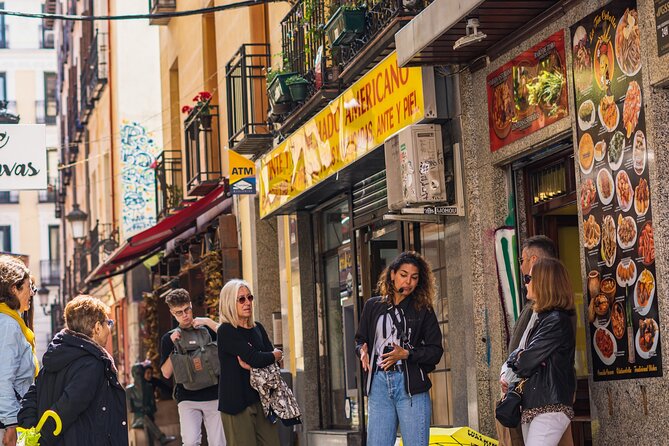
You’re starting at Trip Tours Madrid, Puerta del Sol (Centro, 28013 Madrid) at 11:00 am. You’ll finish at Lope de Vega’s House-Museum, Calle de Cervantes, 11 (Centro, 28014 Madrid). It’s a classic end-in-a-relevant-place format, so your final stop isn’t random.
Because the tour is built from short segments, the rhythm is important. You’ll be moving at a steady walking pace, and each location gets a focused slice of explanation. That keeps the tour from dragging, but it also means you should be ready to stand, look, listen, and move.
Also, since it uses a mobile ticket, you won’t need to hunt down printed papers. Just have your phone ready at the start.
Puerta del Sol: the quick Golden Age orientation you actually need
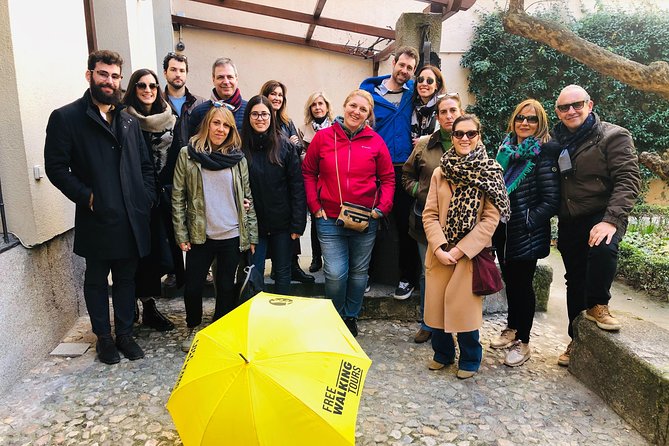
The tour begins around Puerta del Sol, and that early choice is practical. It gives you a grounding framework before you start turning into narrower, older streets. You’ll get a brief introduction to what you’re going to see and why this part of Madrid mattered in the Spanish Golden Age.
If you’re new to Madrid, this stop helps you understand the route as more than a list of famous names. You start with context, so later details make sense instead of feeling like separate soundbites.
It’s also a smart “jump-in” point because it’s easy to reach by public transport, and it’s where most people naturally orient themselves when they arrive.
Calle de la Cruz: spotting a trampantojo and reading the story behind it
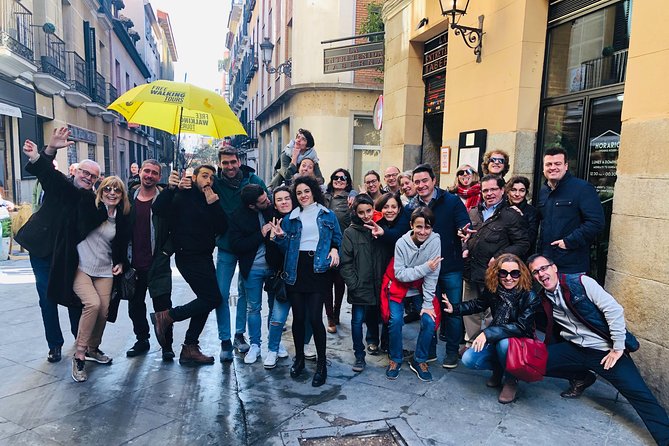
At Calle de la Cruz, the tour focuses on a trampantojo, an artful trick that creates an illusion. The point isn’t just to look at something pretty. You’re meant to notice how the neighborhood plays with perception—very much in the spirit of a culture that loved performance.
This is the kind of stop that changes how you walk the rest of the quarter. After you’re taught what to look for, you start seeing how Madrid’s streets can be theatrical, even when there’s no stage in sight.
Time here is short, so your best move is simple: arrive with a phone camera charged, but keep your eyes up while the guide explains what you’re looking at.



Calle de Álvarez Gato: sperpentos and the shadowy side of literature
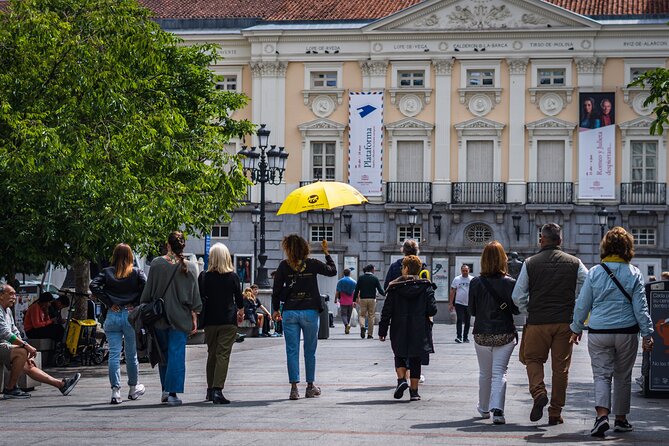
Next comes Calle de Álvarez Gato, where the tour points to the sperpentos linked to Bohemian Lights. Even if the term is new to you, the guide’s job is to connect it to the neighborhood feel—how literature can be sharp, strange, or slightly unsettling, depending on the writer’s mood and message.
This stop is valuable because it reminds you that Golden Age literature wasn’t always polite or tidy. It had bite. And Madrid’s literary quarter, with its layers of public life and character, makes that kind of writing feel believable.
Again, the practical limitation: don’t expect a long lesson at each corner. You’ll get enough to recognize the theme and then move on.
Plaza de Santa Ana: statues, stories, and the Corral de Comedias connection
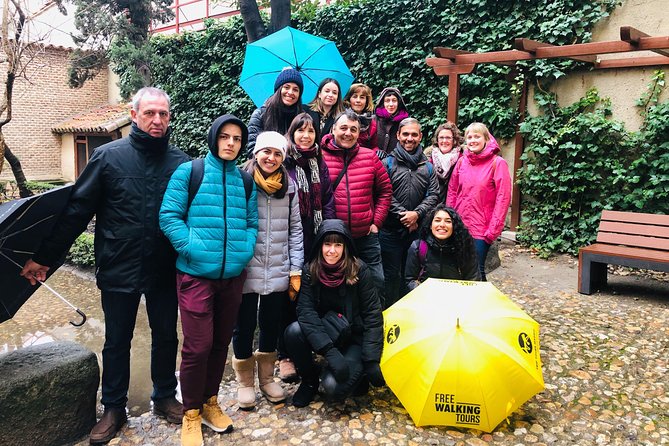
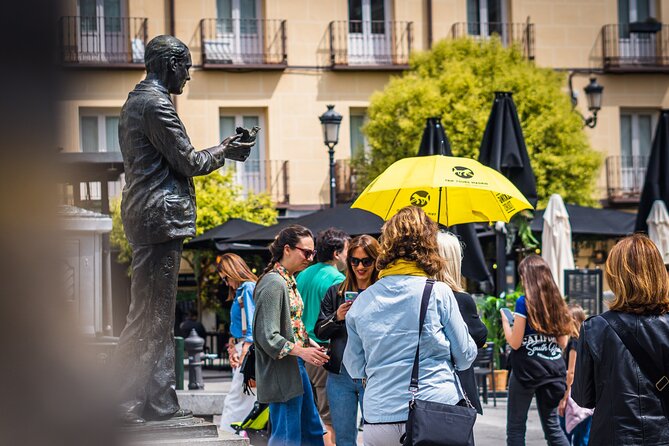
At Plaza de Santa Ana, you step into the main square tied to a more bohemian side of Madrid. The tour brings in stories connected to the statues you see there and references the Corral de Comedias, which matters because it links the square to theatrical life.
If you love theatre history, this stop is one of the most satisfying. It turns a recognizable plaza into something more specific: a place where performance culture had a real home base.
If you’re not a theatre-history person, you’ll still get something out of it. Understanding that squares functioned as gathering points helps you read why this neighborhood became so fertile for writers.
Iglesia de San Sebastián: the monument stop that gives the walk weight
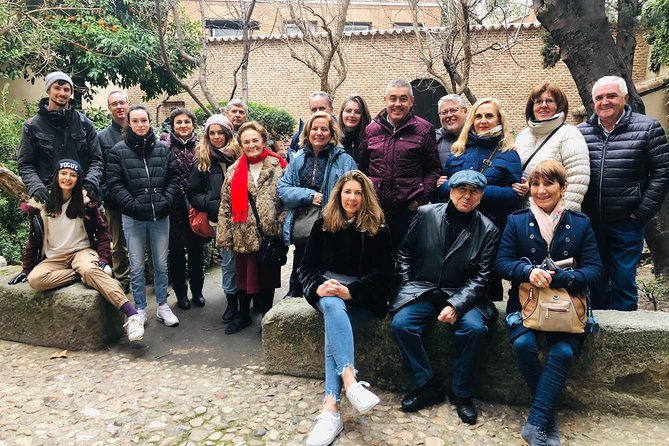
Then you reach the Iglesia de San Sebastián, presented as a National Artistic Historic Monument of Spain. This stop shifts the tone from street spectacle to preservation and significance.
It’s a useful balance. A tour like this can drift into playful stories and forget that these streets also hold formal, protected landmarks. Here you get a sense that the literary quarter isn’t only about wordplay—it’s also about real cultural weight.
Plan to pause and look, not just listen. In places like this, even small details you notice yourself can make the explanation stick.
Calle de las Huertas: letters on the street and the lives behind them
Calle de las Huertas is where the route leans into identity. The tour frames this street as full of letters and connects it to the lives of notable Golden Age figures. That matters because it’s one thing to know famous author names; it’s another to understand their day-to-day geography.
This is the part of the walk where you’ll likely feel the neighborhood “click.” When the guide links writers to streets you can physically walk between, the quarter stops being an idea and becomes a workable map.
If you like taking notes, this is a good place to write down names the guide mentions, because you’re going to see or hear them again in the final stretch.
Convento de las Trinitarias Descalzas de San Ildefonso: where Cervantes rests
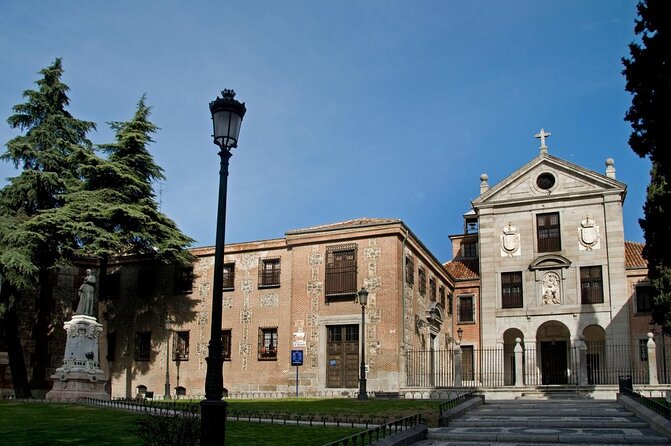
One of the strongest stops comes at the Convento de las Trinitarias Descalzas de San Ildefonso. The tour focuses on the place where Miguel de Cervantes rests and includes admission there.
This is the moment where the walking tour turns from cultural storytelling into something more personal and grounded. The inclusion of the admission ticket makes a real difference here because you’re not only hearing about a key site—you’re also being granted access to it within the tour format.
If you’re the type who likes to visit places tied to writers more directly than just their street addresses, you’ll appreciate this stop most. It’s also why the tour’s length makes sense: you need time for a site like this without turning the whole afternoon into a museum day.
Calle de Quevedo: the rivalry story you can feel in the street
At Calle de Quevedo, the tour brings in the famous rivalry between Francisco de Quevedo and Luis de Góngora. This stop is about more than two names. It’s about literary tension—how competing styles, reputations, and ideas can energize a whole cultural scene.
I like stops like this because they give you a reason to care. You aren’t just learning where someone lived. You’re learning how a neighborhood hosted intellectual conflict and creative competition.
Look around while the guide talks. When you connect an argument to a physical corridor of streets, the story sticks better than if it stays abstract.
Casa Museo Lope de Vega: the last stop that earns its ending
The tour closes with a flourish at Casa Museo Lope de Vega, often described through Lope de Vega’s reputation as the Phoenix of Wits. Even without lingering too long, ending here works well because you finish with a writer tied to what you’ve been learning all along: words made real, housed in a physical place.
The final stop also gives you a clean mental exit. If you want, you can keep exploring the area right after the tour since you’re already at a relevant destination.
Who this tour is best for (and who should skip it)
This tour is best for you if:
- You want a guided, story-first walk through Madrid’s literary quarter.
- You enjoy theatre-related context and street-level art details like trampantojos.
- You like seeing how famous writers connect to real streets and sites.
It might not be your best choice if you want a long, slow museum experience or if you need lots of downtime at each stop. The route is efficient, and most segments are brief.
Good news: it’s designed so most travelers can participate, and service animals are allowed. It’s also near public transportation, so getting to the start area tends to be manageable.
What to do after the tour, without overplanning
When a tour ends at Lope de Vega’s House-Museum, you’re in a good position to keep the momentum. If you’re curious, spend a little time looking around on your own, then use the rest of the afternoon to walk the edges of what you learned.
A smart strategy is to return to one or two streets from the tour and see what you notice now that you have the guide’s lens. That’s when the neighborhood becomes more than a “sights list.”
And if you’re hungry, keep it simple: plan a meal in the general area rather than rushing across town right away.
Should you book this Barrio de las Letras tour?
Yes, if you like guided storytelling that turns Madrid streets into a coherent narrative. The value is strong, especially because the price is per group up to 6, and the tour is limited in size (max 20) so you should actually hear what’s going on.
Book it soon if you can. The tour is typically reserved about 23 days in advance, which is a sign it stays popular. If your plans are flexible, you can still take comfort from the fact that cancellations are offered with a full refund if you cancel early enough.
One last practical thought: bring comfortable shoes and plan for standing in small spaces. This is a walking tour built for listening, looking, and moving.
FAQ
Where does the tour start and end?
It starts at Trip Tours Madrid, Puerta del Sol, Centro, 28013 Madrid, Spain. It ends at Lope de Vega’s House-Museum, Calle de Cervantes, 11, Centro, 28014 Madrid, Spain.
What time does the tour begin?
The start time is 11:00 am.
How long is the tour?
The duration is approximately 2 hours 30 minutes.
How much does the tour cost?
The price is $3.47 per group, up to 6. The price guarantees your place on the tour.
Is a mobile ticket used?
Yes, the tour uses a mobile ticket.
What admissions or tickets are included?
The price guarantees your place on the tour. Admission is included for the Convento de las Trinitarias Descalzas de San Ildefonso stop. Other stops list admission as free.
What is the cancellation policy?
You can cancel for a full refund if you cancel at least 24 hours before the experience’s start time. If you cancel less than 24 hours before, the amount paid is not refunded. Free cancellation is available up to that 24-hour cutoff.