REVIEW · MADRID
Madrid: Traditional Tour wh Private guide in yellow Tuk Tuk
Book on GetYourGuide →Operated by Yellow TU TUK TUK · Bookable on GetYourGuide
One hour in Madrid, and you see it all. What makes this tour work is the tight route and the yellow tuk-tuk format, designed to cover major sights without tiring you out. You get quick photo stops, short guided moments, and a route that strings together Madrid’s most recognized architecture and neighborhoods.
I especially like how the focus stays on place—the Royal Palace, Almudena Cathedral, and the classic squares—so you leave with a mental map, not just random facts. And I like that the narration can go beyond surface descriptions; on this kind of ride you’ll hear details explained clearly, including an emphasis on Spanish history from guides such as David.
The one consideration: it’s only 1 hour, and museum entry tickets aren’t included. So plan on seeing buildings and viewpoints up close, not doing long indoor stays like a full Prado Museum visit.
In This Review
- Key highlights worth your time
- Why a yellow tuk-tuk works for Madrid’s big sights
- Plaza Isabel II to Opera Square: getting your bearings fast
- Royal Palace of Madrid: the building you recognize immediately
- Almudena Cathedral: quick architecture lessons in a walk-stop
- Mercado de San Miguel and Barrio de Las Letras: Madrid with a human story
- Cibeles, Neptune, and Parliament: classic monuments on one efficient sweep
- San Jerónimo el Real, Prado Museum, and Retiro Park: what you can spot in the time you have
- Alcala Gate, Salamanca District, and Puerta de Alcalá: Madrid’s more elegant stride
- Plaza de Santa Ana: closing the loop with a classic square feel
- Price and value: is $105 for a 1-hour private ride a good deal?
- Who this tour fits best
- Should you book this 1-hour Madrid tuk-tuk tour?
- FAQ
- How long is the Madrid traditional tour in a private yellow tuk-tuk?
- Where does the tour start and what should I look for at the meeting point?
- What key sights are included during the ride?
- Are museum tickets included?
- What languages are available for the live guide and audio guide?
- Is the tour wheelchair accessible?
Key highlights worth your time
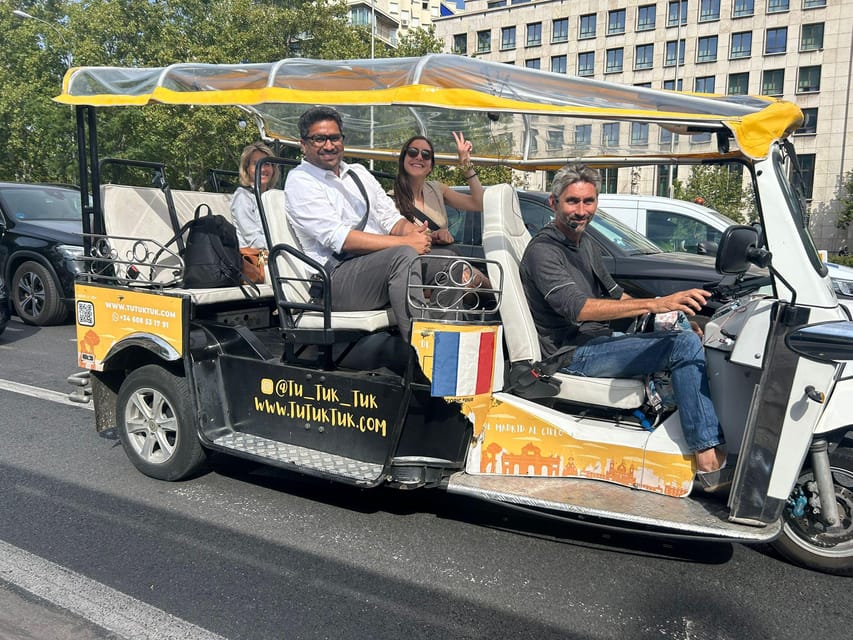
- Electric tuk-tuk sightseeing: easier pacing and smoother city touring with less foot fatigue
- Royal Palace + Almudena Cathedral: two headline landmarks placed back-to-back
- Barrio de Las Letras storytelling: literature-linked streets around Cervantes
- The Cibeles and Neptune square sweep: classic Madrid monument views in a single loop
- Prado and Retiro from the outside: enough context to decide what to do next on your own
Why a yellow tuk-tuk works for Madrid’s big sights

Madrid is spread out. Distances add up fast, especially when you’re juggling neighborhoods, plazas, and the “everyone’s here” central streets. A tuk-tuk tour is a smart shortcut because it lets you cover ground in short bursts while still stopping often enough to actually see what you came for.
This is built as a private group, priced per group up to four people. For a group size like that, the cost can feel reasonable because the guide’s time is shared only within your party—not diluted across a long lineup. It also means you can move at a pace that fits you, with the main plan staying intact: big architecture, classic squares, and representative districts.
The other thing I like is sustainability: the ride is described as using electric vehicles, which fits Madrid’s push toward cleaner sightseeing. Even if you’re not tracking emissions, the practical payoff is you’re not stuck waiting for slower, more complicated transfers between central points.
You can also read our reviews of more guided tours in Madrid

Plaza Isabel II to Opera Square: getting your bearings fast

Your tour starts at Plaza Isabel II, meeting in front of a Starbucks Café with yellow or white tuktuks waiting. This is a good beginning spot because you’re already in the central orbit where lots of major streets converge.
From there, the ride goes to Opera Square (the route includes the Opera area and the Royal Theatre area as a key early photo stop). This is where Madrid’s “grand center” feeling shows up: wide avenues, formal buildings, and sightlines that make it easy to orient yourself. If you’re arriving in Madrid and you’re still trying to understand where things sit, this kind of early stop helps.
You’ll get a photo stop plus guided sightseeing here, so it’s not just a drive-by. A short explanation at the start is useful because the tour later references landmarks by context—what you’re seeing and why it matters—so you’re not waiting until the end to learn the city’s logic.
Royal Palace of Madrid: the building you recognize immediately
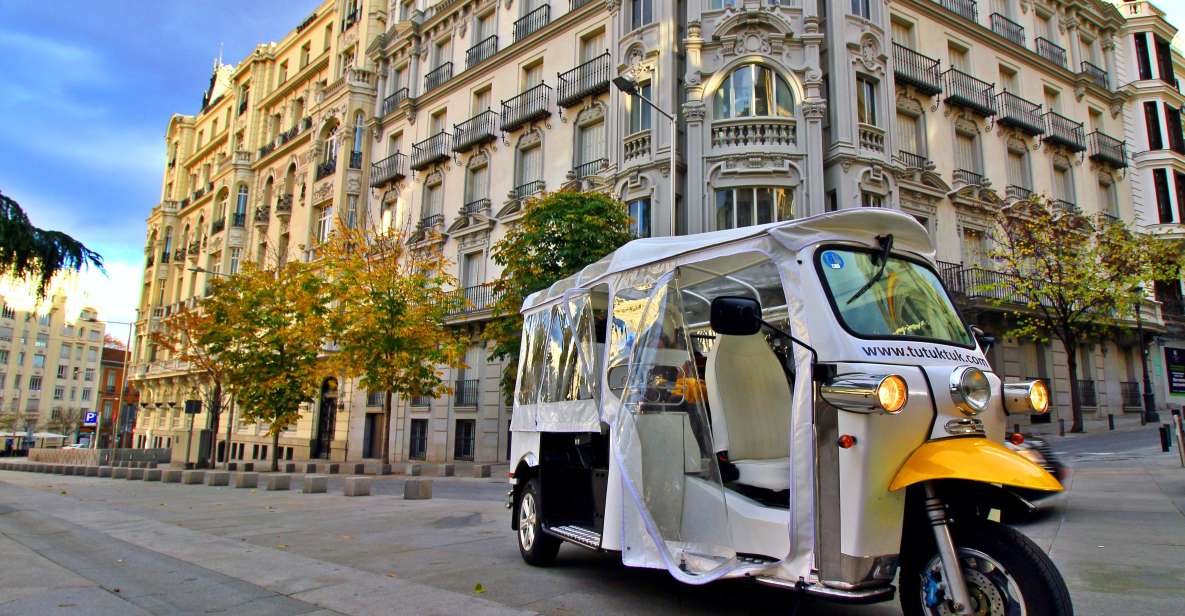
Next up is the Royal Palace of Madrid, one of those places where even if you’ve never stepped inside, you know what it looks like from photos and films. The tour gives you a photo stop and a guided visit moment with sightseeing time.
This is where I’d pay attention to how your guide connects the Palace to the broader feel of the neighborhood. In this central cluster, Madrid’s identity leans toward formality and power: grand facades, strong lines, and a “state capital” look. Even with limited time, the guide’s narration helps you notice details rather than just stare.
One practical note: because tickets to museums aren’t included (and this is a short tour), you should treat the Palace visit as an exterior and quick orientation experience. Think of it as a first meeting, not a full deep visit. If the Palace interior is a top priority for you, you’ll likely want to book that separately after the tour.
Almudena Cathedral: quick architecture lessons in a walk-stop
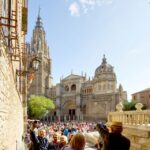
From the Palace, you head to the Cathedral of La Almudena. You get photo stop time and guided explanations, plus a bit of walking included in the schedule here.
What I like about pairing these two landmarks is the contrast. The Palace represents royal grandeur, while Almudena adds a religious and civic layer—another piece of Madrid’s identity in a single stop. If your guide points out style cues, materials, or how the Cathedral fits into the surrounding urban space, you’ll come away with a better sense of how these landmarks “talk” to each other across the city.
Because this stop includes a walk, it’s a good time to slow down. If you wear shoes you can stand in comfortably, you’ll enjoy this more. Short walk stops are where you’ll actually feel the city, not just photograph it.
Mercado de San Miguel and Barrio de Las Letras: Madrid with a human story
After the Cathedral, the route reaches the Mercado de San Miguel area for a photo stop. Even if you don’t go inside, it’s a recognizable stop that signals something important: Madrid’s central core isn’t only about official monuments; it also has lively, food-and-stalls culture packed near major sights.
Then you roll into the Barrio de Las Letras, described as the Literary Quarter connected to Cervantes and the neighborhood associated with Quevedo as well. This is one of the most interesting parts of the tour because it changes the tone from royal and religious to literary and everyday streets.
Here’s why this matters: once you understand the literary identity of the area, you start noticing how neighborhoods evolve around ideas and famous names. You’re not just seeing buildings—you’re learning how the city remembers its writers.
Expect another set of photo stops and guided sightseeing through this area. The tour format keeps it efficient, but it’s still intended to educate you by listening to history tied to the streets you’re passing.
You can also read our reviews of more private tours in Madrid




Cibeles, Neptune, and Parliament: classic monuments on one efficient sweep
As the tour continues, you reach several of Madrid’s signature “square-and-monument” moments: Plaza de Cibeles, the Fountain of Neptune, and passing by Parliament.
If you’ve ever felt overwhelmed by Madrid’s many plazas, this is the antidote: you get them clustered in time. Your guide can explain what these monuments represent, and you get multiple photo opportunities without needing to navigate between them on your own.
I especially like Cibeles as a concept, even beyond the photos. It’s the kind of place where Madrid feels open and ceremonial—wide space, strong visual anchors, and that unmistakable monumental feel. Neptune adds another layer, keeping the focus on fountains and symbolism rather than only grand buildings.
This section is also where the private tuk-tuk structure earns its keep. You’re seeing a sequence of landmark squares without having to plan transport and walking routes across busy areas.
San Jerónimo el Real, Prado Museum, and Retiro Park: what you can spot in the time you have
Next, the itinerary brings you to San Jerónimo el Real, then passes by Museo del Prado and Retiro Park.
San Jerónimo el Real includes both a photo stop and guided time plus walking. That walking element matters because it suggests you’ll get a chance to see the building space more directly—often the difference between “I took a picture” and “I understand what it looks like and where it fits.”
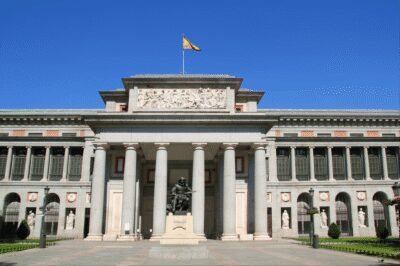
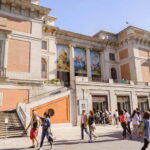
Then you move past Prado Museum and into Retiro Park as part of the sightseeing loop. Here’s the realistic value: you get context without pretending you’ll do the full museum experience in one hour. Tickets for museums aren’t included, so this is best treated as orientation and recognition. You’ll likely leave knowing whether you should return for a proper Prado visit later.
Retiro Park works similarly. Parks can be hard to appreciate from a quick pass, but if your guide points out key viewpoints and explains the park’s role in the city, you’ll feel like you “caught the mood” even without spending hours inside.
Alcala Gate, Salamanca District, and Puerta de Alcalá: Madrid’s more elegant stride
Later, the tour goes to Alcala Gate (including a photo stop and some walk time), then includes Salamanca District with sightseeing and shopping time. You also visit Plaza Colón and see Puerta de Alcalá as part of the route.
This portion is where Madrid can feel a bit different from the earlier cathedral-and-palace section. Salamanca is often associated with a more polished, shopping-oriented side of central Madrid, and the tour’s inclusion of shopping time hints that you may get a brief chance to browse rather than only sightsee.
For Puerta de Alcalá and Plaza Colón, the value is visibility and structure. You’ll see how these landmarks sit along major routes like Calle Alcalá and how they connect to surrounding streets. When a guide gives you history while you’re standing near the monument, the story sticks more than reading it later on your own.
There’s also mention of Calle Alcalá and the Metrópolis building, which is the kind of recognizable skyline architecture people often photograph because it instantly signals central Madrid.
Plaza de Santa Ana: closing the loop with a classic square feel
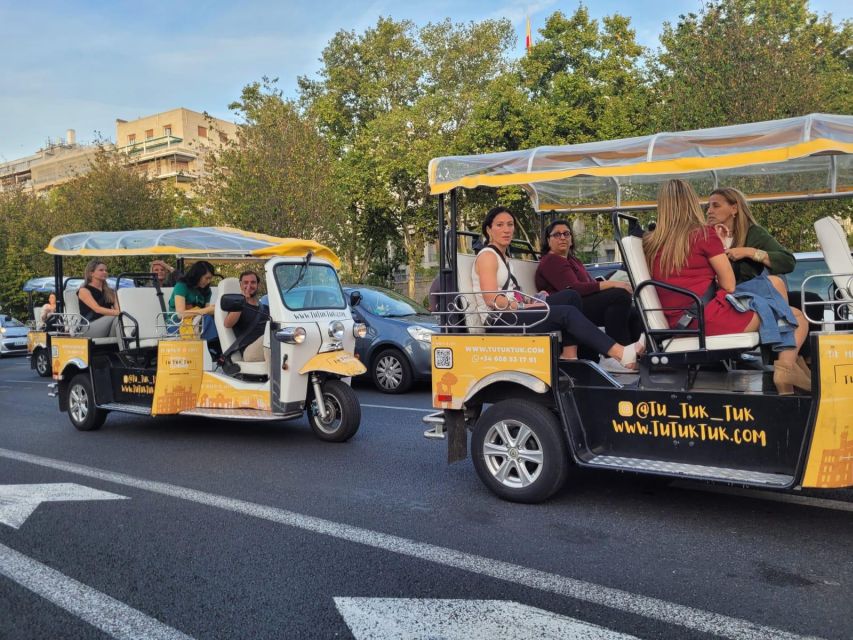
The final stop sequence includes Plaza de Santa Ana, with photo stop, sightseeing, guided time, and walking included. This is a good way to end because it’s the kind of place that feels like a neighborhood center, not only an official monument zone.
If your tour ended earlier at another palace or cathedral, you might leave with great landmark photos but less sense of everyday Madrid. Ending at a square like Plaza de Santa Ana helps you remember the city as lived-in space—somewhere people gather, not just somewhere monuments stand.
Then you return to Plaza Isabel II, back where you started, so you don’t have to scramble for your next transport step right away.
Price and value: is $105 for a 1-hour private ride a good deal?
At $105 per group up to 4 for 1 hour, the price is best judged by what you avoid spending your time on. In one hour, this tour aims to pack in many headline stops: Royal Palace, Almudena Cathedral, Mercado de San Miguel area, Barrio de Las Letras, Cibeles, Neptune, Prado (from outside), Retiro Park (from outside), Alcala Gate, Salamanca District, Puerta de Alcalá, Plaza Colón, Metrópolis building, and Plaza de Santa Ana.
If you tried to self-navigate all of those with frequent stops, you’d likely burn time on walking between them and figuring out where to stop for photos. The tuk-tuk format cuts friction. Also, this is private, so it’s not a “watch from the sidelines while everyone stays in line” situation.
What you should factor in: museum and attraction tickets aren’t included, and the time is short. So you’re paying for guided context and visibility, not for a full-day itinerary or indoor entries.
Where it shines:
- You want a first-day orientation that makes the city’s layout click.
- You’re traveling with a small group and want flexible, direct stops.
- You like learning while you see, not only sightseeing.
Where it might not be ideal:
- You want to spend long hours inside museums.
- You’re hoping for deep dives into any single landmark beyond what fits in a short visit.
Who this tour fits best
This is a strong choice if you’re:
- Short on time but still want the big Madrid highlights
- Traveling in a small private group of up to four
- Interested in architecture and city storytelling
- Curious about the Literary Quarter, including references tied to Cervantes and Quevedo
It can also work well as a “plan first, wander next” tool. You’ll come away with a clearer mental map, then you can choose which places deserve a longer, ticketed follow-up.
Should you book this 1-hour Madrid tuk-tuk tour?
Yes—if your goal is smart orientation plus iconic sights in a compact time window. The combination of a private group, an electric yellow/white tuk-tuk, guided explanations, and an audio guide system makes it easy to enjoy without feeling lost.
Book it if you want to hit the Royal Palace and Almudena Cathedral quickly, add the literary context of Barrio de Las Letras, and get monument-square photos at Cibeles and Neptune—then decide what to do next on your own. Skip or pair it carefully if you’re hoping for lots of museum ticket time, since the tour is structured for seeing and learning, not long indoor visits.
FAQ
How long is the Madrid traditional tour in a private yellow tuk-tuk?
The tour lasts 1 hour.
Where does the tour start and what should I look for at the meeting point?
You meet at Plaza Isabel II, in front of Starbucks Café, and the tuktuks are yellow or white.
What key sights are included during the ride?
The route includes stops around Opera area, the Royal Palace, Almudena Cathedral, Mercado de San Miguel area, Barrio de Las Letras, Plaza de Cibeles, the Fountain of Neptune, San Jerónimo el Real, Prado Museum, Retiro Park, Alcala Gate, Salamanca District, Plaza Colón, Calle Alcalá (including the Metrópolis building), and Plaza de Santa Ana.
Are museum tickets included?
No. Tickets to museums are not included.
What languages are available for the live guide and audio guide?
The live guide is available in Spanish, English, and French. The audio guide is also included in English, Spanish, and French.
Is the tour wheelchair accessible?
Yes, it is wheelchair accessible.
If you tell me your travel dates and whether you plan to enter the Prado or the Royal Palace, I can suggest how to pair this tour with a smart second plan for the rest of your day.