REVIEW · MADRID
Manzanares River’s Story: A Self-Guided Audio Tour in Madrid
Book on Viator →Operated by VoiceMap Audio Tours · Bookable on Viator
A river walk with oddly specific stories. This self-guided VoiceMap audio tour turns Madrid’s Manzanares River into a timeline, from meat markets to mammoth-era surprises. I especially like that it’s built for your pace, with offline audio and maps ready on your phone.
Two standout stops make the route feel more than generic riverside sightseeing: Matadero Madrid (a former slaughterhouse now used for culture) and the stretch that includes the Obelisco de la Castellana / Obelisco de la Arganzuela plus the Arganzuela Footbridge. The route can feel long if your fitness level is limited, because you’re mostly on foot for about an hour to an hour and fifteen minutes.
In This Review
- Key Highlights You’ll Actually Notice on the Walk
- What You’re Getting: A Self-Guided Manzanares River Story in 1 Hour
- Meeting at the Antiguo depósito de agua: Go Straight to the Water Tower
- Matadero Madrid to Madrid Río Park: The City Turns the River Into a Storyboard
- The Manzanares River Audio Stories: Meat Markets, Mammoths, and Washerwomen
- Obelisco de la Castellana (Arganzuela Obelisk) and Arganzuela Footbridge
- Promenade to Toledo Bridge: End on San Isidro and Santa Maria
- Price and Value: $7.99 for Lifetime Access (Not a One-Off Ticket)
- What to Bring (So the Tour Doesn’t Stall in Madrid)
- Who This Walk Fits Best (And Who Might Want Another Plan)
- Should You Book the Manzanares River Story Tour?
- FAQ
- Is this tour guided by a person?
- What language is the audio in?
- How long does the Manzanares River audio tour take?
- What does the $7.99 price include?
- Do I need headphones and a smartphone?
- Can I download and use the audio offline?
- Does the tour include museum entry?
- Where does the tour start and end?
- Is food or drink included?
- What’s the cancellation policy?
Key Highlights You’ll Actually Notice on the Walk

- Offline VoiceMap access to audio, maps, and geodata, so you can keep going even if service is spotty
- Matadero Madrid as the opening scene, where the river story starts with the city’s older food-and-trade past
- Madrid Río Park as your green corridor, linking newer parkland to very old Madrid
- Obelisco de la Castellana (Arganzuela Obelisk) and the Arganzuela Footbridge as strong photo-and-story stops
- Toledo Bridge finish next to the statues of San Isidro and Santa Maria
What You’re Getting: A Self-Guided Manzanares River Story in 1 Hour
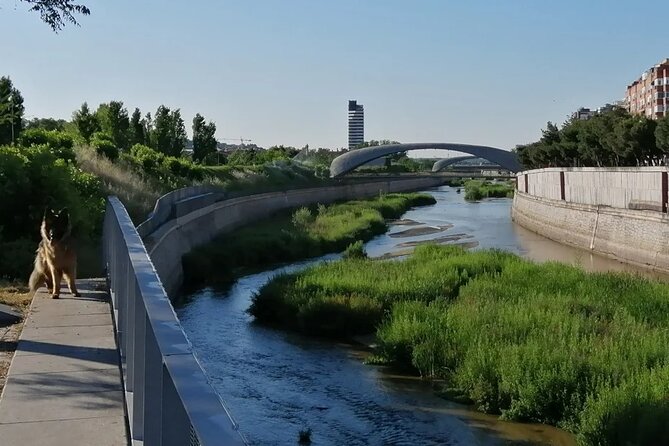
This isn’t a sit-in-a-group type of tour. You use the VoiceMap app to play audio as you walk a set route along the Manzanares River and through Madrid Río Park. Plan on about 1 hour to 1 hour 15 minutes, and keep in mind that your pace controls how fast the story unfolds.
What makes it work well is the balance between movement and information. The audio is designed around actual walking segments, so you’re not stuck reading signs that you can barely see while traveling. And because the tour includes 300,000-year-long history, the narration helps you connect what you’re seeing now with what used to be there before the parkland and bridges took over.
You won’t be escorted into museums or ticketed attractions along the way. If you want to step inside places you pass, you’ll need to pay separately—good to know so you can budget time and money.
You can also read our reviews of more guided tours in Madrid



Meeting at the Antiguo depósito de agua: Go Straight to the Water Tower
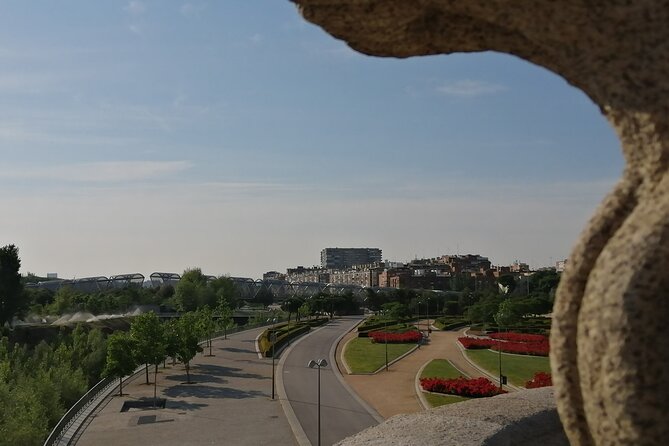
Your start point is next to the Antiguo depósito de agua (water tower), at M-612, 1, in El Pardo (Madrid). This is the kind of meeting point where the surroundings can look a bit unclear at first.
A practical tip from real-world experience: the meeting spot is not just inside a gate. Head to the water tower, then if you spot a gate, walk past it and around the corner to the right to find the start area. Once you’re oriented, the route becomes much simpler.
Also, check your timing. The tour is effectively available all day (opening hours show 12:00 AM to 11:59 PM daily), so you can pick a time that matches your energy level and the weather. If you’re doing this in warmer months, starting earlier often feels more comfortable.
Matadero Madrid to Madrid Río Park: The City Turns the River Into a Storyboard
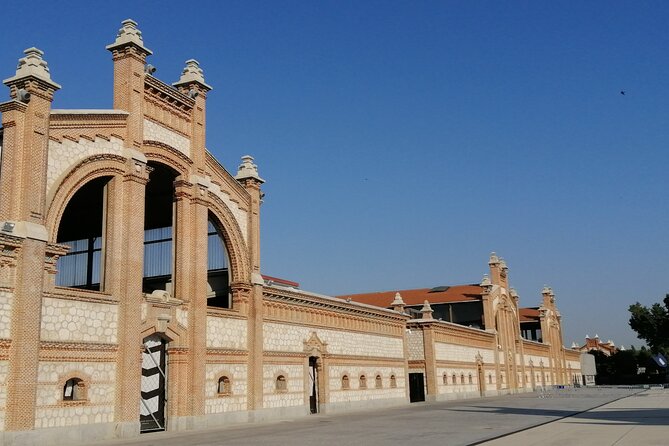
The first major scene is Matadero Madrid—an old slaughterhouse and market that’s been converted into a cultural center. Even if you don’t go inside anything, the audio context makes the building’s original purpose click. It’s a reminder that the Manzanares wasn’t always a calm park-side view. It fed a working Madrid.
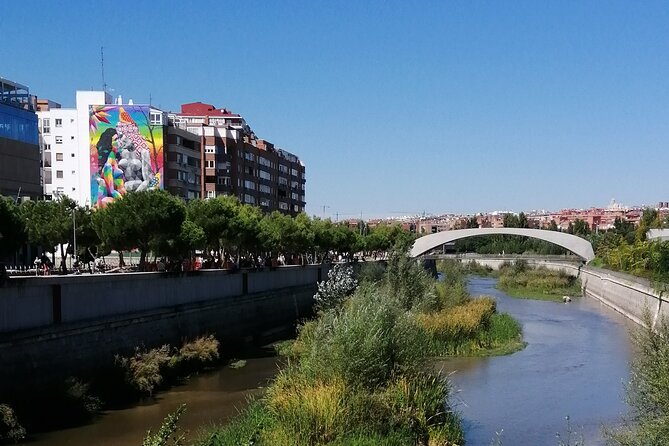
From there, the walk continues into Madrid Río Park, described in the narration as a newer public space but also where the ancient history of Madrid begins. This is one of the tour’s smartest choices: the park helps you relax into the story. You get a mix of greenery and city infrastructure—paths, bridges, and viewpoints—so the history doesn’t feel like homework. It feels like a soundtrack to the scenery.
A possible drawback: the park portion can be long, and your body will notice it. One feedback point that matters here is that the tour can feel like a long walk for people who expected a shorter stroll. If you’re not used to city walking, build in breaks and expect you may move slower than the time estimate.
The Manzanares River Audio Stories: Meat Markets, Mammoths, and Washerwomen
The narration’s biggest strength is its range. You’ll hear about the Manzanares River through themes that aren’t usually bundled together: meat markets, woolly mammoths, and washerwomen. That mix might sound wild on paper, but it makes the river feel human across centuries.
Here’s how to use that properly on the ground: treat each story like a lens. When the audio shifts to meat markets, look for hints of the city’s trade-and-food past in the surroundings around Matadero Madrid. When the audio jumps to mammoths and very ancient timeframes, don’t hunt for a physical mammoth. Instead, think of it as a geological and archaeological framing—Madrid’s layers of time under your feet.
And when you hear about washerwomen, it helps to picture everyday labor connected to water: people using river access as a practical tool. That theme often lands better when you’re literally walking alongside the river corridor, seeing how water shapes movement through the city.
One more detail that’s built into the tour: it repeatedly connects the route you’re walking to history measured in hundreds of thousands of years. That scale is easy to lose in a normal museum setting, but it works better during a walk because your body keeps the timeline grounded.
Obelisco de la Castellana (Arganzuela Obelisk) and Arganzuela Footbridge
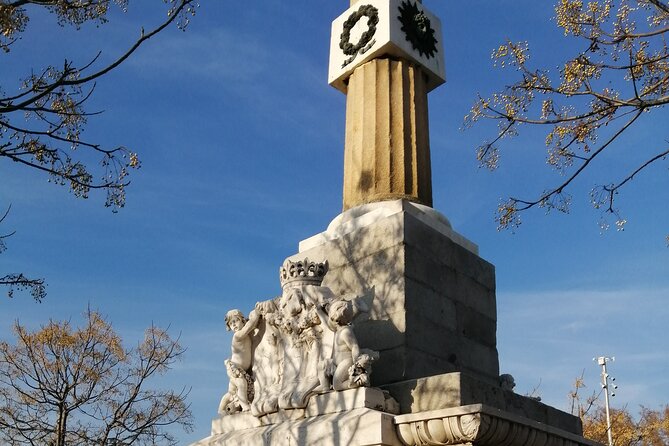
This is where the tour leans into “lesser-known” Madrid in a way that’s genuinely useful. You’ll hear about the Obelisco de la Castellana, also known as the Obelisco de la Arganzuela, and you’ll pass the Arganzuela Footbridge.
Why these stops matter: obelisks and bridges can look like plain city infrastructure if you only see them as landmarks. The audio gives them meaning so you’re not just taking photos and moving on. Instead, you start noticing how the city organizes itself—where it draws lines, where it crosses barriers, and how it connects districts across the river.
If you like architecture and urban design, this portion will probably feel like your favorite chapter. If you’re more focused on casual wandering, it still helps: you’re given a reason to slow down, spot the structure, and keep walking with a clearer mental map of where you are.
You can also read our reviews of more tours and experiences in Madrid






Promenade to Toledo Bridge: End on San Isidro and Santa Maria
Your route winds along the river and through Madrid Río Park toward Toledo Bridge. While you walk, the audio shares the area’s long timeline—again, that idea of layered history matters because the river corridor keeps you moving through space instead of sitting in one place.
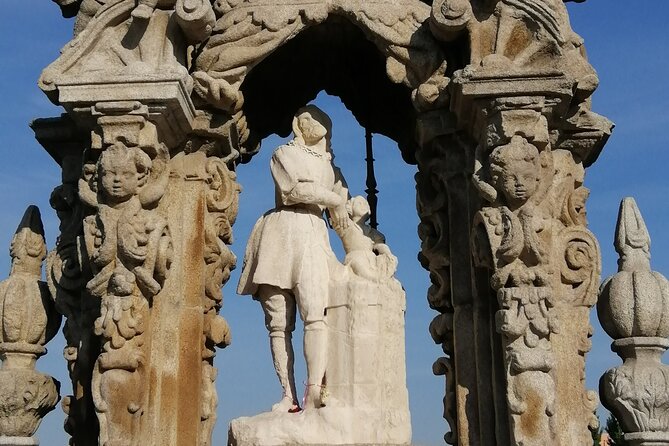
The finish point is specific: the tour ends on Toledo Bridge next to the statues of San Isidro and Santa Maria. That’s a great way to close an audio walk because it anchors your ending visually. You know exactly when to stop listening and when you’ve reached the story’s last scene.
If you want to extend the trip, Toledo Bridge is also a natural place to reorient yourself for the rest of Madrid. You can easily switch from “guided story mode” to “choose your next neighborhood” mode.
Price and Value: $7.99 for Lifetime Access (Not a One-Off Ticket)
At $7.99 per person, this is priced like a smart add-on rather than a major paid attraction. The value isn’t just the price tag—it’s the lifetime access and the fact that you’re paying for a route you can repeat.
Lifetime access changes how you plan. You’re not locked into one visit day. If you come back to Madrid later, or if you simply walk at a slower pace the first time, you can redo the audio without paying again.
You also get a decent tech package:
- VoiceMap app for Android and iOS
- Offline access to audio, maps, and geodata
That offline feature matters in Madrid because your phone battery and signal aren’t always reliable. Downloading ahead can make the experience smoother, especially on longer park sections.
What to Bring (So the Tour Doesn’t Stall in Madrid)
This is the kind of tour where the basics make or break the day. The experience does not include a smartphone or headphones, so you need both.
Bring:
- A smartphone with the VoiceMap app
- Headphones you’re comfortable wearing for about an hour
- Comfortable walking shoes
Since the tour is mostly outdoors, think about weather. Warm day? Start early. Cooler evening? You’ll probably enjoy the walk more than midday heat.
Food and drink are not included. Still, you can plan a pause. One real-world note that came up is that people enjoy adding a refreshment stop—an example mentioned was Cafe Rio—during the park portion. That’s a good strategy if you’re pacing yourself.
Also remember the tour is self-guided. You can pause the audio, rest, and then restart when you’re ready. That’s useful if you want photos, a slow look at the obelisk, or a moment on the river path without rushing.
Who This Walk Fits Best (And Who Might Want Another Plan)
This tour fits best if you like:
- Walking at your own pace
- Audio storytelling that adds context to what you’re seeing
- City history that mixes everyday life with big time scales
- Lesser-known Madrid stops that still feel practical to reach
It’s also a good match for first-time Madrid visitors who already know the classic highlights and want something more local and specific. The route focuses on a neighborhood corridor, the river, and the park—less tourist-bubble, more city-as-it-is.
Where it may not fit:
- If you want a very short walk, the park stretch can feel like more than you expect
- If you strongly prefer guided museum-style access, note that the tour does not guide you through museums or paid attractions you pass
Should You Book the Manzanares River Story Tour?
I’d book it if you want an easy, low-cost way to understand the Manzanares River corridor beyond the obvious. Matadero Madrid, Madrid Río Park, the Obelisco de la Castellana / Obelisco de la Arganzuela, and the ending by Toledo Bridge and the statues of San Isidro and Santa Maria give you a route with clear stops and a story that keeps switching gears in fun ways.
I’d think twice if your main goal is a quick stroll or if you’re worried about longer walking segments. In that case, plan for breaks and bring good shoes, because the experience is fundamentally a walk.
If you like self-guided routes and you’ll use offline audio, this is the kind of Madrid activity you can repeat and benefit from each time you visit.
FAQ
Is this tour guided by a person?
No. It’s a self-guided audio experience using the VoiceMap app, so you listen as you walk.
What language is the audio in?
The tour is offered in English.
How long does the Manzanares River audio tour take?
It runs about 1 hour to 1 hour 15 minutes, depending on your pace.
What does the $7.99 price include?
It includes lifetime access to the tour in English, plus the VoiceMap app access and offline audio/maps/geodata.
Do I need headphones and a smartphone?
Yes. A smartphone and headphones are not included.
Can I download and use the audio offline?
Yes. Offline access to audio, maps, and geodata is included.
Does the tour include museum entry?
No. You will not be guided through museums or other attractions mentioned en route. If you want to enter, you’ll pay separately.
Where does the tour start and end?
It starts next to the Antiguo depósito de agua water tower and ends on Toledo Bridge next to the statues of San Isidro and Santa Maria.
Is food or drink included?
No. Food and drink are not included, though you can stop on your own along the route.
What’s the cancellation policy?
The experience is non-refundable and cannot be changed for any reason.