REVIEW · MADRID
Madrid: Secrets of Retiro Park 2-Hour Walking Tour
Book on GetYourGuide →Operated by Naturanda Turismo Ambiental · Bookable on GetYourGuide
Retiro Park can look like a pretty stroll. The right guide turns it into a guided map of Madrid’s power, art, and science, tucked into one urban green space. I like how this tour hits major sights like the Crystal Palace and the Monument to Alfonso XII, then explains what they were for (not just what they look like).
The big drawback to keep in mind is that it’s Spanish-only, so if you need a specific English-led experience, you’ll want to plan around that. Also, because it’s a short walking route, you won’t get long at every stop.
If you want context without spending your whole day in museums, this is a solid way to get your bearings in Retiro fast and leave with smarter questions for the next corner.
In This Review
- Key highlights you’ll feel fast
- Retiro in 2 hours: what you’re really buying for $11
- Meeting at Puerta de la Independencia and getting your bearings
- Estanque Grande and Paseo de las Estatuas: the park’s big “welcome”
- Parterre Garden: where design feels like a lesson
- Fountain of the Artichoke to Alfonso XII: symbols in stone and water
- Antigua Casa de las Fieras and the “park layers” idea
- Fountain of the Fallen Angel and the walk toward major architecture
- Palacio de Cristal and the Royal Astronomical Observatory: beauty plus brainpower
- Timing, pace, and what the itinerary feels like on the ground
- Language and guide quality: the main risk you should plan around
- Price value: when a guide turns a free park into money well spent
- Who this tour suits best (and who might want to skip it)
- Should you book the Madrid: Secrets of Retiro Park 2-Hour Walking Tour?
- FAQ
- Where is the meeting point?
- How long is the tour?
- What language is the tour offered in?
- What’s included in the ticket price?
- What isn’t included?
- Is there a student discount?
Key highlights you’ll feel fast
- Retiro’s “court life” sites in a tight route, not a slow wander
- Monuments explained (Alfonso XII statue, Felipe IV Gate, and more)
- Photo stops with a purpose, especially around the Great Pond and the main axes
- Architecture beyond the postcard, including the Royal Astronomical Observatory
- Garden design details, from the Parterre to the Artichoke Fountain
Retiro in 2 hours: what you’re really buying for $11
At $11 per person, you’re not paying for park admission. Retiro is a public park, and you can walk it on your own. What you’re paying for here is a guide who connects the dots: why the paths are laid out a certain way, what the major monuments symbolize, and how the park changed as Madrid did.
A good walking tour is less about speed and more about direction. You’ll see the signature areas—the big pond, the formal garden areas, and the famous glass building—but with explanations that help you recognize patterns. That matters because Retiro is large (290 acres), and without context it’s easy to get lost in the beauty.
You can also read our reviews of more walking tours in Madrid



Meeting at Puerta de la Independencia and getting your bearings
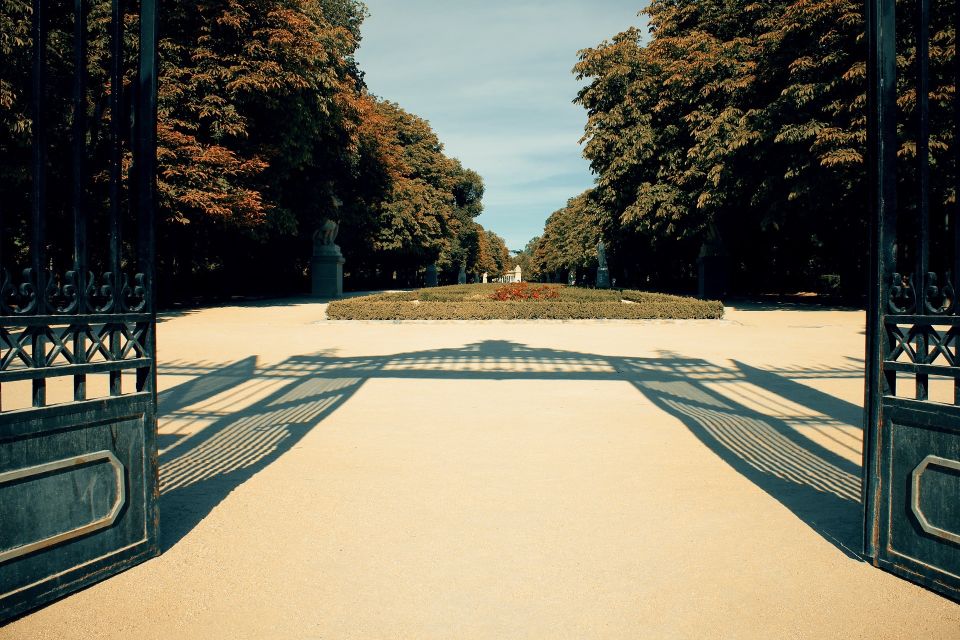
You meet at Puerta de la Independencia del Retiro. This is a practical start point because it’s close to where many people naturally enter the park, and it makes it easier to orient yourself if you want to continue exploring afterward.
The tour is planned for about two hours, with short guided segments and photo stops. That pacing is ideal if you’re planning a busy day around Madrid’s center and want to slot Retiro into your schedule without sacrificing an entire morning.
Estanque Grande and Paseo de las Estatuas: the park’s big “welcome”
The first stop is the Estanque Grande del Retiro (Great Pond). This is one of those places where you can understand the layout instantly: water, sightlines, and the feeling that the park was designed for viewing and strolling, not just relaxing. You’ll get time for a photo and then move on with guidance on what you’re seeing.
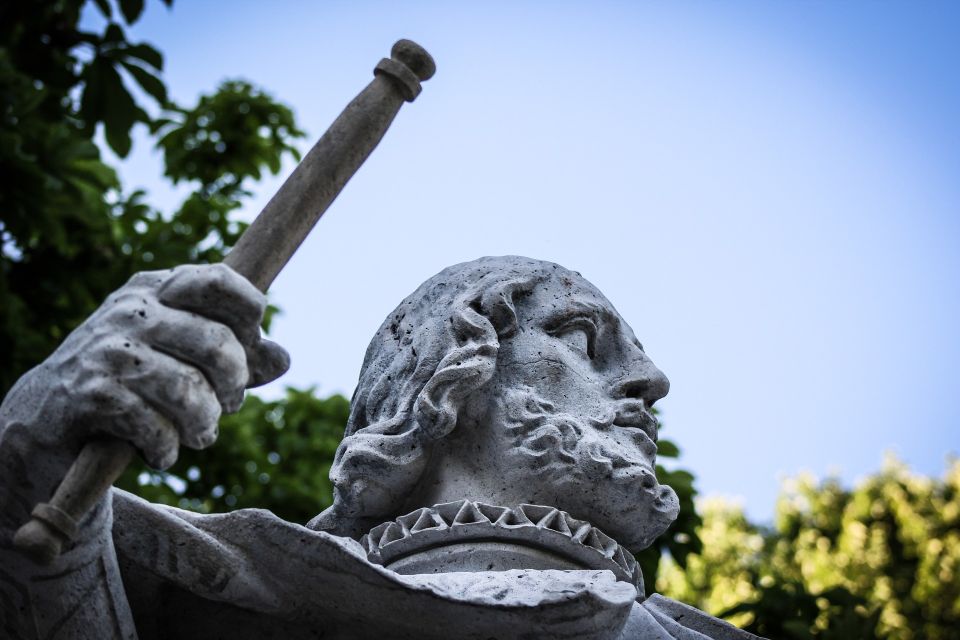
Next comes the Paseo de las Estatuas (Statues Walk). Even if you’ve never studied Spanish art or royal monuments, this is a moment where the guide can help you read the symbolism. Look for how the statues and the path reinforce the park’s ceremonial tone—especially because you’re still early in the route when you’re forming an overall picture.
Tip for you: wear shoes that handle smooth stone and lots of turning. Even though the walking time isn’t huge, you’ll reposition constantly for photos and viewpoints.
Parterre Garden: where design feels like a lesson
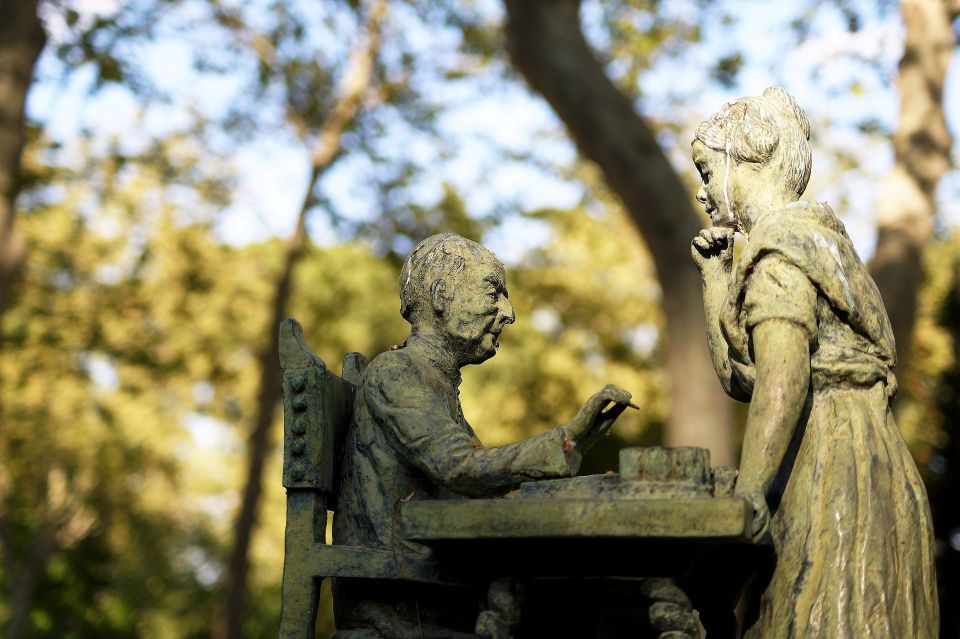
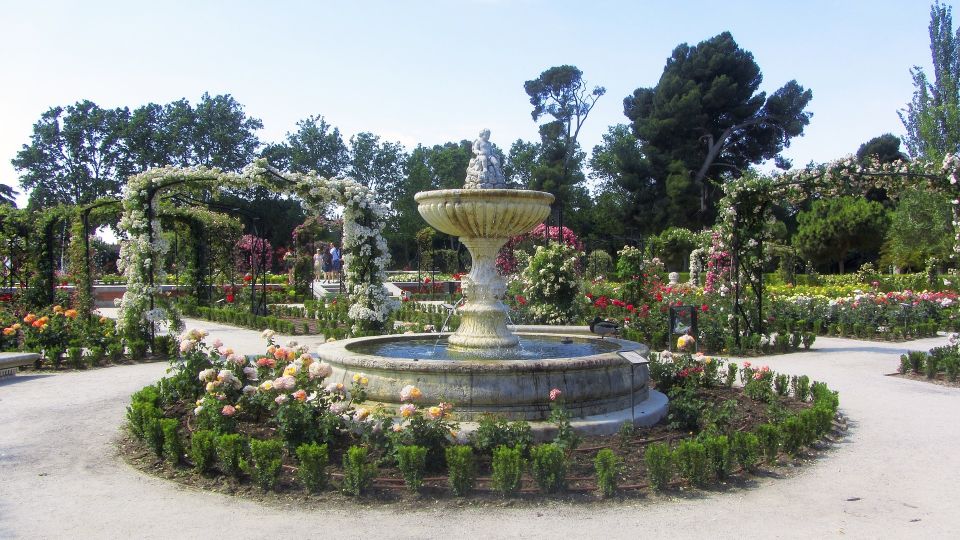
The Parterre Garden is next, and this is where Retiro shifts from open vistas to structured, formal garden design. A parterre is all about geometry and intention—paths, symmetry, and planted areas that make the whole space feel “composed.”
If you enjoy gardens more when someone explains the design logic, this stop is a win. You’ll have a short guided segment, then you’ll be able to look around and notice details you might otherwise ignore.
One thing to consider: because each stop is timed, you won’t get unlimited wandering inside the garden beds. If you’re the type who wants to linger for 30 minutes in one spot, you may feel slightly rushed.
Fountain of the Artichoke to Alfonso XII: symbols in stone and water
The Fountain of the Artichoke is a memorable stop because it’s both decorative and specific—one of those features that makes Retiro feel like a designed experience rather than a generic park. The guide’s role here is to point out the details and explain what the fountain represents in the park’s visual system.
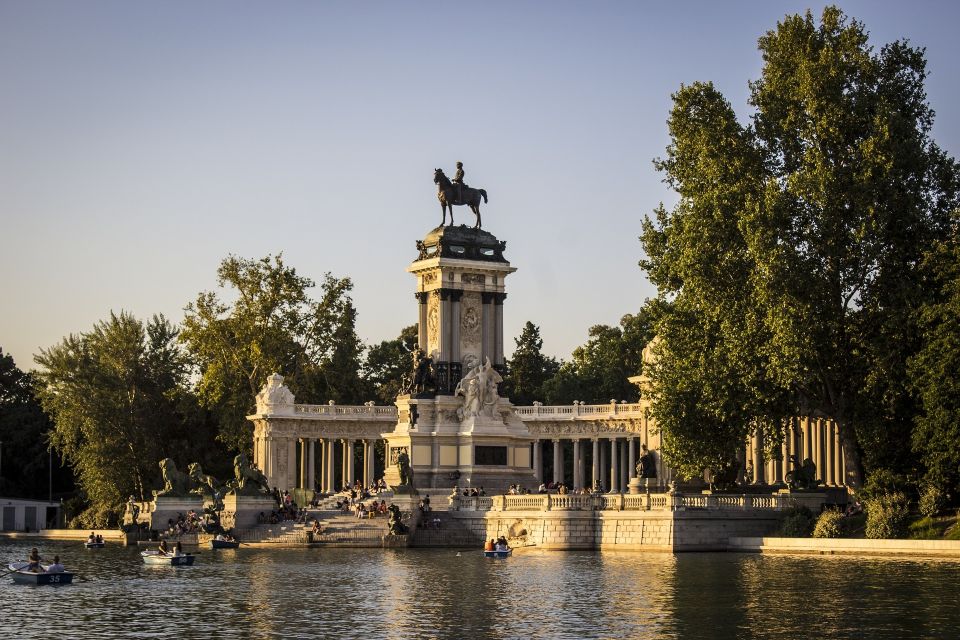
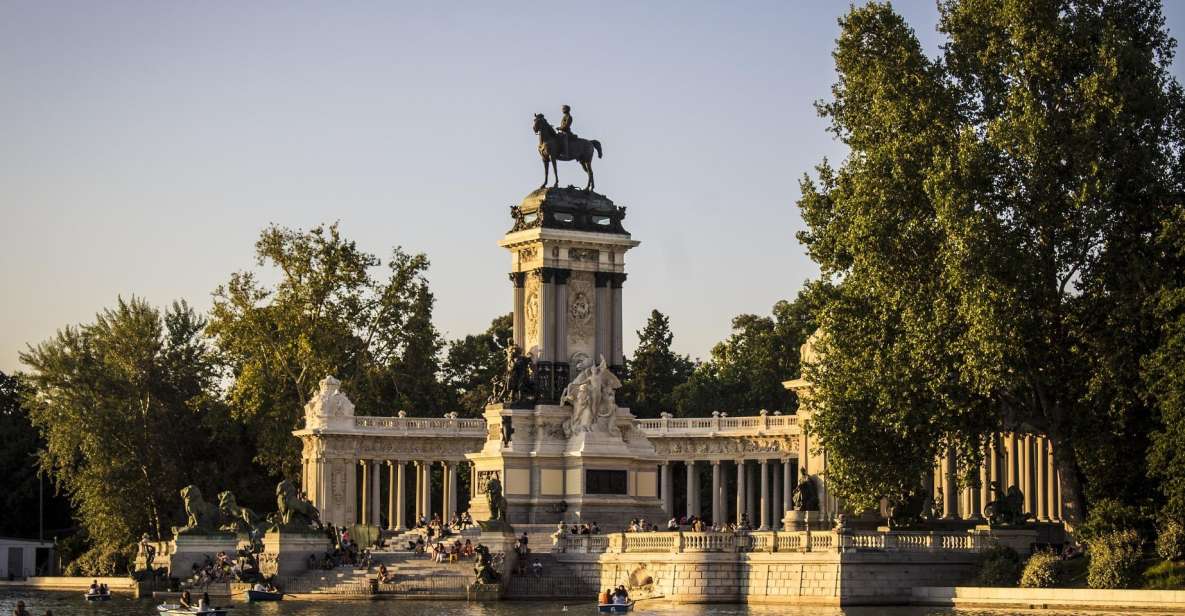
Then you move to the Monument to Alfonso XII. This is a key moment because it connects the park to Spain’s monarchy and the way official memory is staged in public space. You’re not just looking at a statue—you’re learning why it’s placed where it is and what it’s meant to communicate.
If you like monuments that have a story, you’ll probably enjoy the way the tour treats the sculpture and its surroundings as a single composition.
You can also read our reviews of more tours and experiences in Madrid





Antigua Casa de las Fieras and the “park layers” idea
One stop that adds real texture is the Antigua Casa de las Fieras. Even if you think of Retiro as primarily a garden, this is a reminder that the park’s purpose has shifted over time. You’ll get a guided look that helps you see these spaces as part of the park’s longer evolution—built, adapted, used, then changed again.
This is also a moment where the tour’s historical framing matters. Retiro wasn’t always what you picture today. In 1767, Carlos III agreed to use Retiro as an urban park for recreational events. Later, in 1868, it became tied to Madrid City Hall. And during the French invasion, a big portion of the original layout was destroyed—yet remnants from the 17th and 18th centuries still show up.
Translation for your brain: instead of treating Retiro as one “era,” the tour helps you see it as layers. That makes it more interesting even if you’re not a history person.
Fountain of the Fallen Angel and the walk toward major architecture
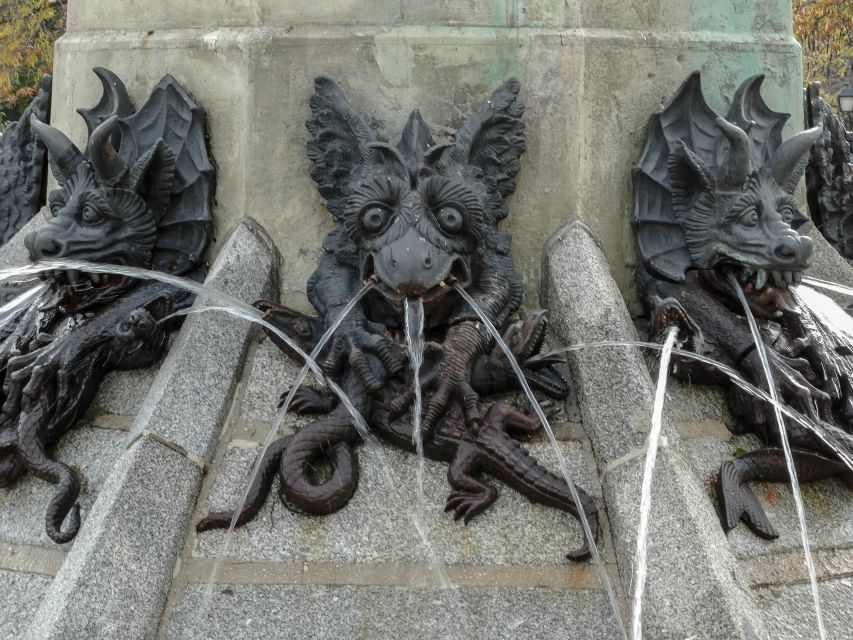
The Fountain of the Fallen Angel is where the tour leans into dramatic storytelling—water, sculpture, and atmosphere. You’ll have a longer guided stop here (about 20 minutes), which is useful because this is the type of location where you’d otherwise just snap a picture and move on. With guidance, you’ll understand how the fountain fits into the broader composition of the park.
From there, the route also takes you past other major features you’ll want to notice as you walk, including the Felipe IV Gate. It’s the kind of landmark that can feel like “just another entrance” if you don’t know what it signals. With context, it becomes part of the park’s structure and its relationship to royal Madrid.
Palacio de Cristal and the Royal Astronomical Observatory: beauty plus brainpower
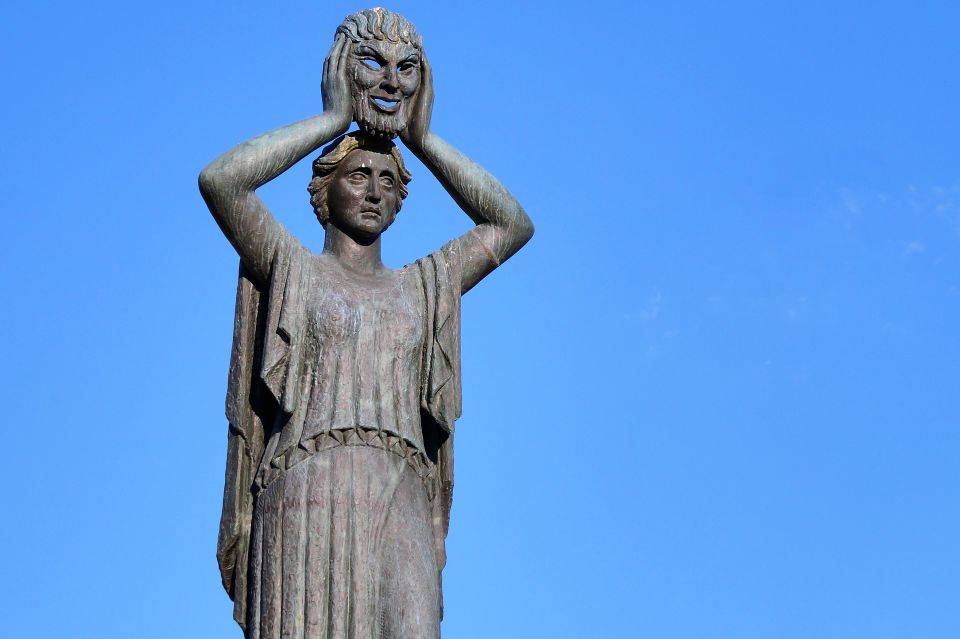
The Palacio de Cristal (Crystal Palace) is the headline for many visitors, and it’s earned. The structure looks like it belongs to another world—glass and light—yet it sits in the middle of an urban park. During the guided time here, you’ll be able to connect the building to Retiro’s designed purpose rather than treating it like a standalone photo spot.
After that, the tour includes architectural sights such as the Royal Astronomical Observatory. This is a different angle on Retiro: it’s not only about leisure and aesthetics. It’s also about how Madrid staged knowledge, science, and institutional importance in formal spaces.
Why you’ll probably care: these kinds of “unexpected” stops are what separate a tour from a casual loop. You’ll come away with a bigger sense of how the park functioned when the city’s priorities were changing.
Timing, pace, and what the itinerary feels like on the ground
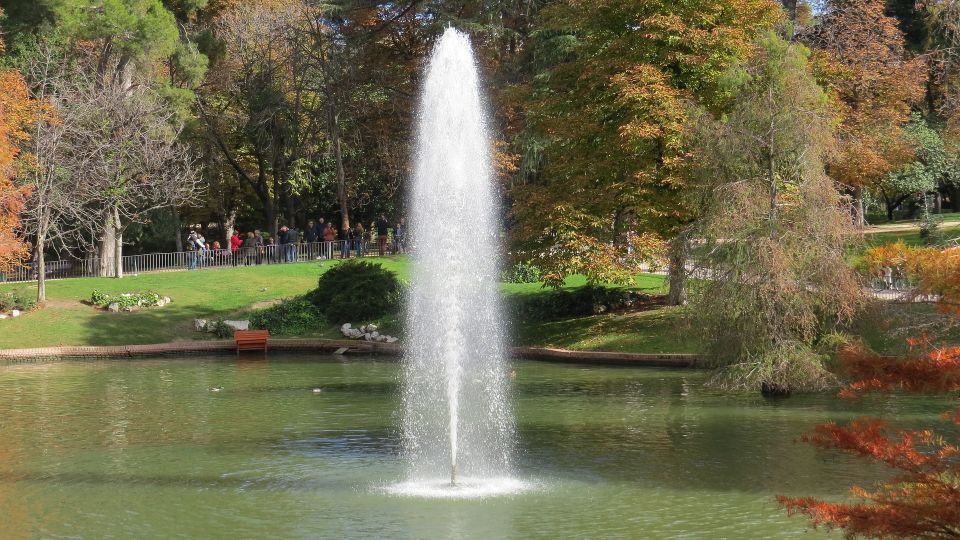
The route is built around repeated short guided moments—often 10 to 20 minutes at each stop—with photo opportunities sprinkled in. That means you’re never stuck in one place too long, but you also don’t get to go deep like you would on a private tour.
The full itinerary includes the Great Pond, the statue walk, the Parterre, the Artichoke Fountain, Alfonso XII, the Antigua Casa de las Fieras, the Fallen Angel Fountain, and the Palacio de Cristal. Along the way you also get explanations that cover the Felipe IV Gate, the Royal Astronomical Observatory, and the San Isidro ruins from the Romanesque period. (You may not see all of these in the exact same “big reveal” way, but the guide’s job is to connect them as you move.)
Language and guide quality: the main risk you should plan around
The tour is led in Spanish, and audio is also provided in Spanish. If you speak Spanish—or you’re comfortable using a translation app—you’ll be fine. If you need an English-led guide, this is not the format suggested by the tour details.
One caution: I’ve seen reports where the tour experience suffered due to guide issues, including instances of a guide not arriving and at least one complaint involving a guide named Marta Sáenz. I’m not saying this is the usual outcome, but it’s enough to recommend a practical habit: confirm your exact meeting point and keep your confirmation details handy. If you’re traveling on a tight schedule, treat this as a plan you’ll monitor, not something you can assume will go perfectly.
Price value: when a guide turns a free park into money well spent
Because Retiro itself is free to enter, your $11 is really paying for interpretation. If you like understanding what you’re looking at, you’ll feel the value right away—especially around the monuments and the architecture.
If you mainly want scenery and you’re comfortable reading on your own, the tour may feel unnecessary. But if you want someone to explain why Alfonso XII and the Crystal Palace are placed where they are—and how the park’s layout was reshaped by major events—this tour is one of the cheaper ways to get that connection.
For context: you’re getting a guided experience lasting two hours, with multiple major stops you’d otherwise need to research and stitch together yourself.
Who this tour suits best (and who might want to skip it)
This is a great fit for you if:
- you want a quick, structured look at Retiro’s must-sees
- you enjoy monuments and garden design when explained clearly
- you’re visiting Madrid with limited time and want smart use of it
You might want a different option if:
- you need English throughout (the tour is Spanish)
- you want long stops in one place rather than a paced route
- you use a wheelchair (the tour is not suitable for wheelchair users)
Should you book the Madrid: Secrets of Retiro Park 2-Hour Walking Tour?
If you’re excited by landmarks like the Palacio de Cristal, the Alfonso XII monument, and the idea that Retiro has gone through multiple historical phases, booking makes sense—especially at this price. The tour’s best strength is that it gives you a framework for what you see, not just a checklist of spots.
If Spanish-only content is a stretch for you, or you’re very schedule-sensitive, you’ll want to think carefully and plan as if the meeting experience could vary. With that in mind, it can be a very cost-effective way to experience Retiro with your eyes open.
FAQ
Where is the meeting point?
You meet your guide at Puerta de la Independencia del Retiro.
How long is the tour?
The tour duration is 2 hours.
What language is the tour offered in?
The live tour guide is Spanish, and an audio guide is also provided in Spanish.
What’s included in the ticket price?
The guide is included, and all taxes are included.
What isn’t included?
Food and drinks aren’t included, and there’s no hotel pick-up or drop-off.
Is there a student discount?
Yes, a discounted student price is available for students up to 25 who hold a valid student card.
If you want, tell me your comfort level with Spanish and your travel dates, and I’ll help you decide whether this is the right match or whether you should pair Retiro with another Madrid stop.