REVIEW · MADRID
Madrid: Royal Collections Gallery Entry Ticket
Book on GetYourGuide →Operated by GetYourGuide Tours & Tickets GmbH · Bookable on GetYourGuide
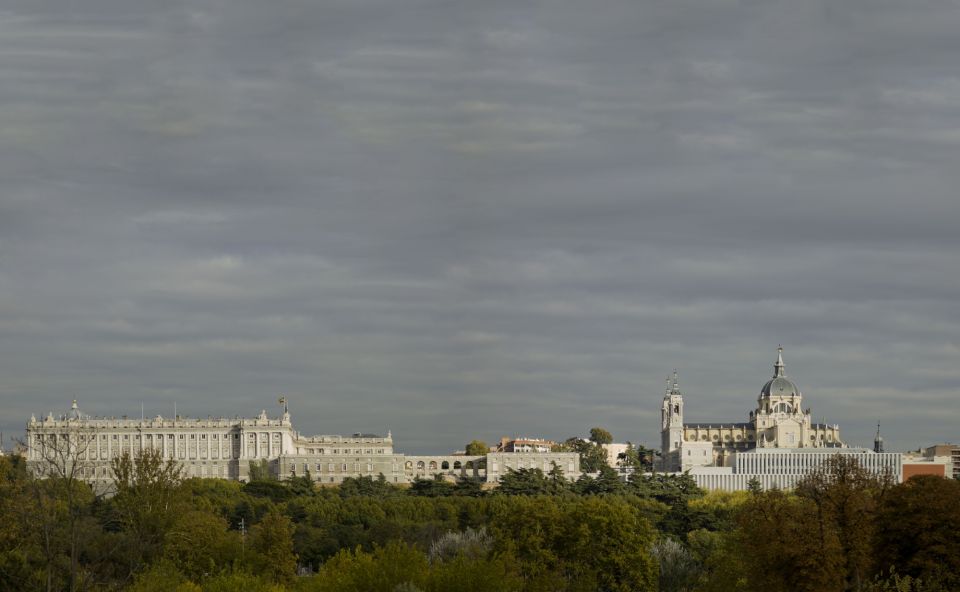
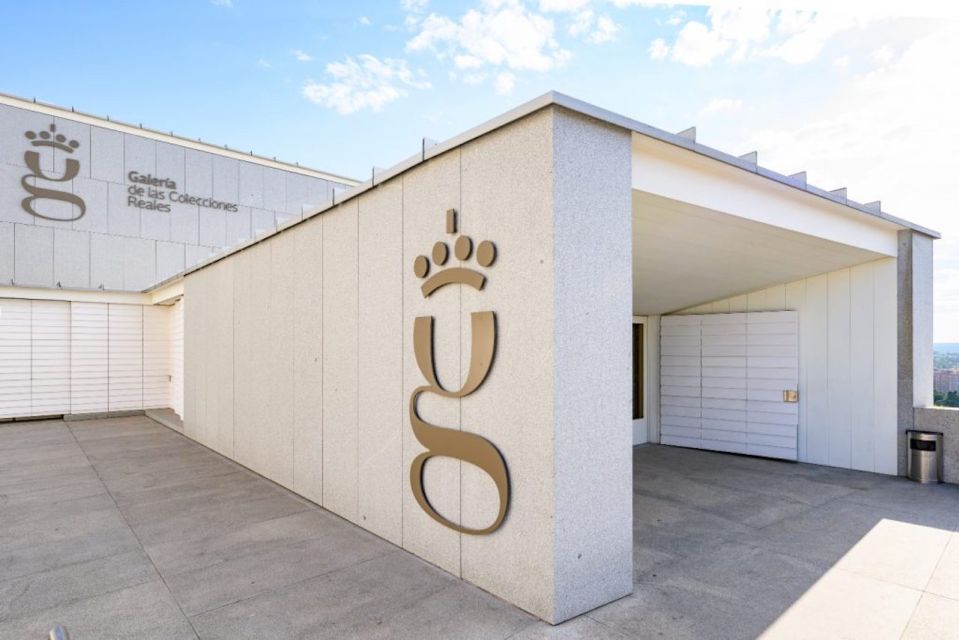
Madrid’s Royal Collections Gallery is a smart way to “do” history. The setting is close to the Royal Palace, and the museum organizes Spain’s monarchy through 650 art and decorative objects. I also like that you can skip the ticket line, but there’s one catch: an audioguide isn’t included.
What makes the visit feel efficient is the flow. You start high up, then follow ramps that use videos for context, and you end with the big visual payoff of the 360º projections cube. One more thing to keep in mind: you’re visiting a museum with rules, so plan around no large bags and no flash photos.
In This Review
- Key points before you go
- Royal Collections Gallery: what you’re actually buying with this ticket
- Where it fits in your Madrid day
- The route: starting at the top floor and moving down by ramps
- Temporary exhibition room: the end of the journey, not a side quest
- The art lineup: Velázquez, Goya, Caravaggio, Titian, Bosch, El Greco, and Luisa Roldán
- What to focus on during the galleries
- Monument construction stories: El Escorial and La Granja through models and videos
- How to use these exhibits to get more out of the rest of your trip
- The 360º cube: architecture and natural spaces in a wraparound view
- Temporary exhibitions, café time, and how to extend the day
- Pairing ideas that make sense
- Price, logistics, and getting there around Madrid (without wasting time)
- Opening hours and last-entry feel
- How to reach the museum
- What to bring (and what to leave behind)
- Audioguide reality check
- Children and pacing
- Should you book the Royal Collections Gallery ticket?
- FAQ
- Is an audioguide included with the Royal Collections Gallery ticket?
- How long should I plan for this 1-day entry?
- What are the museum opening hours?
- Where is the meeting point for public transit?
- Can I bring luggage or a large bag?
- Is flash photography allowed, and what should I bring?
Key points before you go
- Next to the Royal Palace: easy to pair with a palace morning or afternoon plan
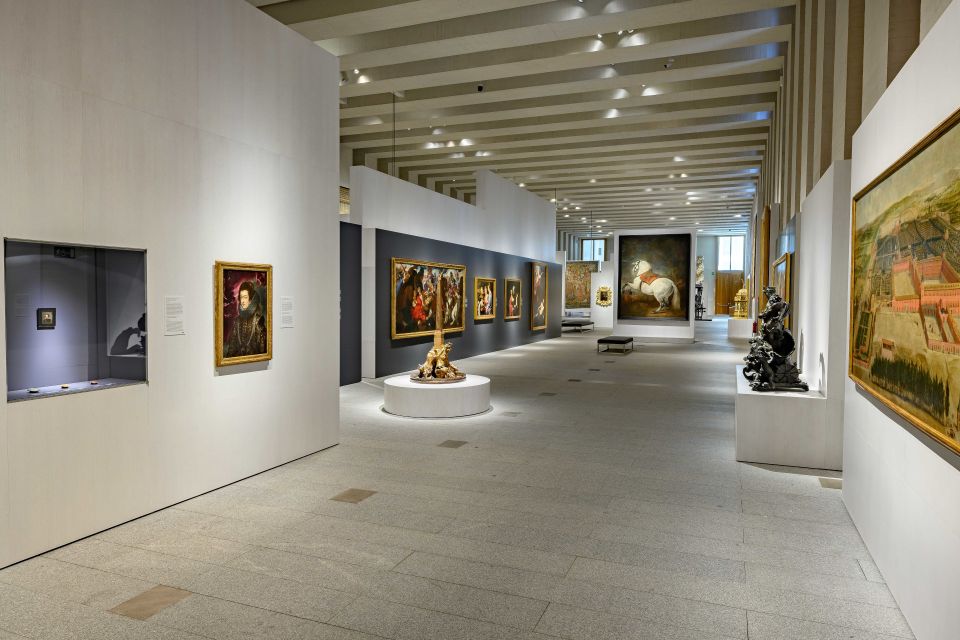
- 650 pieces across five centuries: art, furniture, tapestries, sculptures, and decorative arts
- Start on the top floor and go down by ramps: the videos make the direction make sense
- Monument-building lessons: models and videos about El Escorial and La Granja
- 360º cube projections: architecture and natural spaces shown in a wraparound view
- Temporary exhibition room at the end: a good final landing spot
Royal Collections Gallery: what you’re actually buying with this ticket
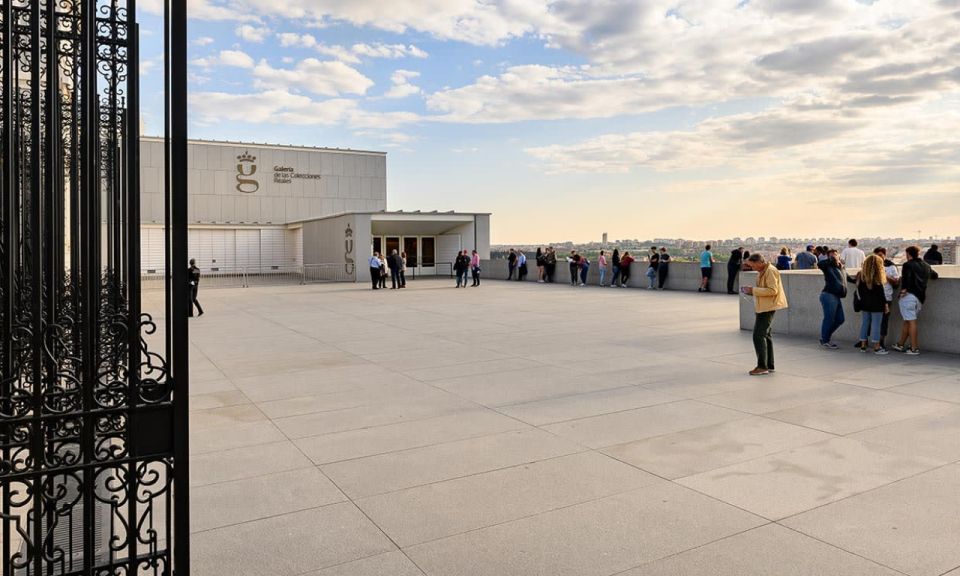
This ticket gets you into the Royal Collections Gallery next to Madrid’s Royal Palace, where you’ll move through five centuries of Spain’s monarchy. The museum houses a large collection of 650 pieces, not just paintings. You’ll see sculpture, furniture, tapestries, and decorative arts, which matters because royalty lived in a world of objects, not only famous canvases.
I like how the collection doesn’t treat art like a frozen museum-poster. Instead, it frames the monarchy as something built in layers—taste, power, and the people who designed and decorated palaces. If you enjoy understanding why things look the way they do, you’ll get more from this visit than if you only want famous names on wall labels.
Also, because the museum is a more recent project, the setup is built for learning without making you feel like you’re trapped in a classroom. The museum uses videos, models, and guided-like displays as you move through the spaces.
You can also read our reviews of more tours and experiences in Madrid


Where it fits in your Madrid day
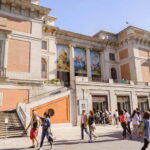
A 1-day ticket is useful because you can shape the rest of the day around it. The museum is open Monday to Saturday from 10:00 AM to 8:00 PM, and on Sundays and holidays from 10:00 AM to 7:00 PM. You also get access until 45 minutes before closing, so arriving late means you’ll still get in, but you won’t see everything at a comfortable pace.
If you’re pairing it with the Royal Palace area, a common rhythm is: palace first (if that’s your priority), then gallery right after—because both are near Ópera and the same general tourist zone. Or flip it: do the gallery first to understand the monarchy backdrop, then go to the palace with better context.
The route: starting at the top floor and moving down by ramps
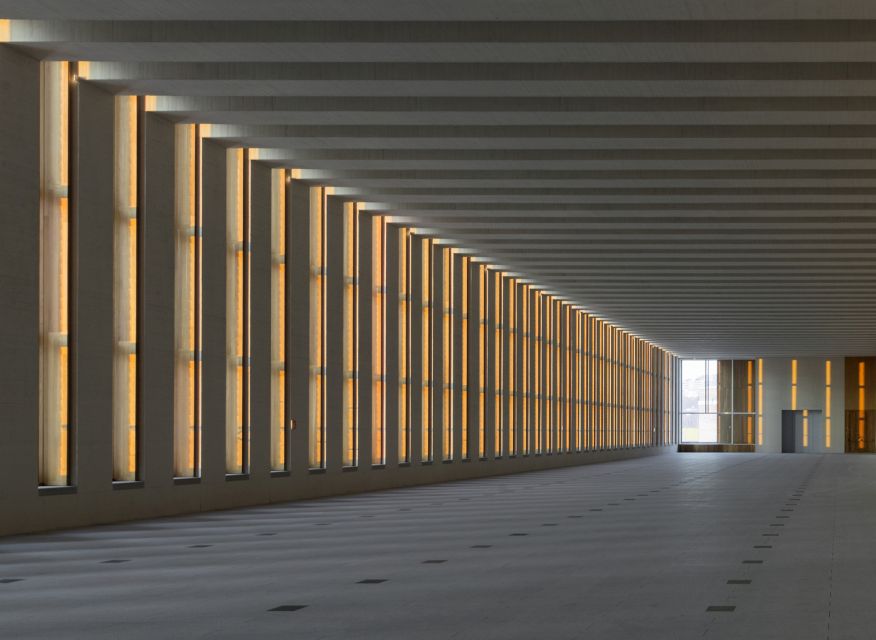
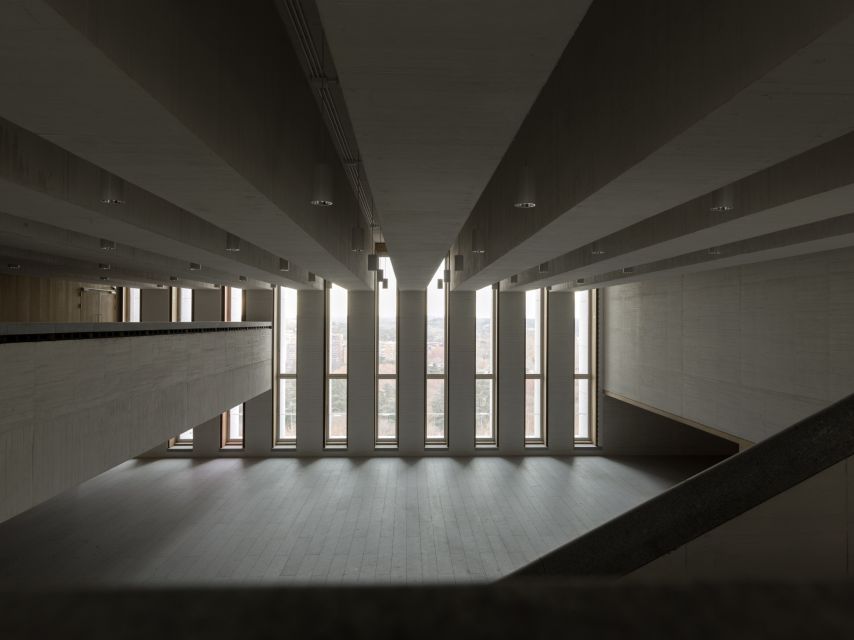
Your visit follows a clear direction. You begin on the top floor and then work your way down via ramps, each section supported by videos and didactic materials. This helps a lot. Instead of feeling like you’re wandering through isolated rooms, the layout pushes you to connect objects to the time period they came from.
Along the ramp path, the museum offers visual context that explains the construction and meaning behind major royal monuments. That’s a big deal because it turns a collection of objects into a story about how Spain projected power—through architecture, planning, and the art commissioned to fill these spaces.
Practical tip: if you’re someone who likes to pause and look closely, plan extra time for the ramp sections with videos. They’re not long in an academic way, but they’re the moments that make the rest of the galleries click.
Temporary exhibition room: the end of the journey, not a side quest
After you work your way down through the main galleries and the big visual feature, your visit ends in a spacious temporary exhibition gallery. This is a smart design choice: it means you finish with something that feels fresh rather than repeating the same permanent collection vibe.
What you’ll do here depends on what show is running that day, but the structure stays the same. You arrive with the permanence story in your head, then exit through the temporary space.
The art lineup: Velázquez, Goya, Caravaggio, Titian, Bosch, El Greco, and Luisa Roldán
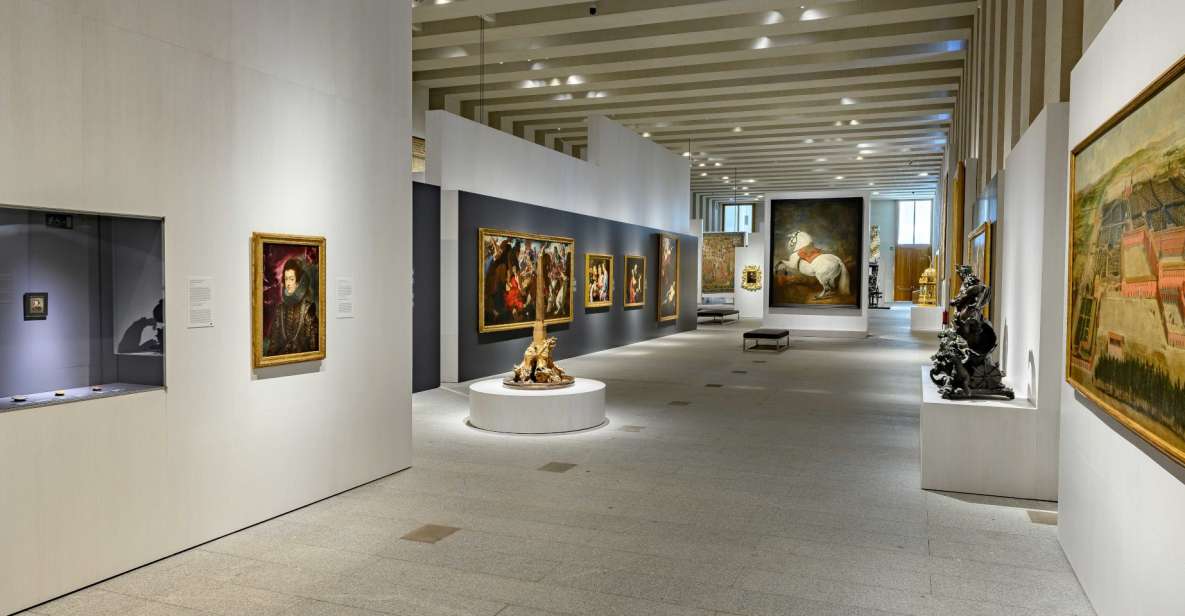
The gallery’s collection highlights some heavyweights: Velázquez, Goya, Caravaggio, Titian, Bosch, and El Greco. On top of that, you’ll find works by Luisa Roldán, a name that’s easy to miss in many mainstream museum itineraries. If you want your Madrid art day to feel balanced—without only chasing the biggest, most obvious names—this collection gives you that.
Here’s the practical value of seeing so many famous artists in one place: the museum shows you how royal collecting works. Instead of only asking, What’s beautiful? you also get to ask, Why did the monarchy want this style and this work? Even when you don’t read every label, the range of artists and object types encourages you to look for patterns.
I also like that the collection isn’t only brushwork. Decorative arts and furniture matter here because they show the monarchy’s taste in three dimensions. Paintings are only one part of the “royal look.” The decorative side is what makes palaces feel like palaces.
You can also read our reviews of more museum experiences in Madrid


What to focus on during the galleries
You’ll have the best experience if you don’t try to “finish” every room like a checklist. Instead:
- Pick a few artists and see them as representatives of different ways power gets expressed in art.
- Slow down where you see decorative arts and furniture next to paintings, because that’s where you’ll start noticing how royal spaces were designed as complete environments.
- When you spot interactive elements or videos, treat them like mini “turns” in the story rather than interruptions.
Monument construction stories: El Escorial and La Granja through models and videos
One of the strongest parts of this ticket is the museum’s attention to building and planning. You’ll learn about the construction of monuments like the Monastery of El Escorial and the Palace of La Granja through videos, models, and didactic resources.
Why this matters for you: Madrid can feel like a stack of stunning buildings with no connective tissue. This museum helps you understand how those monuments were conceived and built, so later, when you stand in front of the real structures, you’ll recognize the ideas behind the appearance.
The models are the real advantage if you like spatial thinking. A painting can be appreciated at a glance, but architecture usually takes effort to visualize. Here, the museum gives you a “practice view” first, and then the real thing is easier to read.
How to use these exhibits to get more out of the rest of your trip
If you’re planning day trips or even just future walks around Madrid’s monument-heavy areas, use these construction stories as your reference points. You don’t need to memorize everything. You just need a framework—because once you have that, Madrid’s royal landscape starts to make sense.
The 360º cube: architecture and natural spaces in a wraparound view
After the galleries and ramp explanations, you’ll reach a large cube with 360º projections. This is where the museum shifts from “look at objects” to “experience the spaces they represent,” showing architectural and natural spaces connected to the Royal Sites.
I like this part because it’s an energy change. You get a visual break from reading and close looking, and you come back with a more unified sense of place. It’s also one of the few museum moments where you can stand back, let the projections carry you, and still feel like you learned something.
Practical note: the cube is a focused, show-like experience. If you’re planning snacks or rest stops, do them before this segment so you don’t lose your timing.
Temporary exhibitions, café time, and how to extend the day
Your visit ends in the temporary exhibition area, which is a great way to keep the day from feeling repetitive. Because the show changes, you’ll be able to return later without it being identical—though this ticket is currently a 1-day entry.
Once you’re done, you can slow down at the museum’s café or browse the shop before you head into the rest of Madrid. I recommend using the café as a reset rather than a full meal plan. The museum is close to major transit, so you can keep your day flexible after your galleries.
Pairing ideas that make sense
This is an ideal museum to pair with other Royal Palace area stops. It’s also a solid choice if you want a culture-heavy day that doesn’t rely on timed performances. You’ll get your “big sights” without needing to build your day around a specific showtime.
Price, logistics, and getting there around Madrid (without wasting time)
This ticket costs $21 per person and is valid for 1 day (availability determines starting times). That price can be good value if you care about more than a quick look at famous works. You’re paying for a large-format collection across multiple media, plus interactive exhibits—monument construction stories and the 360º cube.
You should also factor in the time-saving benefit: the ticket includes skip the ticket line. In a busy area like the Royal Palace zone, that matters. It’s not just convenience; it protects your actual viewing time.
Opening hours and last-entry feel
Plan for a full chunk of time, because you’re going through galleries, video-supported ramps, interactive displays, and then a cube. The museum is open:
- Monday to Saturday: 10:00 AM to 8:00 PM
- Sundays and holidays: 10:00 AM to 7:00 PM
And you can access the museum until 45 minutes before closing.
How to reach the museum
You’ve got several transit options around the center:
- Subway: Lines 5 and 2 (Ópera station)
- Cercanías: Príncipe Pío Station
- Bus lines: 3, 25, 39, and 148
If you’re staying near Ópera or moving between central hubs, transit here is straightforward.
What to bring (and what to leave behind)
Bring a jacket. Madrid weather can shift fast, and museums are usually comfortable enough that a light layer helps.
Don’t bring:
- Luggage or large bags
- Pets (assistance dogs are allowed)
Also, plan on following photo rules: flash photography isn’t allowed.
Audioguide reality check
An audioguide is not included. The museum does have information services and other support, but if you prefer guided listening, you’ll need to plan for that separately.
Children and pacing
Children under 14 must be accompanied by an adult. If you’re traveling with kids, you’ll likely want to keep an eye on pacing, especially around the video-supported ramps and cube segment.
Should you book the Royal Collections Gallery ticket?
Book it if you want a focused Madrid day that blends famous art with the story of how royal monuments and royal spaces were built. This ticket is especially good value for you if:
- You like learning through models, videos, and themed rooms, not just walking from painting to painting.
- You want variety: paintings plus decorative arts like furniture and tapestries.
- You’re pairing this with the Royal Palace area and want better context.
I’d skip or reconsider if you’re the type who only wants a short highlights loop and hates museum rules. The no-large-bags policy can also affect how you travel that day, especially if you’re carrying luggage.
If you’re aiming for an art-and-architecture day that feels organized and story-driven, this one delivers. It’s not just about seeing famous artists—it’s about understanding how Spain’s monarchy shaped the objects and spaces you’re seeing across Madrid.
FAQ
Is an audioguide included with the Royal Collections Gallery ticket?
No. An audioguide is not included with this ticket.
How long should I plan for this 1-day entry?
The ticket is valid for 1 day. The museum experience includes galleries, video-supported ramps, a temporary exhibition area, and a 360º cube segment, so plan for enough time to move through everything comfortably.
What are the museum opening hours?
The museum is open Monday to Saturday from 10:00 AM to 8:00 PM, and from 10:00 AM to 7:00 PM on Sundays and holidays. Access is allowed until 45 minutes before closing.
Where is the meeting point for public transit?
You can get there via Ópera station by subway (Lines 5 and 2), Príncipe Pío by Cercanías, and several bus lines including 3, 25, 39, and 148.
Can I bring luggage or a large bag?
No. Luggage or large bags aren’t allowed. The ticket information also notes self-service lockers and a cloakroom on site.
Is flash photography allowed, and what should I bring?
Flash photography isn’t allowed. Bring a jacket. Pets aren’t allowed, but assistance dogs are permitted.