REVIEW · MADRID
Madrid: Jewish Heritage (Private Walking Tour)
Book on GetYourGuide →Operated by Royal Routes · Bookable on GetYourGuide
Madrid has layers, and this walk reads them for you. You’ll trace Jewish heritage through the historic center, hunt down street-level symbols and inscriptions, and then step inside the Sephardic Jewish Center of Spain to connect the stories to real places. I especially like the way this tour keeps it personal with a guide who can tailor the route, and the way it balances landmark Madrid with the smaller signs that most people miss. One thing to consider: some parts of the Jewish story are tied to locations where physical proof is limited, so you’ll be relying on the guide’s interpretation more than on surviving artifacts everywhere.
This is a private walking tour designed for a slower pace and clearer context, not a rushed checklist. The guide-led format also helps if you want deeper explanations about Sephardic history after the 1492 expulsion or you want the walk to match your interests. In past tours, guides like Yuliia have stood out for being warm, patient, and flexible, which really matters when you’re trying to understand a complex past on foot.
In This Review
- Key highlights worth your attention
- Three hours of Jewish heritage: what this tour is really for
- Starting at the Monument of Don Quijote and finding your bearings
- Plaza de España into Centro Madrid: landmarks that anchor the story
- Catching the smaller clues: the quiet stops that matter
- Sol and the working streets: learning without rushing
- The big anchor: Sephardic Jewish Center of Spain
- How guides shape your experience: Yuliia as a signal
- Cibeles Fountain wrap-up: finishing with a classic Madrid frame
- Price and value: is $194 per group worth it?
- What you should bring (and what to avoid)
- Languages and pacing: getting the most out of a private guide
- Who this tour suits best
- Should you book this Madrid Jewish Heritage tour?
- FAQ
- FAQ
- How long is the Madrid Jewish Heritage private walking tour?
- Where do I meet for the tour?
- What’s included in the tour price?
- Are entrance tickets included?
- Is there any food during the tour?
- What languages are available for the live guide?
- Is the tour wheelchair accessible?
- What should I bring?
- Can I take photos with flash?
- What’s the cancellation policy?
Key highlights worth your attention
- Private, customizable route for your interests rather than a fixed script
- Sephardic Jewish Center of Spain visit, including the museum and library focus
- Symbols and inscriptions on the streets that hint at Madrid’s earlier Jewish presence
- Historic-center landmarks that give you orientation fast, especially around Plaza Mayor/Royal Palace viewpoints
- A guide who tells the story clearly (Yuliia’s patient, humorous style comes up often)
- Optional additions like a Center for Sephardic Studies stop and a kosher lunch reservation
Three hours of Jewish heritage: what this tour is really for
This tour is built for people who want more than a few surface stops. The value isn’t just that you see major Madrid sights; it’s that the guide links those sights to the Jewish community’s history and how it changed over time.
You’ll walk a historic route, then pivot into the cultural center where the Sephardic story becomes specific. That rhythm matters. On the street, you start noticing patterns: inscriptions, symbols, and design details that many visitors never question. Then at the center, you can slow down and connect those clues to documentation, collections, and preservation work.
Because it’s private, you can also ask questions without feeling like you’re interrupting a group schedule. If you want more on Sephardic traditions after 1492, or if you’d rather spend extra time on the visual clues in the city, the guide can steer.
You can also read our reviews of more walking tours in Madrid



Starting at the Monument of Don Quijote and finding your bearings
Your meeting point is the Monument of Don Quijote, and the walk begins in the broader Plaza de España area. I like this setup because it gets you oriented near central Madrid right away. You’ll be placed in the part of the city where it’s easy to understand distances and where landmark backdrops are close enough to actually use while learning.
The first stretch includes a short guided orientation at a viewpoint (about 15 minutes). That early positioning is more helpful than it sounds. Jewish heritage in Madrid isn’t limited to one district on a map. It’s scattered through time and space, and you’ll want a mental framework before the stories start stacking up.
If you’re someone who dislikes getting lost while someone else explains history, you’ll likely appreciate this structure. Comfortable shoes also help here, because the tour is meant to be leisurely but steady.
Plaza de España into Centro Madrid: landmarks that anchor the story
From Plaza de España, the tour moves through Centro Madrid for about an hour. This is where you’ll connect Madrid’s big-picture landmarks with the Jewish historical layer.
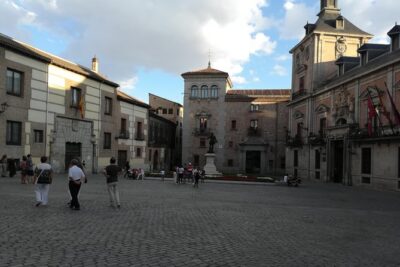
You’ll encounter Plaza Mayor and the Royal Palace area as part of the historic-center experience. These aren’t “Jewish sites” in the usual sense, but that’s the point. Madrid’s Jewish history has to be understood in the same city that later hosted royal power, major civic life, and shifting social rules. Seeing the grandeur up close gives you context for what “normal life” looked like around the times the Sephardic community was living, working, and then being forced into upheaval.
A practical note: on a walking tour like this, the scenery can tug your attention. That’s fine, but listen for what the guide points out beyond the obvious views. The most useful moments are the ones where the explanation turns a landmark into a timeline.
Catching the smaller clues: the quiet stops that matter
There’s time on the route for a less obvious stop (about 30 minutes) and later a short secret stop (around 10 minutes). Even without knowing the exact address details, the idea here is clear: you’re going to slow down in places where Madrid’s past is suggested through subtle physical evidence.
This is where the tour’s theme—hidden symbols and inscriptions—comes alive. On my ideal version of this tour, the guide keeps you alert to lettering styles, markings, and design choices that can hint at earlier communities. Whether or not every clue has direct proof, the overall goal is pattern recognition: you learn how to see the city as a document.
One review highlights a key consideration: Jewish history is sometimes told in areas where physical proof is limited. I’d plan for that. If you want only places with major, obvious Jewish landmarks, you might feel slightly frustrated. If you’re okay with interpretive storytelling backed by visible cues, this section is often the most memorable.
Sol and the working streets: learning without rushing
The route includes time near Sol (about 30 minutes). Sol is one of those places where most visitors pass through fast. On this tour, Sol becomes a pause point. The guide uses the intensity of the area—movement, street life, the central grid—to slow your thinking down.
This is also a useful stretch for families or first-timers, because the guide can tailor pacing. The tour’s private nature helps here: you can ask for more context if you’re new to Madrid, or ask for the most relevant details if you’ve been before.
If you’re bringing kids, it helps that the tour is welcoming to children. It’s not a museum-only experience. It’s more like an engaging guided walk through Madrid’s “why is this here?” clues.
You can also read our reviews of more private tours in Madrid




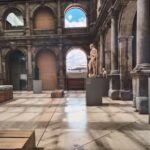

The big anchor: Sephardic Jewish Center of Spain
The highlight for most people is the Sephardic Jewish Center of Spain. This is where the tour shifts from street cues to a focused cultural visit.
You’ll explore the center’s museum and library, with a clear emphasis on preserving Sephardic heritage—especially the story tied to Jews expelled from Spain in 1492. That date matters because it explains why Sephardic culture spread, changed, and also kept memory alive. Even if you only know the story in broad strokes, seeing how the center frames it helps you connect the personal and the historical.
You can also choose an optional Center for Sephardic Studies add-on. The tour is designed so those choices don’t feel tacked on. Instead, they fit the theme: how Madrid connects to Sephardic identity today through scholarship and preservation.
A practical point: entrance tickets aren’t included. So if the center requires separate tickets for any portion, plan for that as an extra cost.
And if you’re someone who likes to ask questions in person, this is the moment to do it. A museum visit plus a guide explanation tends to stick better than a guide-only street talk.
How guides shape your experience: Yuliia as a signal
In the feedback that’s most consistent, Yuliia (also spelled Yuliia/Yulia) shows up as the sort of guide people remember. The common threads are clear: she’s warm, informed, patient, and willing to adapt so the tour runs smoothly.
That matters for this specific subject. Jewish history in Madrid isn’t a one-note narrative. It’s layers: life in the city, visible traces, expulsion and aftermath, and then how memory gets preserved. A guide who can pace explanations—without rushing you past the details—is a big reason a tour like this feels satisfying rather than confusing.
If you book and you have a specific interest (Sephardic culture, how symbols appear in architecture, or the role of preservation today), you’ll likely get more value by asking directly.
Cibeles Fountain wrap-up: finishing with a classic Madrid frame
The tour ends with Cibeles Fountain (about 35 minutes). This is a smart ending choice for two reasons.
First, it gives you a grand “Madrid photo” moment to close the walk. Second, it helps you consolidate everything you learned while your brain is still awake. After a few hours of history and interpretation, it’s easier to remember the story when you can point to a place and say, that’s where our walk finished—and here’s the feeling the city left me with.
If you’re the type who likes to take a last pause to review what you heard, Cibeles is a good spot for it. You’ll also have an easy sense of where you are afterward.
Price and value: is $194 per group worth it?
The price is listed as $194 per group, up to 1 person. Since it’s a private walking tour, you’re paying for a dedicated guide and a route built around your pace.
So here’s how I’d evaluate the value:
- If you’re traveling solo or as a small group and you want a guide to tailor details, the price can feel fair because you’re not competing with other interests.
- If you’re a large group and you’re expecting low-cost per person, you might find it less budget-friendly because private guiding costs more than shared group tours.
- If you care about the story quality—symbols, inscriptions, context, museum/library explanation—this format usually justifies the cost more than a quick, crowded route.
Also remember: entrance tickets, food, and transportation aren’t included, and that can affect the real total. The tour does include the guided walking time and the cultural-heritage focus, plus optional add-ons like kosher lunch reservation (optional) and the Center for Sephardic Studies.
In short: it’s a solid choice when you want understanding, not just sightseeing.
What you should bring (and what to avoid)
This is a walking tour, so plan like you’re walking across central Madrid for a few hours.
Bring:
- Comfortable shoes
- A head covering or kippah (recommended)
- Water
Avoid:
- Smoking
- Flash photography
If you forget the head covering, you might still be able to participate, but you’ll likely feel more at ease if you plan for it ahead of time. And with walking tours, water is your quiet life-saver in the warm months.
Languages and pacing: getting the most out of a private guide
The tour guide is available in English, Spanish, Ukrainian, and Russian. That matters because history topics can get technical fast, and the ability to fully understand the explanation makes the experience more rewarding.
The private group format also means you can keep questions flowing. If you want more background on specific figures in Madrid’s Jewish story, or you want the guide to slow down when something catches your eye, you have that option.
And if your group includes children, the guide can typically keep things engaging through stories and visible street clues rather than only long indoor presentations.
Who this tour suits best
This tour is a great fit if:
- You like walking tours where you learn to see the city differently
- You’re specifically interested in Sephardic heritage and Madrid’s Jewish past
- You want a guide who can answer questions and adjust pacing
- You value a structured 3-hour route instead of wandering on your own
It may feel less satisfying if:
- You want only major, clearly marked Jewish sites with heavy physical remains
- You dislike interpretive history where visible evidence is limited in places
Should you book this Madrid Jewish Heritage tour?
I’d book it if you want a guided, story-led way to understand Madrid’s Jewish past—especially the Sephardic thread—without feeling rushed. The combination of central landmarks, time for symbols and inscriptions, and a real visit to the Sephardic Jewish Center of Spain is the kind of mix that usually sticks with you.
I wouldn’t skip it lightly, though. If you’re expecting a purely museum-based experience or only sites with obvious physical markers, adjust your expectations. And since entrance tickets and optional lunches aren’t included, check what you plan to do so there are no surprises.
FAQ
FAQ
How long is the Madrid Jewish Heritage private walking tour?
It runs for 3 hours.
Where do I meet for the tour?
The meeting point is at the Monument of Don Quijote.
What’s included in the tour price?
You get a 3-hour guided walking tour with a local expert, plus a history-focused visit related to Sephardic Jews, including time at the Sephardic Jewish Center of Spain. There may also be optional add-ons like a Center for Sephardic Studies visit and an optional kosher lunch reservation.
Are entrance tickets included?
No. Entrance tickets are not included.
Is there any food during the tour?
Food isn’t included. There is an optional kosher lunch reservation you can add if you want.
What languages are available for the live guide?
The tour guide is available in English, Spanish, Ukrainian, and Russian.
Is the tour wheelchair accessible?
The info provided includes wheelchair accessibility, but it also states it is not suitable for wheelchair users. If you use a wheelchair or have mobility limitations, you should contact the provider to confirm whether this specific route will work for your needs.
What should I bring?
Bring comfortable shoes, water, and a head covering or kippah.
Can I take photos with flash?
No. Flash photography is not allowed.
What’s the cancellation policy?
There is free cancellation up to 24 hours in advance for a full refund.