REVIEW · MADRID
Historic and Modern Madrid by Classic Car Private Tour
Book on Viator →Operated by Vintage City Tours · Bookable on Viator
Madrid’s famous sights, seen at driving speed.
This private Historic and Modern Madrid tour strings together big-name landmarks and real neighborhoods in about 1 hour 40 minutes. I like that you get a hotel pickup in central Madrid and a smooth, air-conditioned ride, then pop out for short photo/walk moments—no racing against crowds. One thing to consider: the itinerary is mostly exterior viewing, and the vintage-car vehicle can feel tight for larger groups.
The route is built for orientation. You pass the grand museum stretch, glide through leafy Retiro-area streets, then swing into the Royal Palace zone and end up in the Old Town core around Plaza Mayor and Puerta del Sol. I also like the mix: art-and-architecture icons (Prado, Royal Palace, Almudena) paired with living Madrid energy (Gran Vía, Salamanca). The payoff is a fast mental map of where things are—and what you’ll want to return to later.
In This Review
- Key things to know before you go
- Price and what you really get for $189.65
- The classic-car ride: charming, but plan for comfort
- Stop-by-stop: what to look for (and what each moment is really for)
- Prado area: Museo Nacional del Prado exterior (Stop 1)
- Puerta de Alcalá, Sabatini style (Stop 2)
- Parque del Retiro: Madrid’s green lung (Stop 3)
- Plaza de Colón: National Library and the Columbus monument (Stop 4)
- ABC Serrano and Paseo de la Castellana (Stop 5)
- Museo Nacional de Ciencias Naturales: a grand old building (Stop 6)
- Santiago Bernabéu Stadium (Stop 7)
- Museo Lázaro Galdiano: private collection vibes (Stop 8)
- Barrio de Salamanca: Golden Mile energy (Stop 9)
- National Archaeological Museum: massive and imposing (Stop 10)
- Plaza de Cibeles: fountains and major buildings (Stop 11)
- Gran Vía: Madrid’s Times Square-like street (Stop 12)
- Plaza de España: Cervantes monument and towers (Stop 13)
- Templo de Debod: an Egypt gift in Madrid (Stop 14)
- Royal Palace complex: Sabatini gardens area (Stop 15)
- Almudena Cathedral: modern Spanish cathedral design (Stop 16)
- San Francisco el Grande: third-largest circular dome (Stop 17)
- Plaza Mayor: medieval origins to today’s food-and-market corners (Stop 18)
- Teatro Real: Madrid’s opera house (Stop 19)
- Plaza de las Cortes: Congress building with lions (Stop 20)
- Paseo del Prado: Neptune fountain and the Thyssen Museum area (Stop 21)
- Puerta del Sol: the country’s geographic center (Stop 22)
- How the on-board guide/commentary usually works
- Best for who? Who should book this tour
- Small risks to consider before you commit
- Should you book this Historic and Modern Madrid classic-car tour?
- FAQ
- FAQ
- How long is the Historic and Modern Madrid by Classic Car Private Tour?
- Do they pick you up from your hotel?
- Is the tour private?
- What languages are available?
- Are tickets to the main museums and palaces included?
- Is WiFi and air-conditioning included?
- What do I need to provide when booking?
Key things to know before you go
- Private, door-to-door style pickup from many central hotels, so you start without hassle
- Quick stops (about 2–5 minutes) mean photos and orientation, not long museum time
- Audio-style commentary on board can help if your guide’s English is limited
- Not all major sights include entry, so plan for extra tickets if you want inside
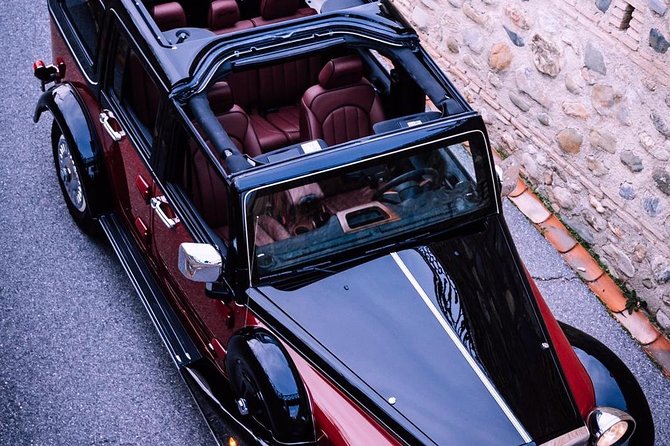
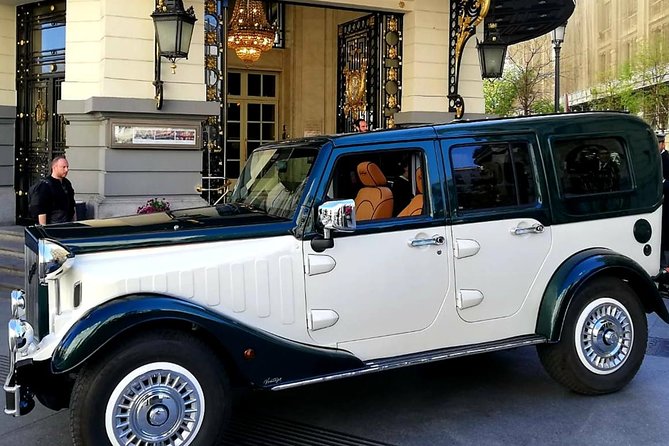
- A classic-style Jeep setup adds charm, but can feel snug for four adults
Price and what you really get for $189.65
At about $189.65 per person for roughly 1 hour 40 minutes, this tour is priced for convenience and access to a private vehicle, not for deep museum time. The value is strongest if you want to:
- see a lot of “Madrid basics” in one sitting, and
- get dropped back at your starting point without negotiating buses or taxis.
Included items matter here: you’ll have private transportation, a driver/guide, and WiFi on board in an air-conditioned vehicle. It also runs as a private experience, meaning it’s only your group. That reduces the stress of coordinating with strangers—especially in a city where traffic can slow everything down.
The tradeoff is that several of the most famous buildings are view-only on this format. Admission tickets are not included for some stops, and many stops are described as brief exits or pass-bys. If your goal is “one museum in depth,” you may find this too fast. If your goal is “I need a map of Madrid,” it’s a good fit.
You can also read our reviews of more private tours in Madrid

The classic-car ride: charming, but plan for comfort
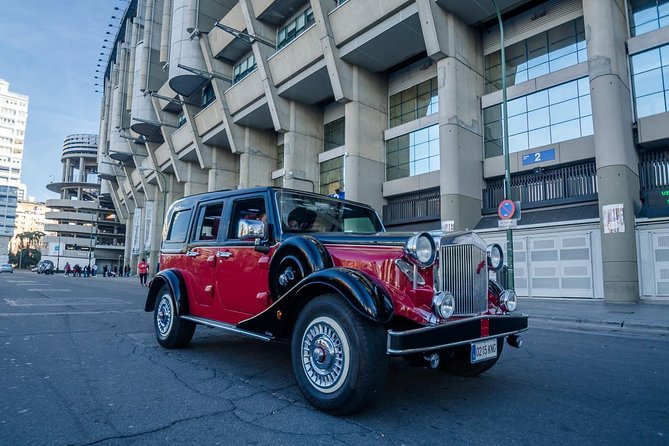
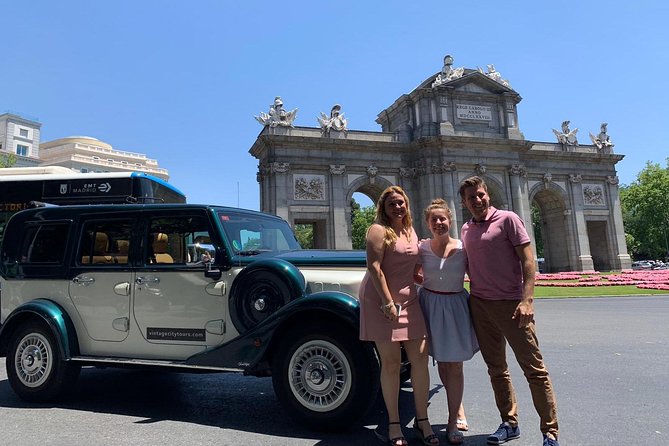
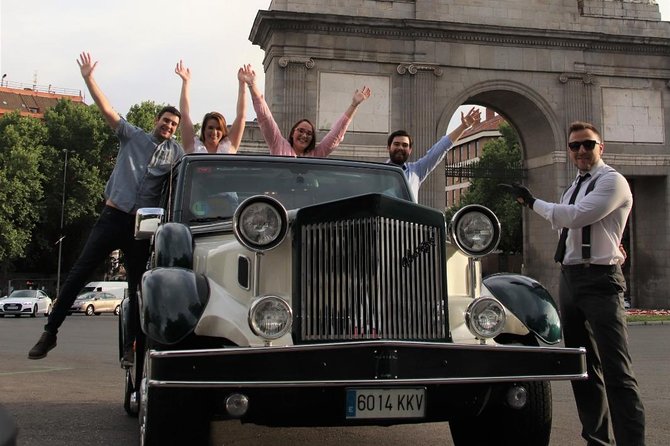
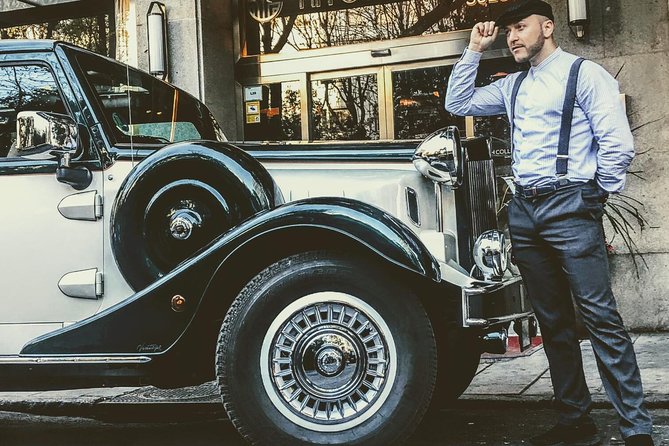
This is not a standard van tour. In practice, it’s a Jeep with a classic car body added, which gives it personality—and yes, people notice. In one experience described, the car drew attention from school children at various points around the city. That kind of visibility is fun, but it also feeds into the practical reality: you’ll be moving through tight urban streets and stopping briefly, and your space can depend on the exact vehicle configuration.
Comfort split is the main issue. One set of feedback flagged that four adults felt uncomfortable and that the ride can become a long experience at nearly two hours. My advice is simple: if your group is on the bigger side, consider fewer adults per ride, or pair the tour with a later, slower afternoon where you can walk more freely.
Stop-by-stop: what to look for (and what each moment is really for)
This route is paced like a highlight reel. Most stops are around 2 to 5 minutes, which is perfect for quick photos, exterior details, and a first sense of the area.
Prado area: Museo Nacional del Prado exterior (Stop 1)
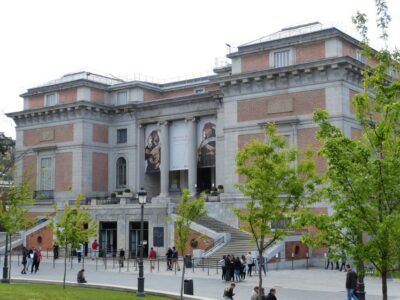
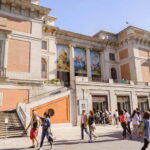
You start by viewing the Prado from the outside. The museum was inaugurated in 1819, and even just seeing the exterior helps you understand why it’s such a cornerstone of Spanish culture. Admission isn’t included here, so think of this as a visual warm-up.
What I’d do in your shoes: take a few wide shots first, then decide if you want to come back for an inside visit later. Prado is one of those places where you’ll want time and a plan.
Puerta de Alcalá, Sabatini style (Stop 2)
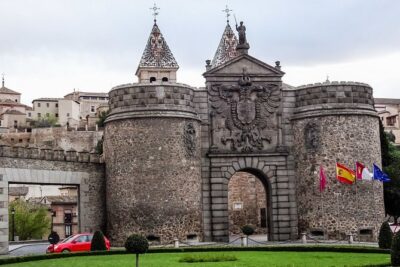
Next up is Puerta de Alcalá, by Sabatini, dated 1778. It sits bordering Retiro Park, so you get a sense of how monumental architecture and green space share the same neighborhood.
This stop is usually quick, but Puerta de Alcalá is big enough that you can still get a satisfying “I’m in Madrid” photo without needing a long stop.
You can also read our reviews of more historical tours in Madrid


Parque del Retiro: Madrid’s green lung (Stop 3)
Retiro Park is the city’s “lungs.” Even though your stop is short, it’s an important one because it marks a shift from dense stone-and-street energy to something calmer and more human-scaled.
If you want to go deeper later, Retiro is the kind of place where a second visit with time to stroll pays off.
Plaza de Colón: National Library and the Columbus monument (Stop 4)
At Plaza de Colón, you’ll see the National Library, a Monument to Christopher Columbus, and the large flag of Spain. This is a good stop if you like civic landmarks and want to understand how Madrid’s major squares feel different from one another.
No entry is included, so the value is the visual orientation.
ABC Serrano and Paseo de la Castellana (Stop 5)
You’ll pass the ABC Serrano area and connect through Paseo de la Castellana—a corridor known for museums, mansions, and shopping. It’s a strong “modern Madrid” transition point.
Expect this to feel like the city’s more polished, upper-boulevard side of town. Great for noticing where the fancy shopping and museum clustering is.
Museo Nacional de Ciencias Naturales: a grand old building (Stop 6)
Then comes the Museo Nacional de Ciencias Naturales. The building dates to founded in 1771, and it houses the National Museum of Natural Sciences, described as one of the oldest in the world. Admission isn’t included, so you’re mainly looking at the architecture and immediate area.
If you’re traveling with kids or you just like science museums, you might pencil this into a separate half-day later with actual ticket time.
Santiago Bernabéu Stadium (Stop 7)
You’ll see Santiago Bernabéu Stadium, the headquarters of Real Madrid. This stop is free for entry, but in this kind of tour format, it’s about exterior impressions and location awareness.
If you care about football, the best move is to treat this as a “you’re in the right neighborhood” marker and decide later if you want to tour the stadium interior.
Museo Lázaro Galdiano: private collection vibes (Stop 8)
Next is the Museo Lázaro Galdiano, a state museum of private origin, with a collection of more than 12,000 pieces and a library of 20,000 volumes. Admission isn’t included here.
Even if you don’t go inside, this stop signals that Madrid isn’t only big public museums. There’s a quieter layer of collections that can be worth seeking out.
Barrio de Salamanca: Golden Mile energy (Stop 9)
You’ll pass into Barrio de Salamanca, including the area people call the Golden Mile, plus Michelin-star restaurants and what’s described as Madrid’s most exclusive night scene. This is not a “cheap lunch” zone—it’s the Madrid of style.
For you, the value is simple: after the tour, you’ll know where the upscale dining/shopping cluster lives.
National Archaeological Museum: massive and imposing (Stop 10)
The National Archaeological Museum appears in its majestic setting, alongside the National Library. Admission isn’t included, so you’re again getting the quick architectural impression.
If you’re the type who loves Roman/Greek artifacts or archaeology, this is the kind of exterior stop that can send you back to book tickets later.
Plaza de Cibeles: fountains and major buildings (Stop 11)
At Plaza de Cibeles, you’ll see the famous Cibeles fountain plus major surrounding buildings like the Palacio de Comunicaciones (city council headquarters), Palacio de Linares, and the Bank of Spain.
This is one of those stops where the photos usually turn out well even with a short time window, because the square is designed for a strong view from multiple angles.
Gran Vía: Madrid’s Times Square-like street (Stop 12)
Gran Vía is one of the city’s most emblematic arteries. You’ll pass by shops and theaters and pass through an area described as Madrid’s Times Square feel around Plaza de Callao.
This is modern Madrid theater-and-neon energy. It’s also where you’ll likely want to come back for a slower walk once you’re oriented.
Plaza de España: Cervantes monument and towers (Stop 13)
Then comes Plaza de España, described as one of Madrid’s largest squares. You’ll see the monument to Cervantes, plus Torre Madrid and the Edificio España.
This is a good stop for skyline awareness. Even if your time is short, it helps you understand Madrid’s “layered” city center.
Templo de Debod: an Egypt gift in Madrid (Stop 14)
As you move along Paseo de Rosales, you’ll see the Templo de Debod, described as a donation from the Government of Egypt.
This is the kind of detail that makes the tour more than a checklist. It’s unusual, memorable, and gives you an instant story to tell later.
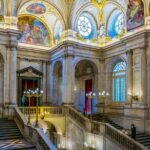
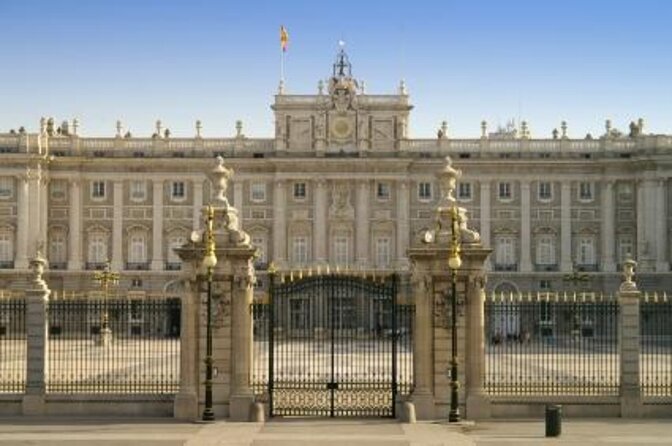
Royal Palace complex: Sabatini gardens area (Stop 15)
You’ll reach the Royal Palace of Madrid complex, one of the best-preserved in Europe, plus the Sabatini gardens. Admission isn’t included.
The key here is expectation management: with only a brief stop, you’ll mainly take in the setting and decide whether you want a ticketed palace visit later. If you love palaces, you’ll probably want more than a quick look.
Almudena Cathedral: modern Spanish cathedral design (Stop 16)
Next is Catedral de Sta Maria la Real de la Almudena, described as one of the more modern cathedrals in Spain. Admission isn’t included.
If you’re an architecture person, even the exterior view can help you read the whole area as “official Madrid” rather than just another church-stop.
San Francisco el Grande: third-largest circular dome (Stop 17)
At Real Basilica de San Francisco el Grande, you’ll see the basilica noted for having the third largest circular dome of Christianity. Entry is listed as free on the tour stop.
A circular dome is visually unforgettable, so even a quick stop can feel meaningful. This is also a great place to decide if you want a longer interior break later.
Plaza Mayor: medieval origins to today’s food-and-market corners (Stop 18)
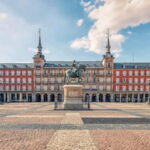
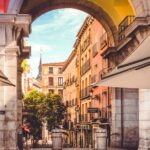
Then you enter one of the city’s most iconic squares: Plaza Mayor. The tour also references Plaza de la Villa (medieval origin and former town hall seat), Plaza de San Miguel and its gourmet market, then connects onward toward Puerta del Sol.
This is Old Town central. Even if you don’t go inside anything, you’ll feel the change in atmosphere fast.
Teatro Real: Madrid’s opera house (Stop 19)
You’ll pass by the Teatro Real, inaugurated in 1850. Entry is listed as free here, but again, with short timing this is mostly a view-stop.
Plaza de las Cortes: Congress building with lions (Stop 20)
Next is Plaza de las Cortes, where Madrid’s Congress building stands out, with lions flanking the entrance. The route mentions walking through the street Duque de Medinaceli and passing the Basilica of Jesus de Medinaceli.
This is a meaningful shift toward political Madrid—more formal and official-feeling than the squares you visited earlier.
Paseo del Prado: Neptune fountain and the Thyssen Museum area (Stop 21)
You’ll then go along Paseo del Prado. You’ll pass by the fountain of Neptune and the Thyssen Museum area among other sights.
This is a classic “great avenue” moment. Even if you don’t stop long, you start to see why Prado/Thyssen/Reina Sofía live in the same broad cultural zone.
Puerta del Sol: the country’s geographic center (Stop 22)
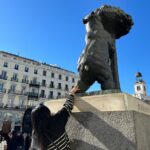
Finally, you end at Puerta del Sol: described as the country’s geographic center, with the equestrian statue of Carlos III, the clock connected to New Year’s chimes, the Bear and the Madroño symbol, and the Mariblanca statue.
This is an excellent landing point because Puerta del Sol is a natural hub for everything after your tour. You’ll know where you are, and you’ll know which direction to head.
How the on-board guide/commentary usually works
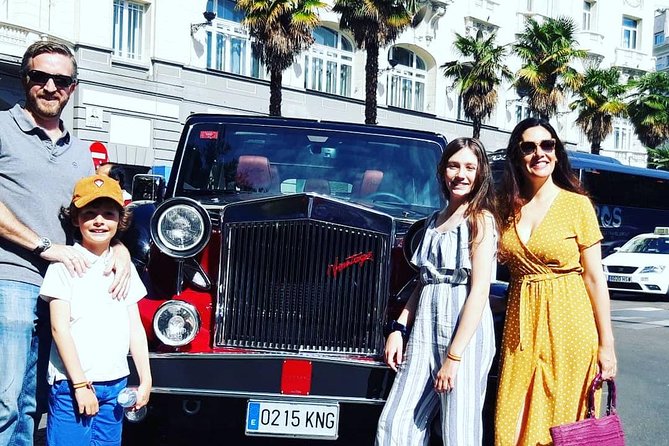
English is listed as the tour language, but in real life, the biggest variable can be the driver’s comfort level with English. One driver named Victor was described as excellent, with a colorful style, and with plenty of patience in traffic. Another experience noted that the guide spoke limited English, and the group relied on audio-style information during the ride.
So here’s the practical takeaway: if you want to learn details, don’t rely only on live commentary. The best strategy is to use your phone audio notes or pre-read short facts about key stops like Prado, Retiro, Puerta de Alcalá, the Royal Palace, and Puerta del Sol so you can enjoy whatever level of spoken English you get.
Best for who? Who should book this tour
This classic-car Madrid tour makes the most sense if you want:
- a quick, structured orientation to major neighborhoods,
- exterior viewing of big sights, and
- minimal stress, thanks to pickup and WiFi in an air-conditioned vehicle.
It’s also a strong first-day option when you still feel jet-lagged and want to build a mental map quickly. If you’re in Madrid for only a short time and hate trying to route taxis and bus changes on day one, this helps.
If you’re the type who wants long museum visits, deep cathedral time, or guided entry into the palace or museums, plan for a second tour or independent visits later.
Small risks to consider before you commit
A few things can affect your enjoyment:
- Time is short at each stop. You won’t see much interior action.
- Vehicle comfort can be tight for larger groups. If you’re four adults, assume it might feel like a long ride.
- Traffic can stretch the experience. One account described being stuck in backstreets for much of the tour, which reduced what they saw and made it feel repetitive.
None of these are deal-breakers. They just help you decide whether this is your style of tour.
Should you book this Historic and Modern Madrid classic-car tour?
If your goal is orientation plus a lot of Madrid landmarks in one go, I think it’s a smart booking. The combination of hotel pickup, a private ride, and a clear loop through Prado/Retiro/Gran Vía/Royal Palace/Old Town makes the time feel efficient. It also gives you a ready list of what to return to when you have more time for ticketed visits.
Skip it (or add a buffer day) if you’re hoping for lengthy museum time or if comfort is a big deal for your group size. In that case, you may prefer a walking-based or museum-focused tour where you control pacing.
FAQ
FAQ
How long is the Historic and Modern Madrid by Classic Car Private Tour?
The tour lasts about 1 hour 40 minutes.
Do they pick you up from your hotel?
Yes. Pickup is offered in many central Madrid hotels, with confirmation of the pickup details provided for your booking.
Is the tour private?
Yes. It’s a private experience, so only your group participates.
What languages are available?
The tour is offered in English.
Are tickets to the main museums and palaces included?
No. Some stops list admission tickets as not included, including the Museo Nacional del Prado, Museo Nacional de Ciencias Naturales, Museo Lázaro Galdiano, Royal Palace of Madrid, Almudena Cathedral, and the National Archaeological Museum. Other stops are listed as free.
Is WiFi and air-conditioning included?
Yes. The tour includes WiFi on board and an air-conditioned vehicle.
What do I need to provide when booking?
You need the DNI/passport number of the main passenger who makes the reservation.