REVIEW · MADRID
Guided Madrid Countryside Wine Tasting & Winery Tour
Book on Viator →Operated by Things to do in Madrid · Bookable on Viator
A wine lesson outside Madrid. This 4-hour guided trip takes you to Chinchón and Bodega del Nero for a winery walk through barrel rooms and a tasting led by an expert.
I like the way the timing works for a first-timer: about 2 hours onsite gives you both the production side (vineyard and cellar) and the tasting side without feeling rushed. I also like that the session is built around a guided tasting and pairing guidance, so you leave knowing what to try next, not just what you drank.
One thing to consider: you’ll sample multiple wines, and with a max group of 30, questions can move along at a steady pace.
In This Review
- Key things that make this tour a smart pick
- Chinchón and a winery in one smooth half-day plan
- The 9:30am start: getting to Naturanda Madrid without stress
- Chinchón: a 15-minute town break that changes the mood
- Inside Bodega del Nero: vineyards, cool cellars, and the production story
- The guided winery walk (about 1 hour)
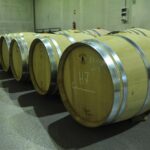
- Barrel rooms: why aging rooms can feel like a different world
- Technical talk: grapes to extraction
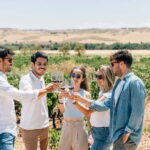
- The enologist-led tasting: how the guide helps you taste smarter
- Guided tasting format (about 45 minutes)
- Group size and pacing: what max 30 travelers feels like
- Is the $124.51 price good value for what you get?
- Who should book this tour (and who might pass)
- Should you book the Madrid Countryside Wine Tasting & Winery Tour?
- FAQ
- What time does the tour start?
- How long is the tour?
- Where is the meeting point in Madrid?
- Does it return to the same place?
- Is there transportation included?
- What happens in Chinchón?
- What’s included at the winery?
- How many people are in the group?
- Can I cancel for a refund?
Key things that make this tour a smart pick
- Chinchón main square stop: You get about 15 minutes right in town when you arrive.
- Bodega del Nero cellar tour: You’ll see vineyards, cool cellars, and fermentation tanks with a guided explanation of the winemaking steps.
- Barrel rooms included: The winery visit isn’t just a quick photo stop.
- Tasting with pairing alternatives: You taste several wine types while an enologist explains characteristics and how to pair.
- Small-enough group vibe: Max 30 travelers, which usually keeps the pace interactive.
- Simple Madrid start and return: It departs at 9:30am from Naturanda Madrid near Plaza de España and returns to the same spot, with a mobile ticket.
Chinchón and a winery in one smooth half-day plan
Madrid is great, but it’s also easy to stay locked into museums and tapas. This tour is an easy fix. You trade some city time for Madrid countryside scenery and then come back with a stronger feel for Spanish wine than you’d get from a quick shop tasting.
What makes it work is balance. You get a town moment in Chinchón, then you shift gears to production and technique at Bodega del Nero, and then you cap it with a guided tasting that connects flavors to pairing ideas. It’s not just “taste and go.” The structure is designed to help you understand what you’re noticing.
The best fit is if you want a guided intro to Spanish wine heritage without needing a rental car, a translation app, or a plan for where to eat after. It also suits people who like learning by watching real processes: grapes to fermentation to aging, then flavor in a glass.
You can also read our reviews of more food & drink experiences in Madrid

The 9:30am start: getting to Naturanda Madrid without stress
The tour meets at Naturanda Madrid, Plaza de España, 9 (Moncloa – Aravaca), 28008 Madrid, starting at 9:30am. The experience ends back at the same meeting point, so you don’t have to figure out transport back into the city.
This matters more than it sounds. A lot of wine tours get messy around the edges: missed pickup windows, complicated meeting points, or uncertainty about where the return drops you. Here, the round-trip setup is straightforward, with about 2 hours of transportation to and from the winery and about 2 hours onsite.
Practical tip: since it’s a morning departure, I’d treat it like a “comfortable shoes” day. Even if the stops are not long, you’ll be walking through winery areas and spending time on your feet during the tasting portion. If you’re visiting in hot months, plan for sun and bring water.
Chinchón: a 15-minute town break that changes the mood
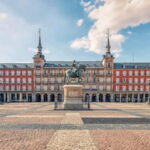
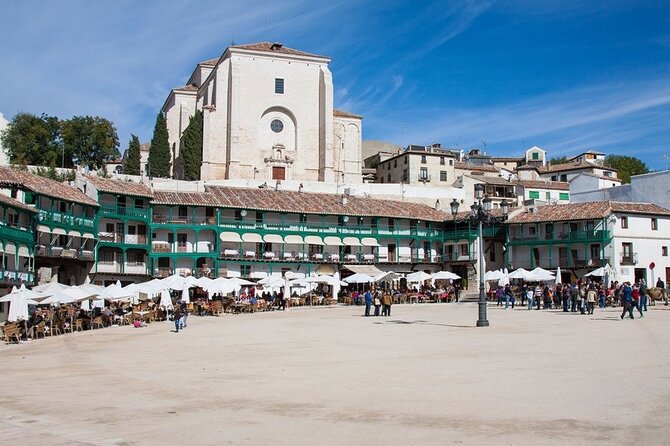
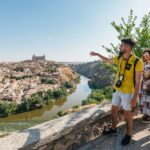
The first stop is in Chinchón, a famous wine-producing area just about an hour from Madrid. You’ll spend around 15 minutes at the main square, with admission not required.
That brief town moment is more than a token photo stop. Chinchón’s main square sets context. You see the kind of place wine culture lives in day-to-day, not just in a tasting room. Even in a short window, you can get your bearings: a sense of the town’s pace, the atmosphere, and why wineries feel natural here instead of staged.
What I’d do with those 15 minutes:
- Walk a bit around the square so you’re not standing in one spot.
- If you like snacks, keep an eye out for quick bites nearby, because your main meal timing will depend on the tasting schedule.
- Take a few notes on the scenery you notice. When you’re later inside cool cellars, you’ll likely remember the shift from bright outdoor light to cooler underground rooms.
The downside of a short town stop is obvious: you won’t get a deep wander. Still, it’s a good way to “arrive in Spain,” then get back into the wine work.
Inside Bodega del Nero: vineyards, cool cellars, and the production story
The core of your morning is at Bodega del Nero. This is where the tour becomes educational, not just scenic.
The guided winery walk (about 1 hour)
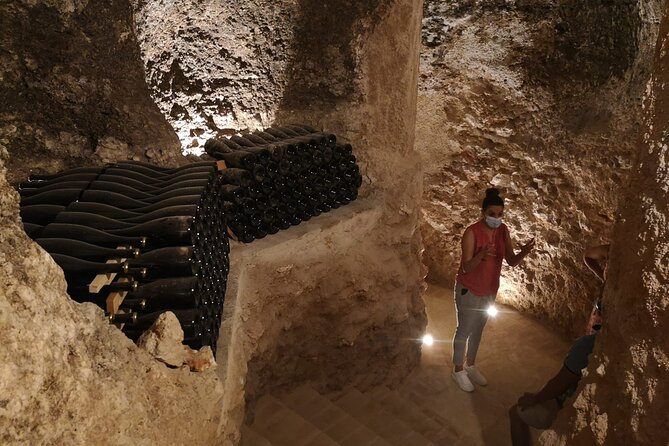
You get a guided tour of the winery premises, including:
- Vineyards
- Cool cellars
- Fermentation tanks
- Barrel rooms (explicitly part of the tour experience)
- The technical process of how winemaking moves from grapes to extracted liquid
This is the section I’d call the “why it tastes the way it tastes” part. You’re hearing how grapes are grown, how the juice is handled, and why fermentation conditions matter for flavor and structure. Even if you’re new to wine, this walk tends to make the tasting later feel less random.
How to get the most out of the cellar time:
- Don’t just look at tanks. Listen for the cause-and-effect language: what changes in the process and how that affects the wine.
- Pay attention to temperature and environment when they point out the cool cellars. Those details are often linked to preserving aromatics and stabilizing fermentation.
You can also read our reviews of more guided tours in Madrid


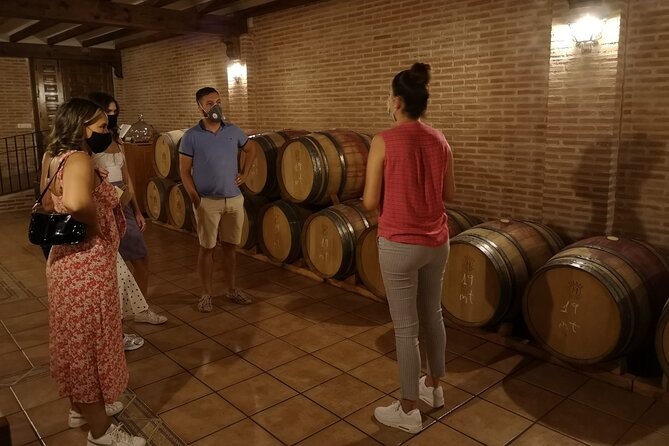
Barrel rooms: why aging rooms can feel like a different world
Barrel rooms are often where wine tours surprise people. You can see the craft in physical form: aging setups and the sense of time passing in barrels.
Even if you don’t know what every barrel detail means, the room experience helps. When the tasting comes later, your brain already has a reference point for where the wine’s character comes from.
Technical talk: grapes to extraction
The tour includes explanation of the technical process starting from grapes growing to extracting the precious liquid. That matters because Spanish wine is not one style. The guide’s framing of process gives you a way to understand differences you’ll taste later, even if you can’t name every variety.
The enologist-led tasting: how the guide helps you taste smarter
After the production walk, you move into the tasting session, guided and focused on tasting with context.
Guided tasting format (about 45 minutes)
You’ll taste several wine types while learning:
- the characteristics of each wine
- pairing alternatives for each type
- how the guide connects flavor notes to food choices
This pairing angle is a big value add. When wine tasting is just “try this, like it or not,” you learn less. When it’s paired with explanations, you walk away with usable guidance: what to order next time, what foods make sense, and how to approach another tasting without feeling lost.
The reviews you’ll see for this kind of tour often talk about the wines and the explanation matching up. Here, the structure is designed for that. You’re not left to figure out your own vocabulary from scratch.
Practical tasting tips:
- Take small sips and let the wine warm slightly in your mouth before deciding what you think. It can change what you notice.
- Use the pairing notes like a checklist for future restaurant orders.
- If you’re driving later, don’t assume you can “taster sip and be fine.” You’ll be sampling multiple wines, so treat it as a no-driving activity.
Group size and pacing: what max 30 travelers feels like
This tour caps at 30 travelers, which is one reason the experience tends to stay calm. Large tours can turn into a shuffle. Smaller groups can keep the guide’s attention spread across everyone without the session turning chaotic.
The pacing also seems built to protect attention:
- 2 hours on transportation so you start onsite with energy rather than jumping between city stops.
- 2 hours onsite split between the winery walk and tasting.
The flip side is that “max 30” still means you won’t have a private question session. If you want deeper back-and-forth about a specific topic like oak aging, you might get brief answers rather than long discussions. Still, with an enologist guiding, you should get clear explanations along the way.
Is the $124.51 price good value for what you get?
At $124.51 per person, this isn’t a budget activity. It’s priced like a structured, guided experience with transport and included tasting.
Here’s why it can still feel fair:
- You’re paying for the guided winery tour and the tasting, not just entrance to a property.
- The tour includes meaningful production walkthrough time (vineyards, cool cellars, fermentation tanks, barrel rooms) plus a guided tasting.
- You also get the “time-saving” portion: 2 hours of transportation that handles the countryside logistics for you.
When wine tourism is underpriced, you often end up with the opposite problem: short talks, rushed tastings, or unclear what’s included. In this case, the onsite schedule is set up so you get both education and tasting in a tight half-day window. That balance is usually what makes the price feel worth it.
Who should book this tour (and who might pass)
This is a strong pick if:
- You want a first real look at Spanish winemaking in a guided way.
- You like the idea of pairing ideas, so you can use what you learn after the tour.
- You’re traveling with a partner or friends and want a shared activity that doesn’t require constant planning.
It’s less ideal if:
- You dislike tasting multiple wines in a single session.
- You only want free time to wander a town for hours. Chinchón is brief here, by design.
- You prefer fully independent DIY wine exploration. This one is structured, for better or worse.
If you fall in the middle—curious about wine, but not trying to become a sommelier—this tour’s format is built for you.
Should you book the Madrid Countryside Wine Tasting & Winery Tour?
I’d book it if you want a guided half-day that combines a town stop in Chinchón with a real winery visit at Bodega del Nero, including cellar sights and an enologist-led tasting. The biggest win is how the tasting is tied to the winemaking explanation, plus the pairing guidance you can reuse later.
I’d skip it if you already know exactly what you want to drink and you’d rather craft your own route. This is for people who want structure, not total freedom.
If you want to make the decision fast, use this rule of thumb: if you’d rather learn and taste with a plan than spend time figuring out where to go, this tour makes sense. If you want independent wandering, you might enjoy building your own day in Madrid instead.
FAQ
What time does the tour start?
The tour starts at 9:30am.
How long is the tour?
It lasts about 4 hours.
Where is the meeting point in Madrid?
It meets at Naturanda Madrid, Plaza de España, 9, Moncloa – Aravaca, 28008 Madrid, Spain.
Does it return to the same place?
Yes, it ends back at the same meeting point.
Is there transportation included?
Yes. The schedule includes about 2 hours of transportation to and from the winery.
What happens in Chinchón?
You stop at Chinchón’s main square for about 15 minutes.
What’s included at the winery?
At Bodega del Nero, you get a guided tour (about 1 hour) and a guided wine tasting (about 45 minutes). Winery admission is included for these parts.
How many people are in the group?
The tour has a maximum of 30 travelers.
Can I cancel for a refund?
Yes. Free cancellation is available if you cancel at least 24 hours in advance of the experience start time.