REVIEW · MADRID
From Madrid: Gems of Andalusia 6-Day Sightseeing Tour
Book on Viator →Operated by Julia Travel S.L · Bookable on Viator
Six days through Andalusia’s biggest icons. This tour groups together UNESCO-level sights and the kind of guided walking you normally need multiple trips to piece together. The big draw is that you’re not just looking at landmarks—you’re getting pointed stories in the exact places where Spain’s different eras overlap.
I especially like the way the included visits cover the headliners you can’t easily DIY: Córdoba’s Mosque-Cathedral, Seville’s Cathedral, and Granada’s Alhambra complex plus the Generalife Gardens. I also like the human side—when guides like Ismael (described as a master historian) or hosts such as Laura, Margherita, and Sonsoles show up, the history landings feel clear and paced, not like a rush-through of dates.
One thing to plan for: this is a walking-heavy route through hilly, cobblestone cities. Even with free time, you’re still moving between neighborhoods and viewpoints, so bring shoes you trust and accept that it won’t feel slow.
In This Review
- Key highlights worth booking for
- First, figure out if this tour matches your travel style
- Mérida and Córdoba: Roman ruins to a former caliphate capital
- Seville Cathedral, Santa Cruz, María Luisa Park, and Plaza de España
- Ronda and Costa del Sol: valley views, then a modern break
- Granada: Alhambra and Generalife first, optional flamenco after
- Getting back to Madrid: what you keep from the road trip
- Hotels and meals: what’s included, what isn’t, and how to avoid meal disappointment
- Included entrances and the real value of $1,189.45 per person
- Group size, language, and pacing: the parts that can make or break your mood
- Should you book this 6-day Andalusia tour?
- FAQ
- What time does the tour start and where?
- How long is the tour?
- Is the tour offered in English?
- Which major attractions are included?
- Are breakfast and other meals included?
- What about transportation and insurance?
- Are there any luggage limits?
- What fitness level do you need?
- How big are the groups?
- What if I need to cancel?
Key highlights worth booking for
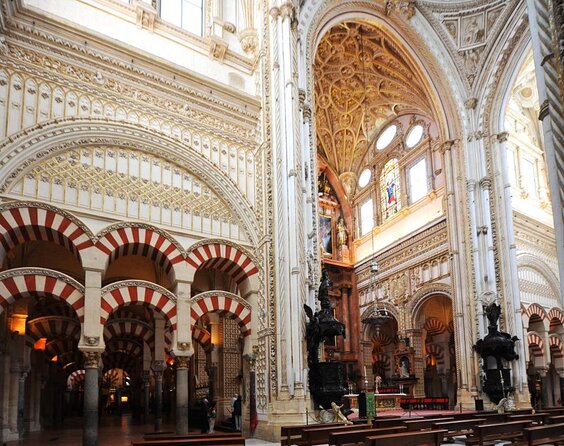
- Included entrances at the Mosque of Córdoba, Seville Cathedral, and Alhambra & Generalife Gardens
- Córdoba + Seville guided time that pairs major monuments with nearby streets and quarters
- Seville classics on day 3: Barrio de Santa Cruz, María Luisa Park, and Plaza de España
- Ronda photo moments tied to the bullring exterior and wide views over valley and mountains
- Granada at the top of the list with the Alhambra complex and Generalife Gardens, plus optional Flamenco Zambra
- A mix of guided time and recovery time, so you’re not only “on tour” all day
First, figure out if this tour matches your travel style
You’re starting from Madrid at 8:30am at Aloft Madrid Gran Via (C. de Jacometrezo, 4, Centro). Then the tour works like a guided road trip: coach travel in between, guided blocks in each city, and some breathing room so you can eat, wander, and reset.
This is a great fit if you like three things:
- Seeing a lot of famous places without spending hours planning tickets and meeting points
- Having a guide connect the dots between eras (Roman, Islamic, Christian, and Spanish legend)
- Taking your “best photo” from each stop seriously, not casually
It’s not the best match if you expect a relaxed, late-start vacation. Reviews also hint that bus comfort and group size can vary, and the towns themselves don’t forgive slow feet. If you’re sensitive to long walking or steep climbs, you’ll want to pack lighter and plan extra time for the uphill bits.
You can also read our reviews of more tours and experiences in Madrid
Mérida and Córdoba: Roman ruins to a former caliphate capital
Day 1 begins with Mérida, the capital of Extremadura. The payoff here is that Roman Mérida still looks like Mérida, not a museum that happens to exist nearby. You get the Roman story in multiple surviving pieces: the theater, the amphitheater, the Roman bridge, and more. If you’re the type who likes architecture that still has a job (people still move through it), this kind of ruin is satisfying.
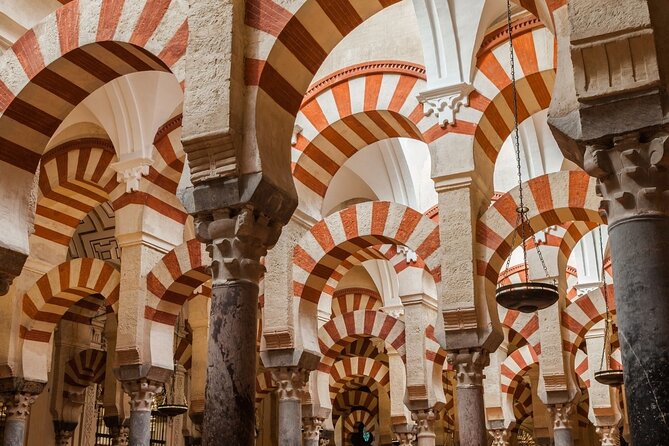
Then the tour continues to Córdoba for your hotel stay. Córdoba is one of those cities where the past feels layered instead of replaced. Your guided time focuses on the Mosque, which today functions as a cathedral—so you’re not just hearing about history, you’re walking through a building that physically reflects it. Expect the guide to connect the interior with strolling through the narrow Jewish Quarter streets after the Mosque visit. That combination matters because it turns a big-ticket monument into something you can picture in context.
Practical tip: this route is built on getting you from coach doors to walking streets fast. In older Spanish centers, you’ll want to keep your “day essentials” (water, phone charger, a light layer) reachable without digging through your main suitcase every time.
Seville Cathedral, Santa Cruz, María Luisa Park, and Plaza de España

Seville is where this tour feels like it hits maximum payoff per hour. You get a morning city tour with entrance to the Cathedral—described as the second-largest in the Catholic world after St. Peter’s in Rome—plus time in the Barrio de Santa Cruz. You also loop through key “Seville scenes” that people associate with stories and cinema: the setting of Carmen and the origin area for the myth of Don Juan.
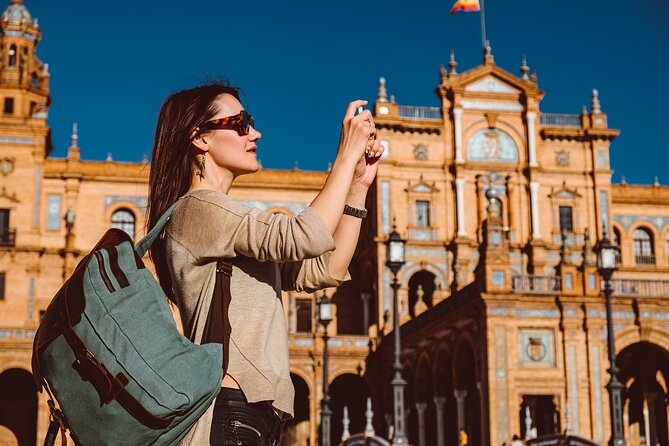
Then you shift into the calmer, greener side of Seville: María Luisa Park and Plaza de España. Even if you’ve seen Plaza de España in photos, it’s one of those places where being there changes what you notice—texture, spacing, the way crowds move, and how the city’s different neighborhoods connect visually.
A tip I’d keep in your pocket: schedule your best camera stops with rest in mind. The route gives you leisure time in the afternoon, which is when I’d do the “slow looking” stuff—street corners, small plazas, and shaded walkways—so you don’t burn out before nightfall.
Ronda and Costa del Sol: valley views, then a modern break
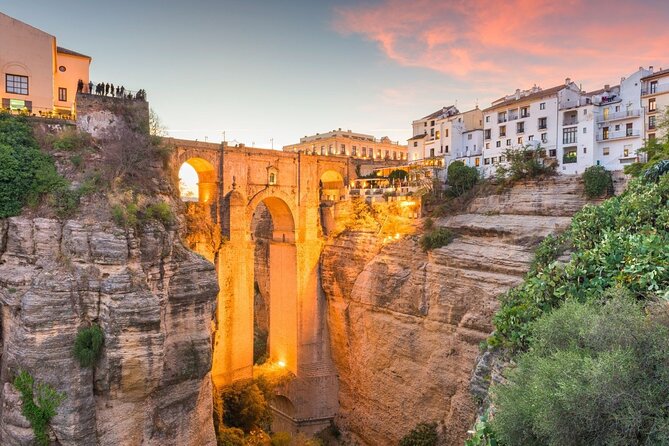
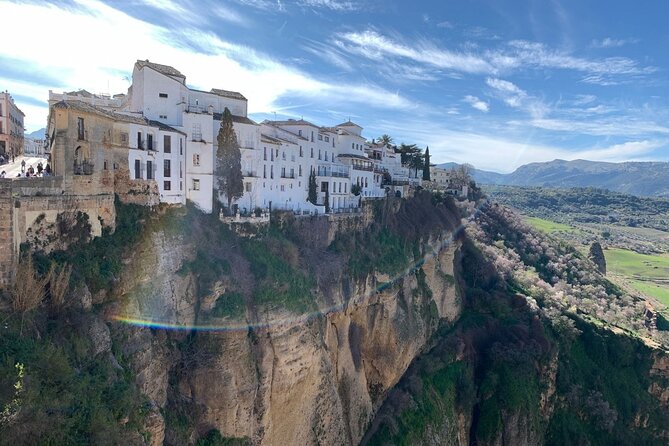
Ronda is one of Spain’s most photogenic interruptions in an otherwise history-heavy itinerary. You’ll drive south through typical villages, then arrive for leisure time to admire the town’s origins and the view over the valley and mountain range.
The bullring is a big deal here, and the tour includes the right kind of nudge: have your camera ready. This is Spain’s oldest bullring, and even when you’re only seeing it from the outside, the setting and architecture give you that “you’re really here” feeling.
After Ronda, the tour continues to the Costa del Sol, described as a modern and important international tourist area. This is your change-of-gear day. In practice, Costa del Sol can feel like a resort strip more than a walkable “old city,” so this is the moment to do whatever your body needs:
- a long café break
- a late lunch
- or just the quiet benefit of less hill-climbing
If you want to add a side trip, keep in mind that not everything is close just because the hotel is “on the Costa del Sol.” The distance between sights can surprise you, so plan transport options before you commit.
Granada: Alhambra and Generalife first, optional flamenco after
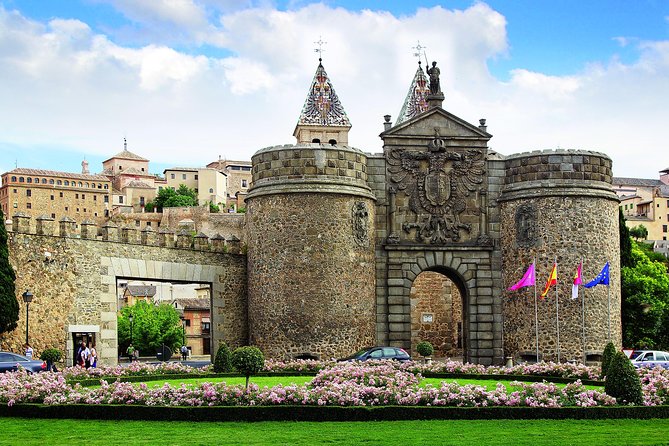
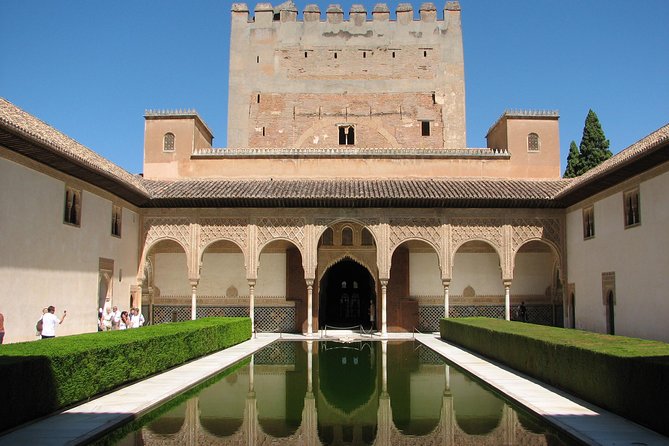
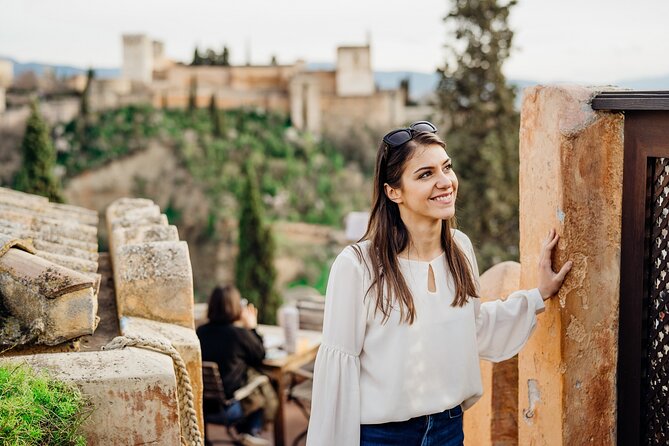
Granada is handled differently from most stops because the Alhambra complex is the entire atmosphere. You leave in the morning and visit the world-renowned Alhambra and the Generalife Gardens—both included. The Generalife Gardens are especially worth taking slow; this is where Washington Irving’s Tales of the Alhambra inspiration comes up, and it’s easy to see why authors get fired up here.
One smart way to enjoy Alhambra is to treat it like two visits:
- the structured tour and set-piece rooms
- and then your own time to notice details you missed earlier
You also have an optional Flamenco Zambra show in the evening. If you like performance art, this is the time to say yes, because the rest of the day is already heavy with walking and museum-like concentration. If you’re tired, you can skip it without feeling like you missed the “main event,” since the Alhambra is the anchor.





Getting back to Madrid: what you keep from the road trip
On day 6 you return north to Madrid, and the services end back at the meeting point area. The value of ending with the ride back is simple: you keep the trip’s momentum without having to negotiate trains or driving.
What you’ll likely carry home is not just a checklist of monuments. This kind of itinerary helps you “feel” the geographic story of southern and western Spain: Roman Extremadura roots, Andalusian city layers, and the shift from inland stone to the coastal reset.
Hotels and meals: what’s included, what isn’t, and how to avoid meal disappointment
Hotel accommodation is included throughout, and breakfast is included on 5 mornings. Food and beverages aren’t included unless specified, which means dinner and lunches are mostly on you.
Based on past participant experiences, hotel quality can vary by stop. Some people were happy with comfortable, well-located hotels, while others flagged Granada lodging choices as a weak point—one example was Hotel Gran Luna being described as run down and inconvenient to reach. I don’t think you should assume every room will be perfect, so check what matters to you:
- room privacy (thin walls can be an issue in older buildings)
- location versus distance to the historic center
- air-conditioning performance, since Andalusia can run hot
For food, expect breakfast to be handled. For dinners, you might get arranged meals at certain hotels, but quality can vary. If you’re a foodie, don’t treat hotel dining as a guarantee. Build a plan to step out and eat local, especially in Seville and Granada where the street options are the real attraction.
Included entrances and the real value of $1,189.45 per person
At $1,189.45 per person, you’re paying for more than sightseeing. You’re buying:
- a luxury coach between regions
- a bilingual tour director throughout (English and Spanish)
- hotel stays
- travel insurance
- guided visits in Córdoba, Seville, and Granada
- and key monument entrances: Mosque of Córdoba, Seville Cathedral, and Alhambra & Generalife
Here’s how I think about the value: tickets for “top tier” sites add up fast, and the biggest hidden cost of DIY is time. This tour removes the planning stress—ticket timing, day-to-day navigation, and the risk of missing entry windows. You pay for the convenience, plus the guide’s ability to explain what you’re looking at in the same hour you’re standing in it.
Would it be cheaper to go it alone? Often, yes. But if you want to feel productive without feeling frantic, the structured approach can be worth it—especially for first-timers to Andalusia.
Group size, language, and pacing: the parts that can make or break your mood
The tour lists a maximum of 40 travelers, and that matters for how quickly things move in narrow streets. At the same time, some departures have run with much larger groups, and that changes everything—waiting times, bus seating comfort, and how much attention your guide can realistically give.
Language is another practical point. You’ll have a bilingual tour director (English and Spanish). Some people love the balance; others feel the switch adds boredom or confusion if you’re trying to follow one language closely. If you strongly prefer an English-only experience, I’d ask the operator what the on-tour directing language pattern is for your date.
Finally, pacing. This itinerary is packed into 6 days with multiple cities and plenty of walking inside cities. Reviews repeatedly mention cobblestones and steep hills as real challenges. The tour says moderate physical fitness is expected, so I’d trust that and pack accordingly.
My best advice to protect your energy:
- wear shoes built for cobblestones
- carry a small water bottle
- keep your phone charged for navigation and photo bursts
- use the free time like a recovery tool, not an obligation
Should you book this 6-day Andalusia tour?
Book it if you want the core highlights—Córdoba, Seville, and Granada—handled with included entrances and guided time, and you’re comfortable with a walking-heavy schedule. This tour is built for people who like history translated on the spot and who don’t want to spend their vacation troubleshooting logistics.
Skip or rethink it if:
- you need a very light walking day every day
- you get stressed by waiting and tight timing
- you want a more English-only feel throughout
- you’re hoping for lots of deep free time in one city instead of a broad sweep
If you do book, go in with the right mindset: this is a “see the big stuff and learn fast” style of tour. With solid shoes and flexible expectations, it can turn Andalusia into one smooth, memorable arc rather than a complicated puzzle.
FAQ
What time does the tour start and where?
The tour starts at 8:30am at Aloft Madrid Gran Via (C. de Jacometrezo, 4, Centro, 28013 Madrid). It ends back at the meeting point.
How long is the tour?
It runs for 6 days (approximately).
Is the tour offered in English?
Yes. The tour is offered in English, and the tour director is bilingual (English and Spanish) throughout the journey.
Which major attractions are included?
Entrance is included for the Mosque of Córdoba, Seville Cathedral, and the Alhambra & Generalife Gardens.
Are breakfast and other meals included?
Breakfast is included for 5 days. Food and beverages are not included unless specified.
What about transportation and insurance?
You travel by luxury coach, and travel insurance is included.
Are there any luggage limits?
Yes: one regular suitcase and one handbag per person are allowed. Extra luggage may be charged, and luggage handling is your responsibility.
What fitness level do you need?
The tour requests moderate physical fitness.
How big are the groups?
The tour lists a maximum of 40 travelers.
What if I need to cancel?
You can cancel up to 6 days in advance for a full refund, with smaller refunds available if you cancel closer to the start date, based on the local time of the experience.