REVIEW · MADRID
Architecture tour Gran Vía from its best rooftops 20thC
Book on Viator →Operated by architoursmad · Bookable on Viator
Gran Vía changes when you see it from above. This architecture tour links Madrid’s rooftop views to landmark 20th-century buildings, with a local architect making the city’s growth feel logical instead of random.
I love how the tour starts high at the Azotea del Círculo de Bellas Artes and then moves you into the Antonio Palacios building, so you get both skyline context and actual architectural detail. I also love the way Emilio (the guide) brings the story together using plans and historical photos, connecting styles you might otherwise notice but not fully understand.
One thing to consider: this experience needs good weather, and the day can feel longer if it’s cold, windy, or rainy. Plus, it’s not an all-interiors tour—you’ll spend most of your time on rooftops and moving between highlights along Gran Vía.
In This Review
- Key Highlights to Expect on This Gran Vía Architecture Tour
- Rooftop-First Architecture: How Madrid Becomes Understandable
- Azotea del Círculo de Bellas Artes: Views Plus the 20th-Century Road Map
- Antonio Palacios Inside: The Staircase Transition That Changes How You Look
- Museo Chicote: Art Deco Glamour in a Short Stop
- Edificio Telefónica (1929 → 2012): A First Skyscraper with a Long Life
- Edificio Carrión and the Schweppes Neon Era by Plaza del Callao
- Plaza de España Rooftop Finish: Palace, Cathedral, and Casa de Campo Views
- Price and Value: Why $216.62 Can Make Sense
- Who Should Book This Tour (and Who Might Want Something Else)
- Timing, Weather, and What to Wear on Rooftops
- Getting Started at the Meeting Point and Ending at Plaza de España
- Should You Book This Gran Vía Rooftop Architecture Tour?
- FAQ
- What’s the duration of the tour?
- What does the tour cost?
- Is the tour offered in English?
- Where does the tour start and end?
- What’s included in the price?
- Are all building entrances included?
- Are drinks included on the rooftop?
- What’s the weather requirement?
- Final Tip
Key Highlights to Expect on This Gran Vía Architecture Tour
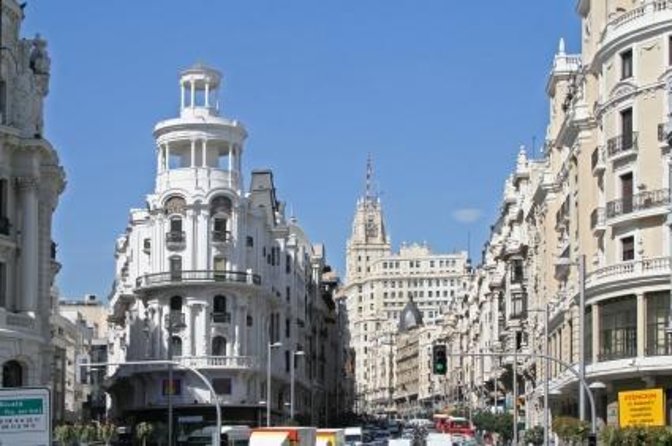
- Rooftop start at Círculo de Bellas Artes with sweeping views and an architectural big-picture talk
- Interior visit inside Antonio Palacios’s building after the rooftop overview
- Edificio Telefónica as a time machine, from its 1929 first-skyscraper identity to a later 2012 reform
- A fast art-deco moment at Museo Chicote, tied to Madrid film premieres and famous names from the era
- A rooftop finish near Plaza de España, with Royal Palace, Cathedral, and Casa de Campo views in one direction
Rooftop-First Architecture: How Madrid Becomes Understandable
If Madrid’s Gran Vía can feel like one long burst of buildings, this tour gives you the reason behind the shapes. You start with heights and sightlines, then the guide ties what you see to planning decisions, design fashions, and the city’s changing priorities.
The format is smart for real travelers. You get visual context early, then you walk out with a mental map: which buildings were about status, which were about technology, and which were about branding—yes, neon included. Emilio’s style is also practical. He explains what to look for on façades, then points to historical clues so you can keep spotting patterns even after the tour ends.
One more bonus: it’s private, and it’s led by a local architect. That combination usually means you’re not just hearing facts. You’re hearing why those facts matter in a city that’s constantly being rebuilt, updated, and reinterpreted.
You can also read our reviews of more tours and experiences in Madrid.

Azotea del Círculo de Bellas Artes: Views Plus the 20th-Century Road Map
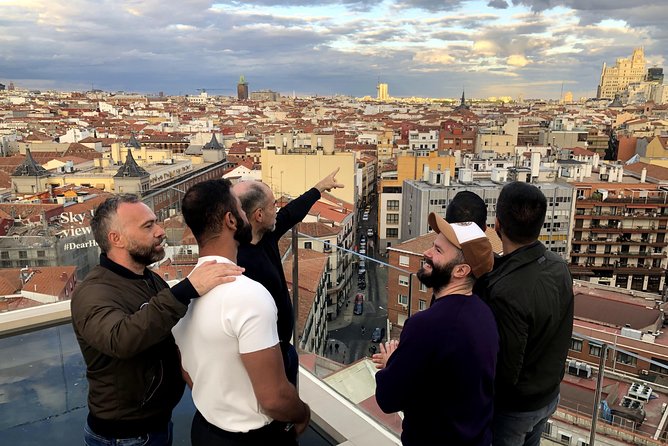
You begin at the Azotea del Círculo de Bellas Artes, which is exactly the right kind of first stop for this theme. You’re above street level, so you can see how Gran Vía’s corridor lines up with the rest of central Madrid. That matters, because the story of Madrid’s architecture isn’t just about individual buildings—it’s also about how the city decided to connect neighborhoods, move crowds, and project modernity.
From this rooftop, you’ll get an urban and architectural overview, including how the city developed over time. In simple terms: you learn how Madrid went from older structures and thinking to a more modern, vertical, and design-conscious era. Then the tour shifts from looking out to getting closer.
Practical note: rooftop time is real time. If it’s breezy, you’ll feel it. Dress in layers, and be ready for brief moments where you’re just standing and taking in the skyline. The guide does the talking, but you’re also doing some sightseeing yourself.
Antonio Palacios Inside: The Staircase Transition That Changes How You Look
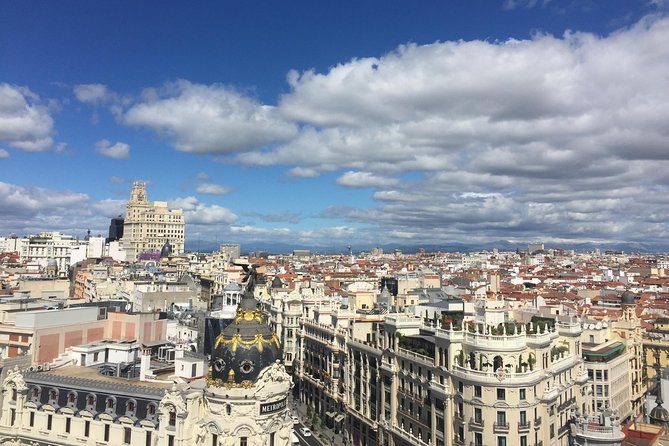
After the rooftop orientation, you head down the impressive staircase and into the interior of the Antonio Palacios building. This is where the tour stops being abstract and becomes physical.
Palacios is one of the key figures behind early 20th-century Madrid architecture, and the visit helps you see the building as more than a pretty façade. Even if you’re not an architecture fanatic, this is the kind of stop that pays off because it turns your “I’ve seen this” into “I understand why it’s designed that way.”
A frequent frustration on architecture tours is that they talk a lot and deliver little space to experience. Here, the interior visit is a built-in correction. You still get the rooftop viewpoint, but you also get the scale, materials, and design logic you can’t fully grasp from the street.
Museo Chicote: Art Deco Glamour in a Short Stop
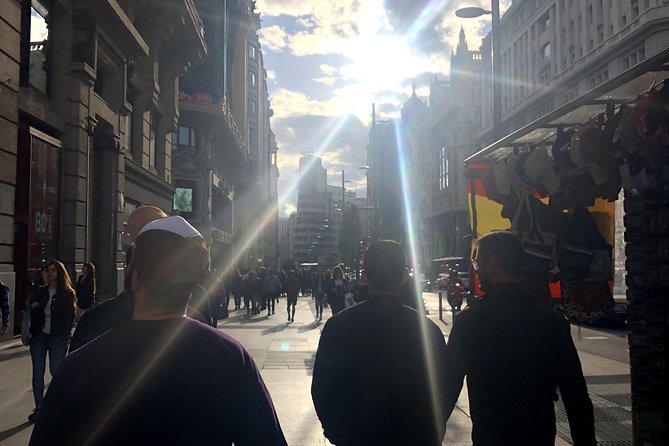
Next comes Museo Chicote, the famous cocktail setting that dates to 1931 and reflects the art-deco mood created by architect Luis Gutiérrez Soto. This is a quick stop—about five minutes—but it’s timed well.
Why it works: it gives you a cultural layer. You’re not only looking at buildings as objects; you’re connecting them to how Madrid displayed itself to the world. The space is associated with film premieres and the glamorous nightlife of the era, with names stretching from Ava Gardner to Almodóvar in the collective memory of Madrid cinema culture.
What to pay attention to even in a short visit:
- design details that scream art deco styling
- the atmosphere of the place (even if you don’t spend long inside)
- how entertainment spaces helped shape the modern city image
A key practical point: the tour’s time here is brief, and the idea isn’t to linger. It’s a scene-setter, and it helps you understand the style language you’ll keep seeing along the Gran Vía stretch.
Edificio Telefónica (1929 → 2012): A First Skyscraper with a Long Life
Then you move to Edificio Telefónica, where you can get inside the first skyscraper in Madrid. The building’s story spans its original 1929 construction identity and a later reform in 2012. That long timeline is the real value of this stop.
Many architecture tours treat buildings like frozen museums. This one reminds you that architecture changes. Technology, needs, and even branding evolve, and buildings often get redesigned to keep functioning in a modern city.
Even with a relatively short interior visit (around 20 minutes), the key is the context your guide provides. You’re learning what the building represented when it was new—how a “skyscraper” concept landed in Madrid—and how later updates reshaped its role.
If you like buildings that have lived multiple careers (not just one moment of fame), this is one of the best stops on the day.





Edificio Carrión and the Schweppes Neon Era by Plaza del Callao
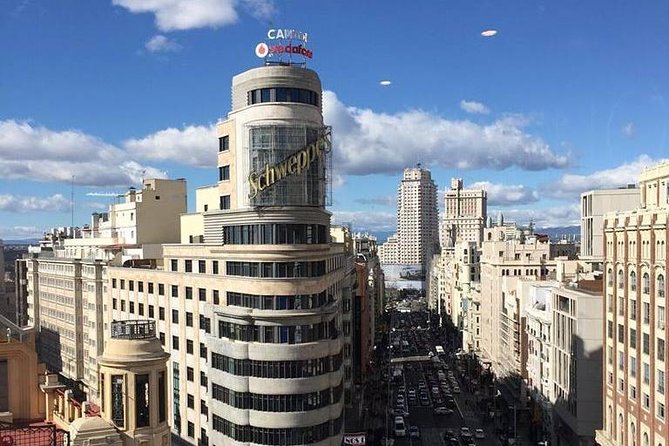
Edificio Carrión is a quick hit—about five minutes—but it’s memorable because it ties architecture to advertising culture. You’ll learn about the 1933 building and the famous Schweppes neon presence, plus how it fit into the surroundings around Plaza del Callao.
This is one of those stops that changes how you read the street. In Madrid, signage and branding became part of the city’s visual identity. The building isn’t just architecture; it’s also part of a commercial language that people recognized immediately.
Look for this kind of clue:
- how the building’s features and surrounding spaces help it function as a landmark
- how public spaces and commercial design support each other
Short stop, big payoff for anyone who thinks neon belongs only to modern times. It didn’t.
Plaza de España Rooftop Finish: Palace, Cathedral, and Casa de Campo Views
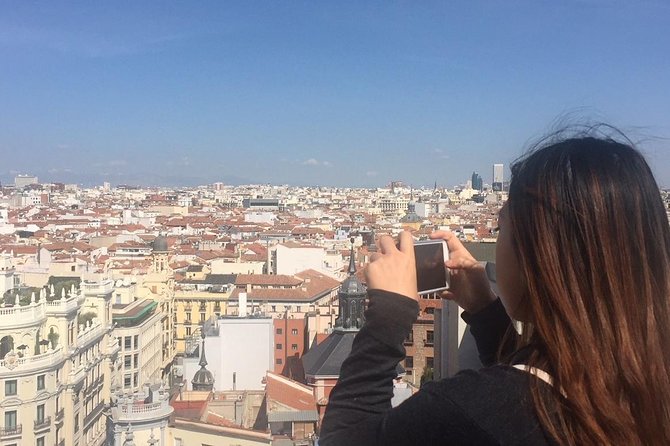
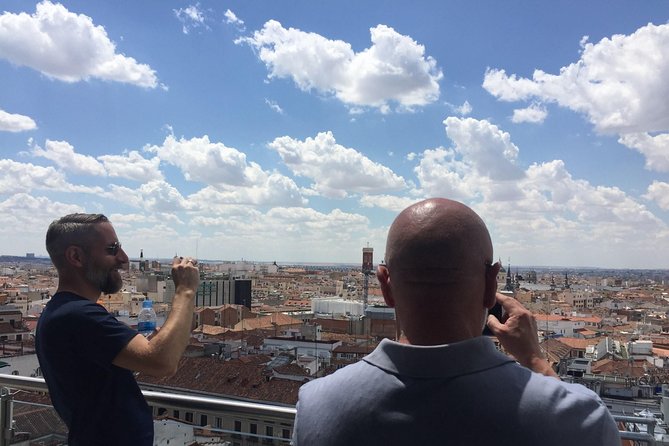
You end on a rooftop finish near Plaza de España, described as a secret terrace of a hotel. The view is the reward, and it’s the right ending for an architecture tour: you can point your eyes and say, that’s the Royal Palace, that’s the Cathedral, that’s the Royal Theater, and beyond it the Casa de Campo forest line.
There’s also an optional way to linger. You could stay on the rooftop with a drink while you enjoy the views, but alcoholic beverages are not included.
One practical thing: this stop can be your best moment or your least comfortable one, depending on the day’s weather. If it’s chilly or windy, you’ll want that layer strategy again. But if the sky cooperates, this is the part that makes the hours feel worth it. You finish with a city-picture you can actually hold onto.
Also note: there’s an option to finish at the RIU Hotel rooftop on specific days, with a listed extra cost schedule. If you’re the type who likes a longer hang time, it’s worth considering—just factor in the extra fee.
Price and Value: Why $216.62 Can Make Sense
At about $216.62 per person for roughly 3 hours 35 minutes to 4 hours, this isn’t a budget walking tour. It’s priced more like a guided architecture experience with paid access and an expert-led plan.
Here’s where the value comes from:
- You get a guided interior visit (Fundación Telefónica entrance) rather than only exterior photo stops.
- You get an architect-led interpretation, plus historical photos and plans to connect different decades.
- You get rooftop viewpoints at both ends, which is often where architecture tours either shine or fall flat.
Is it perfect value? If you’re expecting lots of long interior time at every stop, you may feel the pace is brisk. It’s still worth it, because the tour is designed around perspective changes—roofline to street level, one era to the next—rather than checking off dozens of buildings.
One more signal: it’s often booked around 19 days in advance on average. That suggests a real demand for the rooftop access and specific building entries. If you’re traveling in peak season or on a tight schedule, booking ahead helps you lock in the time slot you want.
Who Should Book This Tour (and Who Might Want Something Else)
This is a strong match if you:
- like architecture with context, not just a list of dates
- enjoy Gran Vía and want a better lens for what you’re looking at
- want two rooftop moments plus interior access, without spending the whole day indoors
It’s less ideal if you:
- want a long interior tour of many buildings (this day is focused and paced)
- hate stairs or are traveling with a stroller (there are stairs involved)
- are traveling on a day that’s likely to be cold or rainy, since the experience depends on good weather
The best part is that Emilio is described as engaging and very organized, with a style that helps you follow the story while you’re moving through the city. You’ll leave with a new way of noticing details on façades and remembering what each era was trying to do.
Timing, Weather, and What to Wear on Rooftops
This experience requires good weather, and the tour includes rooftop time at both ends. That means what you wear matters more than usual.
I’d plan for:
- layers you can adjust quickly
- a light rain option just in case
- shoes with good grip for stairs and sidewalks
Even on a decent day, rooftops can be windy. If your goal is to get the most out of the skyline portion, comfort helps. The guide will keep things moving, but you’ll still be outside for the big viewpoint moments.
Getting Started at the Meeting Point and Ending at Plaza de España
You’ll meet at the Azotea del Círculo de Bellas Artes de Madrid at C. del Marqués de Casa Riera, 2, Centro (near public transportation). The tour ends at Plaza de España, Madrid.
It’s a tidy start-to-finish plan. You go from a rooftop beginning that sets the story, to a Gran Vía focused walk, then back up to a rooftop ending that lets you translate the buildings you saw into a wider city picture.
Should You Book This Gran Vía Rooftop Architecture Tour?
Book it if you want a guided architecture experience where the viewpoints and interiors work together. This tour is built for people who like details, appreciate cultural context, and want to understand why Gran Vía looks the way it does—not just admire it.
Skip or consider something else if you need a low-weather day plan, want lots of long indoor time, or can’t handle stairs. The day is designed around rooftop time and focused stops, so your comfort and expectations should match that rhythm.
If you’re standing in Madrid and wondering how to see the city differently fast, this is one of the most direct ways I know to do it.
FAQ
What’s the duration of the tour?
The tour runs about 3 hours 35 minutes to 4 hours.
What does the tour cost?
The price is $216.62 per person.
Is the tour offered in English?
Yes, it’s offered in English.
Where does the tour start and end?
It starts at Azotea del Círculo de Bellas Artes de Madrid and ends in Plaza de España, Madrid.
What’s included in the price?
Included items are the Fundación Telefónica entrance and a visit led by a local architect with plans and historical photos for context.
Are all building entrances included?
Not all entrances are included. The Circle of Fine Arts has an entrance fee of €6.00 per booking.
Are drinks included on the rooftop?
No. Alcoholic beverages are not included. Drinks on the rooftops are not included.
What’s the weather requirement?
This experience requires good weather. If it’s canceled due to poor weather, you’ll be offered a different date or a full refund.
Final Tip
If you’re choosing between this tour and a casual Gran Vía stroll, pick this one. You’ll look at the same buildings and notice different things—especially after you’ve seen Madrid from those rooftops.