REVIEW · TOLEDO
The Enchanted City: A Mysterious Tour of Toledo
Book on GetYourGuide →Operated by FOLLOW ME TOLEDO · Bookable on GetYourGuide
Toledo after dark feels like a different city. This night walking tour turns familiar corners into stories of Templars, fear, faith, and the kind of alley gossip you only get when the lights go low. I especially love how the mysterious street names become a guided puzzle, and how the route ties legend to real Toledo landmarks. One thing to consider: the tour is in Spanish, so if you want English narration, you’ll need to plan accordingly.
You start right where the city’s pulse has always been—Pl. Zocodover—then you keep moving through the old streets until you circle back. It’s only 1.5 hours, and the price is low enough that you can fit it even on a tight Toledo day. One more plus: there’s no ticket circus, just a guide and a walk through the night.
In This Review
- Key things I’d plan for
- Toledo after sunset: the other Toledo you actually feel
- Starting at Pl. Zocodover: where the night tour gathers its energy
- Alcázar and the story of conflict: history you can see from height
- Plaza del Seco and the Templar thread: symbols with a local rooting
- Devil Street, Callejón Infierno, and Callejón Diablo: why the names matter
- Puerta del Reloj and Nuncio Viejo: gates, “belonging,” and the city’s rules
- Plaza Santo Domingo Real and Virgen de Alfileritos: the legend landing point
- Cathedral and San Pedro Mártir: faith, spectacle, and the darker turns
- Price and time: does $10 buy real value?
- Language, groups, and practical comfort
- Should you book The Enchanted City night tour?
- FAQ
- What is the duration of The Enchanted City: A Mysterious Tour of Toledo?
- How much does the tour cost?
- Where does the tour start?
- Where does the tour end?
- Is there an extra ticket cost or additional expense?
- What language is the tour in?
- Is the tour wheelchair accessible?
- How many people can be in a group?
- Is there a minimum number of participants?
- Can I cancel for a refund?
Key things I’d plan for
- Legends with place names: street-by-street stories like Devil Street and Callejón Infierno
- Templar footprint links: the route connects night mythology to Toledo’s historical traces
- Staying power in 1.5 hours: a compact walk that covers a lot without dragging
- Real historical pressure points: Spanish Civil War stories and religious-era events at key stops
- A fun guide vibe: one guide named Adrián is described as funny and friendly, with history told clearly
Toledo after sunset: the other Toledo you actually feel
Daytime Toledo is all postcards and viewpoints. Night Toledo is different. The streets get narrower, the shadows get longer, and suddenly those dramatic names make sense. This tour leans into that shift on purpose: it’s built for the part of you that wants Templars on horses, witches in the background, and myth that feels like it could still be whispered down an alley.
The best value here is that you don’t just get legends floating in space. You get them placed onto specific Toledo locations—squares, gates, narrow passages, and religious buildings. That matters because Toledo’s reputation is earned by layers. Even if you don’t know the names of every era, you’ll start connecting the dots by the time you reach the middle of the route.
And yes, the tone stays playful. It’s not a horror show, but it does treat the city like it has secrets worth talking about after dark. If you like night walks that feel story-driven—rather than museum-driven—this one fits well.
You can also read our reviews of more city tours in Toledo

Starting at Pl. Zocodover: where the night tour gathers its energy
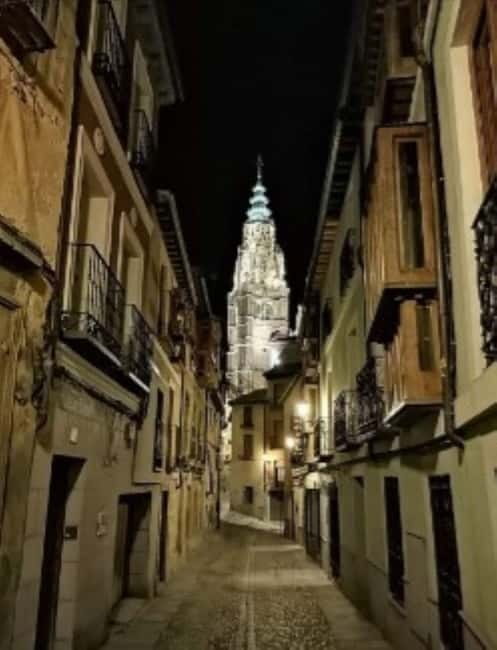
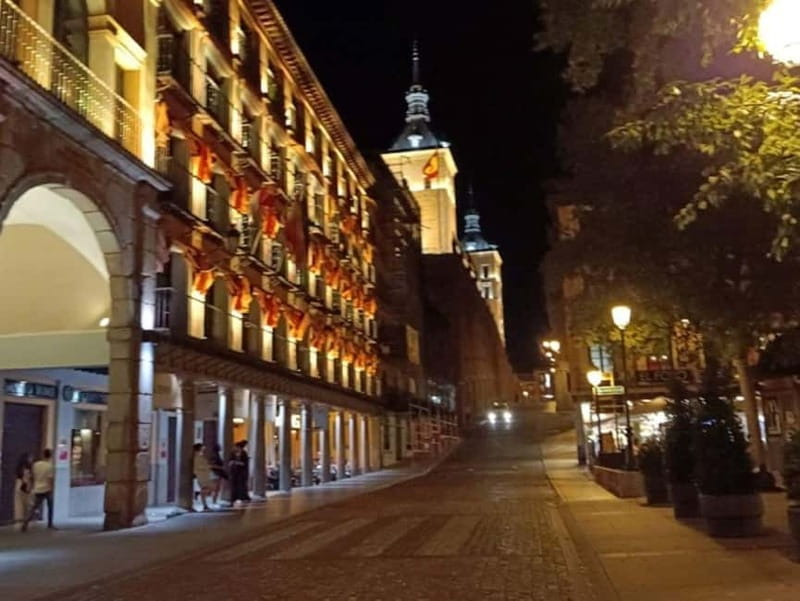
You meet at Pl. Zocodover, 5, at the FollowMe Toledo spot next to the Koker store and a pharmacy. It’s a smart choice because Zocodover is the kind of central square where your brain instantly maps the city. From the start, the guide sets the theme: this isn’t just a stroll for photos. It’s a guided trip through a Toledo that has seen public spectacle, punishment, and power.
This first stretch is important for two reasons. First, it helps you get your bearings fast—Zocodover is the anchor point. Second, the tour frames the night by reminding you that Toledo’s history isn’t tidy. The square is described as a place where major events took place, including autos de fe and executions. The guide uses that context to make the rest of the route feel more meaningful.
Practical tip: since it’s a walking tour, wear shoes you trust on uneven cobblestones. Even though the route is planned, Toledo’s streets always have that “one more twist” feel.
Alcázar and the story of conflict: history you can see from height
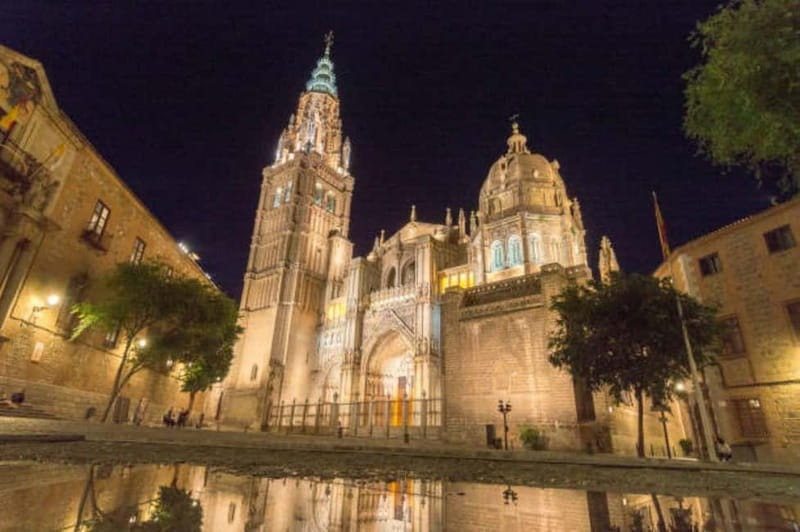
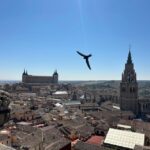
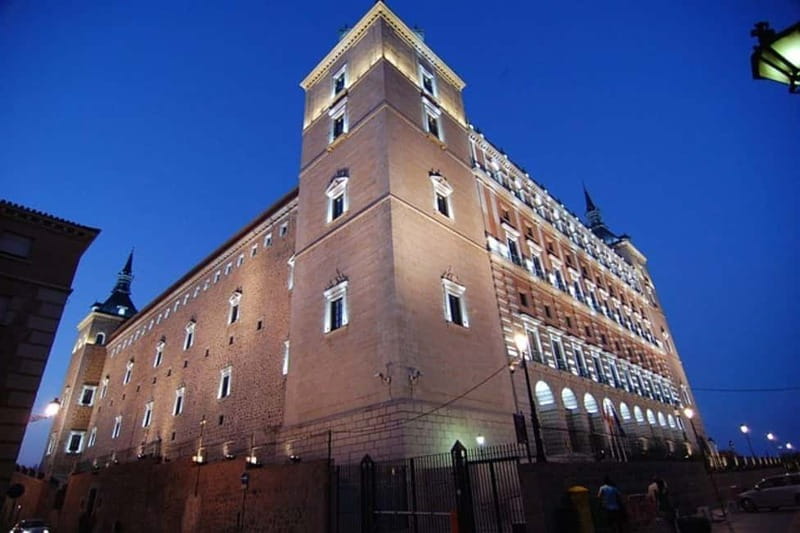
The tour heads toward the Alcázar of Toledo, moving up to one of the city’s higher points. This stop is where the night tone meets hard historical reality. The guide explains what happened here during the Spanish Civil War, turning the viewpoint into a reminder that this city’s drama wasn’t only mythical.
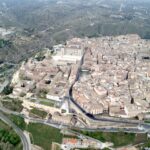
Why this works on a night tour: height changes how you read a place. When you’re higher up, you can sense the layout—where the streets funnel down, where the city protects itself, where routes would have mattered. That makes the later alley stops more than just “cool streets with weird names.” They start feeling like parts of a system.
If you’re the type who likes history lessons that don’t feel like a lecture, you’ll probably appreciate the balance here: the tour uses the Alcázar for context, then shifts back into legends as you move.
Plaza del Seco and the Templar thread: symbols with a local rooting
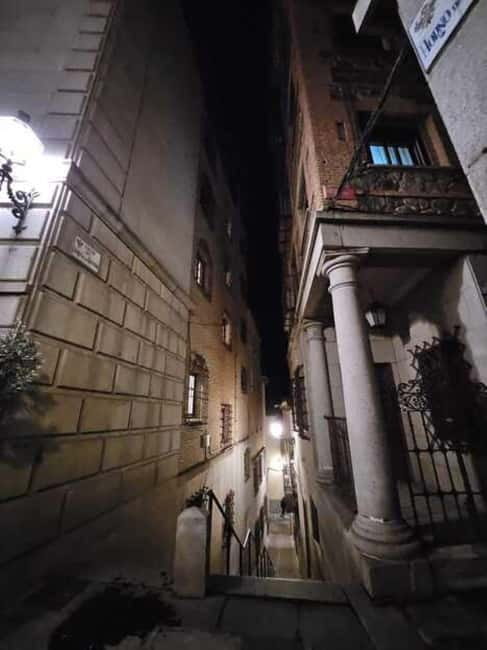
As you head toward Plaza del Seco, the guide leans into the Templar footprint. This is where the tour connects the idea of knights and mysteries to something grounded in Toledo. One of the standout details mentioned in the tour description is the story of Solomon’s table being once in this city.
Even if you’ve heard a few Templar claims before, this stop matters because it’s tied to Toledo’s own myth vocabulary. In other words, you’re not recycling generic conspiracy folklore. You’re learning the specific legends and hints that people associate with Toledo at night.
From a value perspective, this part also gives you momentum. You’ve already seen the city’s central energy. Now you’re getting the “why” behind the night mood—how the tour’s core theme (mystery) is connected to particular places.
Devil Street, Callejón Infierno, and Callejón Diablo: why the names matter
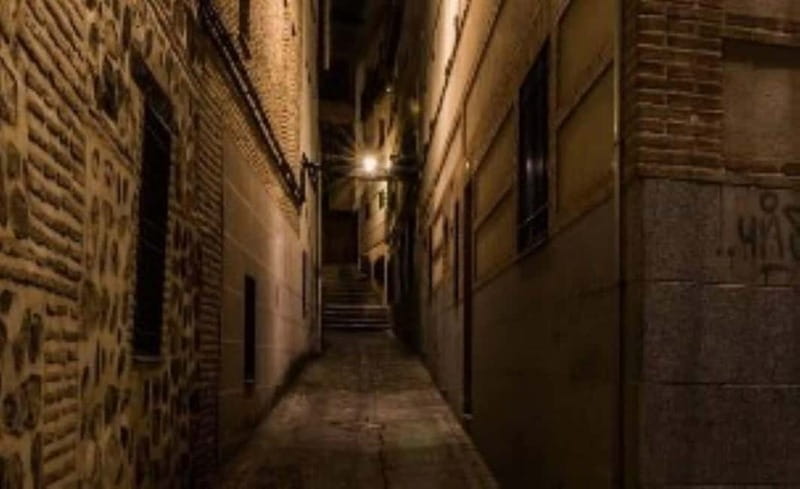
This is the stretch most people remember afterward because it’s so Toledo. You move through streets described as Devil Street, the alley of hell (Callejón Infierno), and Callejón Diablo. The tour promises the explanation behind these names, and that’s exactly what makes this segment worth it.
Street names are more than trivia here. In old cities, names often preserve fear, reputation, and local storytelling. A guide who can connect a name to a legend—and then tie it to how people lived—gives you an easy way to understand the city’s mindset across eras.
If you like “small” stops that lead to big understanding, this is one. You’re not waiting around for a long script or a quick photo. You’re walking through a living hint system: the route teaches you to read the city like a text.



Puerta del Reloj and Nuncio Viejo: gates, “belonging,” and the city’s rules
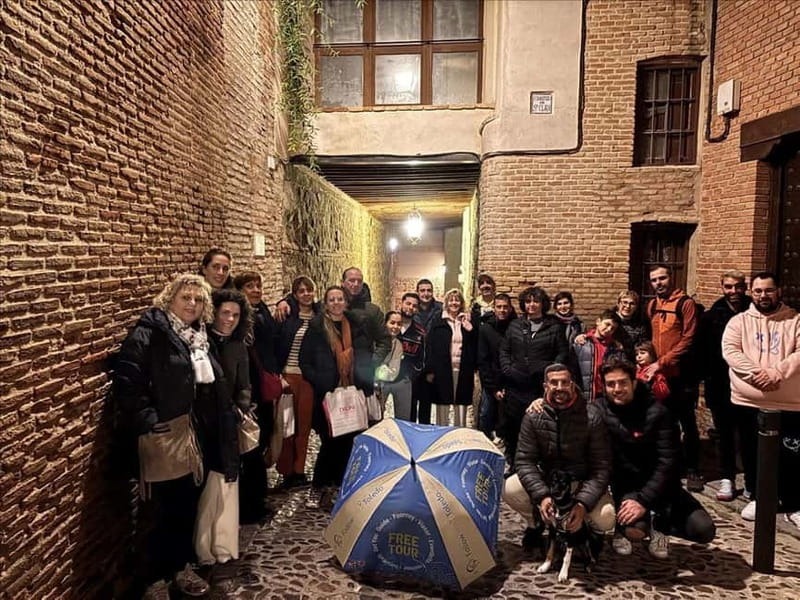
Next comes Puerta del Reloj, the kind of place that gives you a sense of boundaries—what was inside, what was controlled, and how movement mattered. Doors and gates are natural story anchors on a night tour because they imply thresholds. You’re moving from one kind of Toledo story to another.
After that, you pass through Calle Nuncio Viejo, described as a street that belongs to Toledo. That phrase might sound poetic, but it points to the tour’s core style: it treats the city like it has ownership of its own narratives. Instead of presenting history as a list, it frames it as something that’s still attached to streets and buildings.
If you’ve ever visited a historic city and felt like you walked through “cool stuff” without understanding the relationships, this is the part where the relationships start forming.
Plaza Santo Domingo Real and Virgen de Alfileritos: the legend landing point
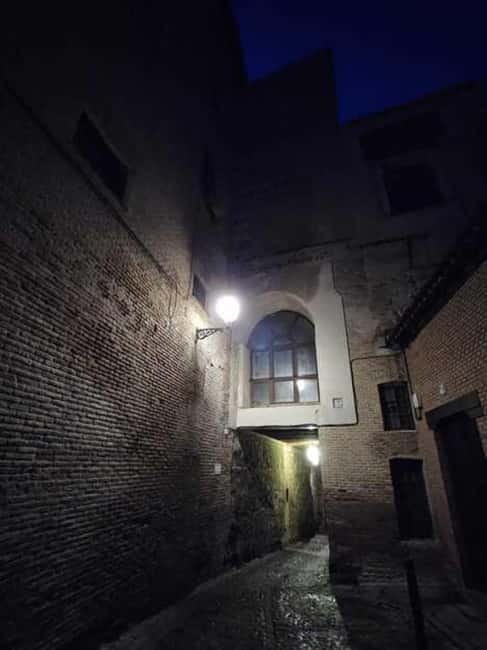
You reach Plaza Santo Domingo Real, then the tour culminates in the legend and image of the Virgen de Alfileritos. This is an end-stage stop that’s both visual and story-based. The tour description makes it clear you’ll hear about the legend and see the image tied to Alfileritos.
Why I think this is a strong finish: it connects the spooky fun of devil alleys back to the quieter force in Toledo—religious figures, popular belief, and the way devotion can become local theater. The story isn’t just about a distant saint. It’s about what people said, feared, hoped for, and repeated.
The tour also references Alfileritos Street with details like the Virgin being tied to singles and the idea of appearances to waiters. Even though the phrasing is playful, the point is serious: Toledo’s legends are often social. They live in everyday talk, not only in formal records.
When you circle back toward Zocodover, you’ll likely realize you didn’t just see places—you collected a cluster of meanings.
Cathedral and San Pedro Mártir: faith, spectacle, and the darker turns

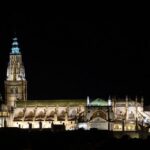
Somewhere along the route, the tour includes stops tied to the Primary Cathedral and San Pedro Mártir Convent. The cathedral is described as having construction finished in the 15th century, and the guide sets up the stop by imagining the many people who came through to pray, marry, and interact with what’s beneath the surface—including the crypts.
Then comes San Pedro Mártir, where the tour description highlights that the first auto-da-fe made in Toledo came from the building’s doors. That’s heavy material, and it changes the tone instantly. This part isn’t about scaring you. It’s about showing you what kind of city Toledo became—and why night stories exist in the first place.
Finally, there’s mention of San Román, with the idea that the city is beautiful from above, and what it looks like below is worth imagining. That’s an important reminder: Toledo’s “mystery” isn’t only supernatural. It’s also spatial. The way streets stack, the way buildings drop away, the way viewpoints frame what you can’t fully see—those are real reasons night feels different.
If you’re sensitive to dark historical subjects, know that the tour includes them as part of the city’s story. If that’s okay for you, this section will likely add the weight that makes the fun feel earned.
Price and time: does $10 buy real value?
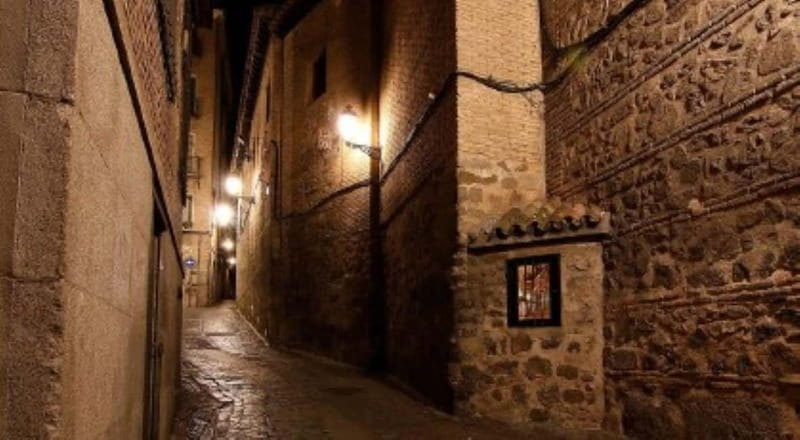
At $10 per person for about 1.5 hours, this is priced like a practical add-on—and that’s part of the appeal. You’re not paying for an all-day commitment. You’re buying a guided story route that helps you understand Toledo’s layout, its legends, and its historical pressure points in one evening.
The value gets better because the tour includes an official local guide and doesn’t require you to pay ticket fees or additional expenses for entry. You’re paying for narrative, timing, and interpretation—the stuff that takes years to learn on your own if you’re doing it casually.
There’s also a group-size factor. Large group reservations aren’t accepted, and the maximum per group (family/friends) is 6. A minimum of 6 people is required to run the tour. That can affect availability, but it often means the guide can keep the walk moving and still talk to everyone.
Bottom line: for the price, you’re getting a structured “night reading” of Toledo, not just a random wander.
Language, groups, and practical comfort
This is a Spanish-language tour. That doesn’t just affect comprehension—it affects how much you enjoy the rhythm. If you understand basic Spanish, you’ll probably catch the key story beats about legends, street names, and historical events. If you don’t, you’ll still see the places, but the tour’s main value is the guide’s storytelling.
Comfort-wise, it’s wheelchair accessible, which is a meaningful detail for a city like Toledo where streets can be tricky. Still, it’s a walking tour, so you’ll want to consider your own mobility and tolerance for uneven surfaces.
Also, because it’s a night tour built around dark alleys and atmospheric stops, it’s best for people who like guided interpretation more than people who only want quiet time for photos.
Should you book The Enchanted City night tour?
Book it if you want Toledo to feel like a story with connections: legends tied to specific streets, a stop at the Alcázar with Spanish Civil War context, and darker historical moments at places like the cathedral and San Pedro Mártir. At $10 for 1.5 hours with a live official guide, it’s good value and easy to fit into a plan.
Skip it (or pair it with something else) if Spanish-language narration is a dealbreaker for you, or if you strongly prefer daytime viewpoints and museum-style pacing. Night tours reward curiosity and listening, not just sightseeing.
If you’re curious about the idea of an other Toledo after sunset, this is the kind of tour that makes that phrase feel real.
FAQ
What is the duration of The Enchanted City: A Mysterious Tour of Toledo?
The tour lasts 1.5 hours.
How much does the tour cost?
The price is $10 per person.
Where does the tour start?
The meeting point is FollowMe Toledo, Pl. Zocodover 5, next to the Koker store and a pharmacy.
Where does the tour end?
The activity ends back at Pl. Zocodover 5.
Is there an extra ticket cost or additional expense?
No. The tour does not require payment of tickets or additional expenses.
What language is the tour in?
The live tour guide speaks Spanish.
Is the tour wheelchair accessible?
Yes, it is listed as wheelchair accessible.
How many people can be in a group?
Large group reservations aren’t accepted. The maximum allowed per group (family/friends) is 6.
Is there a minimum number of participants?
Yes. A minimum of 6 people is required to take the tour.
Can I cancel for a refund?
Yes. Free cancellation is available up to 24 hours in advance for a full refund.