REVIEW · TOLEDO
Toledo: History of the Three Cultures Guided Walking Tour
Book on GetYourGuide →Operated by Toledo 3 Culturas · Bookable on GetYourGuide
Toledo tells its story in layers. This walking tour strings together the three cultures of the city—Christian, Muslim, and Jewish—so the sights start making sense fast, not as separate postcards. I especially like how the guide connects buildings to everyday life, and I also love the focus on Mudejar details you can spot as you move through the old streets.
One thing to plan for: it’s a 3-hour, rain-or-shine walk. If you hate cobblestones or longer pacing, wear the best shoes you own and bring a light layer for the weather.
In This Review
- Key things to love about this Toledo tour
- Why Toledo’s Three-Culture story works best on foot
- Meeting at Plaza de Zocodover, then getting oriented fast
- Arco de la Sangre and the feeling of Imperial Toledo
- Plaza de Zocodover: the crossroads of power and neighborhoods
- Toledo Cathedral: a big Christian landmark you can actually read
- Church of Santo Tomé: connecting architecture to shifting eras
- Synagogue of Santa María la Blanca and the Jewish Quarter feel
- Monastery of San Juan de los Reyes: the final big anchor
- Mudejar details: what to watch for while you walk
- Price and value: €265 per group (up to 10) makes sense if you pack together
- What kind of guide experience you should expect
- Practical tips so you enjoy the walk (not just tolerate it)
- Who should book this tour, and who might not
- Should you book Toledo: History of the Three Cultures guided walking tour?
- FAQ
- How long is the Toledo: History of the Three Cultures guided walking tour?
- Where does the tour start?
- Where does the tour finish?
- Is this tour mainly walking?
- Is the tour wheelchair accessible?
- What languages are available for the live guide?
- What’s included in the price?
- Are entrance tickets included for monuments and museums?
- Does the tour run in bad weather?
- What is the cancellation policy?
Key things to love about this Toledo tour
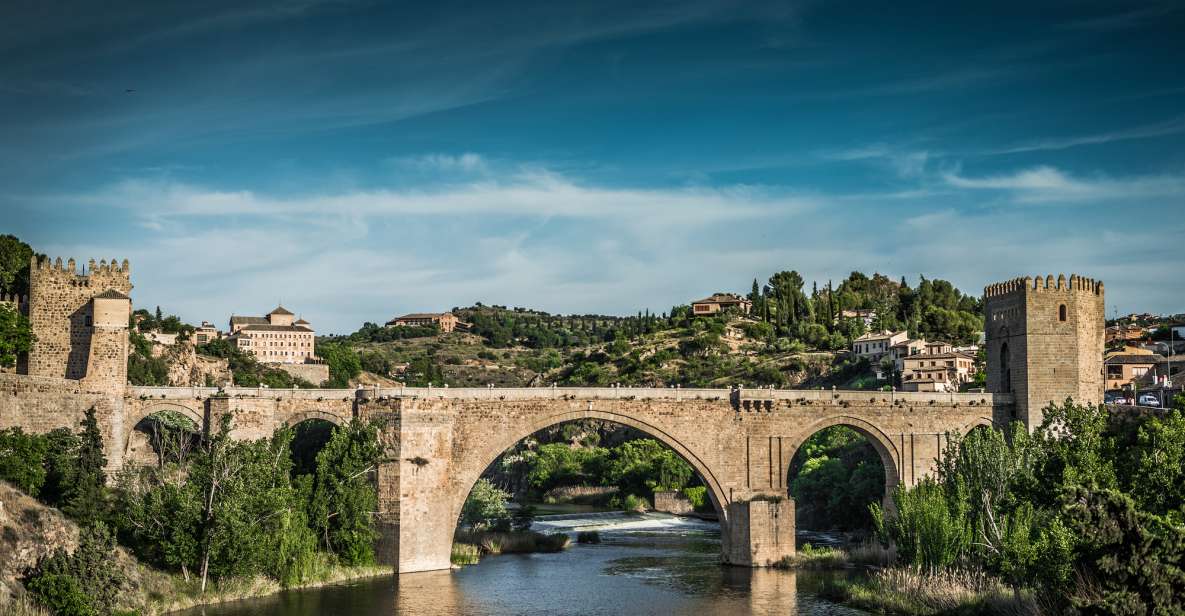
- Three cultures explained in plain language as you walk the historic core
- A tight 3-hour route that helps you understand Toledo’s layout, not just see monuments
- Synagogue time plus the old Jewish Quarter streets, not just a quick stop
- Cathedral and church stops that frame the Christian layer of Imperial Toledo
- Mudejar architecture notes that give you a checklist for what to look for
- Local guides with a Q&A-friendly style, with examples like Juan Ignacio, Laura Garcia, Celia, and Irena Fernandez
Why Toledo’s Three-Culture story works best on foot
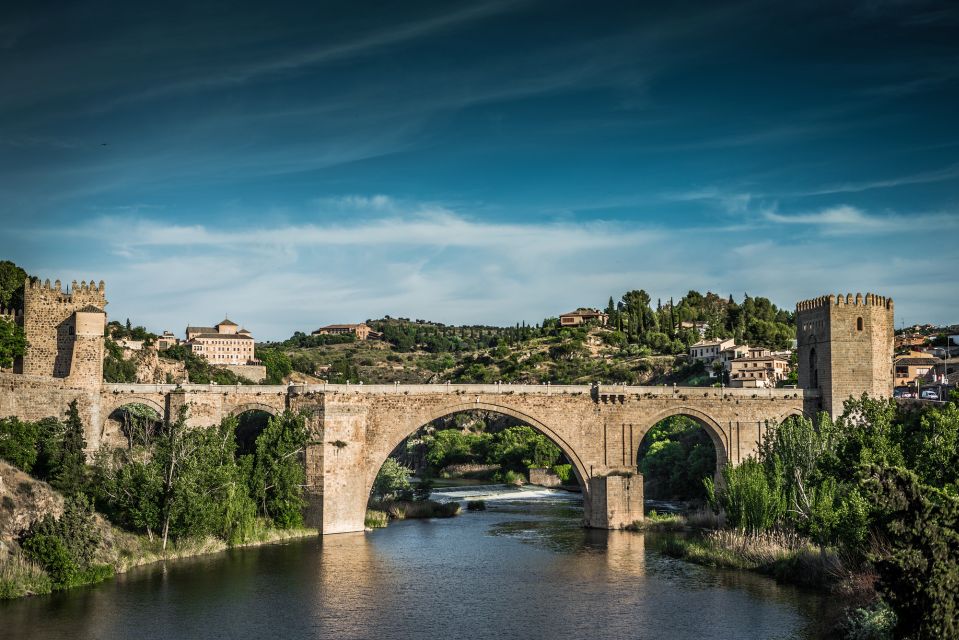
Toledo is the kind of city where the past isn’t behind glass. It’s in the streets, the corners, the way one neighborhood bumps into the next. Doing this by walking means you get the “why” behind what you’re seeing, not just the “what.”
I like that the tour is structured around coexistence—how Jews lived in their neighborhoods, how Christian power shaped major buildings, and how Islamic influence showed up in art and architecture. You also get a clear sense of Imperial Toledo, where the city’s identity grew through centuries of change.
The guide’s job is to connect dots across time. You’ll hear context as you pass major landmarks, and then the explanation lands even harder when you turn a corner and see what that culture left behind.
You can also read our reviews of more walking tours in Toledo

Meeting at Plaza de Zocodover, then getting oriented fast
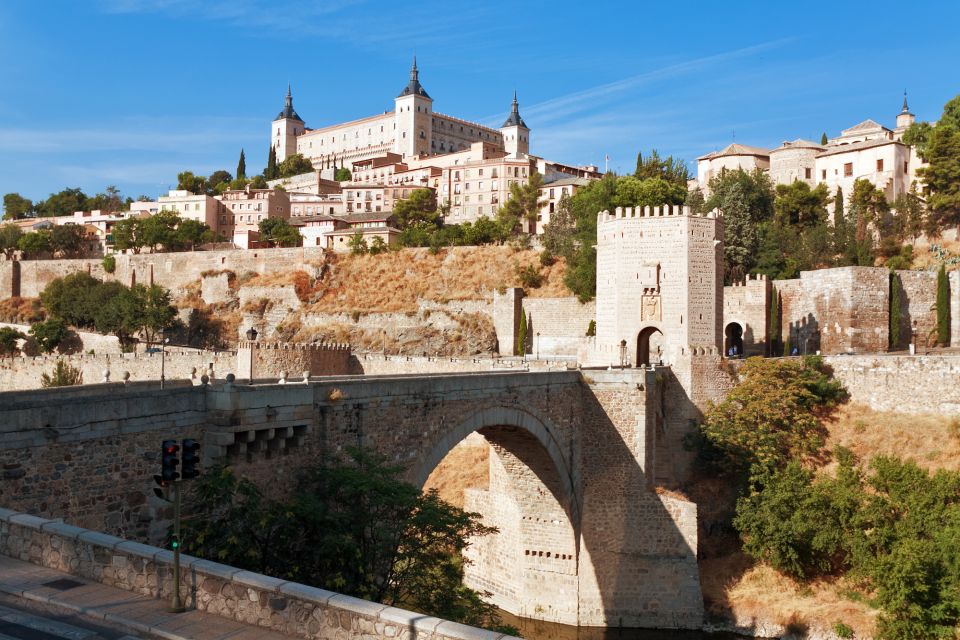
Your tour starts at Plaza de Zocodover, under the arch with the clock, next to the Santo Tomé store. This is a smart pick because it’s central, and it helps you get your bearings before you head into narrower lanes.
From the first minutes, the pacing is practical. You’re not wandering alone trying to figure out where the “real Toledo” is. The route gives you a framework, so even if some streets feel similar, you’ll understand what section of the story you’re in.
Also, you’ll be with a live guide in multiple languages (Spanish, English, French, Italian, German, Portuguese). That matters here because the whole point is interpretation—how one era overlaps another.
Arco de la Sangre and the feeling of Imperial Toledo
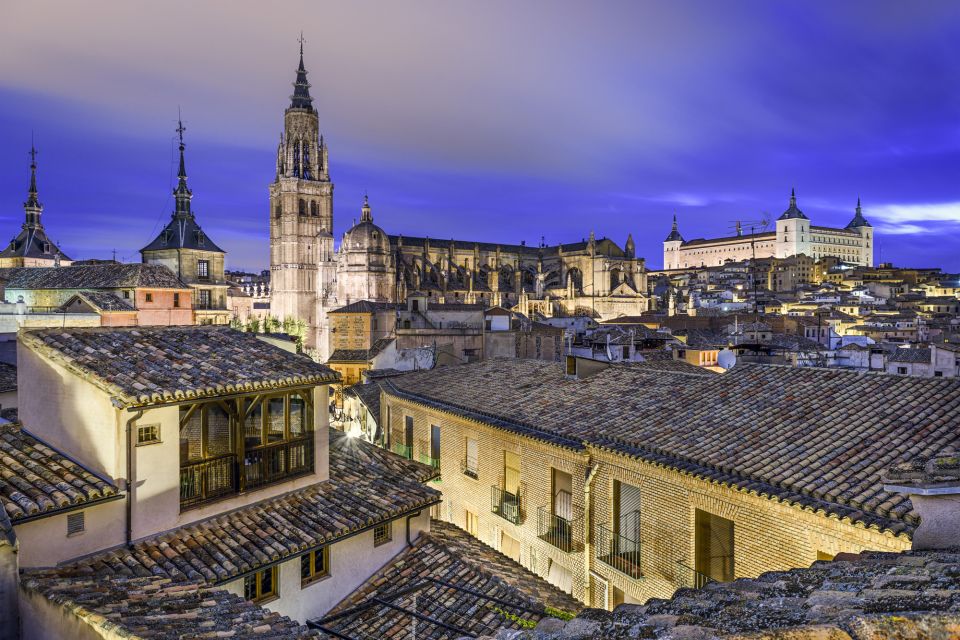
One of the first visual anchors is Arco de la Sangre. Even if you’ve seen arches in other Spanish cities, this one helps you set the tone: Toledo feels compact, historic, and intentionally built.
At this early stage, the guide’s explanations are key. Instead of treating Toledo like a museum, you’re shown how the city’s layers grew and shifted—politically, culturally, and religiously. That context makes later stops click, especially when you start seeing architectural “clues” more clearly.
It’s also a good moment to slow down and watch how the city funnels people into older quarters. Toledo’s layout is part of the lesson.
Plaza de Zocodover: the crossroads of power and neighborhoods
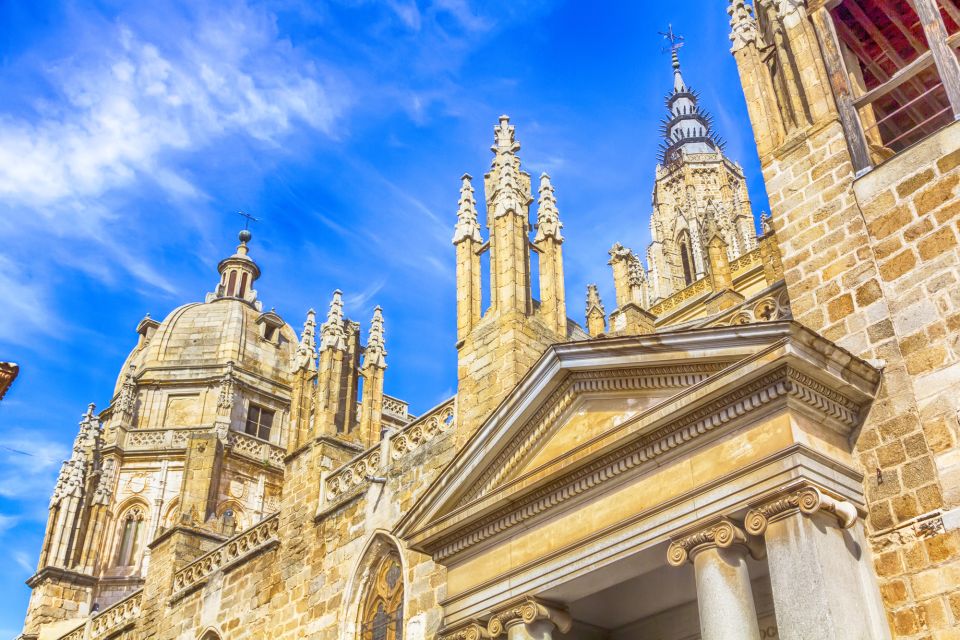
After the arch, the tour moves through Plaza de Zocodover for sightseeing. This square is one of the city’s natural gathering points, and it’s useful because it ties together different parts of Toledo’s historic life.
I like that you get this orientation early. It gives you a mental map for later, so when you reach the cathedral area or the Jewish Quarter streets, you don’t feel like you’re just hopping between random monuments.
If you’re the type who likes to understand how people moved and lived, this stop sets you up nicely for the rest of the walk.
Toledo Cathedral: a big Christian landmark you can actually read
Next comes Toledo Cathedral, one of the strongest symbols of Toledo’s Christian layer. The tour doesn’t just point at the building; it frames what the cathedral represents in the city’s long timeline.
When you’re standing there, you’ll likely find the explanation focuses on how political and religious power shaped architecture over time. This matters because Toledo’s story isn’t only about coexistence in theory—it’s about how institutions left physical marks you can still see.
A practical note: cathedral areas can be busy and visual details can overwhelm you. The guide helps you focus on what to notice, so you don’t come away thinking you saw “a lot of stone” without understanding why.
You can also read our reviews of more guided tours in Toledo



Church of Santo Tomé: connecting architecture to shifting eras
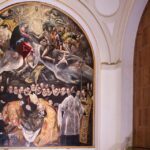
The tour includes Church of Santo Tomé, another key point for understanding Christian-era Toledo. Even when you already know Toledo has multiple religious layers, this stop helps you see how those layers were expressed in everyday religious spaces.
What I like here is the way the explanation stays connected to place. Instead of giving you a history lecture at the curb, the guide ties the story to what the church stands for and how it fits into the wider neighborhood.
You might also find this stop helpful if you’re a photo person. The angle and surroundings often give you context shots—meaning your pictures will show you where you were in the city, not just a close-up of a façade.
Synagogue of Santa María la Blanca and the Jewish Quarter feel
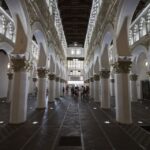
The most emotionally grounded part of the tour is Synagogue of Santa María la Blanca plus time in the Jewish Quarter of Toledo. This combination matters because it doesn’t treat Jewish heritage as a single building. You get a sense of a neighborhood, not just a monument.
The tour is explicitly designed to help you understand life of Jews in their neighbourhood. That theme changes the way you look at the synagogue itself. Instead of focusing only on the architecture, you’ll hear about what it meant within a community and a city that had to make room for multiple traditions.
Then the narrow streets of the Jewish Quarter do what streets always do in old cities: they slow you down. You’ll be walking through the kind of lanes that make the city’s past feel close. It’s one thing to read about a quarter; it’s another to turn a corner and feel the scale of it.
If you care about social history—how communities lived side by side—this is where the tour earns its value.
Monastery of San Juan de los Reyes: the final big anchor
The walking route finishes with Monastery of San Juan de los Reyes, one of the major concluding landmarks. This stop helps close the loop between religious institutions and Toledo’s identity as a city shaped by power and faith.
Even when the day’s highlights felt intense, a monastery stop can bring things back to a calmer rhythm. It’s a different mood than the streets of the Jewish Quarter, and it gives your brain a place to rest while still holding onto the historical thread.
You’ll finish at C. de los Reyes Católicos, 45002 Toledo. From there, you’ll be well positioned to keep exploring on your own—now that you understand how the route relates to the city’s historic center.
Mudejar details: what to watch for while you walk
One of the tour’s strongest themes is Mudejar buildings and the Islamic influence that shows up across Christian-era structures. You’re not just told that it exists—you’re guided to notice it.
So as you walk, try to do this simple mental checklist:
- Look for decorative patterns and brickwork-style textures.
- Notice how forms and shapes feel “different” from what you’d expect in purely Gothic or purely classical architecture.
- Pay attention to transitions—where one style seems to “meet” another.
This is the kind of sightseeing that pays off later when you revisit any Toledo landmark. Once you learn what to look for, you start seeing the city’s history as layered design, not random variations.
Price and value: €265 per group (up to 10) makes sense if you pack together
The price is $265 per group up to 10 for about 3 hours. That’s not cheap per person if you travel solo or as a couple, but it becomes reasonable fast when you spread it across a small group.
Here’s how I think about value:
- You’re paying for a live local guide plus a route that’s meant to make Toledo legible.
- You’re not buying entry tickets—museum/monument entrances aren’t included, so you’ll likely spend extra if you want to go in where applicable.
- You’re getting a structured way to move through the historic center, which saves you time and reduces guesswork.
If you’re traveling with 4–8 people and you want real interpretation (not just a map), this is a strong deal. If you’re solo, you might prefer a more basic self-guided approach—or expect to pay more per person for the benefit of private pacing and Q&A.
What kind of guide experience you should expect
This is a walking tour with a private group, and the guide is on the job for the full 3 hours. That format usually means fewer awkward interruptions and more chances to ask follow-up questions when something clicks.
Past guide names that stand out in the experience include Juan Ignacio, Laura Garcia, Celia, and Irena Fernandez. What’s common across those examples is a focus on answering questions and adding stories that connect the big political timeline to the feel of daily life.
Also, this tour explicitly works in multiple languages. So if you’re not traveling in Spanish, you’re still likely to get the full point of the explanations instead of just hearing a summary.
Practical tips so you enjoy the walk (not just tolerate it)
Wear comfortable shoes. Toledo’s old streets are pretty, but they’re also uneven, and 3 hours passes faster when your feet don’t hurt.
Bring something for the weather because the tour runs rain or shine. Even a light rain jacket can make the difference between enjoying the streets and rushing through them.
If you’re the type who likes photos, give yourself permission to slow down at stops. The guide’s best moments are usually the ones where you look up, then listen, then look again.
And if you want the most out of the Jewish Quarter portion, arrive mentally ready to treat it like a neighborhood, not a checklist. The route is designed for that kind of attention.
Who should book this tour, and who might not
This tour is a great match if you want:
- A clear explanation of how the three cultures coexisted in Toledo
- More than surface-level monument viewing
- A route that helps you understand neighborhoods, including the Jewish Quarter
It may be less ideal if:
- You hate walking for 3 hours
- You only want quick exterior photos and minimal listening
- You’re extremely price-sensitive as a solo traveler (since the pricing is per group)
If you’re somewhere in the middle, the best approach is to think about how much you value a strong guide. In Toledo, a good guide turns “beautiful buildings” into a story you can actually follow.
Should you book Toledo: History of the Three Cultures guided walking tour?
I’d book it if you want a guided, story-first walk through Toledo Cathedral, Santo Tomé, Santa María la Blanca, the Jewish Quarter, and San Juan de los Reyes—with time designed to explain coexistence and Islamic-era influence through Mudejar details. The route is tight enough to feel focused, but broad enough to give you a real citywide understanding.
If you’re a small group and you can share the cost, the value improves a lot. If you’re solo, think carefully about whether you want to pay for a private guiding experience versus exploring on your own and spending your time differently.
If your goal is to leave Toledo understanding how its three cultures shaped the streets you just walked, this tour is one of the most practical ways to do it.
FAQ
How long is the Toledo: History of the Three Cultures guided walking tour?
It lasts 3 hours.
Where does the tour start?
Meet at Plaza de Zocodover, under the arch with a clock, next to the Santo Tomé store.
Where does the tour finish?
The tour finishes at C. de los Reyes Católicos, 45002 Toledo, Spain.
Is this tour mainly walking?
Yes. It is a guided walking tour.
Is the tour wheelchair accessible?
Yes, it is listed as wheelchair accessible.
What languages are available for the live guide?
The guide is available in Spanish, English, French, Italian, German, and Portuguese.
What’s included in the price?
A local guide and a walking tour in Toledo are included.
Are entrance tickets included for monuments and museums?
No. Entrances are not included and are purchased in situ.
Does the tour run in bad weather?
Yes. It takes place rain or shine.
What is the cancellation policy?
Free cancellation is available up to 24 hours in advance for a full refund.