REVIEW · TOLEDO
Toledo: Ancient Underground City Tour in Spanish
Book on GetYourGuide →Operated by Secretos de Toledo · Bookable on GetYourGuide
Toledo goes underground, and it pays off. This 2-hour Spanish tour by Secretos de Toledo links up five underground locations carved into the rock, with a guide who explains the stories and practical purpose behind them.
I like that you’re not just looking at dark rooms. You’re seeing how water, war, religion, and daily life shaped the tunnels over centuries. The possible drawback: the route isn’t suitable for people with mobility impairments, and you’ll want solid footwear for uneven, underground ground.
In This Review
- Key points to know before you go
- Why Toledo’s underground city feels different
- Starting at Secretos de Toledo (and getting your timing right)
- Bath Cenizal: Arab hammam atmosphere and function
- Roman Nuncio baths: a social space under your feet
- Salvador’s Well: mosque-era roots, then the Christian transition
- House of the Jew: memory in the rock
- How legends fit with what you can actually see
- Spanish-only guidance: who this suits best
- Duration, pace, and what to bring
- Price and value: what $15 gets you
- Who should book this underground tour
- Quick checklist before you go
- Should you book Toledo’s Ancient Underground City Tour?
Key points to know before you go
- Five underground stops in about two hours, so it stays focused
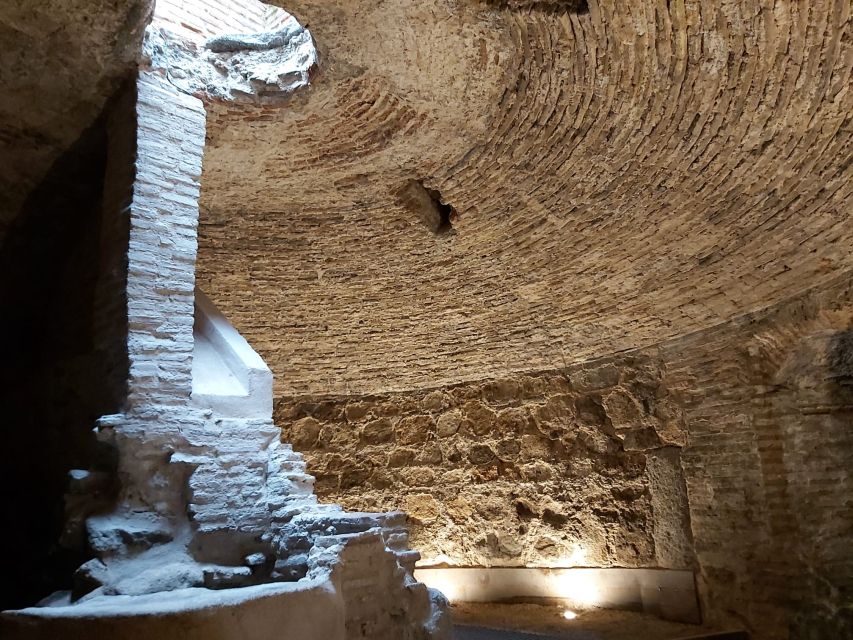
- Bath Cenizal (Arab hammam from the 11th century) gives you a clear sense of the site’s layout and use
- Roman baths show how earlier Toledo reused space, not just buried it
- Salvador’s Well ties the underground story to mosque-era Toledo before moving into church and Jewish associations
- Spanish-only guidance, specialized in Toledo history, with lots of “why” behind the legends
- Entry included to the sites, so you’re paying for access plus interpretation, not just a walk
Why Toledo’s underground city feels different
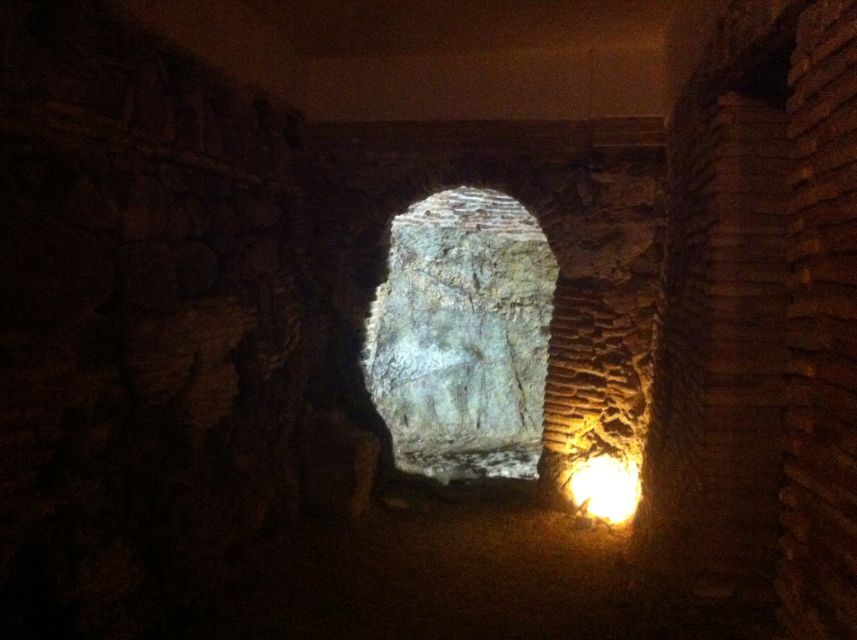
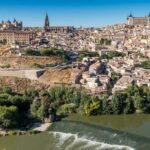
Toledo is famous for its viewpoints. This tour flips the script and takes you below street level, into the rock itself. The key idea is simple: long before modern maps, locals were cutting and reshaping space to survive and to live—storing water, hiding from conflict, and building baths and passageways.
Even the legends have a job to do. Some stories may cloud what historians can prove, but they also show what people wanted to believe about the underground world. If you like ruins, this works. If you like context, it works more.
And because the tour is Spanish and led by a specialist, you get explanations that stay connected—how one stop leads to the next, and why the same underground spaces were valuable to different cultures.
You can also read our reviews of more city tours in Toledo
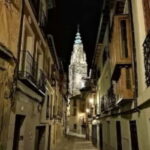
Starting at Secretos de Toledo (and getting your timing right)
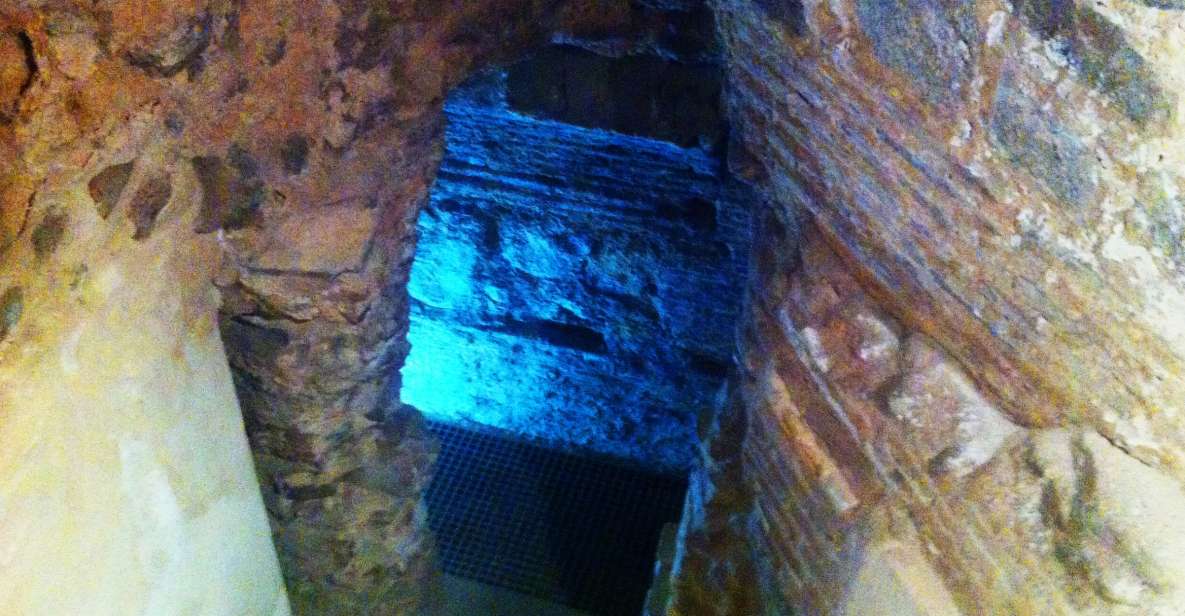
The meeting point is specific: go to the hall of Nº7. At the end on the right, that’s the office of Secretos de Toledo. Showing up a few minutes early matters here because you’re heading straight into the underground portions.
Plan on comfortable shoes because the tour is physically inside old excavations, not a smooth museum corridor. Also note the rule: no video recording during the visit. If you want photos, keep it to what’s allowed and expect your guide to control the pace so everyone stays together.
Bath Cenizal: Arab hammam atmosphere and function
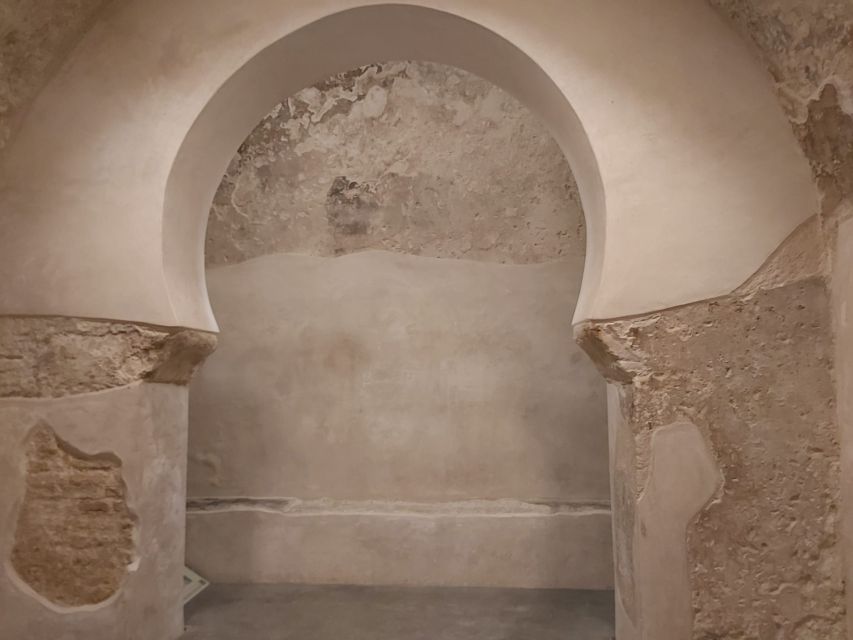
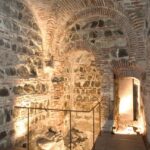
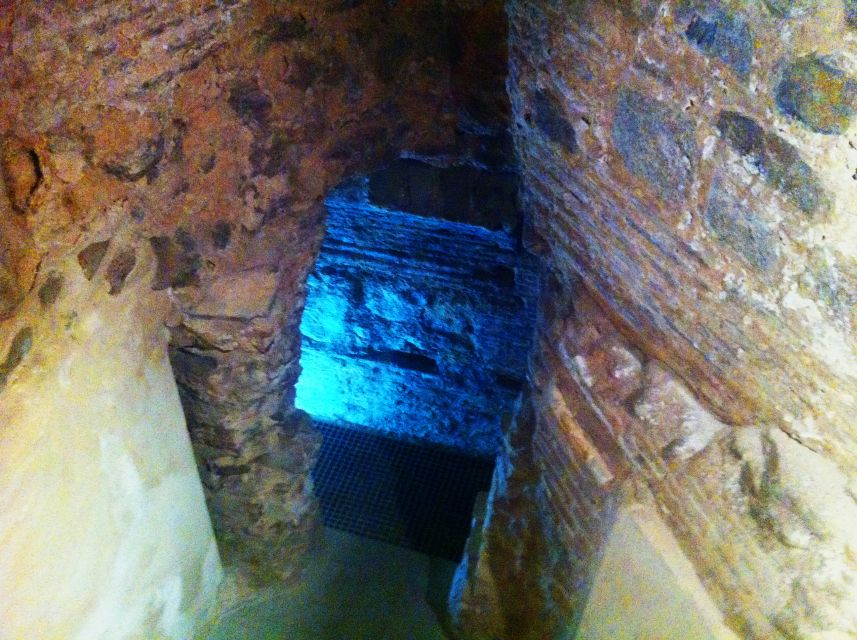
One of the biggest reasons to do this tour is the bath Cenizal, an old hammam tied to the Arab (11th-century) era. You’ll explore what remains and hear how the space was designed for bathing culture—where you’d move, what the structure suggests about use, and what makes the architecture a clue.
The interesting part isn’t just that it’s old. It’s that you can often read how people organized the day around water. In these underground settings, bathing wasn’t only hygiene; it was social and practical. When your guide explains the layout and purpose, the room stops being a “cool photo stop” and starts feeling like a working place.
If you enjoy details—materials, shapes, and how rooms connect—this is likely your favorite chapter.
Roman Nuncio baths: a social space under your feet
Next comes the older layer: the Roman baths, described as a social space of Roman Toledo. The way these sites are presented matters. You’re not treating Roman Toledo and later Toledo as separate worlds. You’re seeing reuse—how later communities found value in earlier constructions and kept using that infrastructure.
That reuse is a big deal in places like Toledo. Rock doesn’t vanish, and water systems don’t disappear just because a new era arrives. When your guide points out how later Toledo built on what came before, you get a clearer sense of continuity, even when power and culture changed.
Also, the “social space” angle is useful. Bathrooms and baths can sound purely functional. In the Roman telling, they’re where people gathered, spoke, and stayed connected—so the underground becomes part of city life, not just a storage basement.
Salvador’s Well: mosque-era roots, then the Christian transition
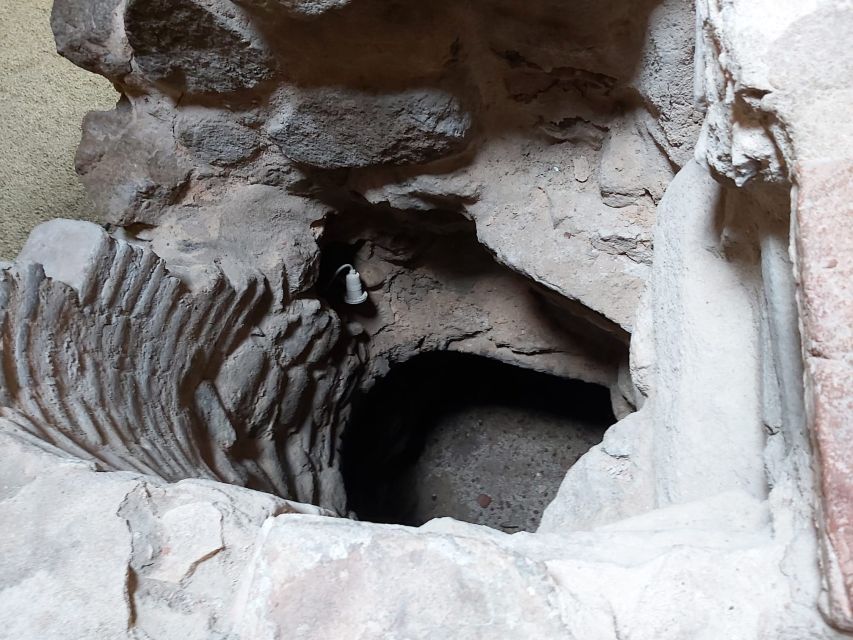
After the bath areas, you’ll find Salvador’s Well, an old well from the 11th century that belonged to the mosque. Wells like this are powerful story anchors because water is universal, even when religions and rules shift. Your guide connects the well to mosque-era Toledo, which helps you see the underground not as a single-era curiosity, but as a long-lived system.
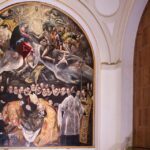
Then the tour moves toward the Church of the Savior, shifting the underground narrative into the Christian chapter of Toledo’s layered past. This sequence—well connected to one cultural system, then the church connected to another—helps you understand how spaces and meanings evolve.
For me, the takeaway is that the underground story is also a language story: different communities assigned different purposes and interpretations to the same rock and water logic.



House of the Jew: memory in the rock
The final stop mentioned is the House of the Jew. Even if you only see a portion of what once existed, the name alone signals the tour’s main theme: Toledo’s underground holds clues to more than one community.
Paired with the earlier mosque and the Roman baths, this stop rounds out the “three cultures” influence the tour highlights. You’ll come away thinking in terms of overlap—how Toledo’s underground architecture reflects the mixing and layering of Roman, Arab, and later religious and Jewish associations over time.
The practical bonus? This stop tends to feel like the guide’s storytelling makes sense of the whole walk. By the time you reach it, you’ve already learned that these spaces were excavated for real needs—water, refuge, movement, and communal life—so the cultural connections land more clearly.
How legends fit with what you can actually see
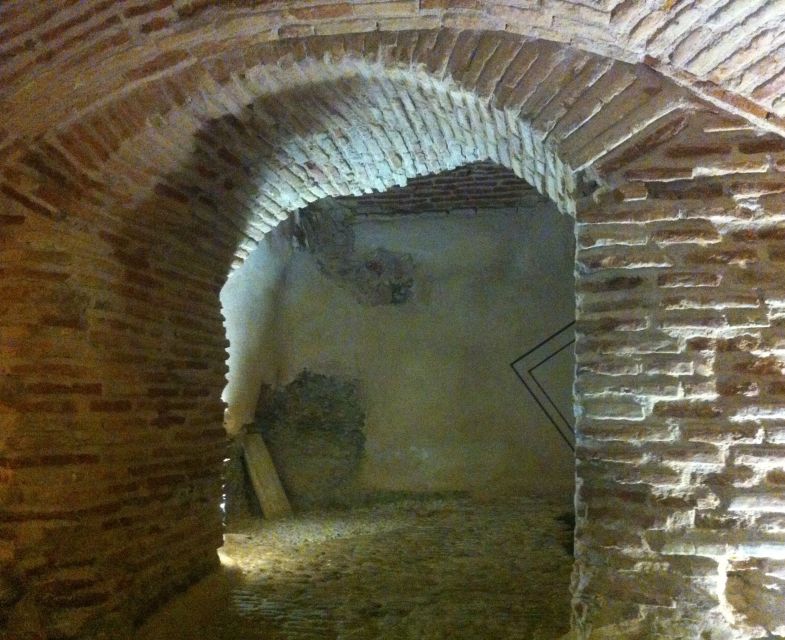
A good underground tour can turn into pure folklore. This one tries to balance the legends with visible features and explanations from your guide.
You’ll hear about why rock was excavated in early times—storage for water, shelter from wars, hidden passageways, and even spas, baths, and tunnels. That list is the backbone. It explains why the underground exists at all, and why later cultures had reasons to keep using, modifying, or reframing what was already there.
Legends then act like a second layer. In some cases, they may mask what’s known. In other cases, they’re attempts to explain the unexplainable. Either way, they show you how people tried to make sense of a hidden city they lived beside every day.
If you like tours where facts and stories work together instead of fighting each other, you’ll likely enjoy the pacing here.
Spanish-only guidance: who this suits best
The tour runs with a Spanish-speaking guide specialized in the history of Toledo. That’s a positive if Spanish is your comfort zone.
If you’re not fluent, you might still catch plenty of “what and where,” but the deeper meaning behind legends and architectural curiosities will be harder to follow. The good news is that one named example mentioned in the experience is Ruth, praised for being close, friendly, and focused on making sure you understand the explanations clearly. That style usually helps even when language gets tricky.
This is also a strong pick for people who like guided context rather than solo wandering. The underground streets are hard to “self-navigate into meaning.” A guide turns the rock into a story you can track.
Duration, pace, and what to bring
This experience lasts 2 hours, which is a sweet spot for underground touring. It’s long enough to cover five locations and still leave room for your brain to process what you’re seeing. It’s short enough that you don’t feel like you’re trapped in cool darkness for half a day.
Bring comfortable shoes—seriously. Not fancy shoes, not sandals. The tour is underground and old, which usually means uneven surfaces and tight angles where you need stable footing.
And because video recording is not allowed, plan to rely on your memory and any permitted photos. If you like to document everything, it’s better to decide now how you want to capture the experience.
Price and value: what $15 gets you
At $15 per person, the main value is what you’re buying: entry to multiple underground sites plus a Spanish guide specialized in Toledo’s history. For a short, two-hour tour, that matters.
You’re not paying for a generic walk with vague explanations. You’re paying for access to several distinct underground spaces—bath Cenizal, Roman bath areas, Salvador’s Well, and the Church of the Savior and House of the Jew stop connected to the underground narrative. Even without food included, the tour still provides the core “product”: guided access and interpretation.
One more value point: the tour’s focus on architectural curiosities and how rooms were used. That turns “I saw underground rooms” into “I understand why they existed.”
Who should book this underground tour
This is a great match if you:
- Want Toledo’s story beyond viewpoints and facades
- Enjoy architecture that’s explained through practical uses (water, refuge, baths)
- Like layered history—Roman, Arab/Moorish, and later Christian and Jewish associations—connected in one route
- Travel with Spanish as a workable language, or you enjoy learning from Spanish guides
It’s not the best fit if you have mobility limitations, since it’s listed as not suitable for people with mobility impairments.
Quick checklist before you go
- Comfortable shoes for underground uneven ground
- Spanish ability helps a lot since the guide is Spanish-only
- No video recording during the tour
- Skip the idea of snacks on the tour—food and drinks are not included
- Meet at hall Nº7, office of Secretos de Toledo (end on the right)
Should you book Toledo’s Ancient Underground City Tour?
I’d book this if you want a guided route that makes Toledo’s underground feel logical and human. The combination of five underground locations plus explanations about water systems, baths, refuge, and legends gives you real understanding fast.
I wouldn’t book it if you need an accessible route or you expect a lot of freedom to film and move at your own pace. This is a guided, controlled experience with an emphasis on entry sites and interpretation.
If you’re planning just one “less obvious” Toledo activity, this is the kind of tour that helps you see the city’s layers instead of just passing by them.