REVIEW · TOLEDO
Toledo: City of the Three Cultures Guided Walking Tour
Book on GetYourGuide →Operated by DE PASEO · Bookable on GetYourGuide
Three religions left fingerprints all over Toledo. This guided walk connects Jews, Muslims, and Christians to the streets and monuments you can still see today.
I especially like the way the tour gives you a clear route from Plaza Zocodover to the heart of the Jewish Quarter, so the city stops feeling like random stone. I also love the focus on specific landmarks, like the Cathedral’s 92-meter tower and the Campana Gorda (the Fat Bell), plus the stop at Santo Tomé for El Greco’s most important painting. One possible downside: if you’re expecting a straight shot of only the biggest sights with no extra commercial street time, the walk can feel like it includes plenty of old-town browsing along historic lanes.
In This Review
- Key moments that make this tour work
- Plaza Zocodover: your launchpad for Toledo’s layers
- The Alcázar’s north façade: Toledo’s power in one glance
- The Alcaná: where an old market street still shapes the walk
- Ayuntamiento Square and the Cathedral tower you can’t miss
- Worth the time: plan for a guided Cathedral visit
- Archbishop’s Palace and Town Hall: two styles of authority
- Jewish Quarter highlights: Santo Tomé and El Greco’s key painting
- Synagogues you can recognize on sight: Santa María la Blanca and del Tránsito
- Monastery of San Juan de los Reyes: ending with a meaningful landmark
- Guide quality is the real deciding factor
- What $14 buys you for 1.5–3 hours in Toledo
- Who should book this tour (and who might want a different one)
- Should you book the Toledo City of the Three Cultures Guided Walking Tour?
- FAQ
- Where do I meet the guide?
- How long is the tour?
- How much does it cost?
- What languages are available?
- Is it a private tour?
- What is included in the price?
- Do I need to bring a ticket?
- Which main sights are part of the walk?
- What is the cancellation policy?
- Are there multiple starting times?
Key moments that make this tour work
- Plaza Zocodover orientation: a quick start point that helps you read Toledo as you walk
- Alcázar north façade views: a classic landmark intro without turning it into a hike
- Alcaná street texture: an old commercial corridor tied to Cervantes lore
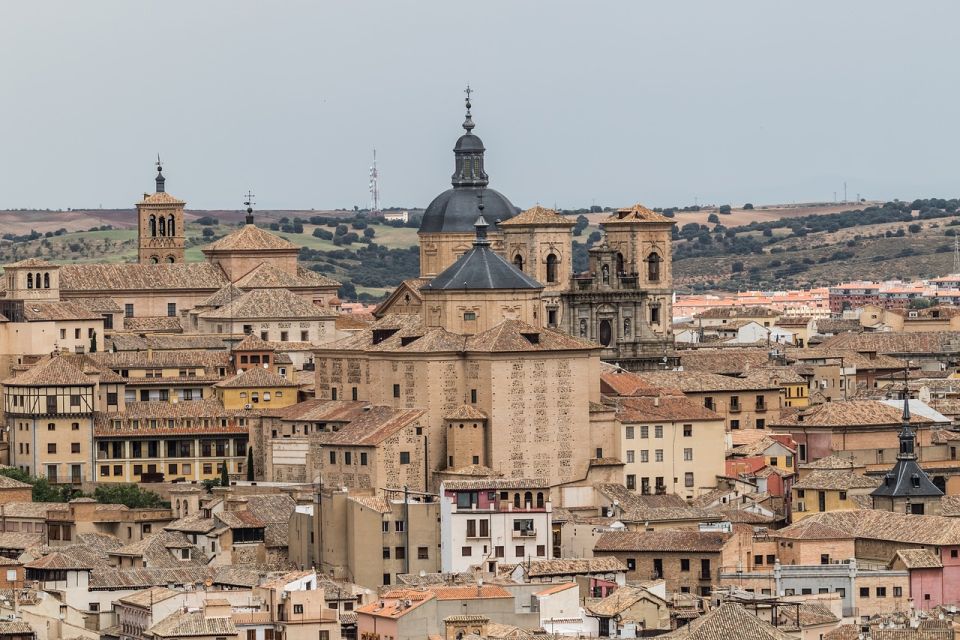
- Cathedral tower + Campana Gorda: one of Spain’s best-known bell stories, in context
- Jewish Quarter monuments: Santo Tomé, Santa María la Blanca, del Tránsito, and more
- Guide-driven storytelling: stronger when you get a passionate speaker like Jesús
Plaza Zocodover: your launchpad for Toledo’s layers
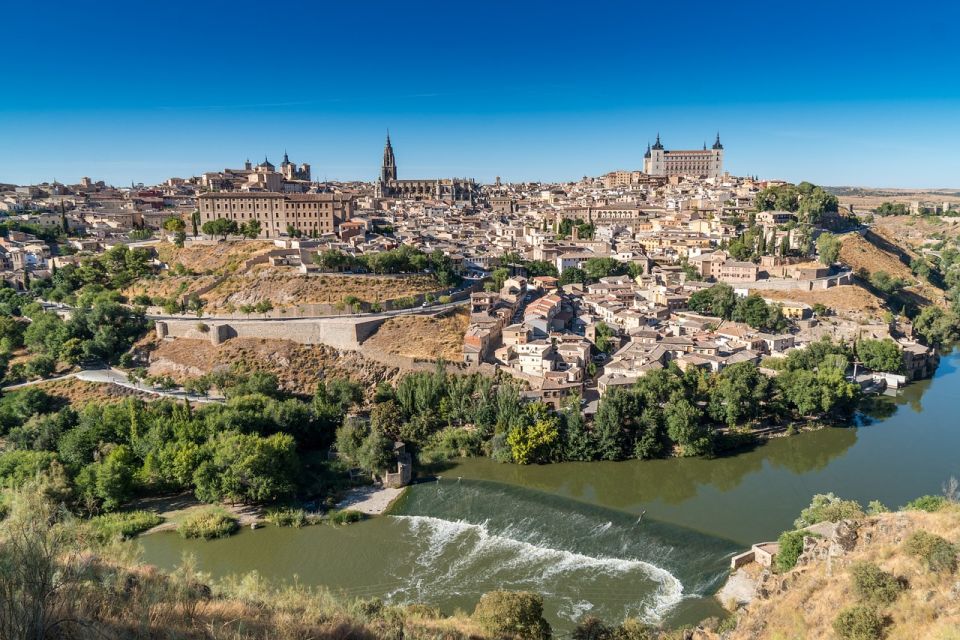
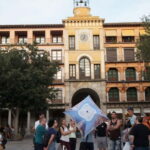
The tour starts in Plaza Zocodover, the nerve center of the historic area. Look for the guide next to the yellow mailbox; they’ll carry a white umbrella. Getting oriented here matters because Toledo’s streets can twist fast, and the guide’s route turns that confusion into a simple, logical walk.
From the beginning, you’re positioned to understand the city’s layout instead of just checking off sites. You also start with one of Toledo’s most recognizable backdrops: the Alcázar.
You can also read our reviews of more walking tours in Toledo

The Alcázar’s north façade: Toledo’s power in one glance
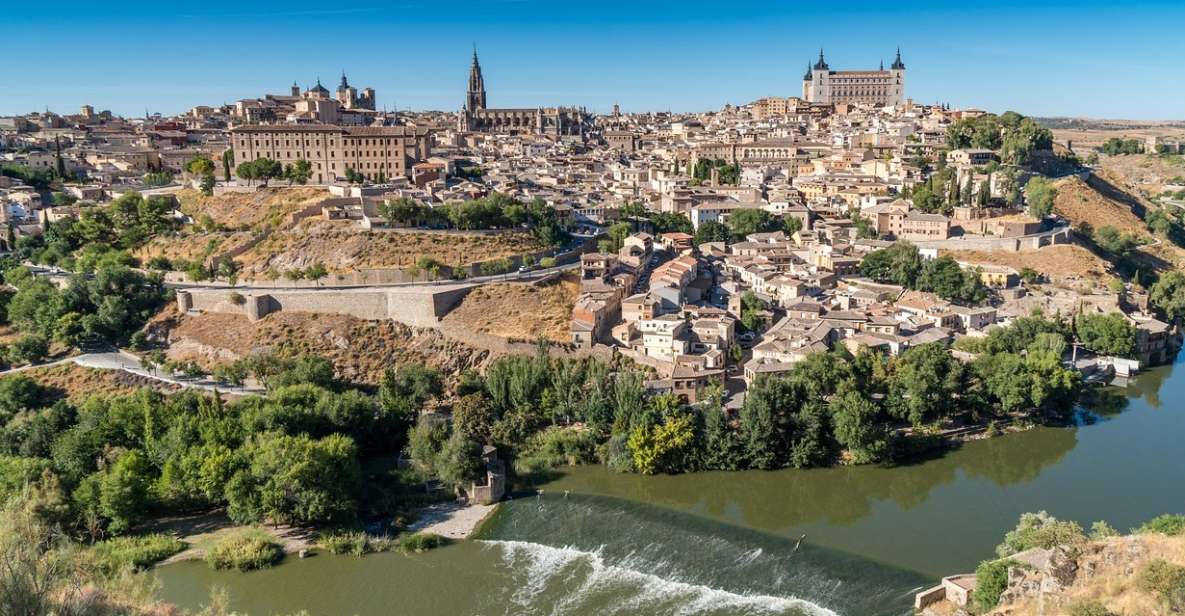
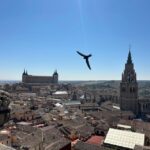
Next, you’ll walk to admire the north façade of the Alcázar, a 16th-century design linked to Alonso de Covarrubias. Even if you’re not going inside, seeing the façade from the streets gives you a real sense of how Toledo presented authority and defense.
This stop is short, but it’s a good “mental map” moment. You learn what you’re looking at, then you keep moving and the city starts to make sense as a place where rulers, faiths, and wealth all competed for space.
The Alcaná: where an old market street still shapes the walk
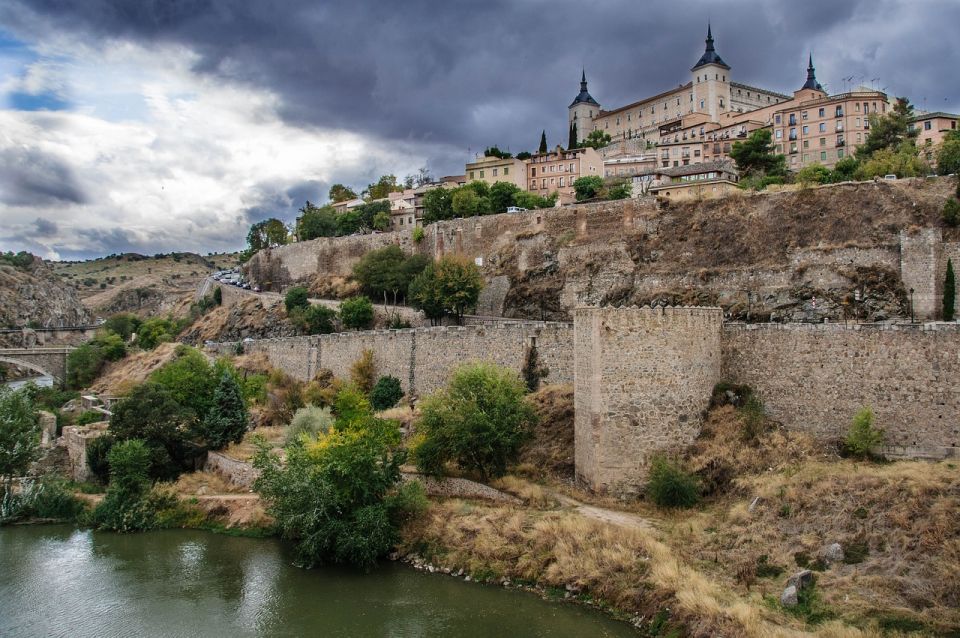
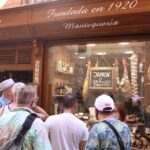
Then comes the Alcaná, an old commercial area. This is one of those streets that changes the mood of the tour: you’re no longer only in monument mode. You’re in daily life mode—historic life.
There’s also a literary connection tied to Miguel de Cervantes, and the guide uses that thread to help you connect people and places, not just buildings. It’s a nice touch for anyone who likes history that has characters in it.
A practical consideration: this is also a shopping-heavy stretch by nature. If your priority is nonstop monuments and you hate detours, you might wish the route skipped some street time. But if you want Toledo to feel lived-in, the Alcaná helps a lot.
Ayuntamiento Square and the Cathedral tower you can’t miss
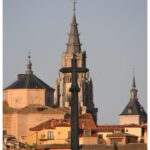
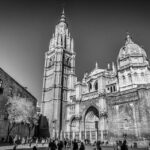
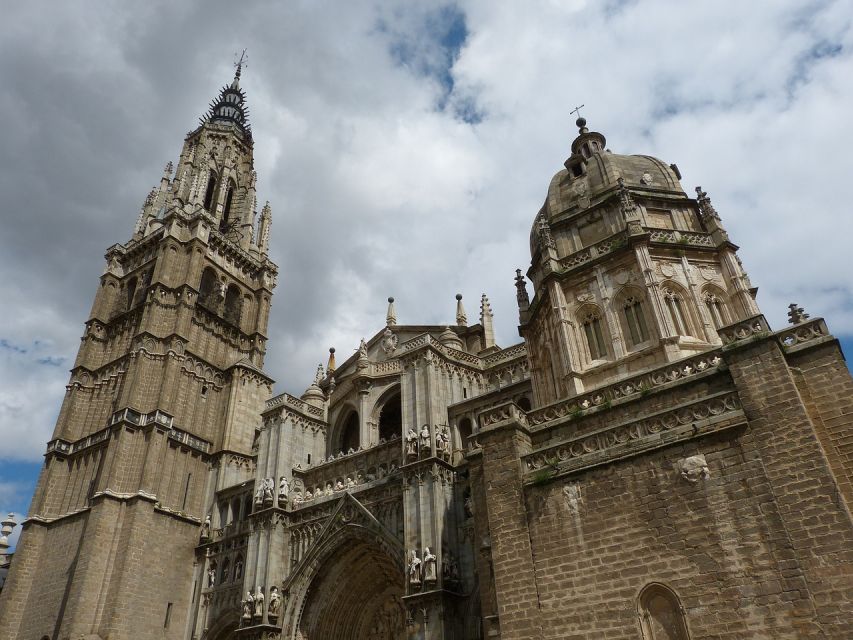
Ayuntamiento Square brings you face-to-face with the Cathedral of Toledo, including its 92-meter-high tower. This is where the tour turns cinematic—because you’re seeing a landmark at a scale that’s hard to grasp on photos alone.
One detail I love here is the focus on the Campana Gorda (the Fat Bell). It’s described as Spain’s largest, and the guide’s explanation helps you understand why bell towers and church sound mattered in everyday life—when churches weren’t only spiritual centers, but also timekeepers and community signals.
You’ll also notice how much institutional power is concentrated in this one square. That makes the next stops feel connected instead of separate.
Worth the time: plan for a guided Cathedral visit
The tour recommends visiting the Cathedral interior with a guide. Your walking tour gives you the outside story, and the interior is where you’d likely want more time for the art and historical objects the guide mentions.
Even if you don’t add extra time, the walking guide still gives you enough context that the Cathedral won’t just feel like a big building.
You can also read our reviews of more guided tours in Toledo


Archbishop’s Palace and Town Hall: two styles of authority
In the same area, the tour points out the Archbishop’s Palace, tied to the residence of the Archbishop of Toledo. This helps you understand the power structure behind the church’s footprint in the city.
Then you move to the Town Hall, designed in the 16th century by Juan de Herrera. The guide connects Herrera’s work to the Herreriano style—useful if you like architecture terms that actually mean something.
This section works well because it’s not random sightseeing. You’re seeing how different institutions shaped the city’s look and how their authority was meant to be visible.
Jewish Quarter highlights: Santo Tomé and El Greco’s key painting
The walk shifts into the Jewish Quarter, where the guide brings the neighborhood’s history into focus and explains its impact on Toledo’s architecture and identity. This is the tour’s biggest “culture and memory” zone, and the stops here are chosen for good reason.
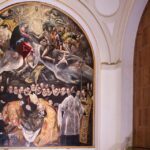
One of the main highlights is the Church of Santo Tomé, known for preserving El Greco’s most important painting. The guide’s framing helps you see the painting as part of a larger story—how Toledo kept changing while still protecting layers of its past.
If you’re an art fan, this is the moment that can make the whole tour feel personal. Even if you don’t know El Greco’s work deeply, you’ll leave with a clear understanding of why the church matters.
Synagogues you can recognize on sight: Santa María la Blanca and del Tránsito
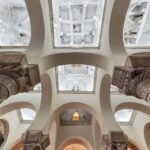
Next come the synagogues: Santa María la Blanca and del Tránsito. These are more than “historic buildings.” The guide helps you understand how the synagogue spaces reflect community life and changing times.
Because both sites are specifically named, the tour avoids the vague approach that sometimes happens on walking tours. You don’t just hear that something used to be here—you hear what it was and why it’s still important.
If your Spanish or English is limited, don’t worry too much. The guide’s way of pairing names with visual cues makes it easier to follow along, especially when you’re moving street by street.
Monastery of San Juan de los Reyes: ending with a meaningful landmark
The tour continues to the Monastery of San Juan de los Reyes. The value of this stop is that it helps stitch together what you’ve already learned: different faiths across centuries, shaping the same city.
Even if you’re not the type to study architectural dates, monasteries often provide a natural “wrap-up” feeling on a walking tour—space, stone, and stillness after busier streets.
By the time you reach this point, the tour’s Three Cultures idea doesn’t feel like a slogan. It feels like something you can point to on the map.
Guide quality is the real deciding factor
This tour lives or dies by its guide, and you’ll see that in real life. When the guide is Jesús, the feedback is that they’re Toledo-born and extremely passionate, with a lot of information to share. When Noelia is leading, enthusiasm is clear, but understanding may take more effort depending on your listening comfort in English or Spanish.
So here’s my practical advice: if you’re sensitive to clarity, pick a time when you feel confident with the language and be ready to focus during the story-heavy parts. Bring your curiosity. This is a walking tour, but it’s also a talk.
The tour includes an expert guide throughout, so you’re not left to wander with a printed plan that only works if you already know what you’re looking for.
What $14 buys you for 1.5–3 hours in Toledo
At $14 per person, you’re paying for something that can cost more elsewhere: an organized route plus an expert guide telling you what things mean as you pass them. You also get a tight time window—1.5 to 3 hours—which is ideal in a city where you’ll be walking anyway.
This price is good value if you want to understand Toledo fast without stacking multiple separate paid activities. You’ll see the Cathedral exterior context, Jewish Quarter landmarks, plus the “why” behind them.
Where it may feel less satisfying is if you want a longer, inside-only program or you expect a strictly minimal walk with no commercial street time. In this case, the short duration means you’re trading depth for breadth. You’ll get the story in motion, not a long sit-down museum experience.
Who should book this tour (and who might want a different one)
I’d recommend this tour if you:
- like history tied to real places you can see immediately
- want a guided path through the Jewish Quarter rather than getting lost on your own
- enjoy art context, especially with the El Greco connection at Santo Tomé
- want a morning-or-afternoon activity that doesn’t steal your whole day
I’d think twice if you:
- hate any detours into old market streets and souvenir zones
- expect a ticketed, full Cathedral interior visit as part of the walking package
- need very slow pacing for listening-heavy storytelling
The tour’s strength is that it makes Toledo readable. Its limitation is that it stays a walking format, not a long museum-style schedule.
Should you book the Toledo City of the Three Cultures Guided Walking Tour?
Yes, book it if you want a practical, landmark-to-landmark way to understand Toledo’s identity. For $14, you get a structured loop from Plaza Zocodover to major Cathedral square sights, then into the Jewish Quarter with named monuments like Santo Tomé, Santa María la Blanca, del Tránsito, and San Juan de los Reyes.
My main recommendation: go in expecting stories tied to specific streets, not only photo stops. If you’re the type who remembers details when someone puts them into context—this is the kind of tour that will stick with you.
FAQ
Where do I meet the guide?
Meet at Zocodover Square, next to the yellow mailbox. The guide carries a white umbrella.
How long is the tour?
The duration is 1.5 to 3 hours, depending on the starting time and schedule.
How much does it cost?
The tour is priced at $14 per person.
What languages are available?
The live tour guide is available in English and Spanish.
Is it a private tour?
It can be private or small groups, depending on the option available at booking.
What is included in the price?
The tour includes an expert guide throughout.
Do I need to bring a ticket?
Yes. You must show up with the printed ticket or the e-ticket on your mobile.
Which main sights are part of the walk?
You’ll see highlights including the Alcázar façade, the Cathedral area with its 92-meter tower and the Campana Gorda, plus the Jewish Quarter stops such as Santo Tomé, Santa María la Blanca, del Tránsito, and San Juan de los Reyes.
What is the cancellation policy?
You can cancel up to 24 hours in advance for a full refund.
Are there multiple starting times?
The tour notes that you should check availability to see the starting times.