REVIEW · MADRID
Madrid: Street Art Tour with Local Graffiti Hunter
Book on GetYourGuide →Operated by Cooltourspain · Bookable on GetYourGuide
Street art in Madrid has a pulse. On this Madrid street art tour, I like that you get the real story behind the walls, not just photos, and you visit standout areas like Lavapiés. You’ll also see major works at places such as La Tabacalera and key public-art pockets like Esta es una Plaza. One catch: beverages aren’t included, so bring water if you get thirsty on a 2-hour walk.
This is the kind of walk where the guide can point out technique and context as you move—stencils, stickers, graffiti layers, and the “why” behind what you’re looking at. The tour is led by an English-speaking guide connected to the street-art festival world, including CALLE Lavapies, Urvanity, and Muros Tabacalera, which helps explain how this scene works beyond a single mural.
Logistics are simple: you meet at the entrance of Teatro Valle Inclán on Calle de Valencia (nearest metro: Lavapiés). The route is wheelchair accessible, and the only real requirement is your feet—comfortable shoes help, because you’re outside the whole time.
In This Review
- Key things to know before you go
- Why Lavapiés and Embajadores street art feels different
- Meeting at Teatro Valle Inclán and how the 2 hours play out
- Calle Argumosa and Calle de Embajadores: the street-as-gallery stretch
- La Tabacalera: the former tobacco factory stop that changes your perspective
- Esta es una Plaza and Plaza del Sombrerete: veteran work and why it matters
- Calle Sombrete and the scene’s future: up-and-coming talent
- The biggest mural in the center district: scale, distance, and impact
- Workshops and community programs you’ll hear about along the way
- Guides who bring technique and neighborhood context (and keep it fun)
- Price and value: is $29 fair for 2 hours?
- Who should book this Lavapiés street art tour
- Should you book it or skip it?
- FAQ
- How long is the street art tour?
- Where does the tour start?
- Is the tour guided in English?
- What’s included in the price?
- What should I bring with me?
- Are drinks included?
- Is the tour wheelchair accessible and can I cancel if plans change?
Key things to know before you go
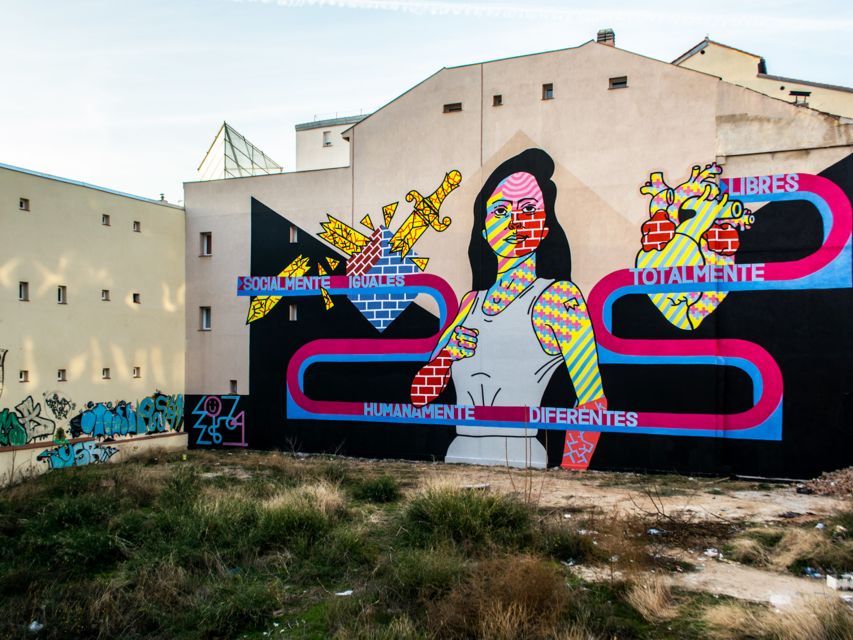
- Local graffiti hunter energy: guides tend to explain both the art methods and the neighborhood context as you walk
- La Tabacalera walls: you get a focused look at street art inside the former tobacco factory setting
- Esta es una Plaza and Plaza del Sombrerete: a guided look at veteran work and evolving styles
- Lavapiés to Embajadores to La Latina: you connect street art to Madrid’s multicultural streets
- Big mural sightings: the “center district” scale is part of what makes this tour feel special
- Workshops in the background: you’ll hear about free community programs (like photography, dance, yoga, cycling, longboarding)
Why Lavapiés and Embajadores street art feels different
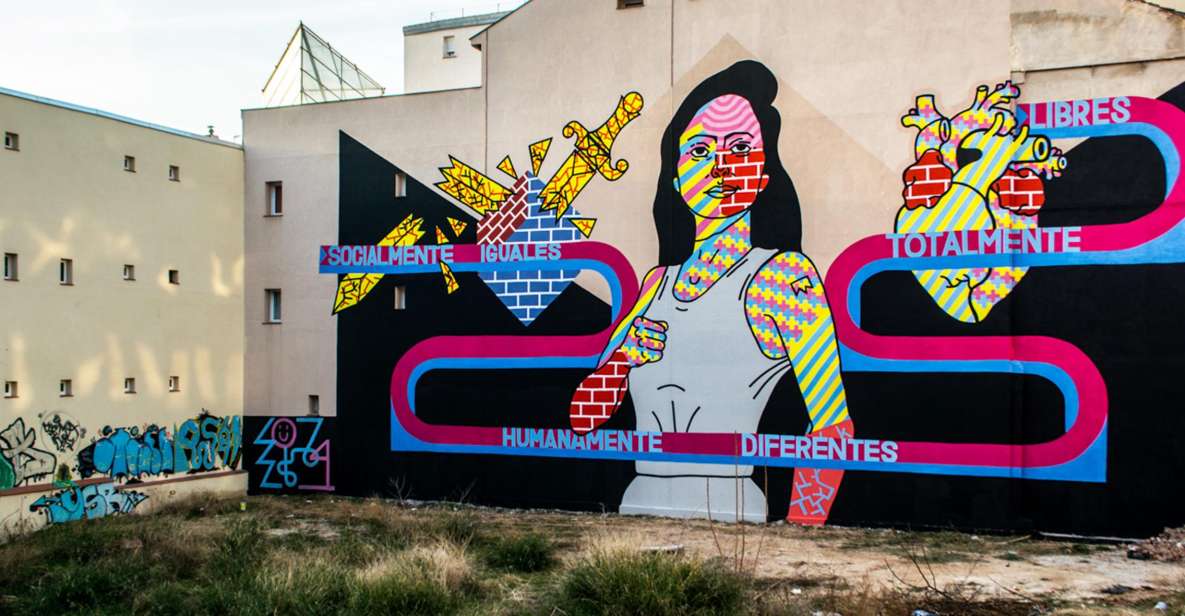
Madrid street art doesn’t sit apart from daily life. In Lavapiés and Embajadores, it’s woven into everyday streets—doorways, side walls, corners where people pause, and walls that keep changing. That matters, because graffiti and stencil art aren’t just decoration here. They’re communication: identity, protest, humor, memory, and sometimes pure craft.
Lavapiés brings the biggest “what is going on here?” factor. It’s multicultural and layered, and the street art reflects that mix. On this tour, I like how the guide uses that setting to explain what you’re seeing—how a piece might read one way from across the street, and another up close, or how styles connect to local art movements.
Embajadores keeps the momentum going. If Lavapiés is the introduction, Embajadores is where the scene starts to feel like a network—different streets, different artists, and different ways of layering messages on a city’s skin. Walking the route with a guide who can interpret the visual language makes the art snap into focus fast.
If you’ve mostly seen street art in one-off Instagram “stops,” this is the antidote. You get a walk where the art and the neighborhood are the same story.
You can also read our reviews of more tours and experiences in Madrid

Meeting at Teatro Valle Inclán and how the 2 hours play out
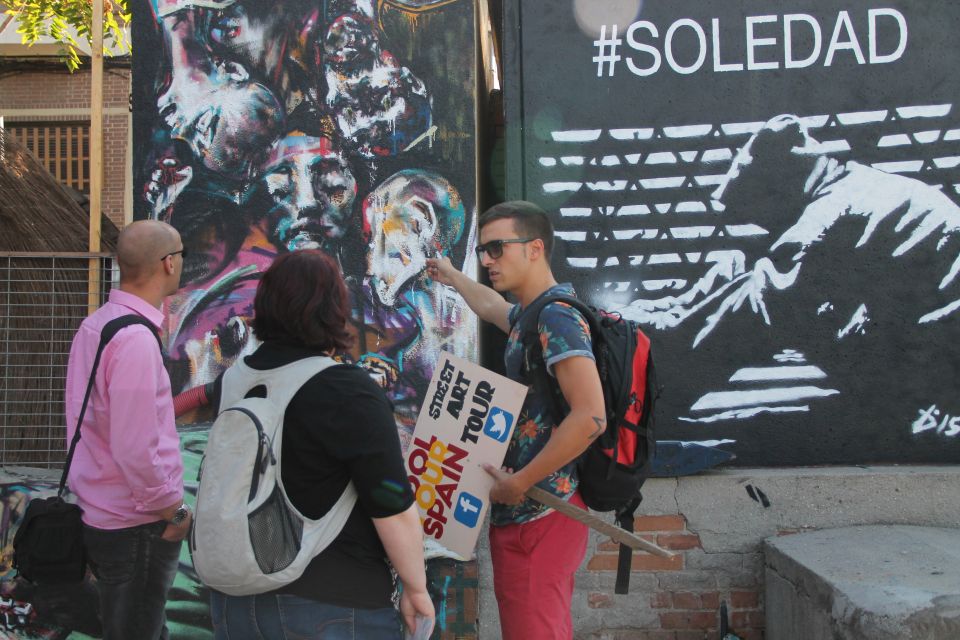
You’ll start at the entrance of Teatro Valle Inclán, Calle de Valencia 1, 28012 Madrid, and the nearest metro station is Lavapiés. Plan to arrive a few minutes early so you don’t start the walk rushed.
The tour is only 2 hours, which changes the pacing. Instead of a long “museum-style” route, you get a tight sequence of streets and walls, with stops chosen for impact and variety. Expect a steady walk with frequent pauses—enough time to look, and enough context to understand what you’re looking at.
Because it’s an English live guided experience, the narration is part of the artwork. One of the most praised elements from past participants is how clearly guides speak and how often they ask questions along the way. That’s good for you if you’re new to graffiti and want help reading the signs and styles without feeling lost.
One practical note: no beverages are included. If it’s warm (Madrid can be sneaky that way), bring water. Comfortable shoes matter, too—this isn’t a “sit and watch” tour.
Calle Argumosa and Calle de Embajadores: the street-as-gallery stretch
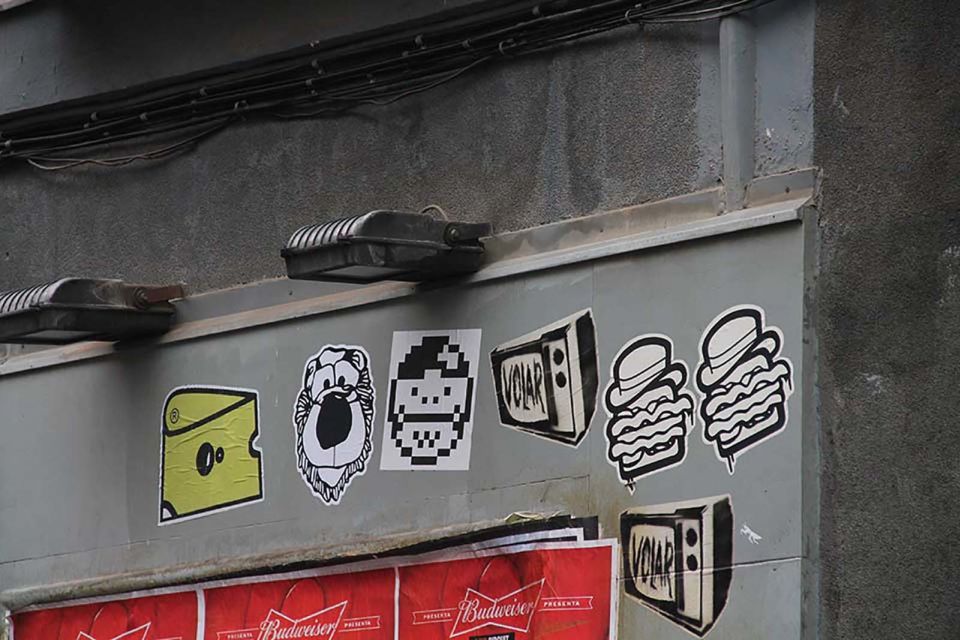
Once you’re walking through Lavapiés, you’ll keep building a mental map of the scene. You’ll spot different forms: graffiti tags and larger letters, stencil work that looks crisp and graphic, and sticker-style pieces that often feel like visual “breadcrumbs” around the city.
Then comes a key corridor: Calle Argumosa and Calle de Embajadores. This isn’t random wandering. These streets help connect the smaller pieces to bigger statements, so your brain learns the patterns of the neighborhood quickly.
As you walk, the guide focuses on how street art can behave like both artwork and signage. Some pieces are meant to be seen briefly as you pass. Others reward slow looking—layers, color choice, linework, and how the piece fits the architecture around it.
If you like the “how did they do that?” angle, this portion of the walk is where the explanations help the most. You’ll hear more about technique and style—things you can’t really learn just by snapping photos.
La Tabacalera: the former tobacco factory stop that changes your perspective
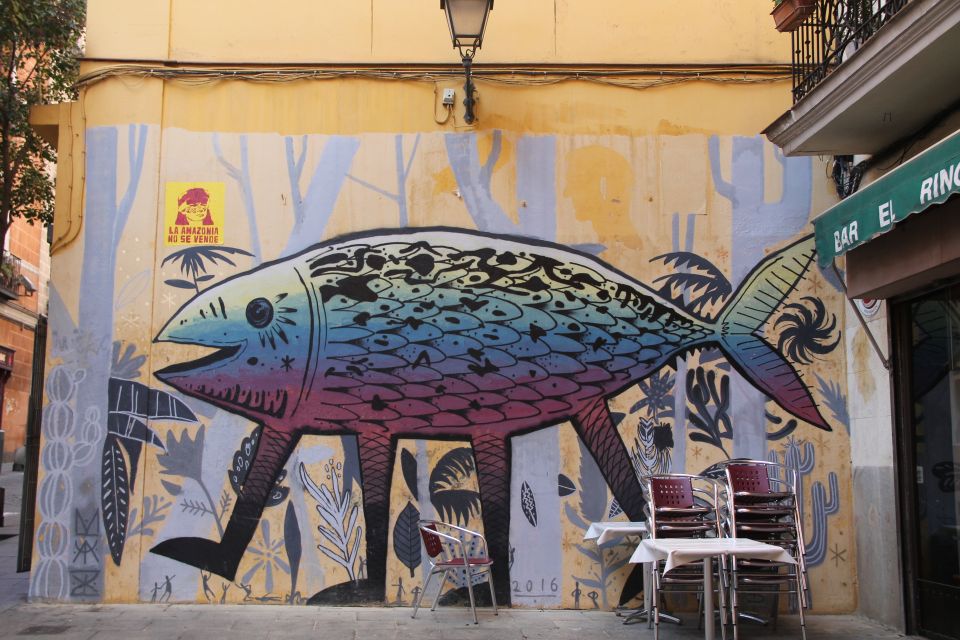
One of the biggest reasons this tour gets high marks is the stop at La Tabacalera, the former tobacco factory. The walls of former industrial spaces can make street art feel louder, bigger, and more “official” in a way—without losing the edge that makes it street art.
This is where the tour shifts from scattered street finds to concentrated, wall-scale artwork. You’re not just looking at a random corner piece. You’re seeing urban art placed within a specific cultural setting that helps explain why this scene keeps producing large work.
A factory shell also changes the acoustics and sightlines. From a distance, murals read like statements on a city block. Up close, you notice decisions: where the color breaks, how the artist used texture, and how the composition works with the wall’s shape and wear.
I also like how this stop fits with the tour’s bigger theme: street art in Madrid isn’t only about rebellious youth aesthetics. It’s also about community spaces and festivals—places where artists and the public cross paths.
Esta es una Plaza and Plaza del Sombrerete: veteran work and why it matters
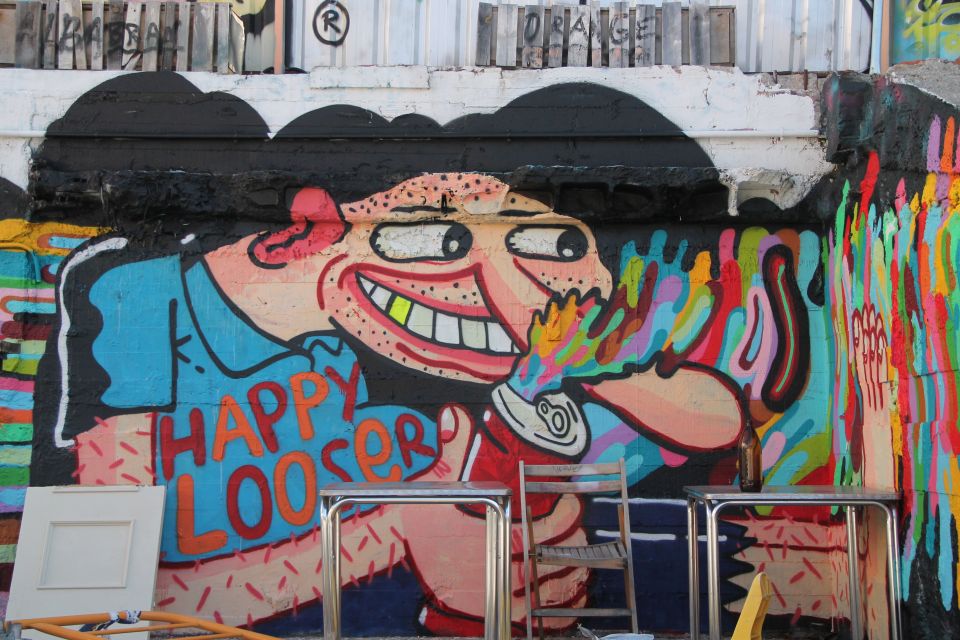
After La Tabacalera, the tour steers toward Esta es una Plaza and the Plaza del Sombrerete area. This is one of those stops where you can feel the difference between “newer street art energy” and work that has earned its place over time.
The guide’s insider approach really pays off here. You’re guided toward understanding not just what the art shows, but what the work means in the local story. Veteran artists—especially in areas like this—often carry techniques and messages that echo past waves of Madrid street culture.
This matters for you if you’re trying to see street art as more than visual noise. The best way to respect the art is to understand its timeline: styles don’t appear out of nowhere, and they don’t stay the same. They evolve with the neighborhood.
If you’re a casual observer, you’ll still enjoy this stop because it’s about meaning. If you’re a street art fan, you’ll enjoy it because the guide has the context to connect motifs, lines, and themes across different walls you’ve already seen.






Calle Sombrete and the scene’s future: up-and-coming talent
Another named highlight in the tour is Calle Sombrete, where you can catch the energy of up-and-coming street artists. This is the kind of contrast stop that’s easy to miss on generic city tours.
Why it’s valuable: the scene changes. One wall can feel like a conversation with the past. Another can feel like an argument happening right now—new artists testing styles, experimenting with materials, and reacting to what’s around them.
In street art, “future” doesn’t always mean softer or nicer. It can mean bolder color choices, sharper political framing, or just a different way to grab your attention in a crowded city.
So by the time you reach Calle Sombrete, you’re not only seeing more art—you’re comparing the scene’s maturity level. That’s a big part of why the two-hour format works so well: it sets up a mini timeline as you walk.
The biggest mural in the center district: scale, distance, and impact
The tour also includes a chance to see the biggest mural in Madrid’s Center District (the tour highlights this as a key moment). Big murals aren’t just “bigger versions” of smaller pieces. Scale changes the job.
When a mural is built for distance, the composition tends to be cleaner and more readable from far away. You start noticing outlines, icon shapes, and color blocks designed to work at street speed. Up close, you might catch the fine detail that’s meant for slower looking.
This is a helpful reminder for you while traveling. Sometimes the best way to enjoy a mural is to step back and let it hit you visually, then come closer and hunt the craft.
If you’re into photography, this is where you’ll get useful practice too. You’ll learn quickly which angles make the work look intentional, not accidental. And if you’re not a photographer, that’s fine. The guide’s explanations help you “read” scale so the impact lands even without a camera.
Workshops and community programs you’ll hear about along the way
As you walk, you’ll also get an insider guide to what’s happening around these art spaces, including free workshops in areas like photography, dance, yoga, cycling, longboarding, and more. Even if you can’t join the workshops yourself, learning that they exist changes how you interpret the murals.
Street art can look like a one-way channel—artist paints, public watches. But community programs suggest something else: the art scene is also a training ground and a social meeting point. When you understand that, the walls don’t feel random. They start to feel like part of a wider ecosystem.
This is also where you get practical cultural context. The best street art tours treat the work like culture, not like entertainment.
Guides who bring technique and neighborhood context (and keep it fun)
A huge strength here is the guide style. Many people comment on guides who keep the walk upbeat, clear, and interactive. Names you might see leading this tour include Ester, Esther, Julian/Julien, Hector, Ana, Santiago, Santy, Yago, and Maria. Different people, same pattern: they explain street art as art and street life as the reason the art exists.
You’ll get more than “this is a mural.” You’ll get explanations tied to the neighborhood’s past and present. One participant even noted that a guide connected street art choices to ethics and community—useful if you want to think about graffiti beyond aesthetics.
And yes, there are moments that feel like extras. Past groups have been lucky enough to spot artists actively painting a new mural while on the tour, and one guide was able to chat with artists in the middle of the walk. You can’t plan on that happening every time, but it tells you something important: this is not a scripted, look-and-run tour. It’s plugged into the scene.
Also, the pacing comes up a lot. People describe the walk as staying engaging without rushing. That matters because street art works best with breathing room. If you’re sprinting to the next wall, you’ll miss the details the guide is trying to point out.
Price and value: is $29 fair for 2 hours?
At $29 per person for a 2-hour guided walking tour, the value is mainly in two places: access and interpretation.
Access means you’re moving through specific neighborhoods—Lavapiés, Embajadores, and La Latina—and you’re not just walking the “obvious” photo spots. Interpretation means the guide can explain the art’s context, the techniques behind what you see, and how these pieces connect to Madrid’s culture.
If you’re the kind of traveler who likes to understand what you’re looking at, this price makes sense. You’re paying for a translator between street art and your own eyes. Without that, some street art can feel like decoration or graffiti you don’t know how to read.
If you mostly want views and photos without any talking, you might feel the price more than someone who enjoys explanations. But even then, the named stops—La Tabacalera, Esta es una Plaza, Plaza del Sombrerete, and Calle Sombrete—give you concrete reasons to show up instead of just strolling on your own.
Be aware of one thing: beverages aren’t included, so plan to spend a little extra on water or a quick drink after.
Who should book this Lavapiés street art tour
This fits you if you want a different Madrid than museums-only. I’d especially recommend it if:
- You like urban art and want context, not just images
- You’re new to graffiti but want help reading it
- You want to walk through neighborhoods you might skip on a first trip
- You like small-group-style pacing and questions along the way
- You care about how art connects to community spaces and local festivals
If you dislike walking, or if you want a mostly indoor, minimal-walking experience, this likely won’t be your favorite. But if you can handle a solid 2 hours outside, you’ll get a lot from the focused route.
The tour is also listed as wheelchair accessible, which is a real plus if you need that kind of flexibility.
Should you book it or skip it?
Book this tour if you want Madrid street art with context, and you’re happy to spend two hours learning how to see. The standout stops—La Tabacalera and the Este es una Plaza/Plaza del Sombrerete area—make the walk feel intentional, not random.
Skip it only if you’re looking for a long, “everything in Madrid” day, or if you strongly prefer quiet sightseeing with no guide narration. Otherwise, the price-to-time ratio is fair, and the guiding style (clear English, interactive pace, lots of neighborhood context) is exactly what makes street art click.
If you can, wear comfortable shoes, bring an ID, and bring water. Then show up ready to look harder than you normally do.
FAQ
How long is the street art tour?
The tour lasts 2 hours.
Where does the tour start?
You meet at the entrance of Teatro Valle Inclán, Calle de Valencia, 1, 28012 Madrid. The nearest metro station is Lavapiés.
Is the tour guided in English?
Yes. It’s an English-speaking, live guided tour, and the tour is operated in English.
What’s included in the price?
The included item is the English-speaking guide.
What should I bring with me?
Bring a passport or ID card and wear comfortable shoes.
Are drinks included?
No. Beverages are not included.
Is the tour wheelchair accessible and can I cancel if plans change?
Yes, the tour is wheelchair accessible. It also offers free cancellation up to 24 hours in advance for a full refund.