REVIEW · MADRID
Madrid Highlights Tour with Santiago Bernabeu Stadium Entrance
Book on Viator →Operated by Julia Travel S.L · Bookable on Viator
Madrid changes mood fast—old city first, then football. This Madrid Highlights Tour with Santiago Bernabéu Stadium Entrance bundles a guided overview of key monuments with special access at Real Madrid’s stadium, so you get two very different parts of the city in one pass. You start in central Madrid, ride in an air-conditioned bus, and finish at the stadium so you can slow down and explore at your own pace.
What I love most is the way you get a real snapshot of Madrid’s layers: Moorish roots in Barrio de la Morería, major squares like Plaza Mayor and Puerta del Sol, then big royal-era landmarks and grand boulevards. The other win is the stadium access—down to the locker rooms, dressing-area feel, the bench, the pitch, and the stadium museum—plus that signature photo-and-trophy section people travel for.
One consideration: stadium access can be affected by events and match-day logistics, and some areas may close. Also, the Bernabéu portion is self-guided, so you’ll want to go in with clear expectations and enough time to wander.
In This Review
- Key Things That Make This Tour Work
- A 9:00 AM Start That Gets You Both Old Madrid and Bernabéu
- The One-Hour Walking Tour: From Moorish Roots to Plaza Mayor
- Plaza Mayor and Puerta del Sol: The Two Squares That Define Your Madrid Map
- The Bus Route Hits the Big Names: Prado, Cibeles, Retiro, and More
- Royal Palace and Almudena Cathedral: Magnificent Facades Without the Museum Rush
- Changing Eras in One Ride: From Charles III to 18th-Century Culture
- Santiago Bernabéu Stadium Entrance: What Off-Limits Access Actually Means
- Museum vs. Self-Guided: How to Spend the Time You’re Given
- Match Days and Stadium Closures: The One Thing to Check Before You Go
- Price and Value: Why $85.49 Can Be a Deal (or Not)
- Getting Back from the Stadium: Plan Your Transport in Advance
- Who Should Book This Tour (and Who Might Prefer Something Else)
- Should You Book the Madrid Highlights Tour with Bernabéu Entrance?
- FAQ
- How long is the Madrid Highlights Tour with Bernabéu Stadium entrance?
- What’s included in the Bernabéu visit?
- Is the stadium tour guided?
- What happens on match days regarding access to dressing rooms and benches?
- What language is the tour offered in?
- Where does the tour start and end?
- Do I need to arrange transportation back after the tour?
Key Things That Make This Tour Work
- A tight city overview with a one-hour walking segment plus bus drives through central Madrid
- Moorish Quarter to Habsburg-era squares, with stops near Plaza Mayor and Puerta del Sol
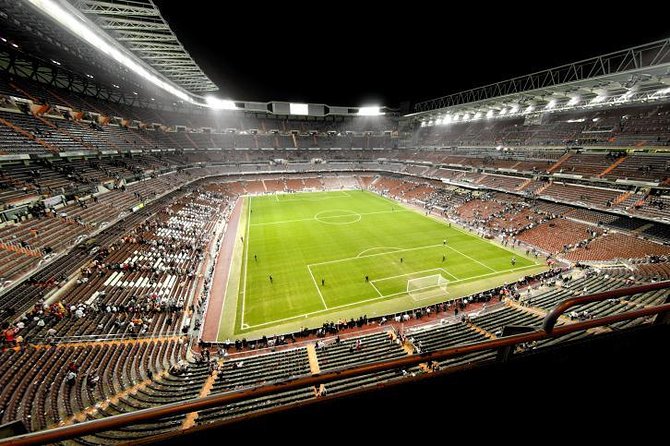
- Real access at Bernabéu, including places most visitors never see
- Museum time is real time: plan on about two hours inside for the most satisfying visit
- Group size stays manageable (maximum 25), which helps with pacing
- You end at the stadium, so you’ll handle getting back on your own
A 9:00 AM Start That Gets You Both Old Madrid and Bernabéu
The day runs about 4 to 4.5 hours, starting at 9:00 am from Julià Travel Madrid in Centro. The structure is simple: first you get your bearings in central Madrid with a guided walk, then you switch to a bus for the bigger “see it from the window” sights, and finally you finish at Santiago Bernabéu.
This format is good if it’s your first time in Madrid. I like that you’re not spending your whole day in one area—you’re learning where the main sights sit, and then you’re cashing in that knowledge at the stadium later.
You can also read our reviews of more tours and experiences in Madrid.


The One-Hour Walking Tour: From Moorish Roots to Plaza Mayor
The walking portion is where the tour earns its value. You start by strolling around a central, emblematic area, then you move into the heart of historic Madrid with an emphasis on how the city formed over different eras.
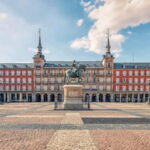
Expect the guide to connect the dots as you go. You’ll see or pass through the Barrio de la Morería, which anchors the conversation around Madrid’s Moorish roots, and then you’ll move toward some of the “you can’t miss this” squares. Plaza Mayor is one of the biggest mood shifts, because it’s the oldest major square in the city and a core gathering point.
You’ll also get time around Calle Mayor, which is one of the best places to understand how old Madrid funnels people toward bigger landmarks. It’s the kind of stop that helps you later when you’re exploring on your own—you’ll recognize street rhythms, not just individual buildings.
Practical note: this tour includes numerous stairways, so I’d skip it with heavy suitcases or a stroller. If you’re traveling light, it’s easier to enjoy the walk without feeling like you’re managing luggage on top of sightseeing.
Plaza Mayor and Puerta del Sol: The Two Squares That Define Your Madrid Map
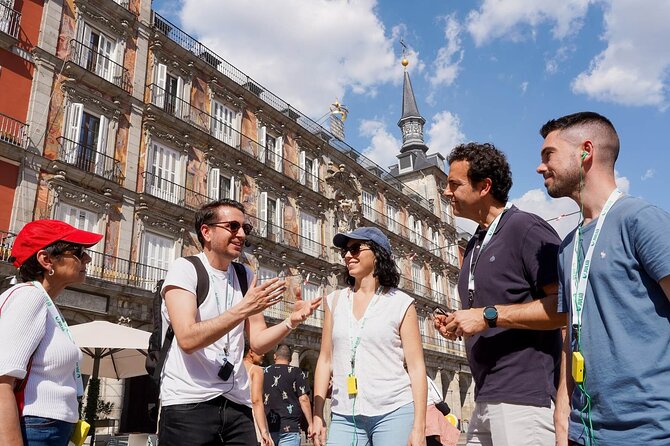
The tour keeps hitting the places that function like navigation tools. Puerta del Sol is one of the clearest examples: it’s a central point you’ll see referenced everywhere, and it helps you orient quickly once you’ve physically stood there.
From there, the ride brings you past more key urban landmarks while you sit back. This is where the “highlights” part earns its name—you’re building a mental map, not trying to win a photo contest at every corner.
If you like efficient travel days, these two stops are the backbone. If you prefer slow, deep walking tours, you may find the bus rhythm a bit fast during the city portion. That’s normal—this one is built for coverage.
The Bus Route Hits the Big Names: Prado, Cibeles, Retiro, and More
After the walking segment, you board an air-conditioned bus for the drive through central Madrid. On the route, you’ll pass key sights tied to Madrid’s royal and cultural identity, along with the grand boulevards where locals actually move through the city.
A few standout windows:
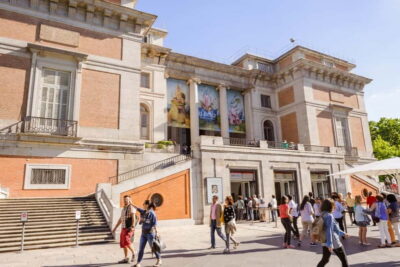
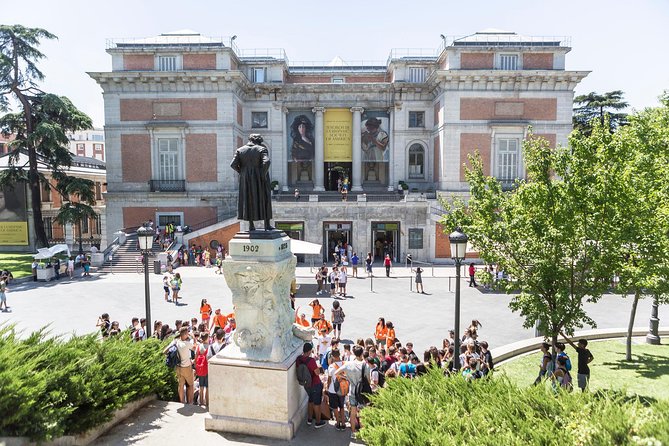
- Paseo del Prado and the area around the Prado Museum
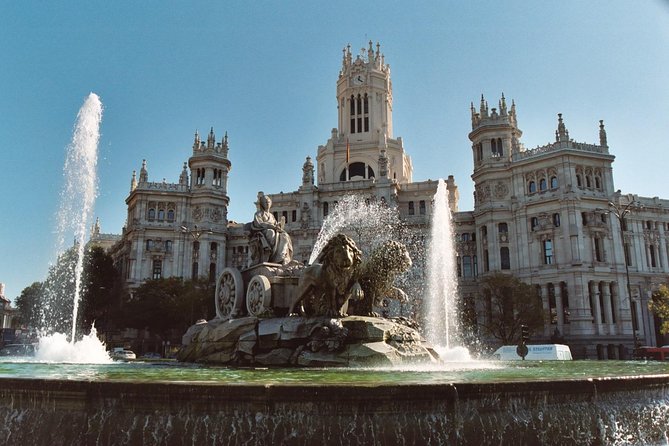
- Cibeles Fountain, a familiar backdrop for Real Madrid fan celebrations
- Retiro Park, one of the city’s most important green spaces
- Puerta de Alcalá, one of the iconic ancient gates into Madrid
You’ll also see a drive-by along the Gran Vía and Paseo de la Castellana, which makes the city’s scale feel real. One extra detail I like: you get Manzanares River views from the road. Even if you don’t exit the bus, that stretch helps break the day up visually.
There’s also a picture stop at Las Ventas bullring, where your guide shares context. It’s quick, but bullfighting is part of Madrid’s cultural story, and a short stop gives you enough to recognize it later.
Royal Palace and Almudena Cathedral: Magnificent Facades Without the Museum Rush
The tour includes views and stops around Royal Palace of Madrid and Almudena Cathedral. The Royal Palace is one of those buildings that feels more dramatic the closer you get to the details, so even without going inside, it hits.
This is a smart compromise for a half-day tour. You get the sense of the royal setting—stonework, layout, and the “this is the center of power” feeling—without turning your day into a line-management marathon.
If you later want to add museums, you’ll know where to aim. That’s the big hidden benefit of tours like this: they help you return with a plan instead of guessing.



Changing Eras in One Ride: From Charles III to 18th-Century Culture
The guide’s commentary is part of the glue. As the bus rolls, you’ll pass areas tied to the reign of King Charles III, including references to how the city’s scientific and cultural output blossomed during the 18th century.
I find that this kind of narration matters because it changes how you look at streets. You start seeing Madrid as a series of decisions—who ruled, who funded, what institutions grew—rather than just a set of pretty facades.
The tour also notes other city “gateways” and major routes as you pass them, like Puerta de la Opera. Again, it’s not about memorizing dates. It’s about understanding how Madrid’s layout tells its own story.
Santiago Bernabéu Stadium Entrance: What Off-Limits Access Actually Means
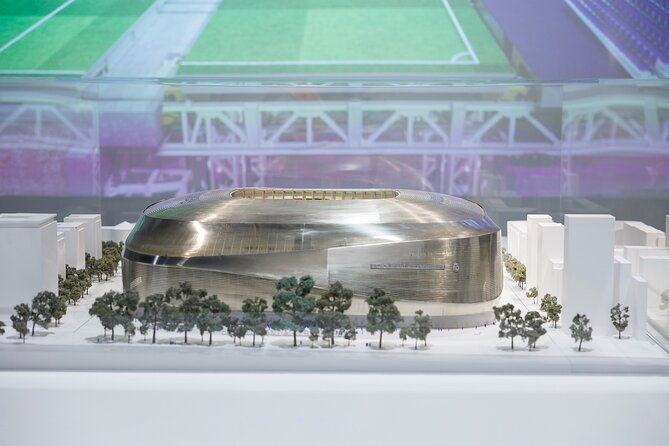
Now for the main event: Santiago Bernabéu. This visit is where the tour becomes a must-do for Real Madrid fans and a still-worth-it stop for sports lovers, even if you’re not a diehard.
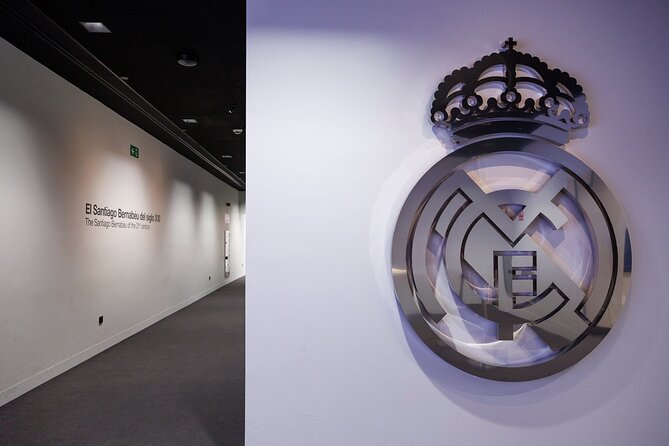
The access includes the Real Madrid Museum, plus areas that feel special because they’re normally not on the standard visitor path. You’ll see locker rooms, the bench, the pitch, and a presidential box viewpoint. That combination—backstage rooms plus field access—is the part people remember.
What I really like is that the museum and stadium areas are linked. You don’t just look at trophies; you connect them to the spaces where match-day pressure happens. It turns the club’s story into something physical.
Museum vs. Self-Guided: How to Spend the Time You’re Given
One key expectation: the stadium portion is self-guided. The admission includes the museum and your stadium access, but you navigate the flow on your own once inside.
Based on guidance from the experience info, you should plan around two hours for a satisfying visit. If you rush, you’ll miss the little transitions that make this meaningful—especially the way the museum sets up what you’ll later stand near on the pitch.
A practical tip: if there’s an audio narration option on a phone device, be ready for the sound to compete with other people in the same space. One person noted that an optional mobile device narration rental was available (mentioned at 5 euros) but that it can be difficult to hear in the crowd and may not include great audio setup. I’d personally skip any extra rental unless you’re confident it’ll work for your hearing needs.
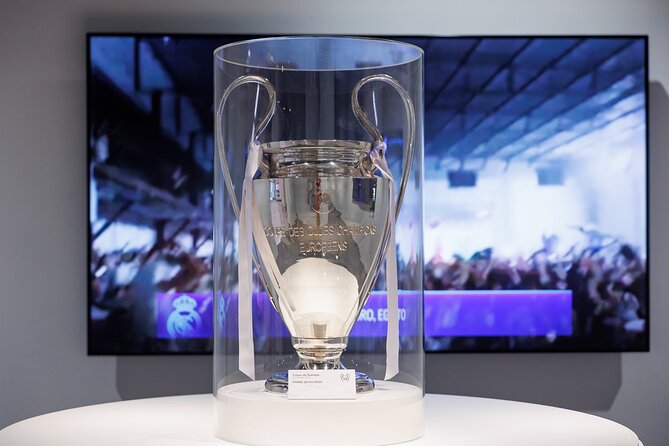
And yes—there’s an official store at the end, plus an optional souvenir photo involving the Champions League trophy and a player-style photomontage.
Match Days and Stadium Closures: The One Thing to Check Before You Go
This tour has an important caveat. From 12:00 noon the day before a match until the stadium reopens the day after, your visit includes only the museum and panoramic view. Dressing rooms and benches remain closed during those windows.
That’s not a minor detail—it’s a change in what you came for. If your goal is the full backstage circuit, check your date carefully. Your ticket is valid for the specific date and time shown, so don’t treat it like flexible museum entry.
The tour also reserves the right to alter the route if events are happening, including stadium schedule variations. In plain terms: build in some flexibility, and don’t assume every “highlight” area is always accessible.
Price and Value: Why $85.49 Can Be a Deal (or Not)
At $85.49 per person, this tour can feel like a bargain if your priority is the Bernabéu access plus a guided city sampler. You’re paying for three things in one package: a guided Madrid orientation, transportation in an air-conditioned vehicle, and an included stadium admission ticket (museum plus the included access zones).
It can feel pricier if you only want the city portion or if you hit a date with match-day closures that limit backstage areas. There are also people who would rather do the city highlights separately and spend more time at the stadium at their own pace, because the city portion can be brief and depends on timing.
The best way to think about value here is simple: do you want the stadium experience bundled with city orientation? If yes, this package makes sense. If the stadium is the whole point, you might compare what’s accessible on your date.
Getting Back from the Stadium: Plan Your Transport in Advance
Another real-world detail: the tour ends at Santiago Bernabéu (Chamartín area) and you’re responsible for getting back. Some people were surprised by this because other tours often return you to the start point.
That doesn’t make the tour bad—it just means you should plan. If you’re staying near public transport, it’s usually manageable. If you’re relying on a specific route back, decide in advance so you’re not figuring it out right after you finish walking the pitch.
Who Should Book This Tour (and Who Might Prefer Something Else)
I’d book this if:
- You’re short on time and want a fast Madrid orientation plus the Bernabéu visit
- You want help understanding where big sights sit so you can return later
- You like a guided start, then freedom at the stadium
I might skip it if:
- You want a fully guided stadium narration the whole time (the Bernabéu visit is self-guided)
- You’re visiting around a match-day window and really care about locker rooms and the bench
- You dislike mixed pacing—some people want a more purely walking-based city tour
About language: the tour is offered in English, but guides may use quick switches in how they speak or how they frame moments. If clarity matters, I’d confirm that your specific departure is fully English-focused before you head out.
Should You Book the Madrid Highlights Tour with Bernabéu Entrance?
Yes, if your trip is timed to avoid match-day backstage closures and you want a one-stop way to see both Madrid’s center and Real Madrid’s home. The stadium access is the reason most people book this, and when full areas are open, it delivers the kind of “I’m standing where players stand” thrill that you don’t get from basic entry.
If you’re booking mainly for the city portion, I’d consider pairing a similar-time walking tour of Madrid neighborhoods with a separate Bernabéu visit—especially if you want longer stops or deeper museum time. For first-time visitors who want an efficient day, though, this package is a strong match: you’ll finish with a clear sense of Madrid—and a field-level memory you’ll keep.
FAQ
How long is the Madrid Highlights Tour with Bernabéu Stadium entrance?
It runs about 4 to 4.5 hours.
What’s included in the Bernabéu visit?
The ticket includes the Real Madrid Museum and access to areas such as locker rooms, the bench, the pitch, and a panoramic view, depending on the day. An official store is included as well.
Is the stadium tour guided?
The museum and stadium visit is self-guided once inside.
What happens on match days regarding access to dressing rooms and benches?
From 12:00 noon the day before a match until the day after the stadium reopens, dressing rooms and benches are closed. Your visit includes only the museum and panoramic view during that window.
What language is the tour offered in?
It’s offered in English.
Where does the tour start and end?
It starts at Julià Travel Madrid on C. de San Nicolás in Centro, and it ends at Santiago Bernabéu (Chamartín).
Do I need to arrange transportation back after the tour?
Yes. The tour ends at the stadium, so you’ll need to plan how you’ll get back from there.