REVIEW · MADRID
Escorial Monastery and the Valley of the Fallen from Madrid
Book on Viator →Operated by Julia Travel S.L · Bookable on Viator
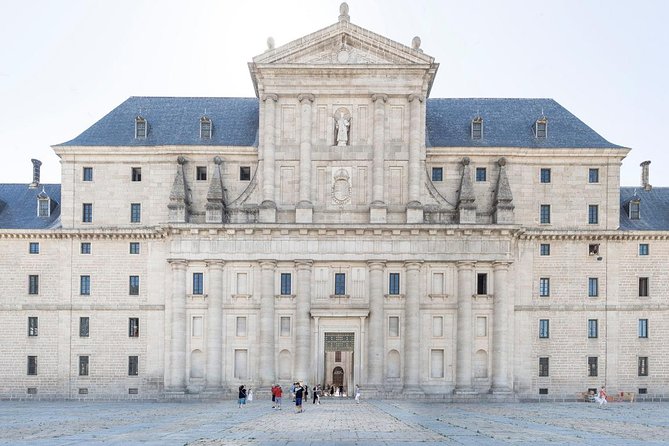
Escorial looks like a ruler decided to build a fortress and a church at the same time. This morning tour pairs the grand Royal Monastery of El Escorial with the sobering Valley of the Fallen, all with guided interpretation and included entry tickets. You’ll get a fast but solid overview of Spain’s Habsburg power and 20th-century history without needing to organize anything.
I especially like that you get a guided route through major Escorial rooms in just 2.5 hours, including the places most first-timers skip. The included radio-guide system is a big help when groups move through busy halls.
The main drawback is pacing and comfort. This is a walking-heavy day once you’re on-site, with stairs and uneven access that can be tough if you have mobility limits, and the English portion can vary by guide.
In This Review
- Key highlights you can plan around
- A focused morning from Madrid: what this trip is really good at
- Getting there on time: check-in, coach ride, and the morning flow
- El Escorial in 2.5 hours: royal tombs, Baroque dome, and the rooms that matter
- Pantheon of Kings and the “specific rooms” that add real depth
- Valley of the Fallen: the cross from afar, the crypt up close
- Language and audio reality: English is offered, but it depends on the guide
- Crowds, pace, and the amount of walking you’ll really do
- Price and value for money on a $79.30 morning tour
- Who should book this tour (and who might be happier elsewhere)
- Should you book this tour?
- FAQ
- What are the main sites included in this tour?
- How long is the tour?
- Are entrance tickets included?
- Is hotel pickup offered?
- Is the tour really in English?
- Is lunch included?
- Is this tour suitable for people with mobility issues?
- Where does the tour start and end?
- Can I cancel for free?
Key highlights you can plan around
- 2 UNESCO-listed stops, timed for one morning: Escorial first, Valley second, then back to Madrid.
- Royal Monastery access included: you won’t have to sort tickets for the big sights at El Escorial.
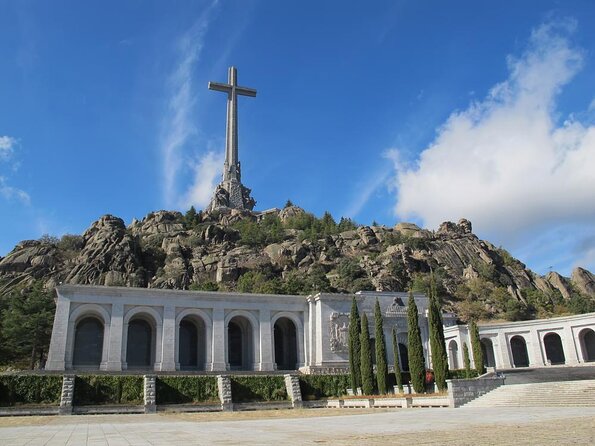
- Valley of the Fallen photo moment: the world’s largest cross is built for visibility from miles away.
- Radio-guide system on the bus and walking: helps you catch the commentary as the group moves.
- Guided outside, self-guided inside the basilica: at the Valley, explanations aren’t given inside.
- Small-group feel, big-site reality: max 30 travelers per guide, but the sites can still feel crowded.
A focused morning from Madrid: what this trip is really good at
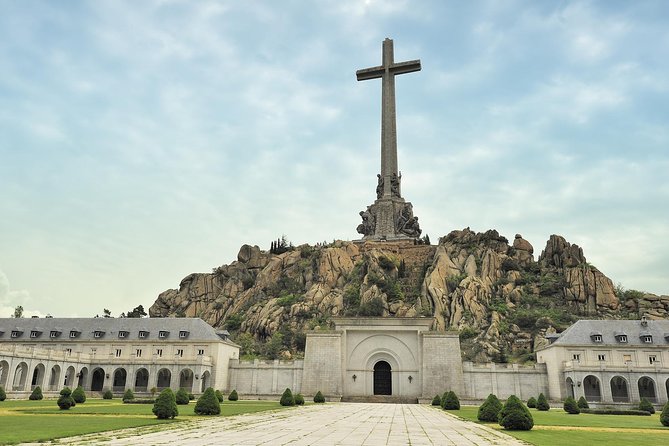
This is a classic Madrid-to-the-outskirts day: you leave early, ride north in an air-conditioned coach, and come back before your afternoon melts away. The value isn’t just that you see two famous places. It’s that you see the right rooms at El Escorial with guidance, then you get the dramatic Valley experience with structured timing.
If you like tours that give you bearings fast, this works. You start with the Royal Seat of San Lorenzo de El Escorial, a Renaissance statement of state power, and then you shift to the mountain-carved monument of the Valley of the Fallen. It’s an interesting contrast: imperial order versus memorial gravity.
And yes, the distance is manageable. You’re looking at about 28 miles (45 km) from Madrid to El Escorial, plus the short hop to the Valley afterward.
You can also read our reviews of more tours and experiences in Madrid.



Getting there on time: check-in, coach ride, and the morning flow
You meet at Julià Travel Madrid on C. de San Nicolás, 15 (Centro), and the tour starts at 8:30 am. Check in about 15 minutes early so you don’t end up sprinting for a bus departure.
The coach is part of the experience in a good way. You travel in comfort with air-conditioning, and your guide’s commentary begins on the road—so you’re not staring at scenery with zero context.
You’ll also appreciate the end point: the tour returns to Plaza de Oriente. That’s a convenient drop-off zone for continuing on your own after the morning.
El Escorial in 2.5 hours: royal tombs, Baroque dome, and the rooms that matter
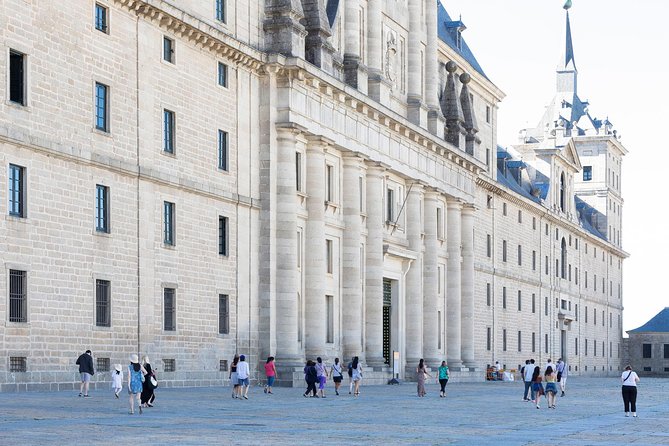
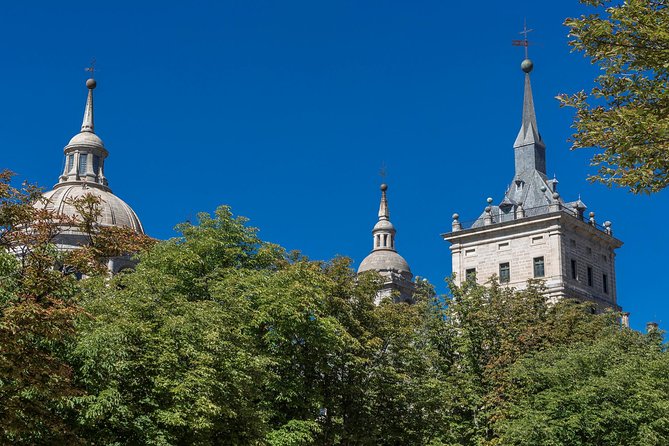
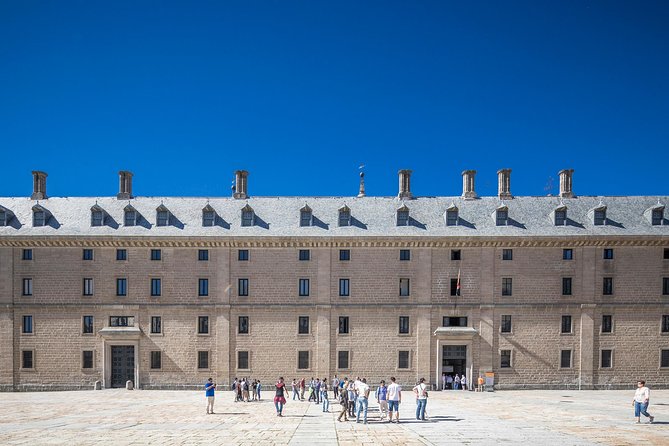
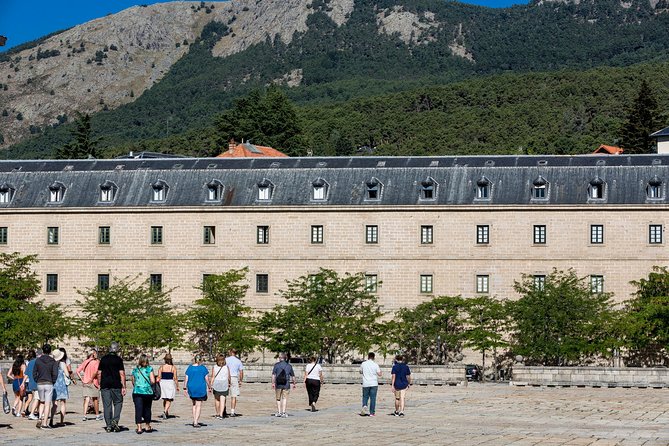
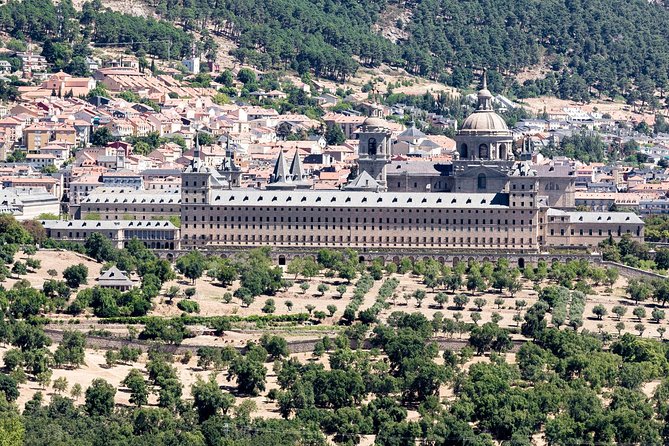
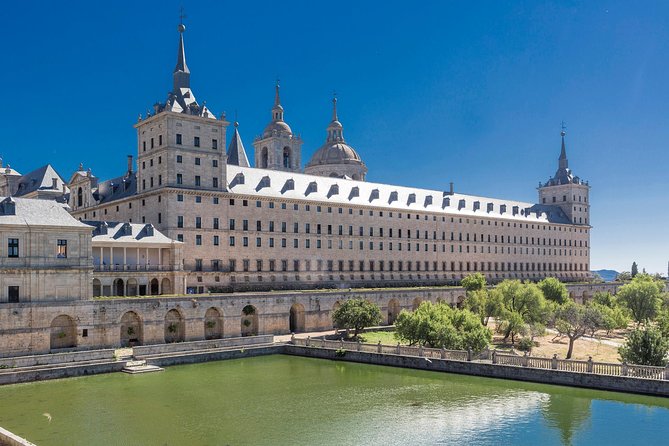
The heart of the day is El Escorial: a UNESCO World Heritage-listed architectural ensemble from the 16th century. This isn’t just a pretty church stop. It’s the final resting place of Charles I and Isabella of Portugal, and the building’s symmetry and layout are part of the message.
You’ll start your guided visit in the most important sections, including the Habsburg’s Palace, the Chapter House, the Basilica, and the library. Expect a route designed to show you both the political story and the artistic details—ceiling work, religious relics, and major spaces that explain how this complex functioned.
What I like about the time allocation is that you’re not given a token look. You get enough minutes to understand the place. Even if you don’t catch every detail, the major themes come through: monarchy, religion, and art working together in one huge plan.
Pantheon of Kings and the “specific rooms” that add real depth
After the main monastery areas, the tour moves into the Pantheon of Kings theme—where the experience becomes more tactile and specific. Here, you’ll see the marble tomb of Charles V, a focal point that grounds the Habsburg story in a single object.
From there, you go into rooms that people often miss if they self-tour:
- Architects Room: you’ll browse building equipment connected to 16th-century construction, which makes the architecture feel less abstract.
- Weapons Room: you get a look at historic arms, tied to the power display the complex is famous for.
- Library frescoes: the decorative ceiling and wall art add a visual layer beyond statues and tombs.
Also watch for group rhythm. At big sites like this, timing is everything: when the group pauses, you have a chance to look closely; when the group moves, you’re mostly observing from a distance. If you like details, slow yourself down for the tomb and fresco areas when your guide gives you the moment.
Valley of the Fallen: the cross from afar, the crypt up close
Next is the Valley of the Fallen, about 9 km from El Escorial in the Sierra de Guadarrama. Even before you reach it, you can see it from far away because of the massive cross above the monument.
The monument is an underground church built into the mountain. The big idea here is the contrast between the visible symbol above and the enclosed space below. The visit includes the basilica and the crypt, where you’ll see vaulted spaces and sculpted angels.
One practical detail matters: you’re told that the guide won’t be able to give explanations inside the basilica, so the narration happens outside and then you tour the interior on your own. That’s not a flaw, but it changes how you should experience it. If you want deeper commentary, plan to take a careful look at what’s there when you’re inside, and don’t expect a running explanation.
Your photos are likely to happen in two stages:
1) the colossal granite cross view from outside (you’ll have plenty of chance to orient yourself), and
2) the interior mood and sculpted crypt when you’re inside.



Language and audio reality: English is offered, but it depends on the guide
The tour is offered in English, and it’s listed as bilingual (English and Spanish). You also get a radio-guide system, which helps you hear the guide more clearly than typical headsets-free tours.
Still, the day can feel different depending on the leader’s English clarity and pacing. Some guides have been singled out positively by name—like Jorge, Susanna, and María—with strong explanations and good accommodation. Others, in past experiences, have been described as harder to follow in English due to accent or speed.
If English-only comprehension is a deal-breaker for you, plan for the possibility that Spanish may dominate at certain moments. The radio system is your safety net, but it can’t replace clear phrasing.
Crowds, pace, and the amount of walking you’ll really do
This tour is not a sit-and-smile loop. It’s a walking tour once you arrive at the sites, and the Valley in particular includes a lot of stairs and interior levels. The operator notes full accessibility can’t be guaranteed due to architectural features, and it’s not recommended for people with walking difficulties or reduced mobility.
Even if you’re fit, you should wear practical shoes. Plan for uneven surfaces and climbs, especially at El Escorial, where moving between major areas involves stairs and long corridors.
Pacing is another factor. The Valley time is about 1 hour, and that’s enough to see the key spaces, but it won’t feel roomy. In some departures, time at the Valley can feel squeezed if there’s an event or service scheduled—so you may get less unstructured time than you hoped.
At El Escorial, crowding can also affect your experience. Even with a guided route, it can get tight in popular rooms. If you’re the type who wants space to stare at artwork for ten minutes at a time, you may prefer arriving with the mindset: look closely during guided stops, then snap a few extra photos where you can.
Price and value for money on a $79.30 morning tour
At $79.30 per person for about 5.5 hours, this can represent good value if you care about two things: guided context and included admission. You’re paying for:
- guided interpretation in English/Spanish,
- coach transportation,
- entry to the Royal Monastery of El Escorial,
- entry to the Valley of the Fallen and basilica,
- and a radio-guide system for listening clarity.
If you were to do this DIY—figure out bus or train routes, buy timed tickets, and coordinate transport between the monastery and the Valley—you’d likely spend more time than you want. For a one-morning option, the “you don’t have to plan it” value is real.
Where the price can feel less justified is when the day doesn’t match the expectations implied by the name, especially if the Valley portion isn’t available on your departure date. Past experiences have noted that some dates may not include the Valley as expected, so I’d treat your confirmation details as the final word.
Who should book this tour (and who might be happier elsewhere)
I’d steer you toward this tour if you want:
- a guided overview of El Escorial’s major rooms without studying floor plans all morning,
- a structured Valley visit with the big cross and underground basilica experience,
- a comfortable coach ride with clear timing.
This also suits you if you like a group setting where your guide keeps the day moving and you can choose how much depth to take in during stops.
I’d think twice if:
- you need full accessibility or have trouble with stairs,
- you require consistently clear English narration for every major moment,
- you strongly prefer long, unhurried time in each museum-like space.
Should you book this tour?
Yes, if you’re going to El Escorial anyway and you also want the Valley included in the same morning. The combination is efficient, and the guided run through the monastery adds context that’s hard to recreate on your own.
Book it with one checklist mindset:
- confirm that the Valley stop is included for your exact departure date,
- bring comfortable walking shoes and plan for stairs,
- and if English comprehension is critical, choose this tour knowing the bilingual format can vary by guide and that the Valley basilica has self-guided interior time.
If that all works for you, you’ll walk away with a strong sense of why the Escorial was built like a statement—and why the Valley was built like a warning.
FAQ
What are the main sites included in this tour?
You’ll visit the Royal Monastery of El Escorial and (if selected on your option) the Valley of the Fallen with access to the basilica.
How long is the tour?
The total duration is about 5 hours 30 minutes.
Are entrance tickets included?
Yes. Entrance to the Royal Monastery of El Escorial and admission to the Valley of the Fallen and the Basilica are included.
Is hotel pickup offered?
Hotel pickup and drop-off is offered if you select a private tour option. Otherwise, you’ll meet at the start point and return to Plaza de Oriente.
Is the tour really in English?
The tour is offered in English, and it is listed as a bilingual experience in English and Spanish, supported by a radio-guide system.
Is lunch included?
No. Lunch is not included.
Is this tour suitable for people with mobility issues?
It’s not recommended for people with walking difficulties or reduced mobility, because the interior areas have many stairs and accessibility can’t be guaranteed.
Where does the tour start and end?
It starts at Julià Travel Madrid on C. de San Nicolás, 15 (Centro) and ends at Plaza de Oriente (Pl. de Ote., Centro).
Can I cancel for free?
You can cancel for a full refund up to 24 hours in advance of the experience start time.