REVIEW · MADRID
El Escorial and Valley of the Fallen Half Day Trip from Madrid
Book on Viator →Operated by Travel Tours Experience · Bookable on Viator
A cliff-top monument and a royal monastery in one morning. This half-day tour bundles El Escorial (a rare Renaissance complex) with the Valley of the Fallen (the huge basilica-and-cross landscape). I like the way it uses fast-track access so you spend time seeing rather than waiting, and I like how a guide adds context that makes both sites easier to understand. The main thing to consider is language balance: it’s offered in English, but the group can include Spanish speakers, so you may hear more Spanish than you want at times.
For a 5-hour-15-minute block, you get two major sites outside Madrid, plus guided time inside the key parts and a short window to look around on your own. It’s not a slow, stroll-all-day outing, so you’ll want to dress for cool interior spaces and be ready for walking up and down museum-style routes.
In This Review
- Key highlights worth your time
- Price and logistics: a morning that actually works
- El Escorial’s Royal Monastery: palace power meets Renaissance design
- What makes El Escorial feel special (beyond the photos)
- The Valley of the Fallen: a huge basilica with a cross on top
- Free time at the Valley: how to use your 30 minutes
- The guide and language mix: what English-only really means here
- Comfort and pacing: walking, cold stone, and getting in and out
- Who should book this El Escorial and Valley tour?
- Should you book it?
- FAQ
- Is this tour offered in English?
- How long do you spend at El Escorial?
- How long is the Valley of the Fallen visit?
- Is round-trip transportation included from Madrid?
- Are admission tickets included?
- Is there free time at the Valley?
- Can I cancel and get a full refund?
Key highlights worth your time
- Fast-track entry at El Escorial and the Valley basilica to cut the worst waiting
- Guided visits inside the monastery complex and the Valley’s basilica, not just exterior photos
- Air-conditioned round-trip bus with a bilingual English/Spanish guide on board
- A smallish group (max 53), which helps the flow at entrances and meeting points
- Real context for two very different chapters of Spanish power and religion
- A short free-explore window around the Valley after the guided portion
Price and logistics: a morning that actually works
At $70.77 per person for about 5 hours 15 minutes, this is priced like a proper guided half-day, not a DIY outing with separate tickets. You’re paying for round-trip transport from central Madrid, guided time at both sites, and fast-track access that can save you a lot of friction on busy days.
The tour starts at 8:45 am at C. de Ferraz, 3 (Moncloa–Aravaca), Madrid, and it ends back at the same meeting point. The schedule is built around a tight rhythm: roughly 2 hours of travel round-trip, about 45 minutes walking to/from monuments and pathways, plus guided time at the sights.
Practical tip: this is a bus-and-walk half day. If you’re the type who likes to wander slowly, you’ll still have a window at the Valley, but you’ll need to accept the guided pace.
You can also read our reviews of more tours and experiences in Madrid
El Escorial’s Royal Monastery: palace power meets Renaissance design
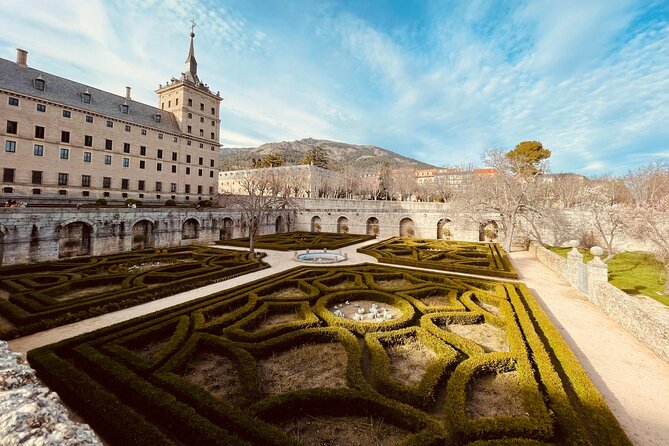
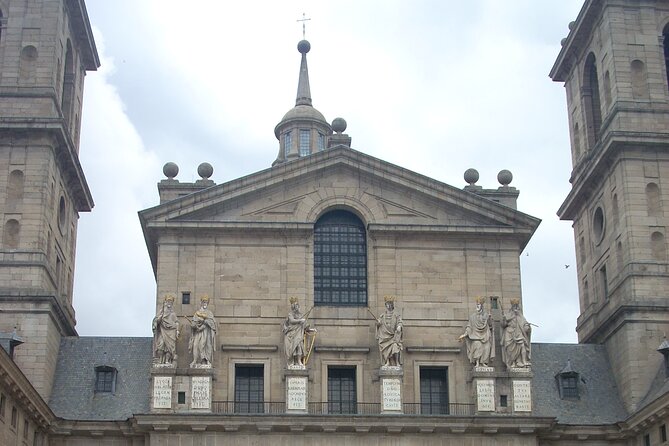
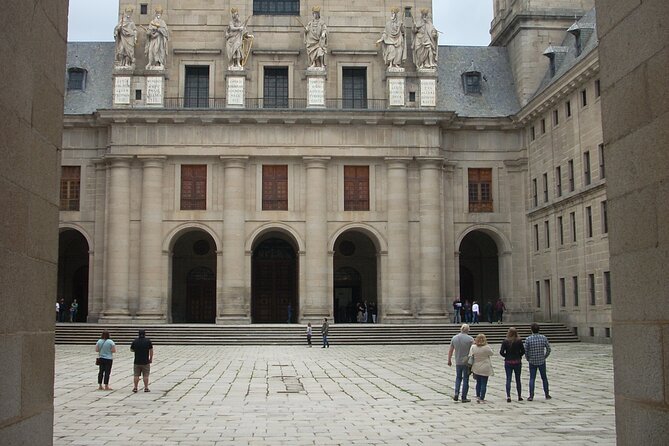
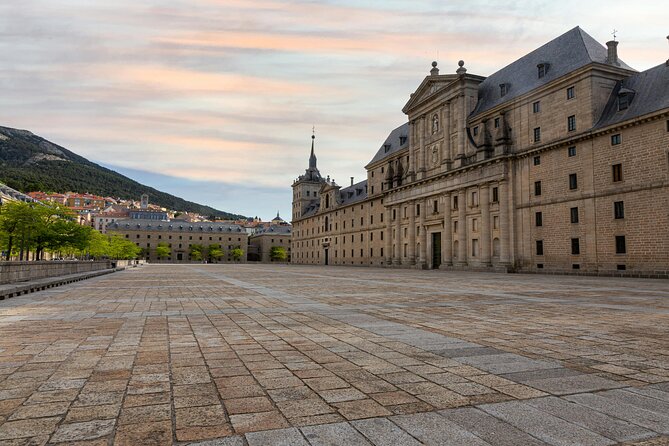
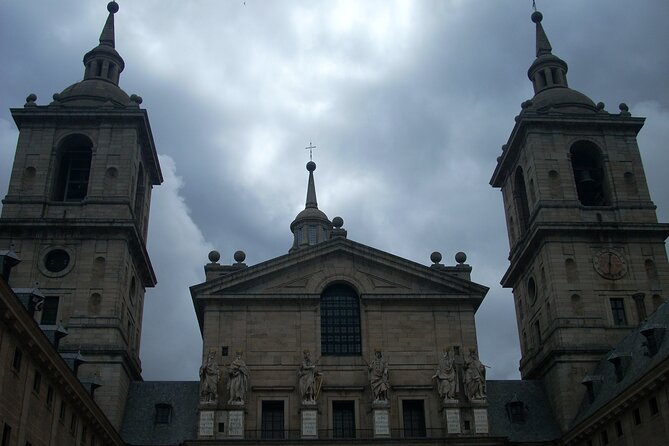
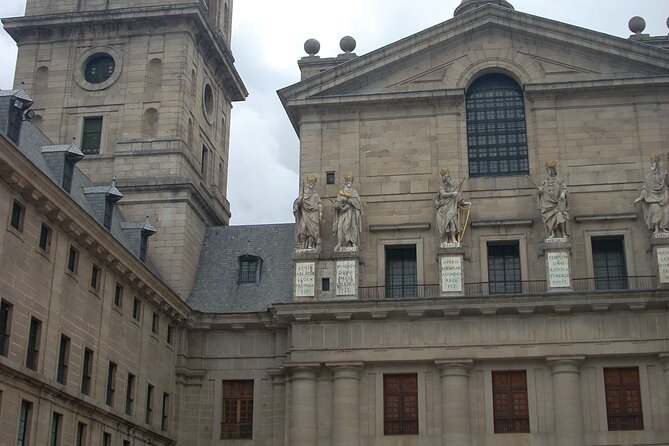
El Escorial is one of those places where the buildings explain the story. This royal complex includes the palace (historical residence), a basilica (burial place of Spanish kings), and a monastery originally founded by monks of the Order of St. Jerome and now occupied by friars of the Order of St. Augustine. Put together, it’s a rare Renaissance statement in Spain and Europe.
The stop runs about 1 hour 20 minutes, and admission is included. That’s enough time to get past the first “wow” and understand what you’re actually looking at—especially if your guide points out the architectural logic and how the different parts fit the religious-and-royal system behind it.
What I like about this stop for you: it’s not only a pretty exterior. You’re guided inside the monastery complex, where the layout and details matter. El Escorial is also easier to appreciate when someone gives you a simple map of what to focus on before you start moving through the spaces.
One consideration: parts of the palace areas may be closed on a given day. In that case, your routing may shift so you still see the core highlights that are open.
What makes El Escorial feel special (beyond the photos)
If you’ve studied architecture or just like “how buildings think,” El Escorial rewards attention. The complex is famous for being unusually coherent: it doesn’t feel like a random museum of rooms. It feels planned—like the whole place was designed to support the royal family’s religious mission and political image.
Even in a compressed visit, you can usually pick up:
- how the complex connects palace, worship, and monastic life
- why the basilica and monastery roles are separate but related
- what makes the Renaissance character show up in real physical space, not just in drawings
The interior can also be a little stiff—lots of stone, big spaces, and a cool hush. Reviews emphasize that it can be very cold inside, so bring layers you can handle without turning your day into a luggage fight.
The Valley of the Fallen: a huge basilica with a cross on top
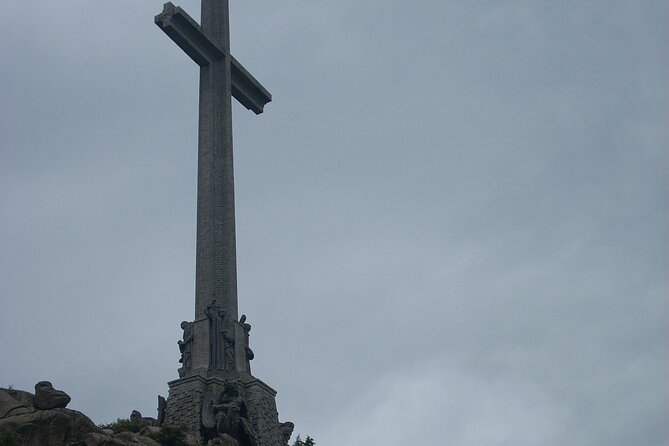
After El Escorial, you head to the Valley of the Fallen, officially known as Valle de Cuelgamuros since October 2022. This is less about tidy museum rooms and more about a monumental landscape you can feel from the moment you arrive.
The complex includes:
- a Catholic basilica
- an abbey
- a 150 m high cross perched above a cliff overlooking the valley
One striking detail is that the basilica is “subway” in its entirety—meaning it’s largely carved/structured in a way that creates an enclosed, underground-like experience. Admission and guided entry are included, and the guided portion is designed to get you oriented quickly.
The schedule gives you 30 minutes at this stop, and once the guided time ends, there’s additional free time around the surroundings to explore at your own pace.
What I like for you here: the guided format matters. This place has deep political and religious weight, and a good guide helps you understand what you’re seeing without turning the visit into a political lecture or a silent photo session.
Tone check: the Valley is solemn. It’s not the kind of place you “speed-run” for selfies. You’ll get the best experience if you slow down slightly during the basilica visit and let the scale land.
Free time at the Valley: how to use your 30 minutes
Thirty minutes isn’t long, but it’s enough to do two smart things:
1) walk the paths around the area so you understand the setting relative to the cross and cliff views
2) take a moment to step back and look before you move on
Because this is an emotionally heavy site, I recommend using the free time for orientation rather than sprinting. If you want photos, grab them while you’re near good angles—but don’t feel like you have to capture everything.
Also: the Valley is described as cold and impersonal by some visitors. Even if the outdoors feels mild, expect interior chill once you’re back in stone spaces.




The guide and language mix: what English-only really means here
The tour is offered in English, and you’ll have an accompanying bilingual English & Spanish guide on the bus. That sounds perfect on paper, and it often is in practice.
But there are real-world complications on mixed-language groups. Some guides switch smoothly between languages; others may speak mostly Spanish when they’re dealing with a larger Spanish-speaking portion of the group. On a couple of visits, people reported issues with English clarity or audio quality, like earphones that didn’t work well for them.
Here’s the takeaway you can use: if your English is your only working language, go in with a flexible mindset. You’ll still get guided context, but it’s wise to expect that you may hear bursts of Spanish during group moments.
Names that have been credited for strong English explanations include guides such as Aimoa, Ana C., Paloma, Sylvia, and Michelle. If you see your guide listed close to one of those names before departure, that’s a good sign.
Comfort and pacing: walking, cold stone, and getting in and out
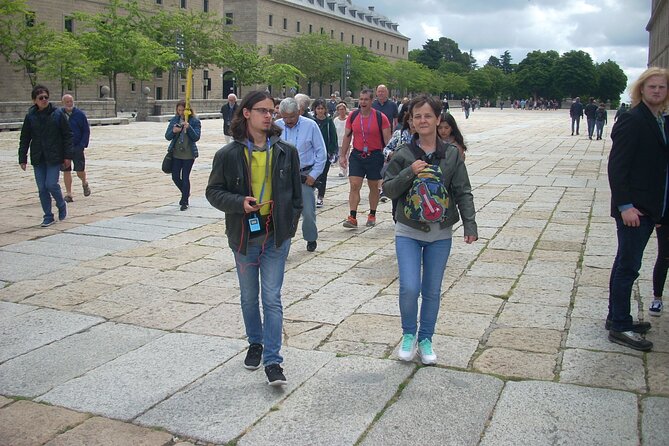
This is a half-day tour, so comfort is mostly about managing the pace and the temperature.
What to plan for:
- Lots of stone interiors that can feel sharply cold
- Pathways and routes that are generally paved and navigable (but still walking)
- Mountains/outside Madrid exposure, which can affect how cold you feel even when you’re moving
The bus ride itself gets praise for being comfortable and air-conditioned, and the driver is described as skilled. That helps you arrive with energy instead of arriving frazzled.
Time management also matters. The itinerary is tight enough that you shouldn’t count on a long sit-down break between El Escorial and the Valley. If you need a coffee stop, consider grabbing something before the 8:45 am start.
Who should book this El Escorial and Valley tour?
This trip is a good match if you want:
- major Spanish landmarks outside Madrid without losing a full day
- guided context that connects the royal story at El Escorial with the more modern, controversial story of the Valley
- fast-track entry so you can focus on what’s inside the key spaces
You’ll probably enjoy it most if you like history in a structured way—architecture, religion, and political symbolism presented as something you can actually see and navigate.
It may be less ideal if you want a private, strictly English experience with no language switching, or if you dislike cold indoor environments and lots of walking.
Should you book it?
Yes, if you want an efficient morning that hits two must-sees with guided time where it counts—inside El Escorial’s major spaces and inside the Valley basilica. The value is strongest when you benefit from the fast-track entry and you’re happy with a paced half-day format.
I’d reconsider if your top priority is hearing only fluent English at all times, or if cold interiors are a deal-breaker for you. In that case, you might still love the sites, but you’d want a tour format that clearly supports your language needs.
FAQ
Is this tour offered in English?
Yes, it’s offered in English and includes an accompanying bilingual English & Spanish guide on the bus. That said, some groups can be mixed-language, so you may occasionally hear more Spanish than you expect.
How long do you spend at El Escorial?
The El Escorial stop is about 1 hour 20 minutes, with a guided visit and admission included.
How long is the Valley of the Fallen visit?
The Valley of the Fallen stop is scheduled for about 30 minutes, including guided time inside the basilica and a chance to explore the surroundings afterward.
Is round-trip transportation included from Madrid?
Yes. The tour includes round-trip bus transport between Madrid and both sites, in an air-conditioned vehicle.
Are admission tickets included?
Yes. Admission tickets are included for the Monastery of El Escorial and for the Valley of the Fallen basilica.
Is there free time at the Valley?
Yes. After the guided visit, you’ll have time to explore the surroundings on your own.
Can I cancel and get a full refund?
Yes. You can cancel up to 24 hours in advance for a full refund.