REVIEW · MADRID
12-Day Morocco and South of Spain Tour from Madrid
Book on Viator →Operated by Julia Travel S.L · Bookable on Viator
Two countries, one packed itinerary. I love the Andalusia-to-Morocco contrast, and I love that you finish with Alhambra and Toledo while the trip is still fresh. The trade-off is simple: you spend a lot of time on an air-conditioned coach and ferry crossings, so the pace isn’t for slow travel.
What I like is that the tour mixes structure with breathing space. In Spain, you get tight guided city blocks around places like Cordoba’s old streets and Seville’s Plaza de España; in Morocco, you get a full morning in the Fez Medina area and then actual free time to roam on your own.
One practical thing matters more than scenery: Morocco paperwork. You’ll need to submit passport data at least 30 days ahead for passage, carry a current valid passport on travel day, and confirm any visa needs yourself. The group also goes through customs control with luggage, so plan on it taking time.
In This Review
- Key things I’d highlight before you go
- La Mancha to Andalusia: the slow warm-up before the sprint
- Córdoba and Seville: two styles of faith, one unforgettable contrast
- Ronda and the Costa del Sol: views, then hotel reset
- The Strait of Gibraltar crossing: why Day 4 can feel like the hinge
- Fez: Medina walking, Mellah areas, and a different kind of orientation
- Rabat to Marrakech: official sights, gardens, and open-air evenings
- Casablanca and Tangier: Hassan II and the coast back-to-back
- Granada’s Alhambra and Toledo: finishing with two heavy-hitters
- Hotels, guides, and group size: comfort can vary, and language coverage matters
- Price and value: what $2,425.18 buys you, and what it doesn’t
- Who this tour suits best (and who should rethink it)
- Should you book this 12-Day Madrid-to-Morocco tour?
- FAQ
- How long is the tour?
- Where does the tour start and where does it end?
- What is included in the price?
- Which meals are included?
- What activities have entrance tickets included?
- What language support will I get?
- Do I need a passport, and how much lead time is required?
- Do I need a visa?
- What is the cancellation policy?
Key things I’d highlight before you go
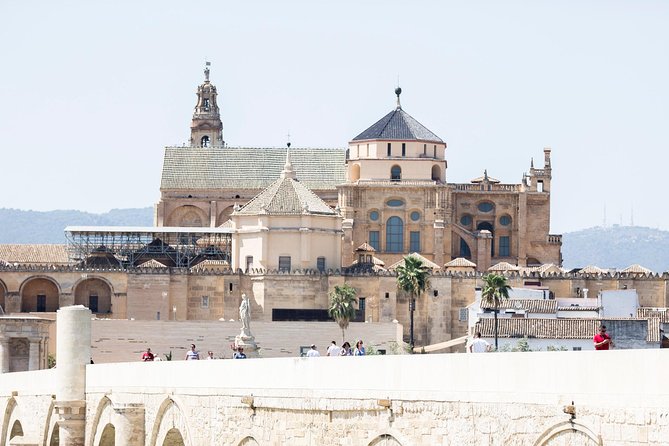
- Moorish Spain meets Morocco’s imperial cities: Cordoba and Seville front-load the Moorish feel, then you continue to Fez, Rabat, Marrakech, Casablanca, and Tangier.
- Gibraltar ferry day, plus a return ferry: you get the Strait of Gibraltar crossing as a real part of the itinerary (not just a line in the description).
- Big-ticket sights with included entrances: the Cordoba Mosque-Cathedral, Seville Cathedral, and the Alhambra complex are covered.
- Centrally located 3 or 4-star style hotels: the idea is convenience, but hotel quality can vary across countries.
- A bilingual escort plus local guides: English/Spanish coverage is built in, and local guides handle the city depth.
- The trip is timing-heavy: a moderate amount of walking is included, but the bigger issue is long days moving between regions.
La Mancha to Andalusia: the slow warm-up before the sprint
Day 1 starts with a classic Spanish road trip vibe: you drive through La Mancha, famously tied to Don Quixote territory, with a brief stop in Puerto Lápice. Then you cross into Andalusia via the Despeñaperros natural border. It’s not a sightseeing day so much as a reset for your body and a way to get everyone lined up before the real culture starts.
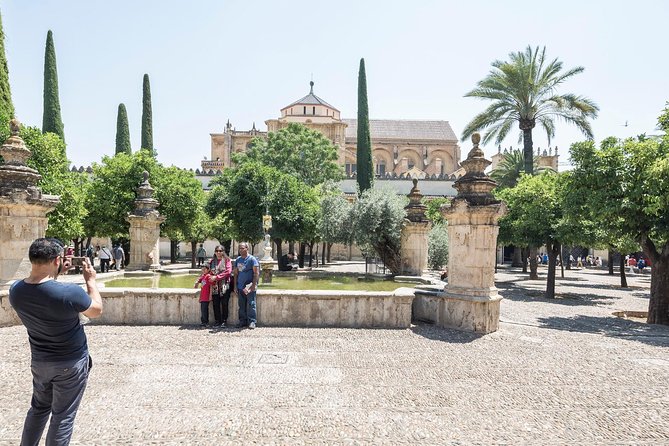
The first major visit is to the Mezquita-Catedral de Córdoba. Even if you only know Cordoba for the headline monument, the tour approach helps: you get a guided look at the mosque section and key surrounding areas, plus time to absorb the maze-like feel of the Jewish Quarter streets afterward. This matters because Córdoba is not a place you “see” fast. It rewards walking, turning corners, and looking up.
After that, you drive on to Seville for the overnight. You’re not lingering long in one place on Day 1, but that’s the trade you make for packing Spain and Morocco into 12 days.
Practical note: the tour calls for a moderate amount of walking. That’s fine for most people, but wear shoes you trust. You’ll rely on them again later in Fez and at the Alhambra.
You can also read our reviews of more tours and experiences in Madrid.

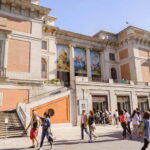

Córdoba and Seville: two styles of faith, one unforgettable contrast
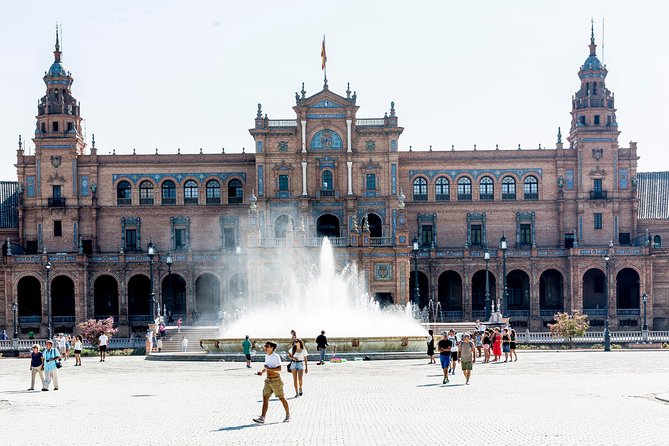
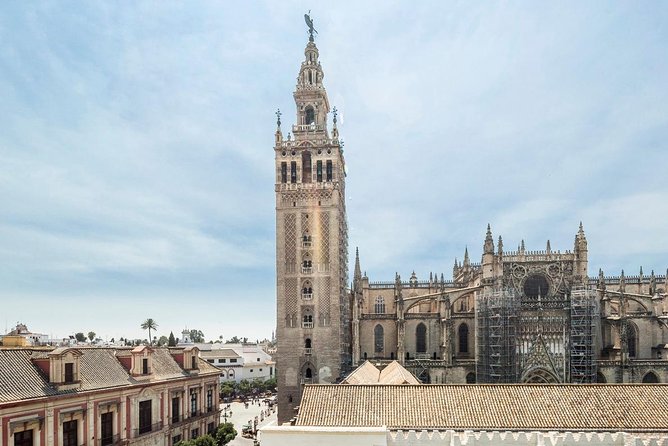
Seville is where the tour really leans into its included sightseeing blocks. On Day 2, you start with the Seville Cathedral, with the key ticket already included. The time in the cathedral is brief (a half-hour panoramic-style visit), but the goal is to get oriented quickly—what to look for, where the main areas are, and how Seville’s story connects to the buildings you see outside.
From there, the tour spreads out into the neighborhoods that make Seville feel like a real city, not a museum. You visit Barrio Santa Cruz and you also pass through landmarks tied to Carmen and Don Juan lore, then you move to Maria Luisa Park and Plaza de España. These are slower, easier stops than inside monuments, and that’s a good rhythm.
What I like about this sequencing: you start with the big indoor site (cathedral), then shift to outdoor spaces where you can breathe and absorb the scale. If you’re traveling with anyone who gets tired inside churches, this helps keep the day balanced.
Drawback to consider: this day is packed with multiple key stops, each with its own time box. If you hate rushing, you’ll want to use your free time moments well—choose one neighborhood to linger in rather than trying to do everything.
Ronda and the Costa del Sol: views, then hotel reset
Day 3 gives you Ronda, a town famous for dramatic drops and a skyline that looks different from almost every angle. You get free time to admire valley and mountain-range views, and the tour keeps the experience practical: quick transitions, enough time to walk around, and then you head to the Costa del Sol area for your next overnight.
Ronda is a great “cool down” before Morocco. Spain’s cities are dense and sight-heavy; Ronda gives you breathing room with overlooks and a smaller feel. Then you roll to the Costa del Sol, where the next day’s ferry crossing will make sense.
If your body is sensitive to long coach rides, this is the time to be extra nice to yourself: plan to stretch, hydrate, and get sleep. The next days move into border crossings and long travel segments.
The Strait of Gibraltar crossing: why Day 4 can feel like the hinge
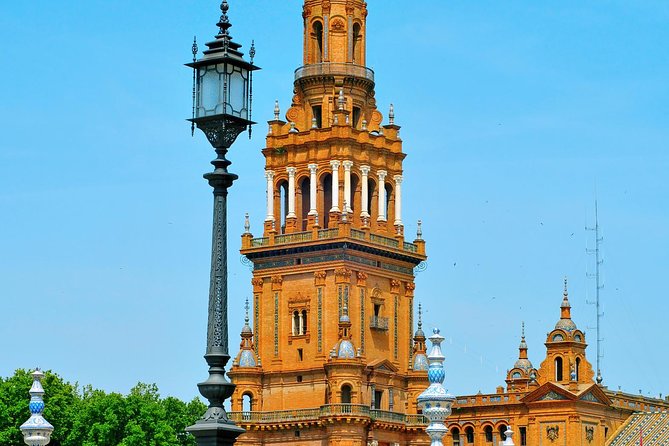
Day 4 is where the itinerary changes countries and your day changes shape. You drive along the Costa del Sol corridor to the ferry area near Algeciras or Tarifa, then you cross the Strait of Gibraltar toward Africa by ferry.
On paper, it’s a short crossing. In reality, the day can feel long because travel days rarely end neatly at “arrive at the port.” Add time for embarkation, disembarkation, and clearing into Morocco, and you’ll feel the difference.
Once you arrive in Morocco, you clear customs and keep moving by bus via Larache to Fez, often described as the most monumental of Morocco’s imperial cities. Dinner and your first Morocco overnight come right after, so the city will feel like an arrival rather than a full exploration day.
Tip for your expectations: Day 4 is more logistics plus first impressions than deep sightseeing. If you try to treat it like a second “Fez Medina day,” you’ll probably feel disappointed.
Fez: Medina walking, Mellah areas, and a different kind of orientation
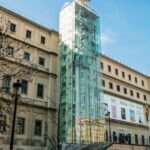
Days 5 through early Fez time are built around understanding the city’s layout. You start with breakfast, then get a morning city tour focused on the most ancient and monumental sections.
The tour route includes several named landmarks and zones:
- the 7 gates of the Royal Palace area
- the Mellah (Jewish Quarter) zone
- Bab Bou Jelous
- and a walking tour of the Medina (Old City), described as a World Heritage Site
Then you get an afternoon that’s freer, plus options like an extra dinner with a show. That mix is important. Fez is not a place you learn fully in one guided block. A good guided walk gives you terms and reference points, while the free afternoon helps you connect those points to real street life.
Balanced caution: the guided Medina route can feel like it has shopping stops built into it. If you’re hoping for long, slow wandering purely for architecture and street texture, keep the free time practical: choose where you want to go, then don’t get pulled too far off your path.





Rabat to Marrakech: official sights, gardens, and open-air evenings
Day 6 starts in Rabat. You visit the exterior of the Royal Palace, the Mausoleum of Mohamed V, and the Hassan Tower. These are not “quick photo points” so much as key national symbols, and the tour keeps it to a manageable scope so you don’t lose the day to wandering without context.
Then you continue on to Marrakech for dinner and overnight. Marrakech is where the itinerary shifts from historical landmarks to street life and city pace.
Day 7 adds Menara Gardens and a pavilion area, then an exterior visit of the Koutoubia Mosque. The real energy comes in the afternoon: you walk around the Medina, souks, and then you hit Jemaa el-Fna (Jemaa el Fna) Square. This is one of those places where you don’t need a ticket to feel the pull—fortune tellers, snake charmers, acrobats, dancers, and performances take over the public space.
Even if you’re not into street shows, this is where you see how Marrakech turns public areas into stages.
Day 8 is a lighter day inside Marrakech. You can enjoy the city further, and the tour offers possibilities for optional excursions. It’s also another good day for choosing your own priorities, whether that’s more souks, a slower walk through the medina, or just watching street rhythms change through the day.
Casablanca and Tangier: Hassan II and the coast back-to-back
Day 9 moves to Casablanca, described as the cosmopolitan industrial and economic heart. You get a panoramic visit covering the city’s major areas, including the Great Mosque of Hassan II, the Corniche boulevard, United Nations Square, the Habous neighborhood, and Anfa residential zones.
This day is helpful if you want Casablanca as a “sense of place” rather than a strict museum visit. The tour’s approach is to point you toward what matters and then let you understand the city’s different faces.
Day 10 heads to Tangier, and you start with the Casbah area. The day also includes a big logistics step: you transfer to the port for departure to Tarifa and then continue on to the Costa del Sol.
So you’re basically doing a Morocco-to-Spain ferry day again, which makes Day 10 another hinge. If you’re the type who gets cranky when schedules slip, build in patience. Travel friction tends to show up on ferry days.
Granada’s Alhambra and Toledo: finishing with two heavy-hitters
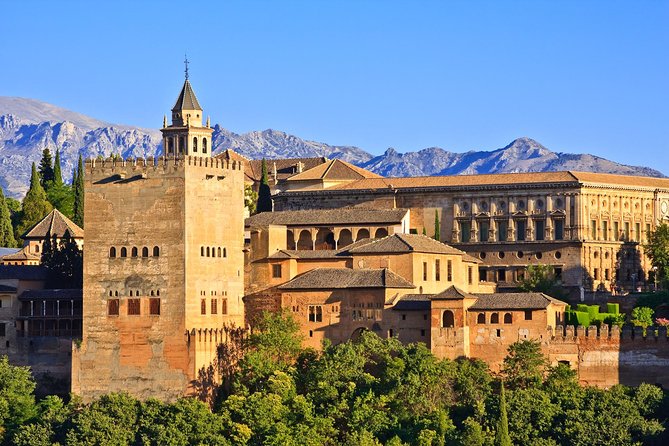
Day 11 is a direct jump back into Spain with Granada and the Alhambra. The tour includes a guided visit to the world-famous Alhambra complex and the Generalife Gardens, which have inspired writers over the years. After that, you get afternoon leisure and an optional flamenco show in Sacromonte Square.
This is the most “big-ticket” sighting day on the Spanish return leg, but it’s also one of the most rewarding if you’ve been paying attention to the earlier Moorish sites. Córdoba gave you the Moorish layers within Christian Spain. Seville and its parks gave you the Andalusian mood. Granada then becomes the concentrated payoff.
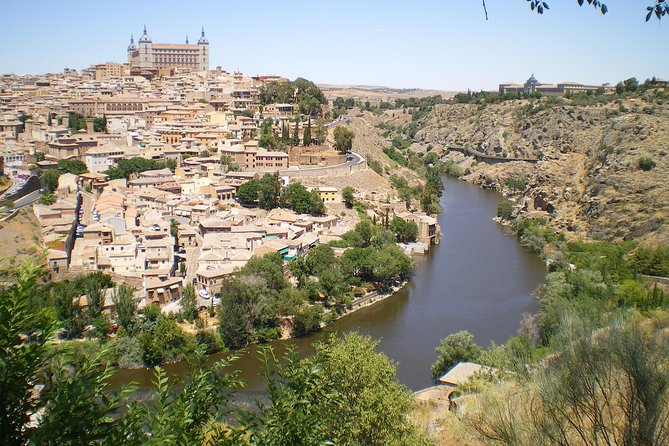
Day 12 closes with Toledo, the World Heritage Imperial city where Christians, Moorish, and Jewish communities historically lived together. You get a short guided tour through narrow old-town streets and you’ll see why Toledo is treated as a national monument-type city.
This ending is strong because Toledo feels different from Granada. Granada is drama and light. Toledo is tight lanes, old stone, and layers you can feel.
Hotels, guides, and group size: comfort can vary, and language coverage matters
The tour runs with centrally located 3 or 4-star hotels depending on the country and availability. On the positive side, some experiences have been praised for hotel quality during the Spanish portion, with examples like Seville stays in well-regarded properties such as Melia Libreros.
The tricky part is Morocco. Hotel ratings vary between countries, and there have been reports of rooms with comfort problems (including A/C issues) and older facilities. If air conditioning and room upkeep are non-negotiable for you, you should treat this as a real consideration rather than an afterthought.
Guides are another key variable. The tour includes a bilingual tour escort (English and Spanish), and local guides cover major stops. Some guides have been described as excellent—Ismael, Ellie, Grace, and Margarita show up in positive feedback—and some have been less helpful, including cases where communication felt more focused on Spanish translation than English.
My practical advice: if you only speak English, you’ll still get coverage, but you should accept that some moments may be more bilingual than you’d like. Also, keep a pair of earbuds handy in case bus audio or mic performance isn’t great on your departure.
Price and value: what $2,425.18 buys you, and what it doesn’t
At $2,425.18 per person, you’re paying for a lot more than beds and attractions. You’re getting:
- round-trip coach travel from Madrid, plus air-conditioned transportation
- a ferry crossing as part of the itinerary
- accommodation included across multiple cities
- guided visits in major stops including Cordoba, Seville, Granada, Toledo, Fez, Meknes, Marrakech, Casablanca, and Tangier
- key entrance tickets for Cordoba Mosque, Seville Cathedral, and Alhambra
- travel insurance
- meals: lunch is included, with 11 breakfasts and 5 dinners listed
What’s not included is just as important: food and beverages aren’t fully covered, and you’ll be paying for drinks and any meals not listed as included. Optional experiences like shows can add up.
So is it good value? It’s best value if you want a structured, cross-border experience without building it yourself—especially with Morocco, where the itinerary needs timing, customs coordination, and local navigation. If you’re comfortable planning trains, ferries, and hotel stops on your own, you could potentially do it cheaper. But you’d lose the guide context and the convenience of having a single schedule.
Who this tour suits best (and who should rethink it)
This is a smart pick if you want:
- a guided overview through major Moorish sites in Spain
- a focused run through Morocco’s imperial cities
- included entrances for the big monuments you actually want to see
- a single trip that ties Madrid, Andalusia, Morocco, Alhambra, and Toledo into one plan
It may not suit you if:
- you hate long coach hours and ferry timing
- your comfort depends heavily on hotel condition and A/C
- you want maximum flexibility and deep free time in each city (this is a fast-moving itinerary)
Should you book this 12-Day Madrid-to-Morocco tour?
I’d book it if you like the idea of seeing a lot, with guides handling logistics and context, and you’re excited by the Morocco-to-Granada payoff. The included monuments are the core reason to choose a packaged format, and the Andalusia setup makes the Moorish story feel connected instead of random.
I’d pause and ask extra questions before booking if you’re very sensitive to hotel comfort, if you need consistent English narration at all times, or if you can’t handle travel days that may run long around borders and ferries.
If you do go, do it with the right mindset: this tour is a guided sprint. Pick comfortable shoes, keep expectations realistic about hotel variation in Morocco, and use free time as your reward.
FAQ
How long is the tour?
It’s a 12-day tour (approx.).
Where does the tour start and where does it end?
It starts at Aloft Madrid Gran Via, C. de Jacometrezo, 4, Centro, 28013 Madrid, Spain at 8:00 am. It ends back at the same meeting point.
What is included in the price?
Accommodation (selected class), transportation in an air-conditioned motor coach, travel insurance, guided visits, entrance tickets to the Cordoba Mosque, Cathedral of Seville, and Alhambra, and meals including lunch, 11 breakfasts, and 5 dinners.
Which meals are included?
Lunch is included. Breakfast is included 11 times, and dinner is included 5 times.
What activities have entrance tickets included?
Entrance tickets are included for the Cordoba Mosque, Cathedral of Seville, and the Alhambra complex.
What language support will I get?
A bilingual tour escort is included during the tour (English and Spanish), along with guided visits in the listed cities.
Do I need a passport, and how much lead time is required?
Yes. You need a current valid passport on the day of travel. Passport name, number, expiry, and country are required at booking, and passport data must be provided at least 30 days before departure to manage passage to Morocco.
Do I need a visa?
You must confirm and obtain any visa requirements prior to border crossing. Visa requirements are the traveler’s responsibility.
What is the cancellation policy?
You can cancel up to 6 days in advance of the experience for a full refund. For a 50% refund, cancel 2–6 full days before the experience start time. If you cancel less than 2 full days before, no refund is available. Cut-off times follow the local time of the experience.