REVIEW · MADRID
Madrid City Tour | Regular Bike or E-Bike | Reduced Groups
Book on Viator →Operated by Bravo Bike · Bookable on Viator
Madrid by bike keeps you moving, but in a city this big that’s not always easy. This tour is built for exactly that problem: you get a guided route that connects major sights, parks, and classic neighborhoods in about 3 hours—without the hassle of figuring out what to see next.
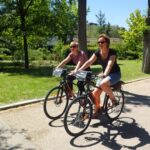
Two things I love: the small-group setup (the listing emphasizes reduced groups, and the operational max is shown as 10 riders), and the practical inclusions—bike, helmet, a guide/local photographer, plus tour photos. One thing to consider: the ride can include tougher segments depending on bike choice, and the commentary quality can vary a bit with how the group stays close enough to hear.
You’ll also get a real feel for Madrid’s “story in places.” The route threads from the Royal Palace area to El Retiro Park, then into La Latina, Barrio de las Letras, and on toward Malasaña, Chueca, and the Egyptian temple at Parque del Oeste. In the reviews, guides named Alboran, Juan Filipe, Sergio, and Remy stand out for being engaged, helpful, and informative—exactly what you want when you’re biking and can’t stop every five minutes. One possible drawback to watch for: if you’re expecting every single listed stop to be handled in the exact same way, pace and group handling can affect what you feel you actually got.
In This Review
- Key Highlights You’ll Feel Immediately
- The Smart Reason to Choose This Bike Tour: You See a Lot Without Wasting a Day
- Bravo Bike Start Point: What You Get Before You Roll
- Stop 2: Royal Palace Area Stop—What You’ll Notice Even Without Tickets
- Stop 3: La Latina—Medieval Street Texture and Names That Still Echo
- Stop 4: Barrio de las Letras—The Literary Center of “Who Lived Here”
- Stop 5: Paseo del Prado and the Golden Triangle Corridor
- Stop 6: Parque del Retiro—Bike Through Madrid’s Favorite Green Break
- Stop 7: Plaza Colón Area—A Food- and Shopping-Friendly Reset
- Stop 8: Malasaña (Manuela Malasaña and Dos de Mayo Commemoration)
- Stop 9: Chueca—After-Franco Energy and Day-to-Night Neighborhood Life
- Stop 10: Templo de Debod—A West Madrid Viewpoint That’s Made for Photos
- Regular Bike vs E-Bike: Choose Based on Your Legs, Not Your Pride
- How the Small Group Affects Your Experience (And When It Can Be a Drag)
- Price and Value: Why $42.24 Can Be a Good Deal
- Who Should Book This Bike Tour (And Who Might Prefer Something Else)
- Should You Book This Reduced-Group Madrid Bike Tour?
- FAQ
- How long is the Madrid city bike tour?
- What’s included in the tour price?
- Is the Royal Palace ticket included?
- Do I need to buy tickets for the other stops?
- What group size should I expect?
- Is the tour offered in English?
- What if I need to cancel?
- Is the tour okay for kids?
Key Highlights You’ll Feel Immediately
- Reduced-group ride: the experience is designed to stay personal, with a max of 10 riders noted in the details.
- Real landmarks, not just streets: Royal Palace area, Retiro Park, and Temple de Debod are part of the loop.
- Guide + photos included: you’re not just biking—you’ll come away with pictures and context.
- Bike choice matters: hills are part of Madrid, and reviews specifically recommend the e-bike if you want less strain.
- Fast orientation for your next days: it’s a smart way to get bearings before you pick museums and neighborhoods.
- Art-walk corridor vibes: you pass the Prado/Thyssen/Reina Sofía area along Paseo del Prado.
The Smart Reason to Choose This Bike Tour: You See a Lot Without Wasting a Day
Madrid can be tricky for first-timers. If you rely only on public transport and walking, you spend a surprising amount of time crossing between “clusters” (Palace/centro parks/art triangle, then neighborhoods, then west-side viewpoints). This tour is structured to stitch those zones together in one afternoon block.
The big win is pacing. You’re not expected to memorize every fact. Instead, you get a guided route that helps you place things: where the Palace sits, how Retiro flows into the city, and how the vibe shifts from historic streets to modern shopping and nightlife-adjacent areas. That “map in your head” effect is what makes later museum visits and neighborhood strolls feel easier.
And because it’s a guided cycling experience, you’re not just looking at Madrid—you’re moving through it. That changes your perspective fast. You notice the feel of streets, the geometry of plazas, and where people naturally gather.
You can also read our reviews of more cycling tours in Madrid
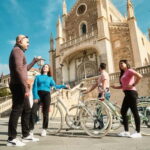
Bravo Bike Start Point: What You Get Before You Roll
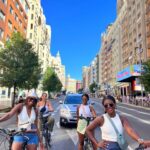
You meet at Bravo Bike in the Moncloa–Aravaca area (C. de Juan Álvarez Mendizábal, 19). It’s a practical starting choice because it keeps you close to public transportation, so you’re less stressed about “how do I get there on time?”
Once you’re set up, the inclusions are straightforward and useful:
- city bicycle (and the option for an e-bike based on the tour title)
- helmet
- local guide / photographer
- tour photos
That helmet detail matters more than it sounds. Madrid is full of bike lanes in patches and mixed traffic in others, so you’ll feel better knowing you’re not borrowing gear at the last second.
Stop 2: Royal Palace Area Stop—What You’ll Notice Even Without Tickets
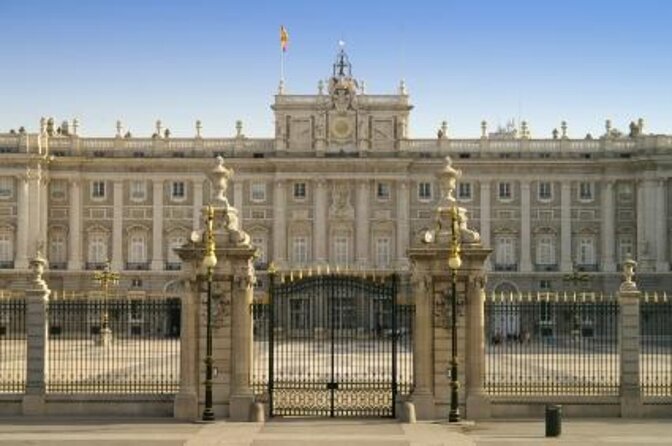
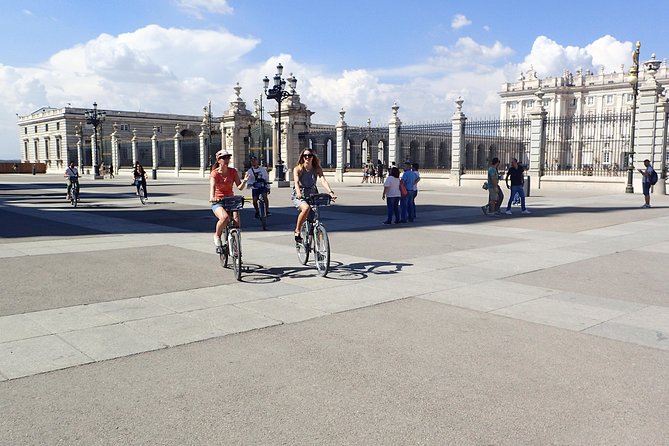
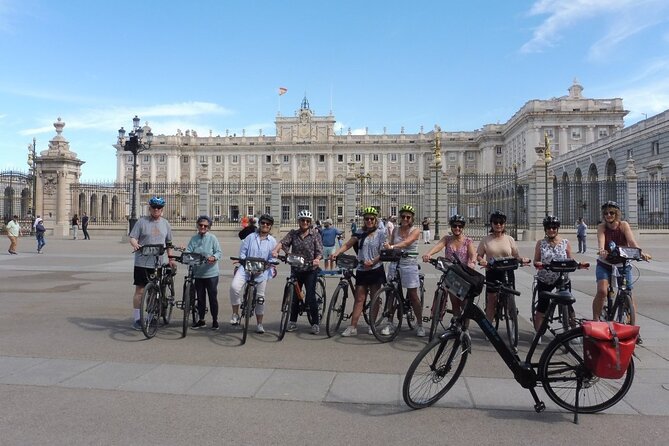
The Royal Palace stop focuses on the building’s dramatic backstory and its sheer scale. The site matters: the earlier Alcázar burned down in 1734, and the new palace rose afterward as the Spanish monarchy’s official residence.
Even more interesting is how the structure is described: it’s built using a system of domes without a single piece of wood. That’s the kind of detail that makes a quick stop worthwhile—because you’re not just standing in front of a postcard. You’re seeing the “how” behind the look.
Important practical note: Royal Palace admission is listed as not included, so you should treat this as an exterior-or-area visit with interpretation, not a full interior tour. If you want to go inside, plan that separately after you’ve done this ride and figured out whether you’re in palace mode.
Stop 3: La Latina—Medieval Street Texture and Names That Still Echo
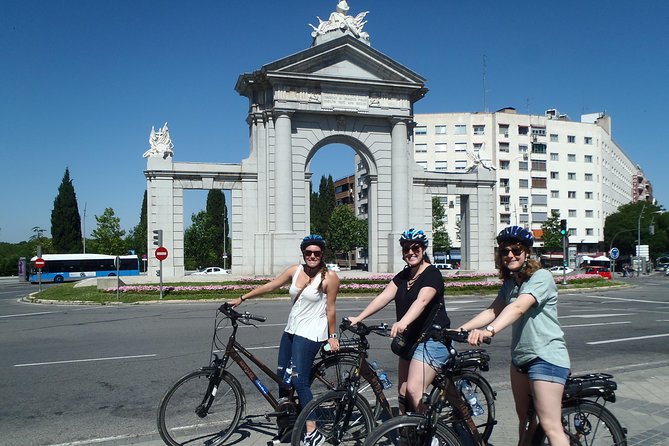
La Latina is the kind of neighborhood where you can feel history in the street layout. Expect narrow, winding streets from older urban patterns that often funnel into small squares.
What makes the stop more than just scenic is the way street names preserve the past:
- Plaza de la Cebada linked to the former farmers’ market
- Plaza de los Carros tied to carriage activity
- Plaza de la Paja connected to straw
- and El Rastro, associated with the historical slaughterhouse reference in the name’s origin
You’re likely getting a quick orientation moment here, but it’s exactly the kind of place where you’ll want to circle back later for an unhurried walk. If your goal is to understand Madrid’s layers quickly, La Latina is a good early stop.
Stop 4: Barrio de las Letras—The Literary Center of “Who Lived Here”
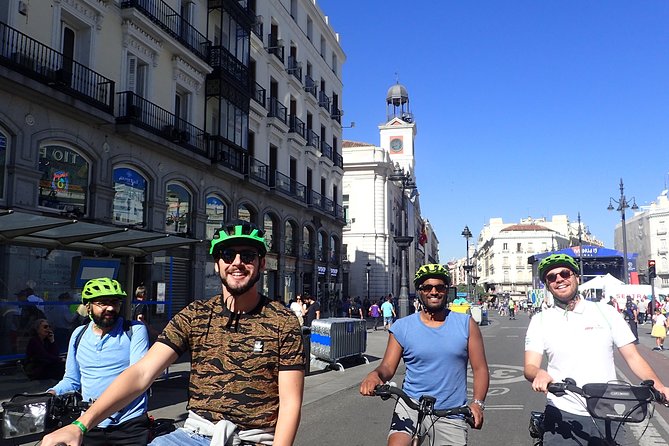
Barrio de las Letras earned its name because major Golden Age writers lived here. The tour context references names you’ll recognize from Spanish literature—Cervantes, Lope de Vega, Quevedo, Tirso de Molina, and Góngora—each tied to the neighborhood’s identity.
Practically, this is a “feel it in the streets” stop. You won’t walk through a museum hall here. You’ll see the kind of compact streets and turns that shaped life for writers and residents. It helps explain why the area became such a cultural magnet.
Also: if you like planning your own “follow-up loop,” this stop is useful. You’ll know where to wander next once the bike ride ends.
You can also read our reviews of more city tours in Madrid




Stop 5: Paseo del Prado and the Golden Triangle Corridor
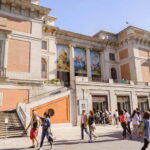
Paseo del Prado is Madrid’s art-walk boulevard. The tour’s framing is clear: this is where you find the big three—Prado Museum, Thyssen-Bornemisza, and Reina Sofía—along a stretch often called the Golden Triangle of Art.
Even if you don’t go into any galleries during this bike loop, passing here is still valuable because it shows you how Madrid plans around culture: wide, tree-lined movement corridors; side streets that spill into neighborhoods; and a boulevard that’s built for strolling and gathering.
One small but helpful detail: the avenue area was once an open green space and was tied to royal development (the “prado” meadow idea). That kind of context makes the urban layout feel less random and more intentional.
Stop 6: Parque del Retiro—Bike Through Madrid’s Favorite Green Break
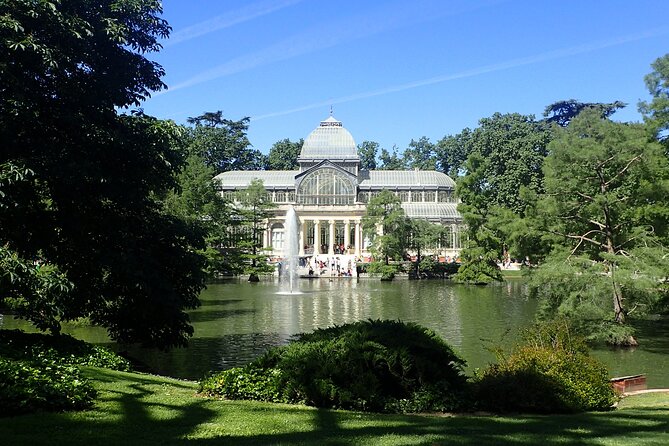
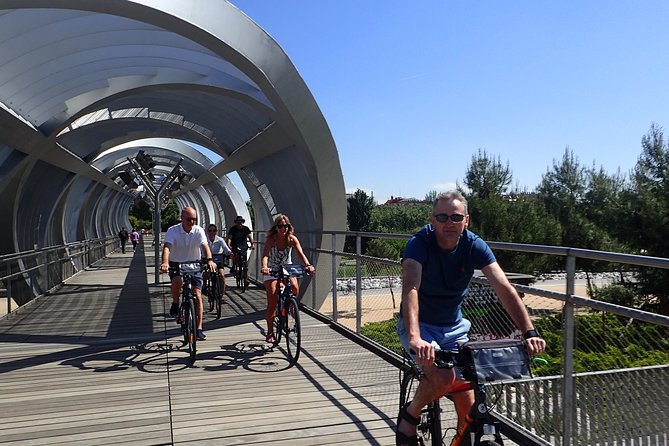
Retiro Park is a major reason this tour is worth your time. You’re not just riding alongside it—you bike through it, and the stop is described in a way that helps you picture the route: moving along the French parterre toward the lake area (Estanque), continuing toward the Crystal Palace area.
The Crystal Palace reference is key. It’s an elegant glass-and-iron construction that the route notes as historically linked to exotic plants and flowers from the Philippines. That’s a neat “Madrid isn’t only brick” reminder.
The other practical plus: there’s an optional break at the lake for refreshments. That pause changes the whole experience. You reset your legs and your brain, then rejoin the ride with better focus.
Also, you exit through the main entrance near Alcalá Gate—so the park doesn’t just feel like an isolated green island. You reconnect to the city’s major axes right away.
Stop 7: Plaza Colón Area—A Food- and Shopping-Friendly Reset
After Retiro, the tour heads toward the Salamanca district zone near Plaza Colón. This stop is less about monuments and more about modern Madrid everyday life.
You get quick orientation around:
- street-level shopping areas like calle Serrano (noted as where many fashionable shops are)
- food market spots such as Mercado de la Paz
- and Platea on calle Goya, positioned as a food and tapas place opposite Plaza de Colón
This is one of those stops that’s worth it even if you don’t eat right then. You’ll know where to go later when you want a convenient meal without hunting across the city.
Stop 8: Malasaña (Manuela Malasaña and Dos de Mayo Commemoration)
Malasaña adds a different tone. The tour links the neighborhood name to Manuela Malasaña, connected to events in Madrid on 2 May 1808. At the heart of the area, Plaza del Dos de Mayo commemorates the rebellion against Napoleon’s occupation.
The stop also gestures toward the later cultural shift: Malasaña is tied to the birth of the movida madrileña in the 1980s, described as an underground movement that changed arts and culture and Spanish society more broadly.
On the ground, you’ll feel the neighborhood’s personality: the streets, the plazas, and the way locals occupy space. It’s not just a history lesson. It’s a “Madrid then and now” moment.
Stop 9: Chueca—After-Franco Energy and Day-to-Night Neighborhood Life
Chueca is described as one of Madrid’s livelier districts after the Franco dictatorship, with lots of boutiques and bars. There’s also a food-market angle: San Antonio international food market is called out as a place that draws visitors.
Another useful detail here is the reference to Augusto Figueroa street, with shoe shops, cafés, and traditional taverns. That matters because if you’re planning your own evening or shopping detour later, these are the kinds of “names that help you navigate” that a tour can give you quickly.
This stop is a strong reminder: Madrid’s city centers aren’t frozen in time. They keep changing, and neighborhoods like Chueca show that.
Stop 10: Templo de Debod—A West Madrid Viewpoint That’s Made for Photos
Tempo of the tour shifts at the end with Templo de Debod. This ancient temple was a donation from the Egyptian government and reassembled in the early 1970s in Parque del Oeste.
What you’ll likely appreciate most is the viewpoint. The tour notes excellent views toward Casa de Campo and the Sierra Guadarrama mountains in the distance. It also flags it as one of the best sunset-watching spots.
Even if you don’t time the bike ride perfectly for golden hour, you’ll get a sense of why this site pulls attention. It’s the kind of destination that feels different from the rest of the route—less Madrid-centric architecture, more global storytelling plus a strong skyline view.
Regular Bike vs E-Bike: Choose Based on Your Legs, Not Your Pride
Madrid has hills. That’s not a complaint—it’s just geography. Reviews specifically call out the suggestion to choose the electric bike if you want an easier ride, and the same feedback names a guide (Alboran) while recommending the e-bike because of hills.
So here’s the practical way to decide:
- If you’re unsure about hills or you want the ride to feel social (more talking, less grinding), pick the e-bike.
- If you’re comfortable cycling uphill and you want a more traditional bike feel, regular may be fine.
Either way, you’ll want to dress appropriately for the weather. The tour runs in all weather conditions, so plan for rain or shine rather than hoping the sky does you favors.
How the Small Group Affects Your Experience (And When It Can Be a Drag)
A reduced group is one of the biggest selling points here. The tour details emphasize smaller numbers, and that’s why the guide can spend time at stops without feeling rushed.
In the positive reviews, guide engagement is a standout—Sergio is described as inviting and engaged, and Remy is praised for being informative and helpful. Juan Filipe also gets credit for being knowledgeable and kind.
But there’s a real-world tradeoff. One review notes commentary that wasn’t as strong and another mentions difficulty hearing the leader or getting close enough for information. That’s not a “bad tour” signal—it’s a group-setup reality. If you care a lot about the narration, try to position yourself where you can hear clearly during stops and transitions.
Price and Value: Why $42.24 Can Be a Good Deal
At about $42.24 per person for roughly 3 hours, the value depends on what you’d otherwise pay to cobble together transport, a guide, and bike rental.
Here’s what you’re actually buying:
- a guided route that hits several major zones (palace area, art corridor, Retiro, multiple neighborhoods, a big viewpoint)
- the bike and helmet
- tour photos captured by the included photographer/guide
If you’re traveling efficiently and want orientation quickly, that’s a strong match for the price. You’re not paying extra for museum entry in most parts—many of the stops are described as admission free—while the one major palace admission is listed as not included.
So the value math is simple: if this bike loop helps you plan your next days and saves you from spending half a day “just getting around,” it likely earns its keep.
Who Should Book This Bike Tour (And Who Might Prefer Something Else)
This is a great fit if:
- you want an efficient way to see Madrid without a full day on foot
- you like parks and neighborhoods as much as monuments (Retiro plus La Latina/Letters/Malasaña/Chueca matters)
- you enjoy learning while moving—short stops with context work for you
- you’re starting your trip and want orientation early
You might want to choose something different if:
- you want a museum-style experience with long interior time (this ride is built for cycling and short stops)
- you dislike hills and would rather avoid deciding between regular bike and e-bike (in that case, pick the e-bike option)
Good news: the tour notes moderate physical fitness, so it’s not positioned as an all-out athletic challenge.
Should You Book This Reduced-Group Madrid Bike Tour?
Yes, you should seriously consider booking it—especially if it’s near the beginning of your trip. The route is designed to give you a sense of how Madrid’s main pieces connect: Palace area to the art corridor, then into Retiro, then out through iconic neighborhoods, ending with a viewpoint that feels special.
My advice: book it early, show up ready to pedal comfortably, and lean into the small-group vibe by staying close enough to hear the guide during stops. If you’re hill-sensitive, choose the e-bike. And if you’re the type who wants deeper answers, ask questions at each stop rather than waiting for a “wrap-up moment.”
FAQ
How long is the Madrid city bike tour?
It’s listed as about 3 hours.
What’s included in the tour price?
The tour includes a local guide/photographer, a city bicycle, a helmet, and tour photos. GST is also included.
Is the Royal Palace ticket included?
No. The Royal Palace admission ticket is listed as not included.
Do I need to buy tickets for the other stops?
Many stops are noted as free for admission tickets, but you should expect at least the Royal Palace not to be included.
What group size should I expect?
The experience details state a maximum of 10 travelers, and the tour is described as reduced-group for a more personal feel.
Is the tour offered in English?
Yes, it’s offered in English.
What if I need to cancel?
Free cancellation is available up to 24 hours before the experience start time for a full refund.
Is the tour okay for kids?
Children must be accompanied by an adult.
If you want, tell me your travel dates and whether you’re leaning regular bike or e-bike, and I’ll suggest the best day/time to fit this into a Madrid itinerary.