REVIEW · MADRID
From Madrid: El Escorial and Valley’s Basilica Half Day Tour
Book on GetYourGuide →Operated by VPT TOURS TICKETS & ACTIVITIES · Bookable on GetYourGuide
Two empires, one short Madrid escape. This 5-hour coach tour strings together El Escorial and the Valley of the Fallen, with a guided visit plus basilica interior time. You’ll get the story of Spain’s monarchy and the Spanish Civil War memorial in one clean, guided package.
I really like two things about this tour. First, the El Escorial highlights are the big-ticket spaces: the Cloister of the 4 Evangelists, the Palace of Philip II, and the Royal Pantheon. Second, the Valley stop isn’t just a quick photo break—you go into the basilica interior and learn what you’re looking at.
One consideration: with a half-day schedule, it moves. Also, while audio headsets are included, a few past guests reported hearing issues—so bring patience if wind or headset glitches make moments less clear.
In This Review
- Key things to know before you go
- How this 5-hour run links monarchy and civil war
- Getting from Madrid: VPT Tours pickup and the coach flow
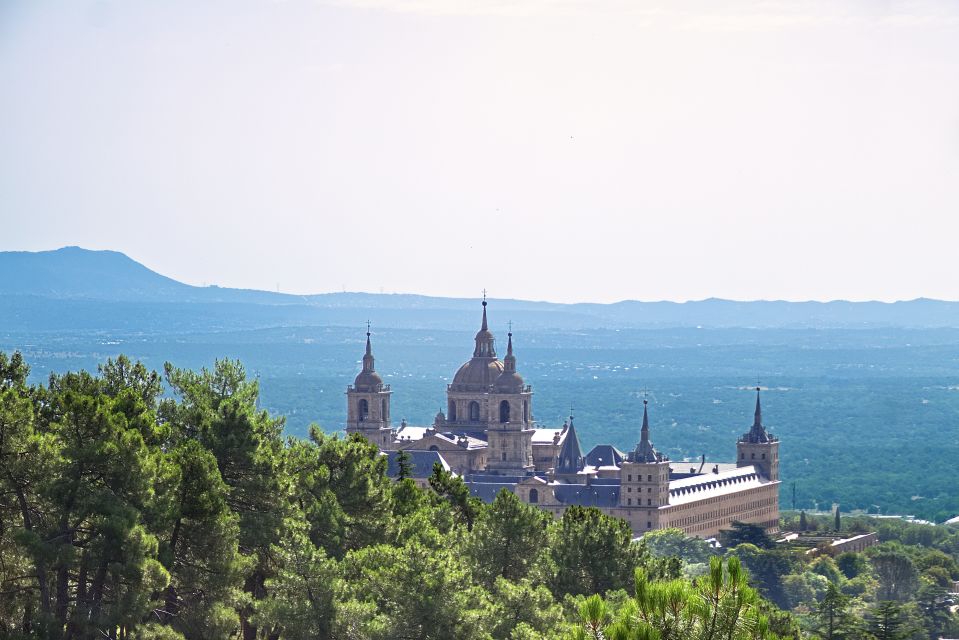
- San Lorenzo de El Escorial: Philip II’s royal monastery complex
- Cloister, palace quarters, and the Royal Pantheon route
- Practical pacing at El Escorial: what 2 hours feels like
- Valle de los Caídos: the 1936 memorial and its 150-meter cross
- Inside the basilica and crypt: where the tone turns solemn
- Time on the bus, group logistics, and packing smart
- Audio headsets and English narration: how to get the most out of it
- Price and value for a half-day of major entries
- Who this tour suits best (and who should skip it)
- Should you book this Madrid half-day tour?
- FAQ
- How long is the El Escorial and Valley of the Fallen half-day tour?
- Where is the meeting point in Madrid?
- Is transportation included?
- What does the tour include besides the guide?
- Do you skip the ticket line?
- Is the tour offered in English?
- Are meals included?
- What items aren’t allowed during the tour?
- Is this tour wheelchair accessible?
- What are the cancellation and payment options?
Key things to know before you go
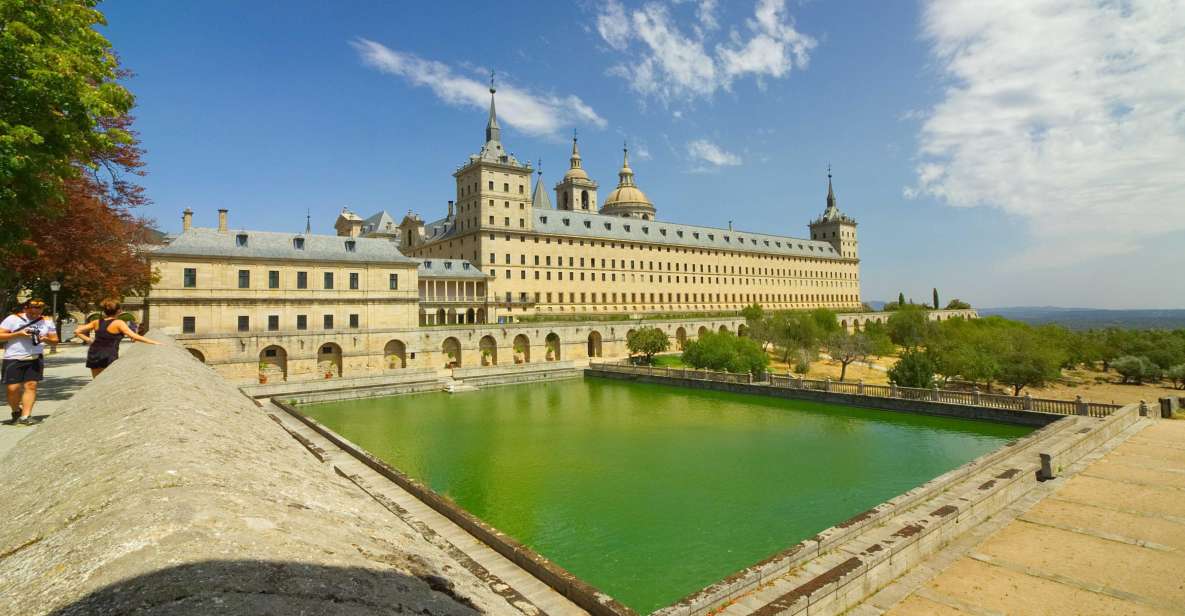
- Cloister of the 4 Evangelists, Palace of Philip II, Royal Pantheon are built into the El Escorial visit.
- Valley of the Fallen includes basilica entry and interior viewing, not just the exterior cross.
- Tour timing is tight: about 2 hours at El Escorial and about 45 minutes at the Valley.
- Audio headsets are included, which helps during guided stops across large stone spaces.
- You skip the ticket line for the main guided entry parts.
- Comfortable coach ride is part of the value, and in past experiences it’s been described as air-conditioned.
How this 5-hour run links monarchy and civil war
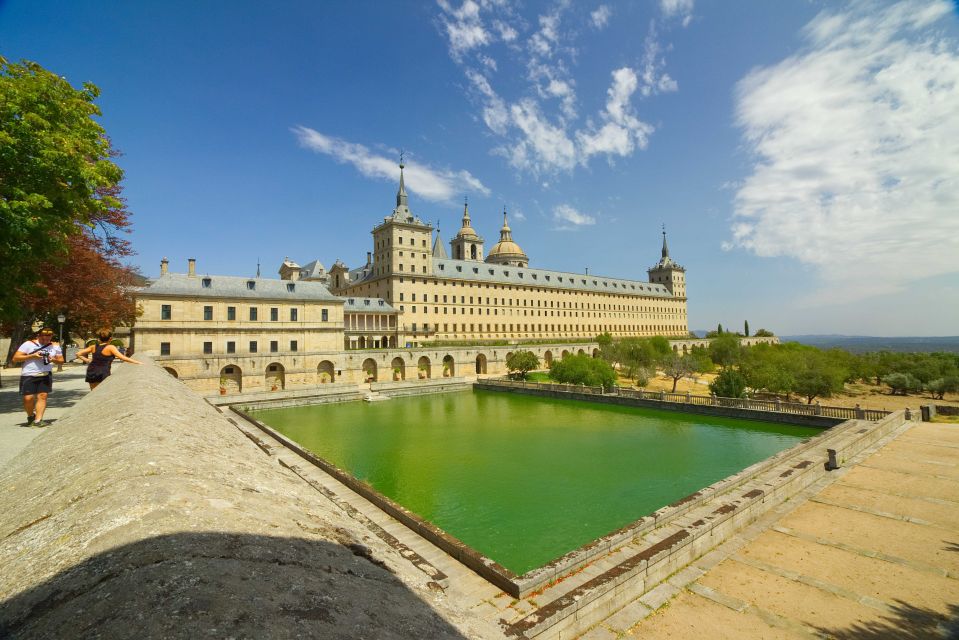
This tour works because it pairs two very different Spain stories under the same roof of good logistics. One stop is royal and imperial, all order, symmetry, and power. The other is a 20th-century memorial with a massive cross and a basilica carved into hard rock.
You’ll also appreciate the contrast if you like history that feels physical. At El Escorial, power looks like architecture. At the Valley of the Fallen, memory looks like scale and stone.
You can also read our reviews of more tours and experiences in Madrid.



Getting from Madrid: VPT Tours pickup and the coach flow
You start at VPT TRAVEL FOR ALL / VPT Tours in Madrid. Then you’ll take a coach ride—about 1 hour out to El Escorial—followed by short transfers between sites and the return trip.
This kind of setup matters if you’re visiting Madrid for only a few days. It saves you from juggling local transit schedules and ticket timing on your own. It also means your guide can keep the narrative moving while you’re traveling.
Practical tip: wear comfortable shoes. The stops are large complexes, and you’re on your feet for long stretches even with guided pacing.
San Lorenzo de El Escorial: Philip II’s royal monastery complex
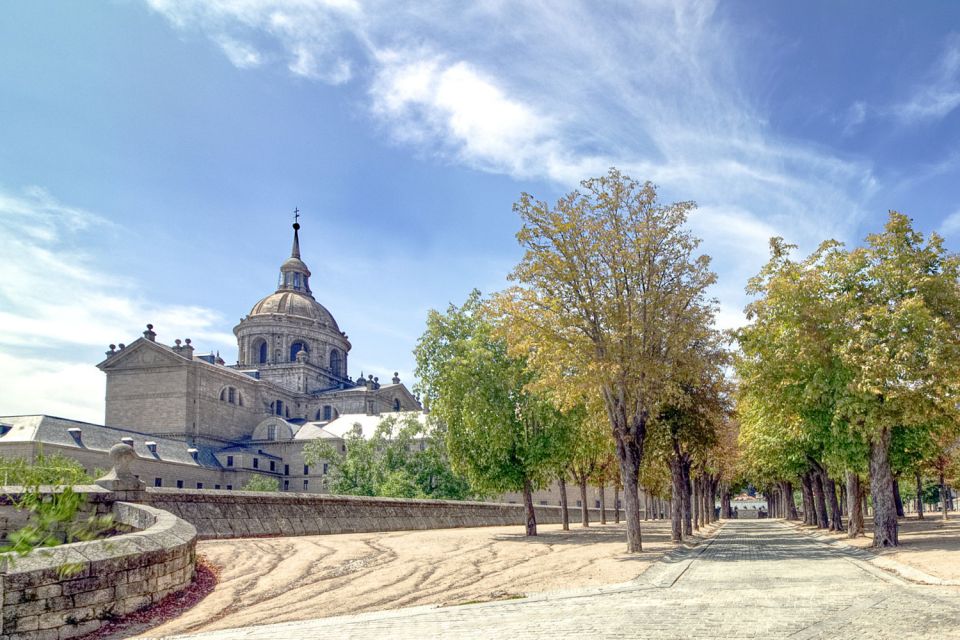
El Escorial is the kind of place that makes Spain’s monarchy feel real, not textbook-ish. Built under King Philip II, it’s part monastery, part residence, and part royal pantheon. It became a symbol of Spanish imperial power at the height of the empire, and it’s recognized as a UNESCO World Heritage Site.
In the guided visit, you’ll learn how the site is organized: sacred spaces and royal spaces aren’t separate. They’re braided together. That’s one reason the tour feels worth doing as a guided circuit rather than a wander-you’re-on-your-own pass.
Expect time for the big areas and guided context, not just surfaces. The overall El Escorial time is about 2 hours, which is enough to see the core rooms without turning it into a full-day marathon.
Cloister, palace quarters, and the Royal Pantheon route
El Escorial’s standouts aren’t random. They’re the places that explain how the monarchy wanted to be remembered.
You’ll see the Cloister of the 4 Evangelists. It’s one of those “slow down for a second” spaces where details help you understand the whole site. Even if you’re not a hardcore art fan, the cloister gives you a visual anchor.
Next comes the Palace of Philip II. This is where you can feel the scale of court life, even though you’re not living in the rooms. One thing I like is that you don’t just get a lecture—you get to map the story onto the spaces you’re walking through.
Finally, you’ll reach the Royal Pantheon areas. This is the side of El Escorial that turns architecture into family history. It’s also the point where the tour becomes more than “what to look at” and more “what it meant.”
In past tours, guides such as Pilar, Carlos, Anne, Ana, and Sylvia have been praised for leading groups at a comfortable pace and keeping questions in mind. That’s a good sign for clarity, especially in a place this large.
Practical pacing at El Escorial: what 2 hours feels like
Two hours at El Escorial sounds generous until you’re inside. This site is big, and even the “main highlights” take time to reach between rooms and courtyards.
The good part: the tour structure keeps you from getting lost in decision-making. You don’t need to guess what’s most important. You follow the guided route and focus on the spaces that explain the site’s purpose.
The tricky part: if your goal is to see every chapel, every corridor, and every optional room, you might still feel there wasn’t enough time. A previous guest even wished for the library to be open, which is exactly the kind of thing that can affect what you end up seeing on the day.
So here’s my advice: treat El Escorial as a guided “best-of” with key interpretation. If you want to go deeper than that, plan a longer follow-up visit later.



Valle de los Caídos: the 1936 memorial and its 150-meter cross
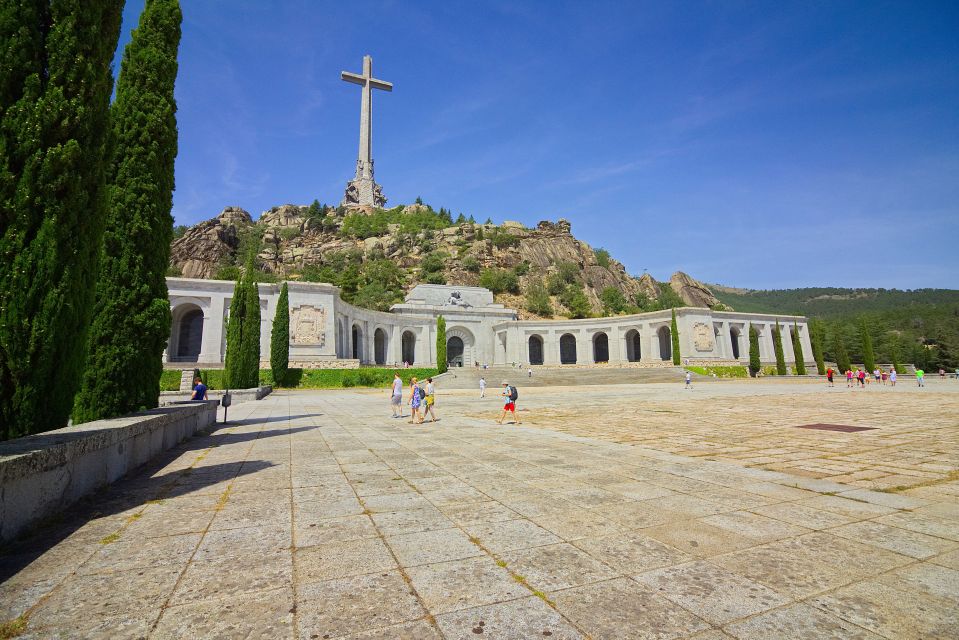
After El Escorial, you’ll transfer briefly—about 15 minutes—to the Valley of the Fallen. This memorial was built starting in 1936, about 9 kilometers from El Escorial, as a commemoration for those who died during the Spanish Civil War.
The setting is in the Guadarrama Mountains area, and the Valley’s power shows up fast. You’ll see the cross standing more than 150 meters high, and you’ll get a guided explanation of how the basilica and crypt relate to the rock and the monument’s message.
This stop is impressive, but it’s also heavy. I like that the tour doesn’t pretend the Valley is just another “wow, what a view” site. It frames what you’re looking at as memory, conflict, and ideology—because that’s what the architecture is doing here.
Inside the basilica and crypt: where the tone turns solemn
At the Valley, the guided time is about 45 minutes, including entrance to the basilica and its interior. That’s the part that many people don’t expect. From the outside, the Valley can look like a single object. Inside, you understand it as a planned experience.
The basilica and crypt are built into the mountain. That carving into hard rock changes how the spaces feel. It also helps explain why the Valley can be hard to process: it’s massive, intentional, and designed to control what you experience as you move through it.
One more context note: a previous guided description mentioned the basilica and crypt being created using Franco-era prisoners. The tour’s guided framing is where you’ll get the details you need to interpret the space responsibly.
Since this is a solemn memorial, I’d recommend you go in with a slower mindset. If you’re the type who likes to sprint from photo spot to photo spot, this is the moment to switch gears.
Time on the bus, group logistics, and packing smart
The total tour duration is about 5 hours, and you’ll spend much of it moving between two far-reaching sites. Between El Escorial and the Valley, you’re not waiting around—you’re using the coach time to keep the day structured.
A few practical rules matter here:
- No pets.
- No oversize luggage and no large bags.
- No food in the vehicle.
- Flash photography is not allowed.
- Video recording isn’t allowed.
Also note: the audio setup includes headsets. That’s great because guides are delivering a lot of information in a loud setting with wind and distance. Still, a small number of past visitors reported that headsets didn’t work properly at some moments or that audio clarity could be tough—so keep that in mind and don’t plan on perfect understanding every second.
For comfort, bring a light layer. The wind around big open stone sites can cut through fast.
Audio headsets and English narration: how to get the most out of it
The tour offers a live guide in Spanish and English and includes an audio headset. That’s the right setup for two-site days where you need your guide’s narrative to connect the dots.
When it works well, you’ll catch the names, dates, and explanations that make the sites click: Philip II’s role at El Escorial, and the Valley’s 1936 memorial purpose plus what the cross and basilica communicate.
If you’re relying on English, pay attention early in the day. The guide’s pacing and clarity are what determine whether you feel oriented when you arrive at the Royal Pantheon areas and then switch tone at the Valley.
And if you notice audio problems, don’t be shy about letting the guide know right away. Headsets are included for a reason, and getting them fixed can make the difference between a good day and a frustrating one.
Price and value for a half-day of major entries
At $78 per person, this tour can be good value if you want two major sites done with guide context and transport included. You’re paying for:
- transportation from Madrid,
- a tour guide,
- entrance and guided visit to the Monastery complex,
- entrance to the Valley of the Fallen and the basilica, and
- audio headsets.
You’re also avoiding the hassle of figuring out timing and ticket logistics across two different locations. The skip-the-line benefit helps too, because queues can chew up your limited time.
Is it expensive for a “normal” half-day? Sure. Is it expensive for two heavy hitters with guided interpretation and included entry? Usually not, especially when you factor in how much a self-guided day can cost in time, transit, and separate tickets.
Who this tour suits best (and who should skip it)
This tour is ideal for you if you want a structured Madrid experience and you like history that’s built into the walls. It’s a strong choice for:
- first-time visitors who want the highlights without decision fatigue,
- people who care about Spanish monarchy and Spain’s 20th-century history,
- anyone who prefers guided pacing over self-navigation in big complexes.
It’s not a great fit if you need wheelchair access. The tour is listed as not suitable for wheelchair users.
And if you’re the kind of person who needs lots of free time to wander at your own speed, this schedule may feel tight. Think of it as guided route-and-meaning, not a loose drop-off.
Should you book this Madrid half-day tour?
I’d book it if your goal is to see El Escorial and the Valley of the Fallen in one day with a guide explaining what you’re looking at. The value comes from bundled transportation, included entries, and the fact that you’re not guessing what matters most inside these huge sites.
I’d skip it or choose something else if you strongly prefer slow museum-style time. The tour is built for getting through the essentials in about 5 hours, and the Valley stop is brief enough that you’ll likely want a longer follow-up if you get really moved by it.
If you want a well-paced hit of Spain’s royal past and its civil-war memorial story, this is a smart, time-saving way to do it.
FAQ
How long is the El Escorial and Valley of the Fallen half-day tour?
It lasts about 5 hours.
Where is the meeting point in Madrid?
The meeting point is VPT Tours (VPT TRAVEL FOR ALL).
Is transportation included?
Yes. The tour includes coach/transportation between Madrid, El Escorial, and the Valley of the Fallen.
What does the tour include besides the guide?
You’ll get entrance and a guided visit to the Monastery of El Escorial, plus entrance to the Valley of the Fallen and the basilica. Audio headsets are also included.
Do you skip the ticket line?
Yes, the tour includes skipping the ticket line.
Is the tour offered in English?
Yes. The live tour guide works in Spanish and English.
Are meals included?
No. Meals and drinks are not included.
What items aren’t allowed during the tour?
Pets aren’t allowed, oversize luggage and large bags aren’t allowed, and you can’t bring food into the vehicle. Flash photography and video recording are also not allowed.
Is this tour wheelchair accessible?
No. It’s listed as not suitable for wheelchair users.
What are the cancellation and payment options?
Free cancellation is available up to 24 hours in advance for a full refund. There’s also a reserve now & pay later option.