REVIEW · TOLEDO
Guided Tour of Underground Toledo
Book on GetYourGuide →Operated by Toledo a pie · Bookable on GetYourGuide
Toledo’s secrets are literally under your feet. This 2-hour Underground Toledo guided walk links the city’s street life to five hidden spaces below, with an official, accredited guide steering the story. I especially love the rare access to exclusive underground areas you normally can’t enter on your own, and I like how the tour connects the daily life of the Three Cultures—Muslim, Jewish, and Christian—through real rooms and real infrastructure. A key drawback to plan around: it’s not suitable for wheelchair users or people with mobility impairments.
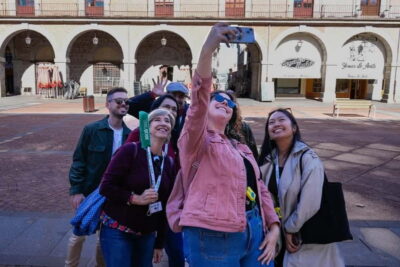
You’ll start in the center of Plaza de Zocodover and look for the guide with a green umbrella, then work your way underground in a steady sequence of short, focused visits. Expect Spanish-only live interpretation, and take note that audio recording isn’t allowed.
If your Spanish is rusty, don’t panic. Guides like Mónica have a reputation for being patient and adapting to the group, including people using mobility aids, which matters when you’re moving through historic spaces and stairs.
In This Review
- Key highlights you’ll actually feel
- Underground Toledo: why this tour works better than walking alone
- Finding your guide at Plaza de Zocodover (and the green umbrella trick)
- Posada de la Hermandad: the Middle Ages underfoot
- Baños árabes del Cenizal: hammam routines you can picture
- Pozo del Salvador in Plaza del Salvador: well vs. cistern in real life
- Casa del Judío: the 14th-century miqvé and ritual washing
- Termas Romanas: Toletum’s baths and the scale of Roman Spain
- Price and value: does $15 make sense for five underground entrances?
- Timing and pacing: a 2-hour plan that keeps you moving
- The small rules that matter: audio recording and what to expect from the guide
- Who should book this Underground Toledo tour?
- Should you book Underground Toledo?
- FAQ
- What’s included in the Guided Tour of Underground Toledo?
- How long is the Underground Toledo tour?
- How much does it cost?
- Where do I meet the group?
- Where does the tour end?
- What underground sites will I visit?
- Is the tour guided?
- Are audio recordings allowed?
- Is the tour suitable for wheelchair users or mobility impairments?
- What if I need to cancel?
- Can I reserve without paying right away?
Key highlights you’ll actually feel
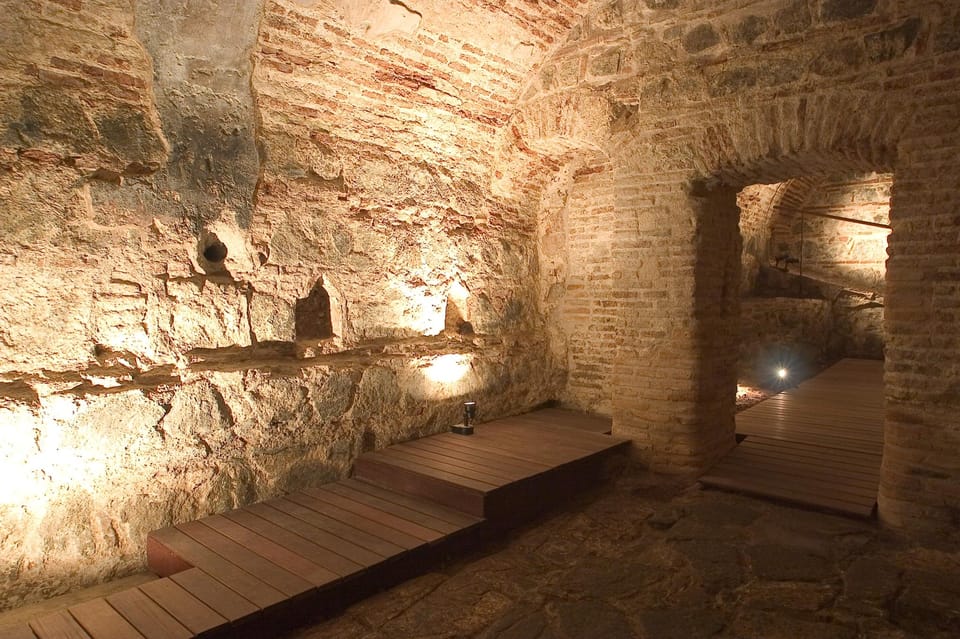
- Five underground sites in one walk: baths, a mikveh, cistern/well infrastructure, Roman remains, and a medieval dungeon
- Official guide access to areas you can’t usually enter without accreditation
- Three Cultures in practice, not just in theory, through rooms tied to hygiene, ritual, water, and confinement
- Stories with names and roles, including the Holy Brotherhood dungeons and the Mangas Verdes
- A tight time plan (about 20 minutes per stop) that keeps things moving without rushing your photos too much
Underground Toledo: why this tour works better than walking alone
Most Toledo tours point at monuments and give you the big timeline. This one does something smarter: it shows you how people lived when the city was built on rock, plumbing, ritual spaces, and power. You’re not just seeing history—you’re moving through it, room by room, where the physical design shapes the story.
I like that you’re not sent down a single “dark basement” for a quick look. Instead, you hit five different underground worlds, each tied to a different community practice—bathing, water storage, ritual washing, communal life, and imprisonment. That variety keeps the tour from feeling repetitive, and it helps you remember the city in layers.
One more practical point: the tour ends up making the streets above feel more meaningful. After you’ve seen how water, ritual, and punishment worked underground, you’ll start spotting clues in the city’s layout that you’d otherwise miss.
You can also read our reviews of more guided tours in Toledo


Finding your guide at Plaza de Zocodover (and the green umbrella trick)
Your start point is the center of Plaza de Zocodover, and the meeting marker is a green umbrella. This is the kind of small detail that saves you stress—Toledo can be busy, and “meet at the plaza” can be vague.
Look for your guide first, then settle in. The tour is designed around short guided segments (about 20 minutes each), so being a few minutes late can put you behind the pacing. If you’re traveling with a cane or other aid, arrive early so the guide can help you fit into the group comfortably.
Because the live guide is in Spanish, you’ll want to be ready to follow along even if you don’t catch every word. That said, the guide’s job is to make the spaces understandable, so you’ll rely on visual cues and clear explanations, not just vocabulary.
Posada de la Hermandad: the Middle Ages underfoot
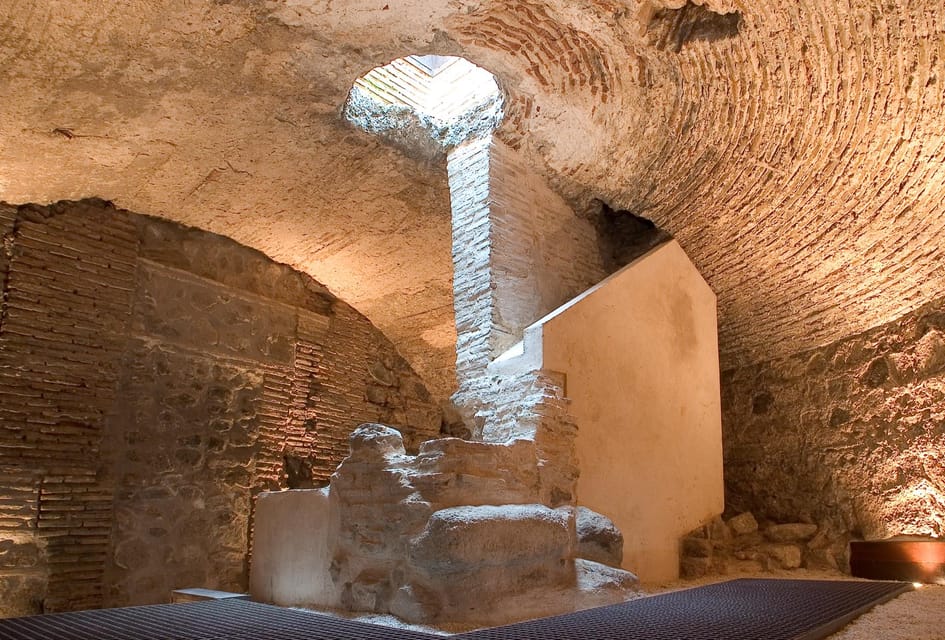
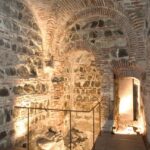
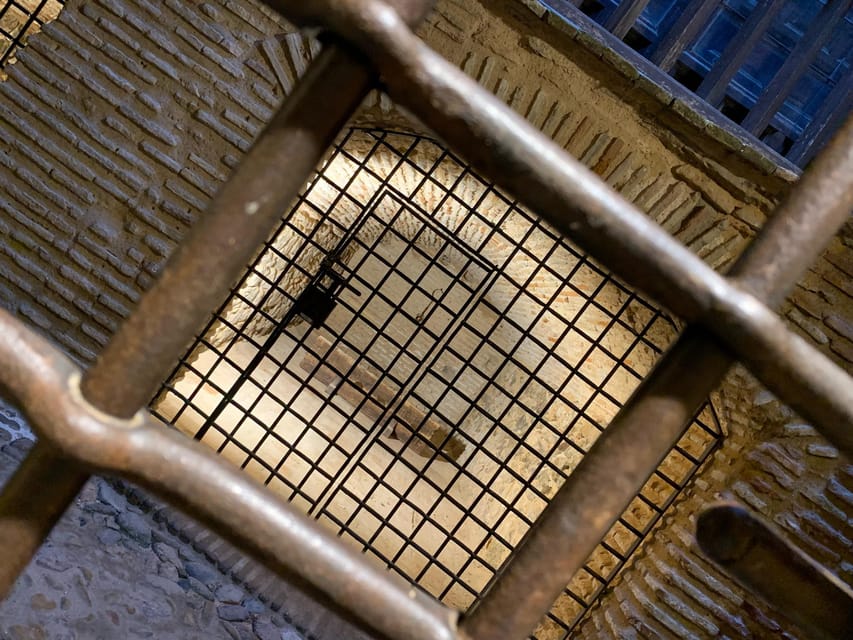
One of the best reasons to choose this tour is the first big tonal shift: you begin with the Holy Brotherhood and its surviving dungeons. This isn’t a generic medieval story. You’re introduced to how confinement worked day to day, and you also meet the Mangas Verdes, the well-known jailers tied to the Holy Brotherhood.
What you’ll likely appreciate here is the contrast with the “pretty postcard” view of Toledo. The architecture and layout of the underground spaces make the social system feel real. And since the tour is officially guided, you’re not stuck guessing what you’re looking at.
Practical consideration: these spaces are older and more enclosed. Wear shoes you trust, keep your footing careful, and don’t expect wide-open walkways. Even if you’re comfortable with steps, this is the part where good group flow matters most.
Baños árabes del Cenizal: hammam routines you can picture
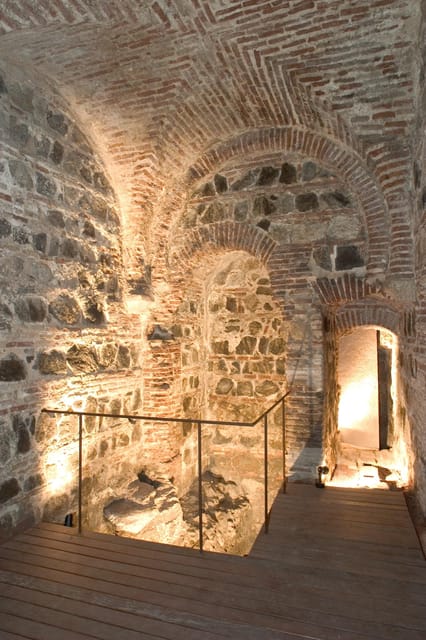
Next comes a direct look at the Arab baths of the Cenizal, a place where hygiene and social life met religious practice. The guide’s explanation focuses on what people did and why—how bathing connected to ritual life and daily habits in a 10th-century setting.
This stop works particularly well because baths aren’t just “rooms that happen to exist.” They’re systems: spaces for heating, washing, and moving through different temperatures. Even without technical language, you can understand how the layout supports the routine.
If you’re someone who likes learning by seeing, this is one of your strongest stops. You’ll be able to connect the guide’s talk to the physical steps of the bath experience, and you’ll start noticing how design reinforces culture.
One thing to remember: the tour doesn’t linger for long at each location (roughly 20 minutes). So bring your curiosity, and let the guide’s explanation do the heavy lifting instead of trying to read every corner detail yourself.
Pozo del Salvador in Plaza del Salvador: well vs. cistern in real life
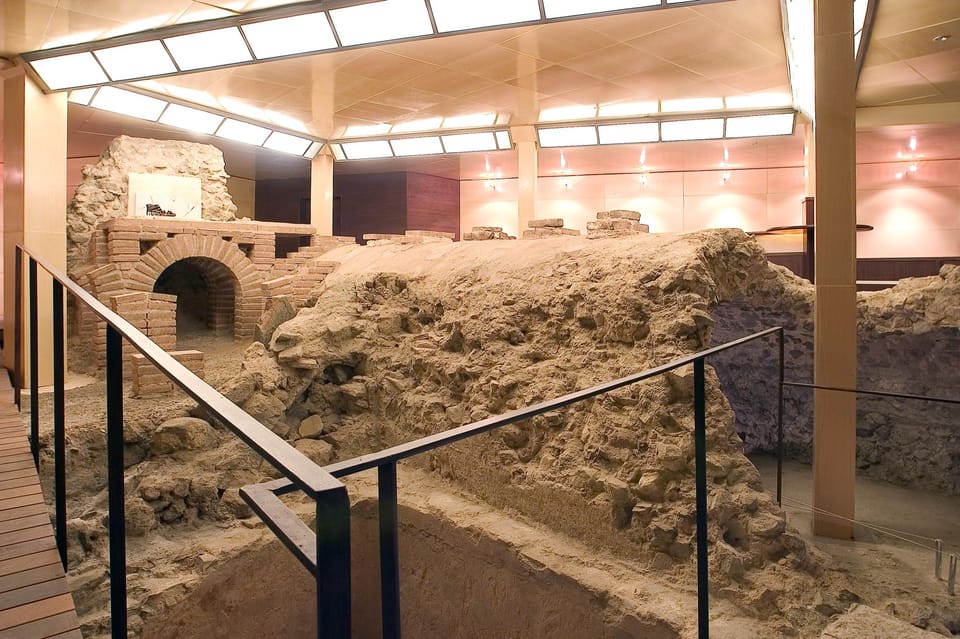
At Plaza del Salvador, the tour shifts from ritual spaces to survival engineering. Here you’ll learn the difference between a well and a cistern, and why it mattered in a city built on rock where water could become scarce—especially during drought.
Toledo’s water story is more than trivia. It’s a reminder that daily life depends on infrastructure you rarely see. Underground, the system becomes visible, and the explanation ties it back to what people needed just to function.
This is also a great stop if you like practical history. Bathing, ritual washing, and daily living all depend on water—so learning how Toledo stored it makes the earlier stops feel less like separate scenes and more like parts of one city routine.


Casa del Judío: the 14th-century miqvé and ritual washing
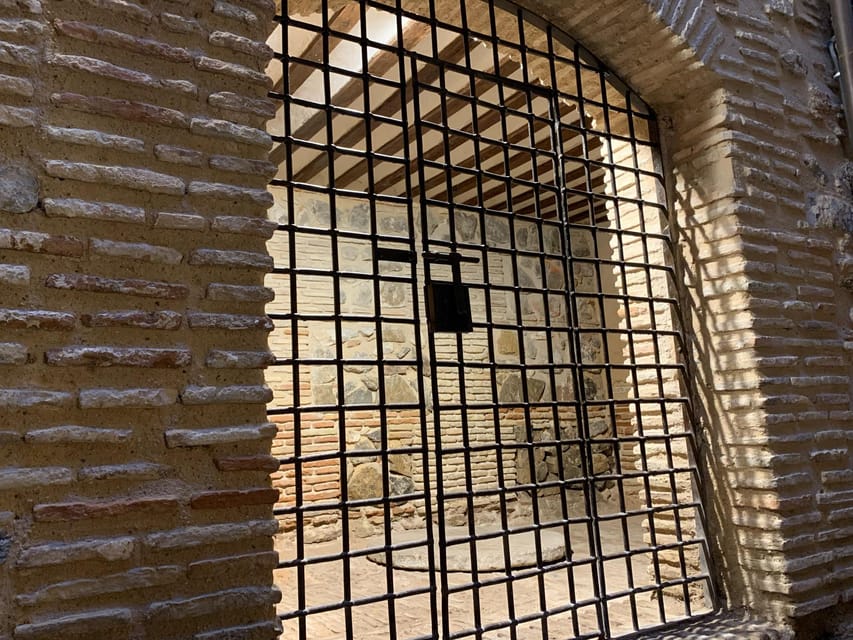
Then you move to the Jewish quarter focus, centered on the Casa del Judío and a miqvé dating back to the 14th century. This stop is where the tour delivers on the Three Cultures theme in a very direct way: you’re not just hearing about community life, you’re looking at a space designed for ritual washing and spiritual practice.
What I like about this part of the tour is the way it balances legend and history without turning it into vague storytelling. The guide ties the room to what the Jewish community did day to day, so the space stops feeling like an artifact and starts feeling like lived reality.
Practical tip: even though the tour is guided, you’ll get the most out of this stop if you take a quiet moment to orient yourself before the explanation ramps up. That way, when the guide references functions of the space, your brain can map the words to the physical elements.
Termas Romanas: Toletum’s baths and the scale of Roman Spain
To close strong, you’ll visit the Roman Baths of Toletum, described as one of the largest in Hispania. This stop gives you a sweeping sense of how the Romans organized bathing culture and public life.
The value here isn’t just that Roman remains are old. It’s that Roman baths were social infrastructure—places where routines, status, and public culture overlapped. In an underground setting, the scale becomes more striking, because you can feel how much space ancient people expected for everyday life.
If you’ve already seen the Arab baths and the miqvé, this Roman stop becomes even more interesting. You’ll start comparing how different cultures approached bathing and cleanliness, and you’ll notice that while the religious meaning may differ, water and bodily care were universal needs.
Like the other stops, the guided time is limited, so come ready to listen closely during the explanation. The Roman baths are impressive on sight, but the real payoff is how the guide connects what you see to daily living.
Price and value: does $15 make sense for five underground entrances?
At $15 per person for a ~2-hour guided tour with entrance to five underground locations, the value is unusually good. The cost isn’t just paying for entry fees. You’re paying for access plus an accredited guide who can explain how each site fits into the city’s layered story.
If you were trying to replicate this alone, you’d likely waste time figuring out what’s open, what’s restricted, and how to understand each space quickly. Here, the sequence is built for comprehension: dungeon first (power and confinement), baths next (hygiene and community routine), then water infrastructure (how the city survived), then ritual washing (religious practice), then Roman baths (public bathing at large scale).
So the real question isn’t whether $15 is low or high. It’s whether you want guided context to connect the rooms into one narrative. If you do, this is a smart deal.
Timing and pacing: a 2-hour plan that keeps you moving
This tour runs about 2 hours, with about 20 minutes at each guided stop. That pacing is a plus for first-timers. It’s long enough for real explanation, but short enough that you’re not stuck in one site while the rest of your day goes sideways.
It also means you should dress for movement. You’ll be walking through central streets, then transitioning into underground spaces, and you’ll do it repeatedly. Comfortable shoes are the simple rule that keeps the experience enjoyable instead of tiring.
The small rules that matter: audio recording and what to expect from the guide
Two details you should plan around:
- No audio recording is allowed during the visit.
- The live guide is Spanish.
The audio rule is pretty common for historic interior spaces where sound equipment may be disruptive. It’s also a reminder to rely on your own notes and visual attention.
On the language front, you’ll likely get more from the tour if you go in with curiosity rather than perfection. You don’t need to understand every word to follow what’s happening in each space, especially when the guide’s explanations focus on how the room functioned.
And yes, guides like Mónica are known for adapting to the group when needed, including supporting someone using a cane. That kind of care can make a big difference in older underground environments.
Who should book this Underground Toledo tour?
This is a great fit if you:
- Want hands-on history through underground spaces rather than only above-ground sights
- Like the Three Cultures angle and want it shown through practical rooms (baths, ritual washing, water storage)
- Enjoy short guided segments where you learn one theme at a time
I’d think twice if you:
- Have mobility limitations or use a wheelchair, since it’s not suitable for either
- Expect long unstructured time in each location, because the tour is built around fixed guided windows
Should you book Underground Toledo?
Yes, if you want Toledo history with physical context and official access. The best part is the combination: five underground entrances plus a guide who connects each place to daily life—whether that’s water storage, bath routines, ritual washing, or medieval confinement. For the price, you’re not just paying to get in. You’re buying an organized way to understand a city built on layers.
If you’re sensitive to enclosed spaces or have mobility concerns, double-check suitability before committing. Otherwise, grab your shoes, find that green umbrella, and get ready to see the city from the ground down.
FAQ
What’s included in the Guided Tour of Underground Toledo?
The tour includes a guided visit with an accredited official tour guide, plus entrance to 5 underground locations.
How long is the Underground Toledo tour?
The duration is about 2 hours.
How much does it cost?
The price is $15 per person.
Where do I meet the group?
Meet at Plaza de Zocodover, in the center of the square, with a green umbrella.
Where does the tour end?
The tour finishes back at the meeting point area, and the final stop is Plaza Amador de los Ríos.
What underground sites will I visit?
You’ll visit five underground stops: the Holy Brotherhood dungeons (from the 15th century), Arab baths at the Cenizal, the Well/Cistern at Pozo del Salvador, the Jewish miqvé at Casa del Judío, and the Roman baths (Termas Romanas).
Is the tour guided?
Yes. There is a live tour guide, and the language is Spanish.
Are audio recordings allowed?
No, audio recording is not allowed during the tour.
Is the tour suitable for wheelchair users or mobility impairments?
No. It is not suitable for people with mobility impairments or wheelchair users.
What if I need to cancel?
You can cancel up to 24 hours in advance for a full refund.
Can I reserve without paying right away?
Yes. You can reserve now and pay later.