REVIEW · MADRID
Madrid on foot: From Debod to Retiro
Book on GetYourGuide →Operated by RandallST · Bookable on GetYourGuide
One walk ties Madrid together. This on-foot route strings together the Temple of Debod story, royal grandeur, and Retiro Park in a way that actually makes the city feel understandable.
I really like two things here. First, the cultural mediator doesn’t just point at monuments; they explain why Madrid looks the way it does, with lots of concrete facts. Second, the pacing is designed for orientation: you pass through major neighborhoods and squares so you start spotting connections fast. One consideration: it’s a 3-hour walking tour on city streets, so it’s not a great match if you have low fitness or mobility limits.
You’re in a small group, limited to 7 people, and the guide works in Spanish and English. The result feels personal without being slow. And based on the strongest feedback I saw, the tour is both well organized and well documented, so you don’t leave with vague impressions.
In This Review
- Key points to know before you start
- A Madrid walk that actually gives you bearings
- The value of a small group with a cultural mediator
- Plaza de España and the unexpected Temple of Debod story
- Royal Palace area: Almudena Cathedral, Teatro Real, and Galileo’s footprint
- Through Madrid de los Austrias to Plaza Mayor
- Puerta del Sol to Gran Vía: Madrid’s center in motion
- Calle Alcalá to Retiro Park: the civic and scenic transition
- Retiro Park’s closing moments: ponds, crystal, and Ángel Caído
- Price and value: is $28 worth it for 3 hours?
- Who this tour is best for (and who should think twice)
- Should you book Madrid on foot: Debod to Retiro?
- FAQ
- How long is the tour, and when does it start?
- Where do I meet the guide?
- Where does the tour end?
- What languages are offered?
- How big is the group?
- What should I bring, and is anything prohibited?
Key points to know before you start
- Cervantes monument start, back to the same spot: easy to find before you begin and simple to finish afterward.
- Temple of Debod explained early: you’ll learn why an Egyptian temple sits in central Madrid.
- Royal Palace area facts you can’t easily guess: Almudena Cathedral, Teatro Real, and a Galileo Galilei connection are part of the story.
- Old Madrid streets in between the big sights: Calle del Codo, Quevedo, and the Austrias quarter add texture.
- Plaza Mayor to Puerta del Sol in one flow: you move from a historic square to Madrid’s heart, then onward toward Gran Vía.
- Retiro Park as the closing payoff: ponds, Palacio de Cristal, and Ángel Caído bring the walk to a calm, scenic finish.
A Madrid walk that actually gives you bearings
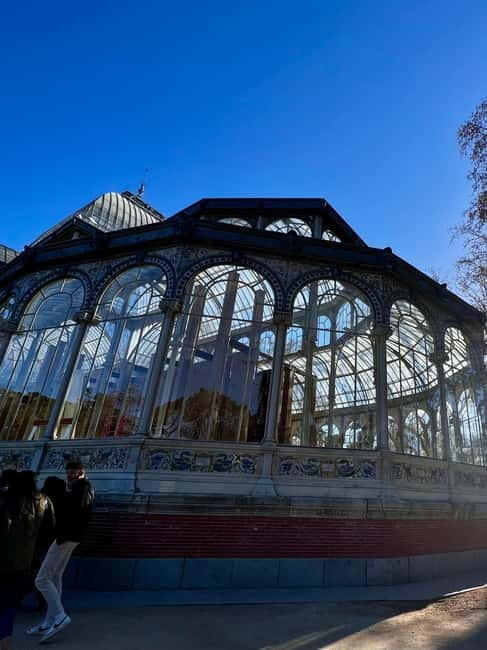
Madrid can feel huge if you only hop between standout sights. This tour is structured like a route through the city’s main layers, starting at Plaza de España and finishing in Retiro Park. Along the way, you’re shown how different eras overlap: Egyptian relics in the middle of Spain, a royal palace complex, street-level literary history, and then a big green reset in Retiro.
You’ll also get a sense of geography without needing a map app open every ten minutes. The route links major points so you can later walk independently with way more confidence. If you like history told through real places you can see and stand near, this style fits.
You can also read our reviews of more tours and experiences in Madrid.


The value of a small group with a cultural mediator
One underrated part of good tours is the tone. Here, you’re guided by a cultural mediator with a live guide in Spanish or English, and the group stays small (up to 7). That matters because questions and small clarifications are easier when the tour isn’t swallowed by a crowd.
What you get is more than “sightseeing with commentary.” The tour is packed with specific details, and the feedback I took seriously emphasizes that it feels truly documented and complete. In plain terms: you leave with answers, not just photos.
Practical note: since it’s small, you also benefit from less stopping-and-starting. That keeps the flow moving from Plaza de España toward the royal core, then into the old streets, then out to Retiro.
Plaza de España and the unexpected Temple of Debod story
You begin at the monument to Cervantes in Plaza de España. That’s a smart starting choice: the plaza is a hub, so you get an immediate sense of where things are.
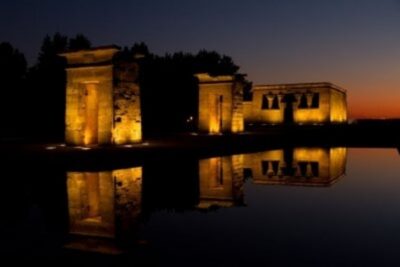
From there, the tour goes to the Egyptian temple presence that makes Madrid feel a little surprising: you’ll find out why there’s an Egyptian temple in the center of Spain. Even if you’ve seen the Temple of Debod on a postcard, the context is the point. You’re not just looking at stones; you’re learning the backstory that explains how this corner of Madrid got linked to Egypt in the first place.
This is the kind of opening that sets the tone for the whole walk. It signals that the tour won’t treat landmarks like isolated islands. Everything is connected by decisions, history, and relocation of meaning over time.
Royal Palace area: Almudena Cathedral, Teatro Real, and Galileo’s footprint
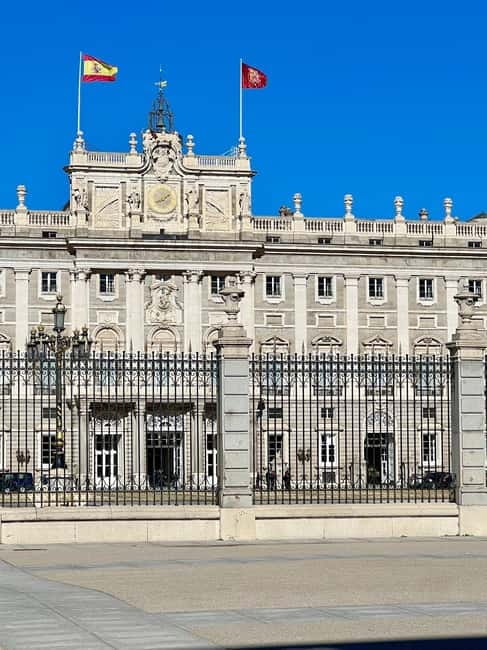
Next comes the royal zone. You pass by the Royal Palace of Madrid, described as the largest palace in Western Europe and the official residence of the monarchy. Even if you don’t go inside on this walk, the scale and setting help you understand the political and cultural weight Madrid assigns to this area.
You’ll also talk about the Almudena Cathedral and the Royal Theater. One of the fun details is that you’ll get the background behind the expression Mucha m*!, tied to performance culture. It’s the sort of cultural nugget that makes you feel like you’re learning how locals speak and act around the arts, not just memorizing facts.
Then there’s a standout “wait, what?” moment: you’ll see a statue in whose construction Galileo Galilei himself participated. The tour doesn’t treat that as a random trivia bullet—it’s part of how you connect art, science, and patronage in the broader story of Madrid’s grand public spaces.
What to watch for here: how the buildings relate to one another, and how the street layout funnels you toward the next landmark. This walk builds a mental map quickly.
Through Madrid de los Austrias to Plaza Mayor
After the royal core, you move into older Madrid territory—Madrid de los Austrias—where the tour slows down just enough to let the neighborhood feel legible. You’ll pass by the area where the foundations of the old Almudena are contemplated, which helps you understand that what you see now sits on layers of earlier decisions.
Then you go down streets with personality. One stop is Calle del Codo, tied to the writer Quevedo, who is associated with walking there. Street-level literary history can feel abstract if you don’t stand near it. But when you’re physically on the street, the details stop being academic.
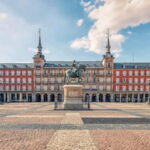
Eventually you reach Plaza Mayor, which has more than four centuries of history. You’ll hear about how it began as a market and how it has absorbed major events—fires, memories of war, and the kind of repeated rebuilding that shapes old-city character. The icing on the cake is that the tour mentions the oldest restaurant in the world as part of the Plaza Mayor story.
Drawback to consider: Plaza Mayor is a major “photo magnet,” so it can feel like a pause in motion. The tour handles it well by giving you context first, so you’re not just waiting in front of buildings while crowds shuffle around you.





Puerta del Sol to Gran Vía: Madrid’s center in motion
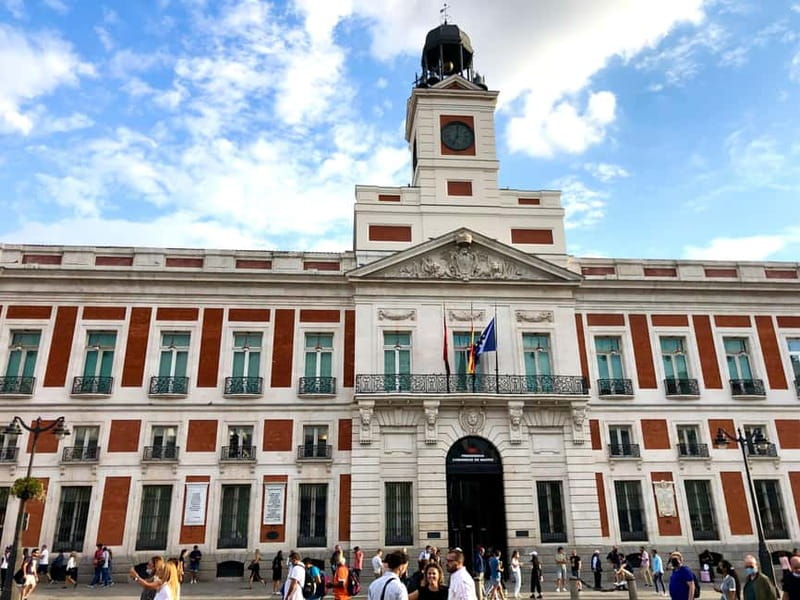
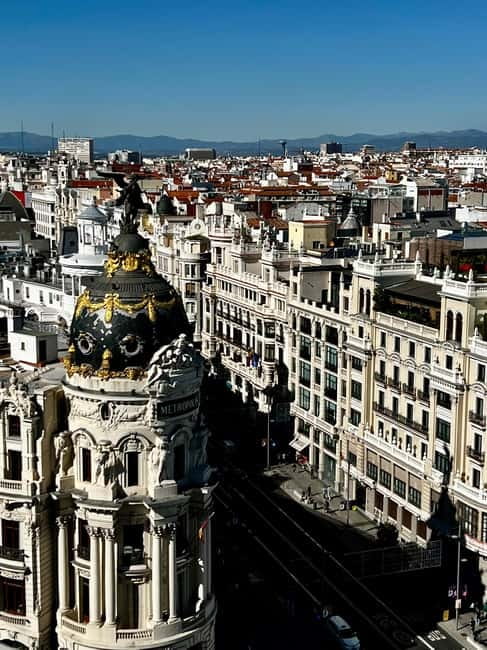
From Plaza Mayor, you walk to Puerta del Sol, described as the heart of Madrid. Here’s a clever detail: the tour enters and exits Sol several times through streets that connect it to Gran Vía, Madrid’s main artery.
That repeated crossing is useful. It shows you that Puerta del Sol isn’t just one square you stare at—it’s a network of streets that feed into major corridors. You start to understand how Madrid funnels foot traffic and how different streets create different vibes even within a short distance.
You’ll be walking in the center of things, which is great for understanding the city’s rhythm. It’s also a reminder to keep your feet under you: this part is easiest if you’re wearing shoes you’re comfortable in for long stretches.
Calle Alcalá to Retiro Park: the civic and scenic transition
As you move toward Retiro, the route shifts from royal and old-town drama into a more civic, urban corridor: Calle Alcalá. Along this stretch, you pass by the Círculo de Bellas Artes, and you’ll also get an important practical clarification: you’ll see the real Banco de España, not the one associated with the popular show La Casa de Papel.
That kind of correction is more valuable than it sounds. It helps you separate entertainment imagery from the real city, so your eyes learn the difference quickly.
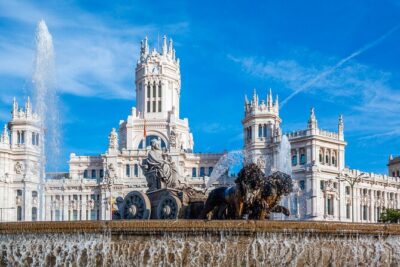
You’ll also pass the fountain and palace of Cibeles, and then the Puerta de Alcalá. This cluster of landmarks creates a transition: you’re moving away from the tight historic blocks and toward a wider, greener end of the day.
Retiro Park’s closing moments: ponds, crystal, and Ángel Caído
Finally, you reach Retiro Park, and the atmosphere shifts. It’s one of the best ways to end a city-walking tour because it gives you room to breathe while still staying in Madrid’s core story.
You’ll see the ponds, the Palacio de Cristal, and Ángel Caído. The tour’s structure makes these feel earned rather than random. After hours of architecture, plazas, and street history, Retiro gives you a scenic reset that also adds variety to what you remember.
This ending is ideal if you want your last segment to feel like a reward. You’re not trapped in more museums or more crowds; you’re finishing in a place designed for strolling.
Price and value: is $28 worth it for 3 hours?
$28 for a 3-hour guided walking tour works out to a fairly low cost per hour, especially because you’re getting a live guide and a dense route through major highlights. The value isn’t just the number of stops—it’s the way the tour connects them through explanation.
If you’re the type who likes context—why landmarks exist, what stories sit behind names, and how Madrid’s neighborhoods evolved—this price is easy to justify. The small group size (up to 7) also supports that value. You’re not paying just to be escorted; you’re paying for interpretation.
One extra point that helps for trip planning: the tour offers free cancellation up to 24 hours in advance and a reserve-now, pay-later option, which is useful if your schedule might shift.
Who this tour is best for (and who should think twice)
This walk is a strong fit if you:
- want a guided route that helps you understand Madrid quickly
- like history and culture explained in plain, practical terms
- enjoy walking between big landmarks and the streets that connect them
It’s not suitable for everyone. It’s listed as not appropriate for children under 8, people with mobility impairments, people with low level of fitness, babies under 1 year, and people over 70. If any of those apply, you’ll likely enjoy Madrid more with a different format that reduces time on your feet.
Also, bring comfortable shoes. This tour is built around walking, and your comfort will determine how much you enjoy the details.
Should you book Madrid on foot: Debod to Retiro?
Book it if you want one organized route that turns Madrid into a readable story. The strongest reasons to choose this tour are the same ones that consistently come through in feedback: the guidance is friendly and correct in delivery, and it’s genuinely well documented and complete. You’ll feel like you understand what you’re seeing, not just that you’ve visited it.
Skip it if you prefer a slower pace, minimal walking, or you need a mobility-friendly itinerary. And if you’re the kind of visitor who hates crowds or hates being on your feet for hours, you’ll want to think carefully.
If you do book: wear good shoes, plan to keep your energy steady for a full 3-hour walk, and use the cultural mediator’s explanations as your shortcut to smarter independent exploring later.
FAQ
How long is the tour, and when does it start?
The tour lasts about 3 hours. Starting times depend on availability, so you’ll want to check the schedule for the day you’re traveling.
Where do I meet the guide?
You meet in front of the Cervantes monument in Plaza de España.
Where does the tour end?
It ends back at the meeting point.
What languages are offered?
The live tour guide works in Spanish and English.
How big is the group?
This is a small group limited to 7 participants.
What should I bring, and is anything prohibited?
Wear comfortable shoes. Alcohol and drugs are not allowed.