REVIEW · SEGOVIA
Legends and Mysteries of Segovia Tour
Book on GetYourGuide →Operated by Paseando por Europa · Bookable on GetYourGuide
Segovia turns spooky after dark. This 105-minute sunset walking tour uses real landmarks to frame stories like Marisaltos, the recumbent Christ, and the devil-versus-the-aqueduct rumors. You get an official guide in Spanish who points you to the city’s “explain it later” places while the light softens and the streets feel different.
Two things I really like. First, the route is built around Segovia’s most famous skyline moments, but the focus stays on the lesser-known side streets and legends. Second, you end at the Aqueduct of Segovia under starlight, where the myths make more sense because you’re seeing the structure that started them.
One consideration: this is a walking tour in Spanish, and it does not include monument entrances. If you prefer quiet self-guided visits (or you want to go inside major sites on this same outing), plan for that ahead.
In This Review
- Key points to know before you go
- Why sunset works for Segovia’s legends
- Getting started by the Monument to Daoiz y Velarde and the Alcázar area
- Old churches and Templar-linked stories at the Vera Cruz
- Canonjías, the Maiden Olalla, and the origin story of hills near Torredondo
- Puerta de San Andrés and Puerta del Socorro: gates as story machines
- Marisaltos and the Jewish Quarter: miracle episode and the city’s layers
- The Cathedral loop: Plaza Mayor, the recumbent Christ, and don Pedro’s tomb
- Squares and façade myths: Antonio Pérez, Cabellera de la Reina, and Casa de los Picos
- Aqueduct at starlight: Roman engineering meets devil stories
- Price and value: what $11 buys you (and what it doesn’t)
- Pacing, walking reality, and who this fits best
- Food tasting and the best plan after the tour
- Should you book this Legends and Mysteries of Segovia Tour?
- FAQ
- FAQ
- What’s the duration of the Legends and Mysteries of Segovia Tour?
- Where does the tour start?
- Where does the tour end?
- What language is the guide?
- Is the tour wheelchair accessible?
- Are monument entrances included?
- Is food included?
- Is there any tasting or food perk at the end?
- What does the tour cost?
- What’s included besides the guided tour?
Key points to know before you go
- Sunset timing makes the legends feel more atmospheric as the day cools down.
- You start outside the Alcázar area at the Monument to Daoiz y Velarde, then move through classic and secret-feeling corners.
- The tour mixes miracle stories, tragic tales, and spooky legends in the same route, so you’re always hearing something fresh.
- You’ll learn where to find the tomb of the young infante don Pedro during the walk around the Cathedral area.
- It ends at the Aqueduct of Segovia with the devil link as the big finale.
- A guide-led walk is included, but monument entry and food aren’t.
Why sunset works for Segovia’s legends
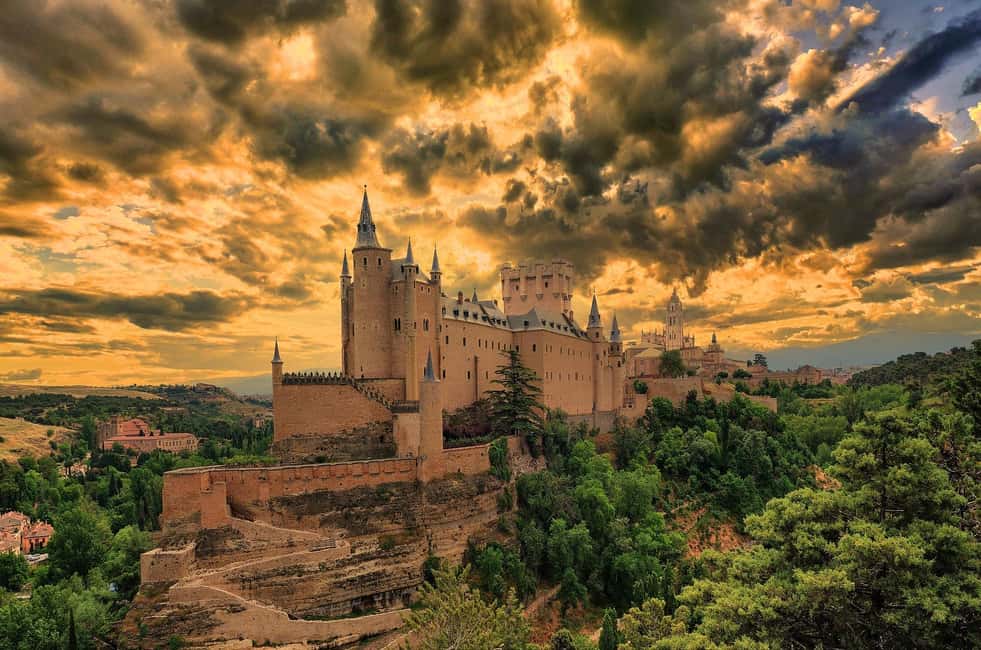
Segovia’s stones look like they’re telling stories even in daylight. At sunset, the effect gets stronger: shadows stretch, details sharpen, and the walk naturally shifts into “why did that happen?” mode.
That timing matters because these are not just trivia facts. The tour uses the city’s layout—church façades, gates, viewpoints, plazas—to make legends feel tied to place instead of floating in the air. Even if you think you know Segovia, the darker tone changes how the landmarks land.
The vibe is also practical. You’re walking while the light is right for photos, then finishing as it gets properly dark. You end at the aqueduct when it’s most dramatic, and you don’t waste your evening hopping between far-apart sites.
You can also read our reviews of more tours and experiences in Segovia.

Getting started by the Monument to Daoiz y Velarde and the Alcázar area
Your meeting point is the Monumento a Daoiz y Velarde, in front of the Alcázar of Segovia, at Plaza Reina Victoria Eugenia. Look for the blue-green flag with the name Paseando por Europa so you can spot your group fast.
Starting here is smart. The Alcázar is the city’s “headline” landmark, and standing nearby gives you orientation. From there, the guide can connect royalty, old power, and cruelty to the kinds of stories that show up in Segovia’s streets—so you’re not just walking, you’re building a mental map.
You also get a sense of scale quickly. You’ll feel how Segovia “reads” as a layered city: viewpoints, gates, churches, and plazas all on a walkable plan.
Old churches and Templar-linked stories at the Vera Cruz
One of the earliest stops brings you to the old Church of the Vera Cruz. The guide connects it to the Templars and to the idea of curses and paranormal phenomena—exactly the sort of story setup that fits the late-day mood.
What I like about this stop is how it changes your attention. It’s easy to rush past church exteriors. On this tour, you’re asked to notice the architecture and the placement, because the legend is tied to why that church is there and what it may have represented over time.
If you enjoy stories that feel “anchored” in real walls, this is where the tour starts doing its job. You’re learning to look at place as evidence.
Canonjías, the Maiden Olalla, and the origin story of hills near Torredondo
Next, you move through the neighborhood of Canonjías, with the Maiden Olalla legend as a thread. The tour then references Torredondo and follows the route without leaving the key street corridor—Marqués del Arco Street is part of the path used to connect the stories.
The point here is not just spooky folklore. It’s how Segovia explains its surroundings: why hills are where they are, how a village got its identity, and what people told each other to make the landscape feel personal.
This is also a good moment to match the pace to the stories. If your feet are fine, you keep walking and absorb it all. If not, this mid-early section still gives you mental payoff even if you need to pause for a better view or a quick photo.
Puerta de San Andrés and Puerta del Socorro: gates as story machines
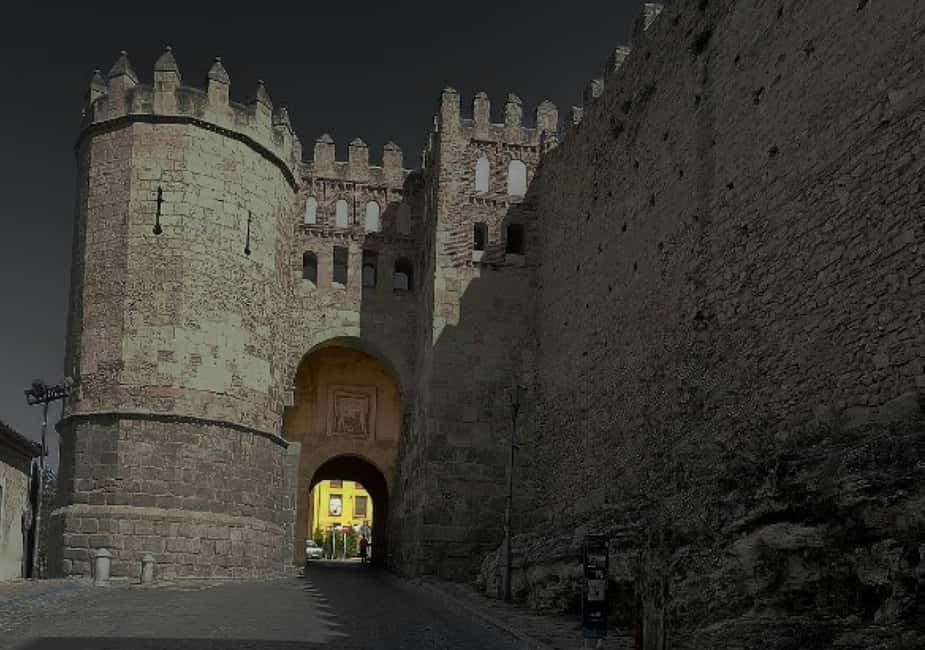
As you continue, you reach the long-lived Puerta de San Andrés, which is also known as Puerta del Socorro. Gates like this are perfect for legend tours because they imply movement—people coming and going, danger, rescue, and what happens at thresholds.
The tour uses the gate nickname to point you toward the city’s more emotional stories, not just the architectural facts. If you like legends that feel like moral lessons, this part fits.
Drawback at this stage: you’re still early in a steady walking rhythm. Wear comfortable shoes, because the route is built for consistent steps rather than frequent sitting breaks.


Marisaltos and the Jewish Quarter: miracle episode and the city’s layers
You’ll walk near where the Jewish Quarter entrance was and hear about a miraculous episode involving Marisaltos, described as a Sephardic neighbor of the city. This is one of the tour’s “surprise yourself” themes: the city’s most iconic look meets a story that feels personal and human, not grand and distant.
Why this matters to you: legends like this help you see Segovia as a lived-in place with different communities, memories, and turning points—not only as a museum of castles and aqueducts.
The route also teaches you to think in layers. You’ll notice how Segovia preserves history in plain sight: street lines, building fronts, and the way neighborhoods connect to major landmarks.
The Cathedral loop: Plaza Mayor, the recumbent Christ, and don Pedro’s tomb
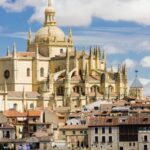
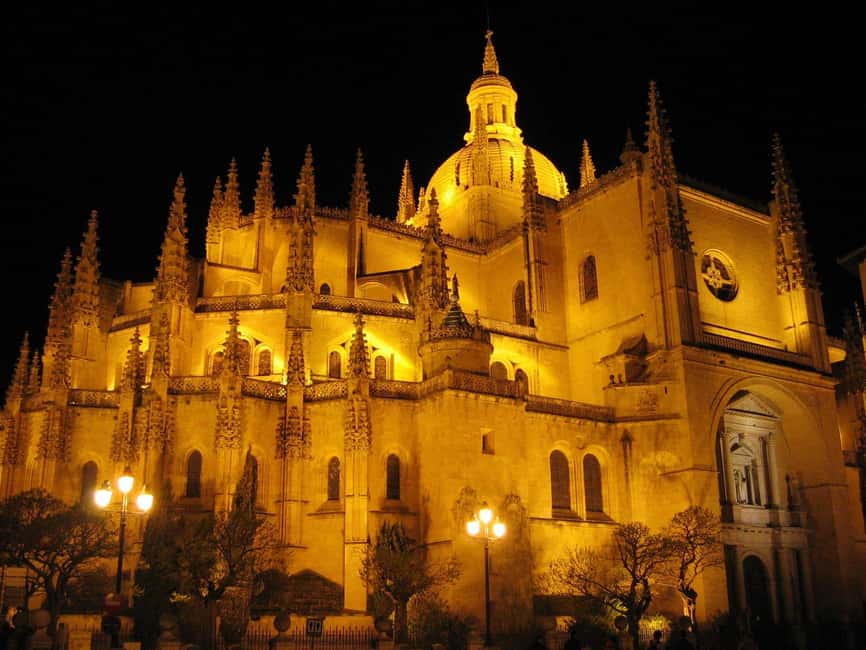
The tour then wraps around the Cathedral of Segovia area until Plaza Mayor, where you’ll hear the tragic love story hidden behind the recumbent Christ housed in the main temple.
This section is a highlight for anyone who likes their legends with a storyline. Tragic love stories are usually more memorable than “spooky because spooky,” and the fact that it’s tied to something you can see makes it stick.
You’ll also learn where to find the tomb of the young infante don Pedro. Even if you don’t go inside monuments, knowing where key elements sit helps you connect what you’re walking past with what you see when you return later for a longer visit.
Tip: if you’re the type who likes to linger, this is where you’ll feel the temptation to stop more often than the tour pace allows. Since entry isn’t included, you might still want to come back separately for more time in the temple.
Squares and façade myths: Antonio Pérez, Cabellera de la Reina, and Casa de los Picos
In squares like Corpus Christi and Medina del Campo, the guide brings up myths connected to Antonio Pérez and the Cabellera de la Reina. Then you move toward the striking Casa de los Picos, where the tour explains theories that circulate about how and why this unusual façade was built.
I like this part because it balances “legend talk” with visual payoffs. A façade like Casa de los Picos is hard to ignore, and once you’re standing there, the stories feel less like random adds and more like attempts to explain what you’re seeing.
Then comes another legend moment near the Mirador de la Canaleja, with the Dead Woman story included. This is the kind of stop where the view helps the mood. When you look out from a mirador, the legend has somewhere to land.
Aqueduct at starlight: Roman engineering meets devil stories
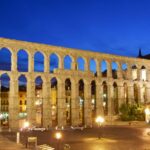
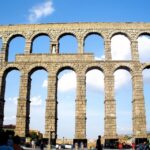
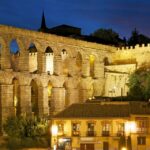
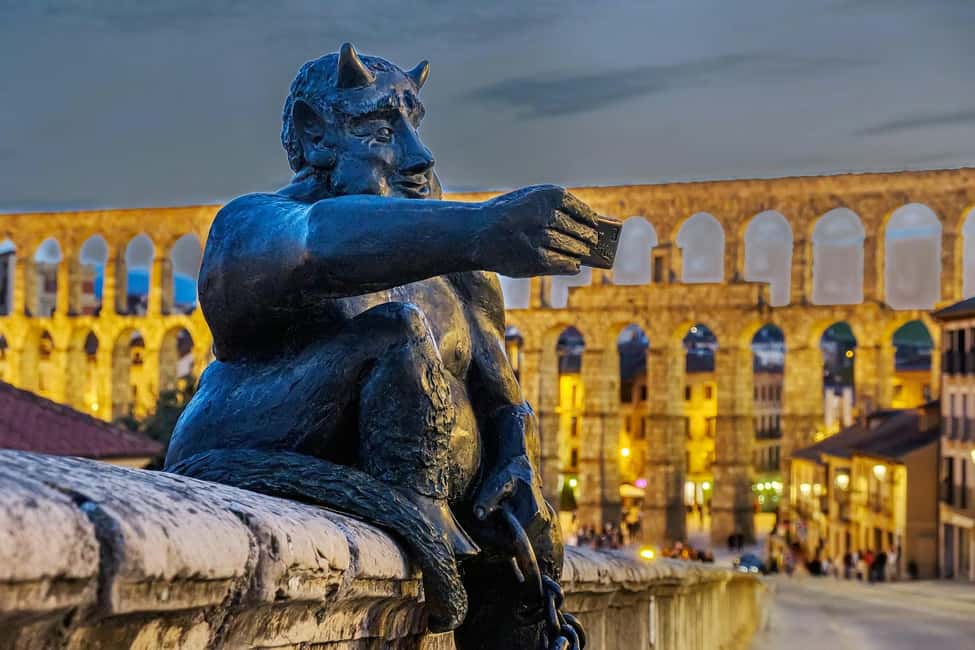
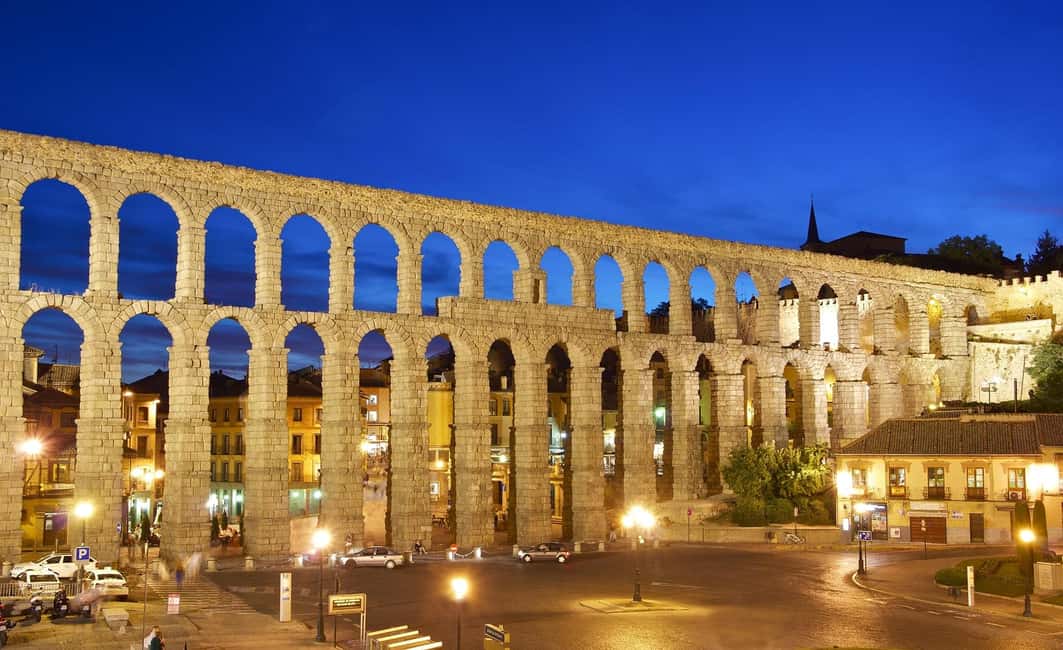
The finale is the Aqueduct of Segovia, where the tour ends under starlight. This is where thousands of years of reputation meets the weirdest question: what relationship could a Roman construction have with the devil?
That question is the tour’s best trick. The aqueduct is an engineering marvel, so your brain expects rational explanations. The legends push you the other way, and standing there at night makes the contrast feel intentional rather than silly.
If you love atmosphere, this ending is strong. You get the biggest “wow” photo moment, and you also get a story that explains why people in earlier eras might have needed a supernatural explanation for something that impressive.
Price and value: what $11 buys you (and what it doesn’t)
At about $11 per person, you’re paying for a short, guided, story-focused walk with an official Spanish guide. That’s the value: you’re not just seeing landmarks, you’re hearing a connected narrative while you move between them.
What’s not included matters. Monument entrances are not included, and food and beverages aren’t included. The tour is also walking, and transportation is not provided—so you’re responsible for getting yourself to the meeting point.
The good part: the tour does offer a small perk afterward, with a special discount on local products and a free tasting at the end. That means your evening doesn’t have to stop when the walk ends—you get a reason to stick around and sample local flavors.
Pacing, walking reality, and who this fits best
This is a 105-minute walk. That’s long enough to connect multiple areas of Segovia, but short enough that it won’t drain your whole day. Still, it’s continuous walking on cobblestone streets and around plazas, so you should expect your feet to work.
Wheelchair accessibility is listed, which suggests the operator is thinking about access. Even so, it’s still a walking tour, so if you need mobility support, it’s worth confirming the exact route details ahead of time.
This tour is best for you if:
- You enjoy legends that connect to landmarks you can actually point at.
- You want an easy evening plan without committing to monument tickets.
- You like guided stories, especially in Spanish.
It’s less ideal if:
- You want mostly museum-style indoor stops.
- You need a tour in a language other than Spanish.
- You’re hoping to include monument entrances in this same 105 minutes.
Food tasting and the best plan after the tour
At the end, you’ll get that free tasting plus a discount on local products. The practical benefit is that it gives you a concrete next step, instead of sending you off with only folklore in your head.
Segovia’s gastronomy is part of the city’s identity, and the tour uses it as a closer. If you time it right, you can finish with the tasting and then decide on dinner without feeling rushed.
Should you book this Legends and Mysteries of Segovia Tour?
Book it if you want Segovia in story mode. This tour turns familiar landmarks—the Alcázar area, the Cathedral surroundings, and the Aqueduct—into a walking narrative with miracles, tragedies, and devil-linked folklore. The price-to-time value is hard to beat, and the free tasting gives you a satisfying finish.
Skip it if your priority is going inside major monuments during this outing, or if Spanish-only narration will slow you down. Also, if you don’t like walking at dusk, you may prefer a daytime visit and a separate meal plan.
One more small note: the Spanish guide quality seems to matter here, and one guide name that shows up in feedback is Ismael, described as great. If you’re lucky enough to get a lively guide, the legends will feel like a real evening plan, not just a list of sights.
FAQ
FAQ
What’s the duration of the Legends and Mysteries of Segovia Tour?
The tour lasts 105 minutes.
Where does the tour start?
You meet at the Monumento a Daoiz y Velarde, Plaza Reina Victoria Eugenia, in front of the Alcazar of Segovia. Look for a blue-green flag that says Paseando por Europa.
Where does the tour end?
It ends back at the meeting point.
What language is the guide?
The live guide speaks Spanish.
Is the tour wheelchair accessible?
Yes, wheelchair accessibility is listed.
Are monument entrances included?
No. Entrance to the monuments is not included.
Is food included?
No. Food and beverages are not included.
Is there any tasting or food perk at the end?
Yes. At the end of the tour, you receive a free tasting and a special discount on local products.
What does the tour cost?
The price is listed as $11 per person.
What’s included besides the guided tour?
You get an official Spanish guide and a walking tour. Transportation isn’t included.