REVIEW · MADRID
From Madrid: Escorial Monastery & Valley of the Fallen Trip
Book on GetYourGuide →Operated by Julia Travel Gray Line Spain · Bookable on GetYourGuide
Two UNESCO giants, one half-day, lots of walking. This Madrid outing links El Escorial with the Valley of the Fallen, so you see 16th-century royal power and a landmark cross you can spot from far away.
I love the way the visit is focused on the monastery’s big-name spaces like the Habsburg Palace, plus the resting place of Spain’s royal family. I also like the practical flow: a comfortable air-conditioned coach and a radio system so you don’t miss the explanations. The main drawback is that this is stairs-heavy, so it’s not a good fit if walking is difficult.
In This Review
- Key things to know before you go
- Getting to El Escorial: the easy start from central Madrid
- El Escorial’s royal “wow”: where power shows up in stone
- The Habsburg Palace and the layout you’ll notice
- The royal mausoleums: Kings and Princes, in one stop
- Chapter House and Basilica: where the “ensemble” feeling clicks
- The short coach hop to the Valley of the Fallen
- The 152-meter cross: the moment the site makes sense
- Underground basilica: what you’ll see and what you should not expect
- The stairs reality check
- Time at the Valley: short, but not empty
- The group size and your ability to hear the guide
- Returning to Madrid: drop-offs near Plaza de Oriente
- Price and value: is $78 a smart use of your Madrid hours?
- Who this tour fits best (and who should skip it)
- Practical tips that make a difference
- Should you book the El Escorial & Valley of the Fallen trip?
- FAQ
- FAQ
- How long is the Escorial Monastery & Valley of the Fallen trip?
- What are the main stops on this tour?
- Is the tour guide available in English?
- Do I need to bring food or drinks?
- Where do I meet, and where do I get dropped off?
- Is the tour wheelchair accessible?
Key things to know before you go
- Two UNESCO sites, one tight schedule: El Escorial first, then the Valley of the Fallen.
- Royal rooms you can actually picture: You’re guided through major areas of the complex, not just passed by.
- The cross is the headline: The Valley is topped by the world’s largest cross, built above the site.
- Underground basilica rules matter: Explanations inside are limited, and your visit there is mostly on your own.
- Expect a workout: There are lots of stairs, including down/up into crypt areas.
- Small-group feel (ish): Up to 30 travelers per guide, with English and Spanish support.
Getting to El Escorial: the easy start from central Madrid
This trip is built for people who want something real outside Madrid without turning the day into a logistics project. You check in at the meeting point in central Madrid at C/ San Nicolás 15, near Plaza de Ramales, and you plan to arrive about 15 minutes early. Then you head out in an air-conditioned coach, which is a lifesaver on hot or cold days—and it helps you conserve energy for the walking once you arrive.
Most departures run as a half-day format, and the pace is geared to cover both sites. That means you’ll get guided time at El Escorial, and then you’ll be back on the bus quickly for the jump to the Valley.
If you select optional pickup, you’ll meet the group via your hotel or apartment in Madrid, but you need to flag that at booking so it’s properly arranged.
You can also read our reviews of more tours and experiences in Madrid.



El Escorial’s royal “wow”: where power shows up in stone
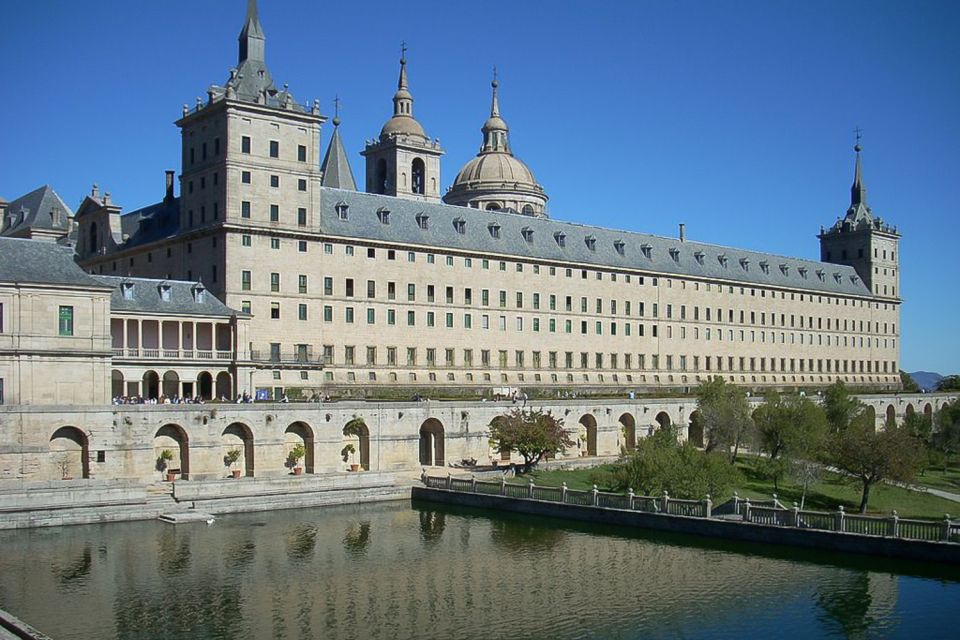
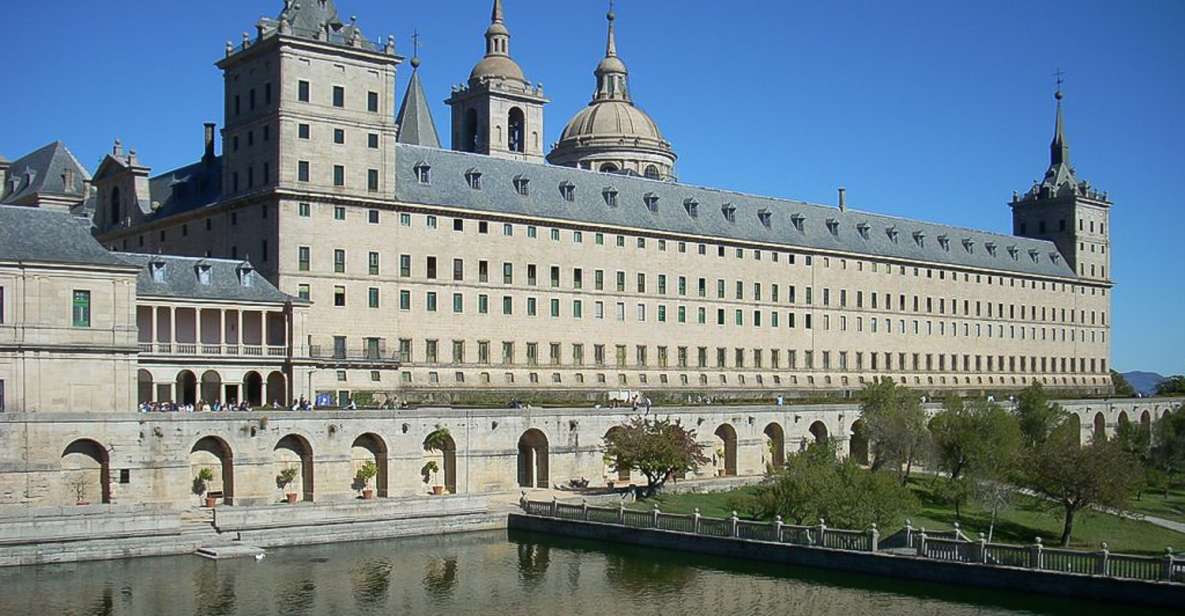
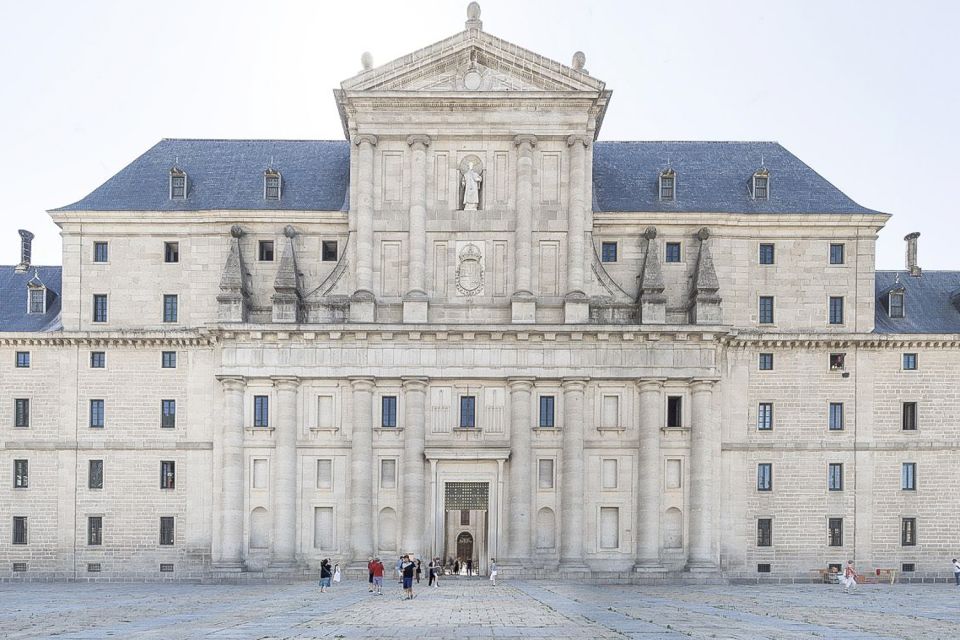
El Escorial isn’t just a church you pass on the way to something else. It’s a whole architectural statement: a 16th-century ensemble tied to Spain’s monarchy and government power, recognized as a UNESCO World Heritage Site.
After about an hour on the coach, you start with a guided visit of roughly 1.5 hours. The best part is that the guide steers you to the spaces that explain the place instead of treating it like a checklist. You’ll move through the complex in a logical sequence, with stops that help you see how the design works and why it mattered to the Habsburg kings who used it as a center of authority.
This is also where you’ll feel the value of having a local official guide plus a radio system. When you’re standing inside big, echoing rooms, it’s hard to hear fine details without support—and the radio system keeps your attention where it should be.
The Habsburg Palace and the layout you’ll notice
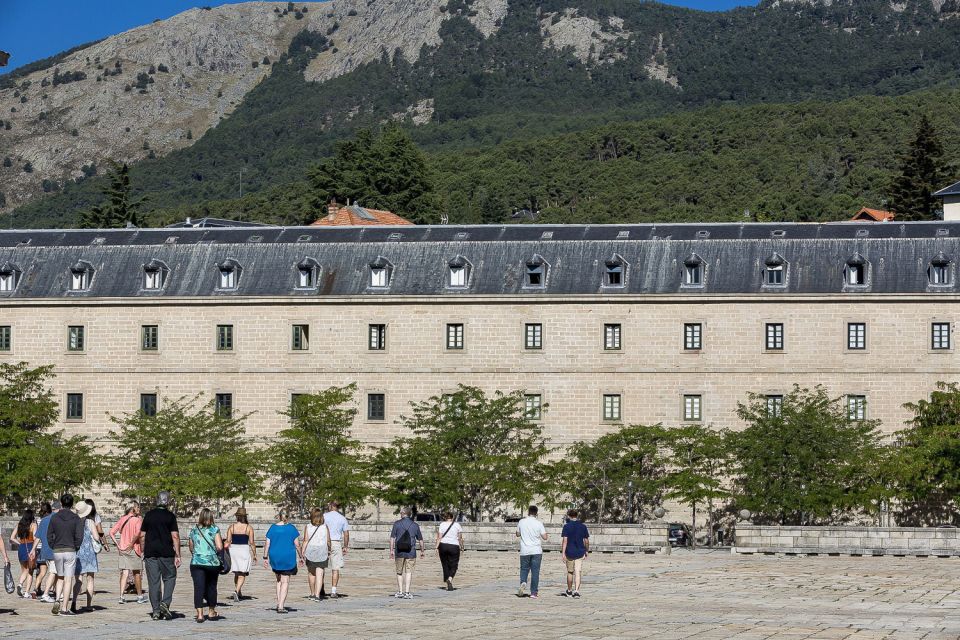
One of the most satisfying parts of El Escorial is the emphasis on the Habsburg Palace. The tour is guided through key monument areas, including the palace spaces and major rooms tied to royal life. You’ll also get time focused on how the complex is organized so the symmetry and Renaissance-style planning start making sense as you walk.
If you like architecture that looks “orderly on purpose,” you’ll enjoy watching how the building’s layout guides your eyes and feet. It’s the kind of place where you can stop for a second and think, okay—this was built to impress.
The royal mausoleums: Kings and Princes, in one stop
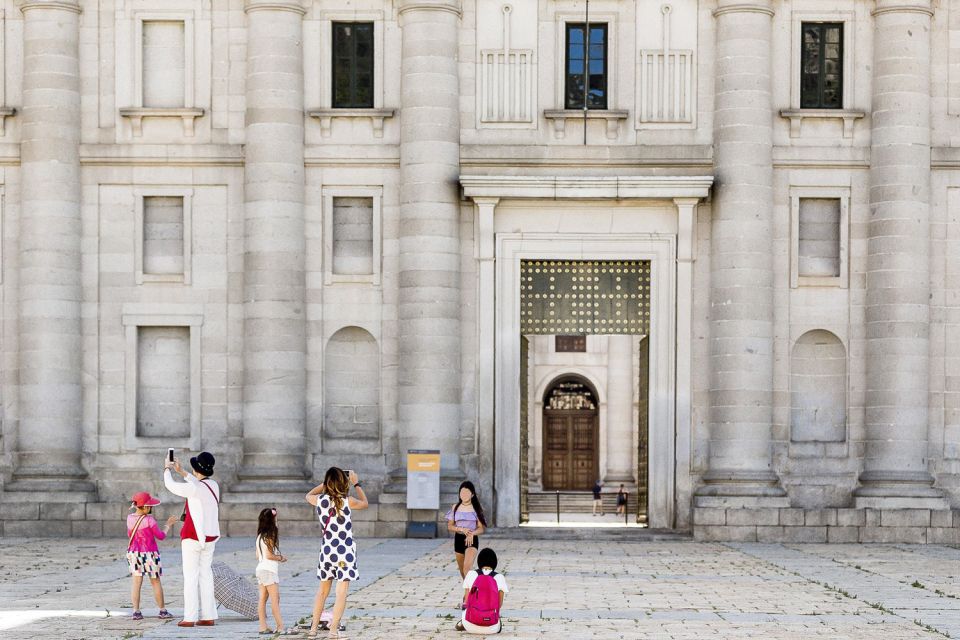
El Escorial’s royal story lands hard when you reach the spaces connected to the monarchy’s final resting places. You’ll see areas associated with the Kings and Princes Mausoleum, and you’ll understand that this isn’t only about art or design. It’s a place where monarchy and religion overlap in a very physical way.
Even if you’re not a deep Spain-history person, this stop helps you connect the dots: who ruled, where they were kept in memory, and why this complex carried such political weight.
Chapter House and Basilica: where the “ensemble” feeling clicks
Beyond the palace, the tour also includes the Chapter House and the Basilica, plus time at the remarkable library. That library stop is more than a decorative aside. It signals how the monarchy wanted knowledge, records, and prestige to live in the same place as worship and government symbolism.
This is a good moment to take your time with your guide’s explanations, then quietly look around yourself. The complex’s scale can feel intimidating at first, but the structure of the guided route keeps it from turning into random wandering.



The short coach hop to the Valley of the Fallen
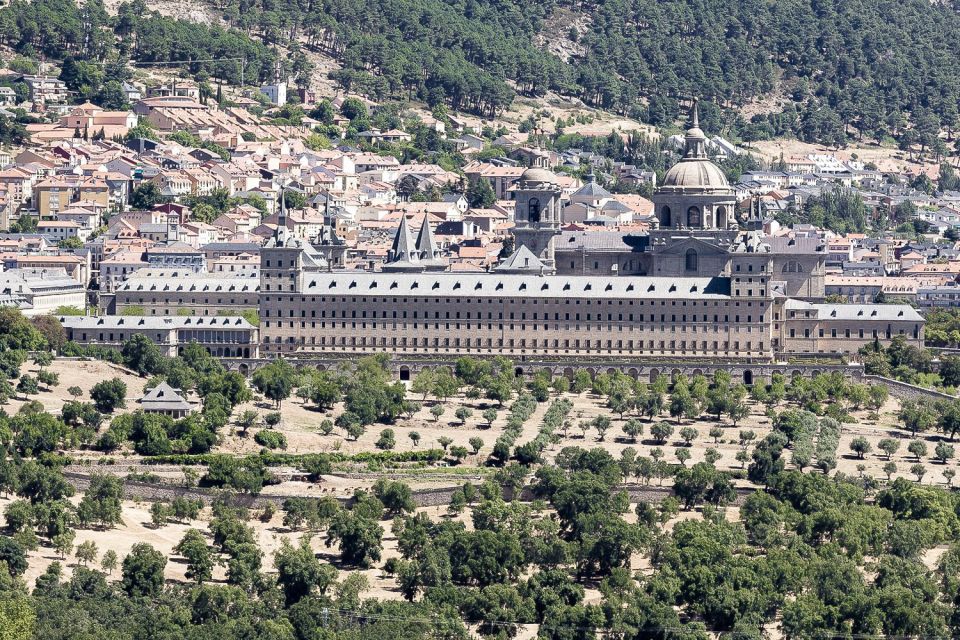
After El Escorial, you’re back on the bus for the transfer. It’s a short journey of about 20 minutes, and you’ll be heading to the Valley of the Fallen, set in the Sierra de Guadarrama area.
Here’s why the drive is worth paying attention to: you can see the monumental cross from far away. That big visual helps you mentally prep for what comes next. It’s like the tour gives you a teaser before you even reach the site.
The Valley is located about 9 km away from El Escorial, so the timing works well without stuffing too much travel into your half day.
The 152-meter cross: the moment the site makes sense
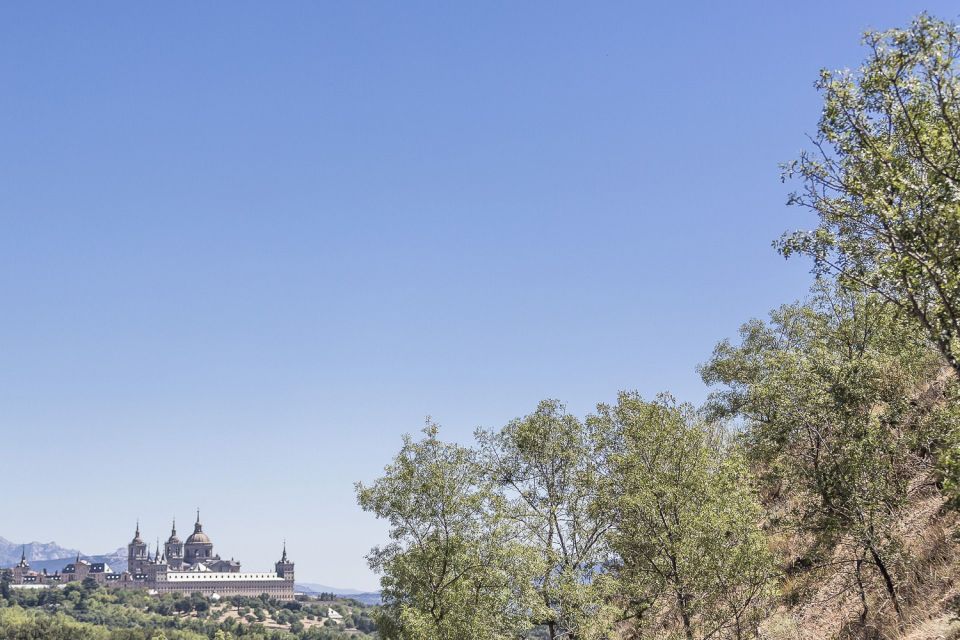
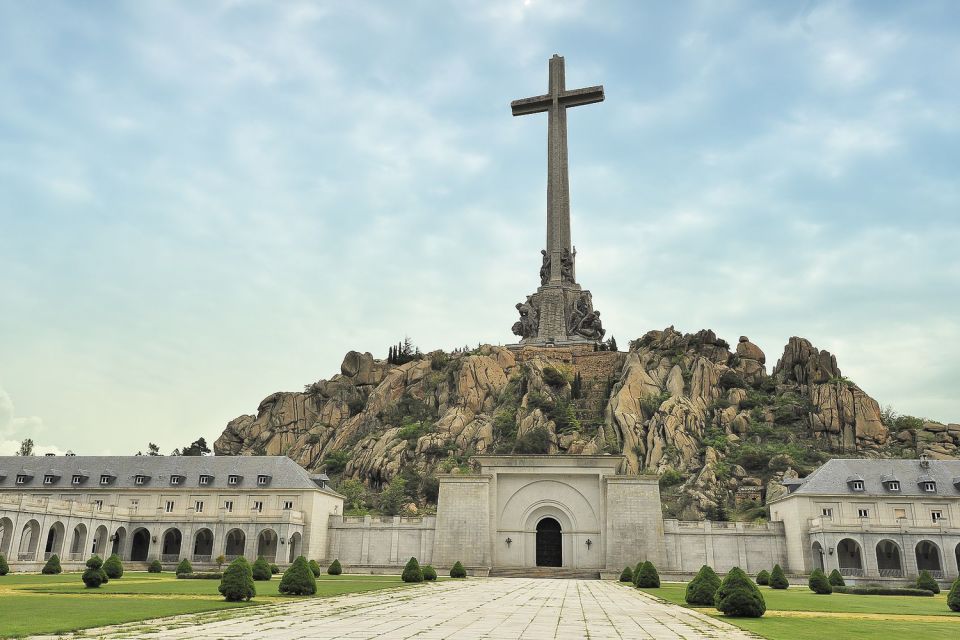
At the Valley, the first impression is the cross. It’s built above the underground church, and it’s described as the world’s largest cross, visible from miles away. Even if you’re not religious, it grabs your attention because it’s so oversized it changes the landscape.
Weather can strongly affect your experience here. If visibility is low, you may feel like the cross isn’t doing its full job, since fog or haze can limit how much you notice from a distance. On the flip side, clear air tends to make the outside views feel more dramatic.
Underground basilica: what you’ll see and what you should not expect
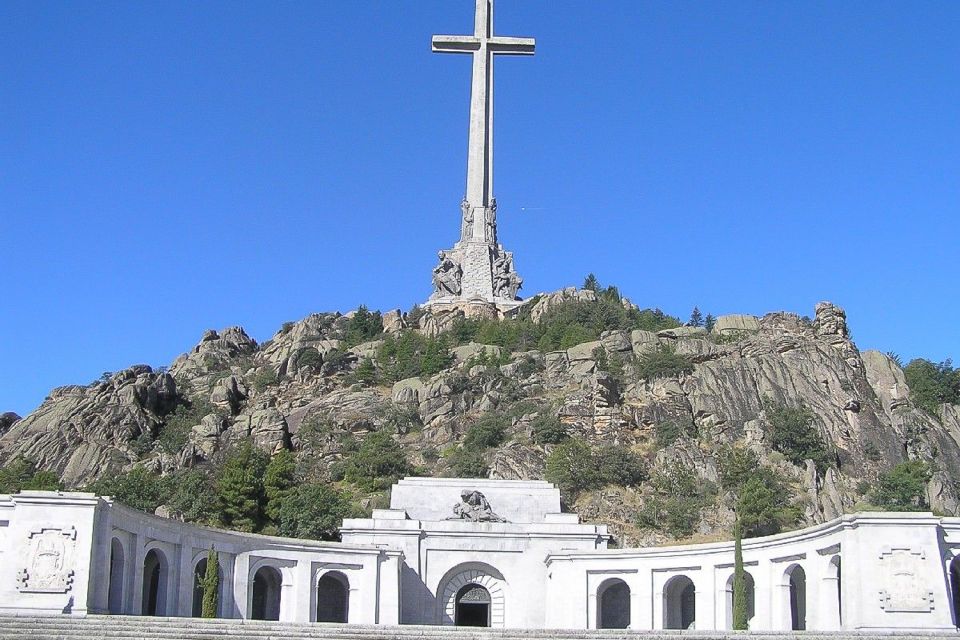
The Valley of the Fallen is best known for its underground church. The basilica is built into the mountain, and that design choice is the point: the site feels carved, not simply built. You’ll tour it as part of the experience with a guided visit of about 50 minutes.
But important rule: the guide can’t provide explanations inside the basilica. All commentary is shared outside, and then your visit inside is basically on your own. So don’t worry if it feels quieter once you go down—just use that time to look, read what’s available, and let your brain do the connecting.
Photography rules can also affect your flow. One review notes no photo permission in both locations, so I’d mentally prepare for the possibility that you’ll be restricted once you’re inside. Bring patience, and focus on seeing rather than shooting.
The stairs reality check
This is also where you should plan for a workout. The visit involves stairs, and one review specifically mentions around 75 stairs up and down to crypt areas. That doesn’t mean you need to be an athlete, but it does mean you should wear shoes that won’t betray you on uneven stone steps.
This trip is not suitable for wheelchair users, and it’s not recommended for anyone who struggles with mobility. If that’s you, you’ll likely feel rushed and stressed rather than moved.
Time at the Valley: short, but not empty
You only get around an hour for the Valley stop with guidance included, plus time you spend independently inside the basilica. That can feel like both a blessing and a limitation.
It’s a blessing because you’re not stuck for ages in one place; the tour is designed to keep momentum. It’s a limitation because the Valley rewards lingering. If you want long, quiet reflection, you may wish you had more time—especially once you’re down in the underground spaces.
Still, the structure of the visit usually works well for most people. You’ll see the main features and get enough context to understand what you’re looking at, without turning it into a full day of museums.
The group size and your ability to hear the guide
With up to 30 travelers per guide, this isn’t a tiny private tour, but it’s also not a huge cattle-car experience. The radio system helps a lot. If you’ve ever struggled with hearing a guide in a busy monument, you’ll appreciate the setup here.
You’ll also find this tour supports English and Spanish. That matters because even when your group language is clear, the guide’s ability to work both languages is part of what keeps the schedule smooth.
In real-life terms: you won’t have to keep asking someone to repeat the key points while you’re standing in the middle of a courtyard or a formal room.
Returning to Madrid: drop-offs near Plaza de Oriente
After the Valley visit, you’ll reboard the coach for the return trip. The coach ride back is about 45 minutes, and then you’re dropped at two locations in Madrid, including Plaza de Oriente (28013 Madrid).
This drop-off is convenient because it leaves you in an area where you can plan an easy next step—snack, a late lunch, or just a wander around central sights. Just remember: you’ll have walked more than you expected from a “half-day” label, and you’ll likely want food and water after.
Price and value: is $78 a smart use of your Madrid hours?
At about $78 per person, this is priced like a value-focused day trip rather than a luxury outing. What makes it feel fair is that you’re not just paying for transport—you’re also paying for:
- Admissions to the Royal Monastery of El Escorial
- Admissions to the Valley of the Fallen and Basilica
- A local official guide
- Air-conditioned coach transportation
- A radio guide system
In other words, a big chunk of your cost goes toward the things you’d otherwise have to plan and pay for separately. If you’re short on time in Madrid, the pairing of two major UNESCO sites in about 5 to 5.5 hours is exactly the kind of efficiency that can be worth paying for.
Where you might feel the price pinch is if you’re the type who always wants longer free time. This tour is designed to cover highlights fast. So if you’re hunting for deep, unhurried exploration, you may end up wanting a second visit to one of the sites later.
Who this tour fits best (and who should skip it)
This experience works well if you:
- Want a high-impact UNESCO duo outside Madrid without a full day gone
- Like guided structure—knowing where to look and what matters
- Prefer coach travel over figuring out buses and schedules yourself
- Are comfortable with stairs and walking inside large stone complexes
Skip or rethink it if you:
- Have significant mobility limitations or need wheelchair accessibility
- Get easily worn out by stair-heavy interiors
- Expect long free time inside the Valley’s underground spaces
Practical tips that make a difference
- Wear comfortable shoes with good grip. The stone steps and indoor staircases can be unforgiving.
- Dress for the weather. Outside views matter here, and you’ll be exposed while moving between stops.
- Plan for limited inside narration at the basilica. The guide’s explanations pause once you’re down there, so don’t wait for commentary—look around.
- If you’re hoping to get good photos, keep your expectations flexible. Rules can restrict photography inside monuments.
- Bring patience for a tight schedule. Even with good organization, city logistics can influence timing, so keep a calm mindset.
Should you book the El Escorial & Valley of the Fallen trip?
If you want one strong outside-Madrid day that hits the big names—El Escorial plus the Valley of the Fallen with its famous cross—this is a smart booking. The guided focus on the royal spaces, the admissions and transport bundled together, and the radio system make it a practical way to get value in 5–5.5 hours.
Just be honest with yourself about the walking. If stairs and mobility are an issue, this tour will likely feel more stressful than moving. If your legs are up for it, you’ll come away understanding why these two UNESCO sites loom so large in Spain’s story—one carved into royal power, the other carved into a mountain.
FAQ
FAQ
How long is the Escorial Monastery & Valley of the Fallen trip?
It runs about 5 to 5.5 hours total.
What are the main stops on this tour?
You visit the Royal Monastery of El Escorial (including guided time through the complex) and then the Valley of the Fallen with a guided visit that includes the Basilica area.
Is the tour guide available in English?
Yes. The tour operates in both English and Spanish.
Do I need to bring food or drinks?
Food and drinks are not included, so plan to bring your own or buy something nearby if you need it.
Where do I meet, and where do I get dropped off?
Meet at the partner office at C/ San Nicolás 15, near Plaza de Ramales. Drop-off is at two Madrid locations, including Plaza de Oriente.
Is the tour wheelchair accessible?
No. It is not recommended for reduced mobility and is not suitable for wheelchair users due to stairs and access limitations inside the monuments.