REVIEW · SAN LORENZO DE EL ESCORIAL
Royal Site of San Lorenzo de El Escorial Entrance Ticket
Book on GetYourGuide →Operated by Distributor: GetYourGuide Tours & Tickets GmbH · Bookable on GetYourGuide
Cold fog makes El Escorial feel unreal. This Royal Site of San Lorenzo de El Escorial lets you walk through the power of Philip II in spaces still largely unaltered. I love the contrast between the fortress-like feel outside and the richly decorated interiors inside—and I especially love the presence of the royal crypt. One drawback: this is a ticket for a self-guided visit with no guide, so you’ll need to follow your own route through the rooms.
Getting there also helps a lot. From Madrid, you’re looking at under an hour by train, then a 25–30 minute uphill walk to the monastery. The included express security check can save time, especially when crowds are building.
On a clear day, the views toward the Sierra de Guadarrama and the Valley of the Fallen’s basilica are a big part of the payoff, and even in cold, foggy weather the gardens and courtyards still look maintained and purposeful. If you want a full story told for you, you may feel a guided tour elsewhere would add context—but the ticket gets you inside the place itself.
In This Review
- Key Things I’d Watch For
- San Lorenzo de El Escorial: Why This Royal Site Works
- Price and Value: Is $21 Worth It?
- Getting There from Madrid Without Losing Your Day
- What Your Ticket Lets You Do Inside the Monastery
- Basilica and Courtyard Rooms: Where the Power Shows
- Royal Spaces and the Crypt Connection
- Gardens, Views, and the Sierra de Guadarrama Payoff
- Art and Design: Italian–Flemish Influences and Juan de Villanueva
- Who Should Book (and Who Might Find It Frustrating)
- Should You Book This El Escorial Entrance Ticket?
- FAQ
- How much is the Royal Site of San Lorenzo de El Escorial entrance ticket?
- How long is the visit?
- What does the ticket include?
- Is a guide included with this activity?
- Does the ticket help you avoid waiting at security?
- Is the ticket refundable?
- When will I receive my booking confirmation?
- Is the site suitable for people with mobility impairments?
- Where is the Royal Site located?
Key Things I’d Watch For
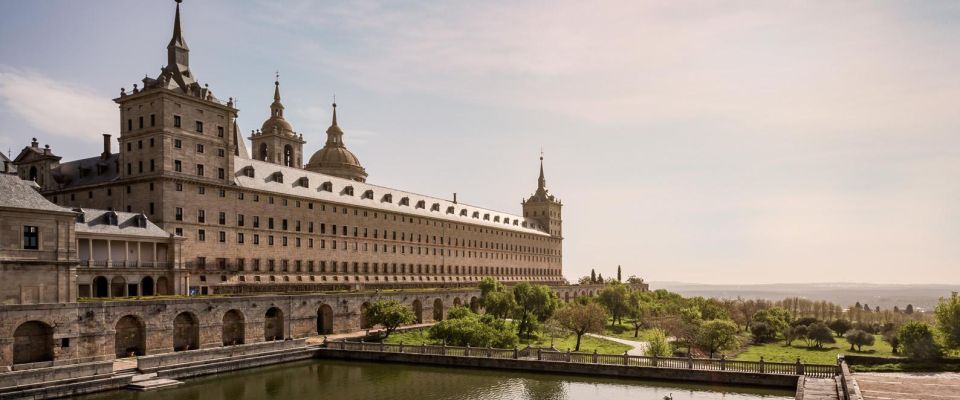
- Self-guided access to a Renaissance royal complex built for different uses, with a layout that’s largely unaltered
- Basilica erected in 1574, plus chapels and other major rooms that reflect Philip II’s ambitions
- Royal connections in the crypt, tied to royals who once lived and used the site
- Gardens that look cared for, with potential big views toward the mountains and nearby landmarks
- A blend of Italian and Flemish artistic forms, showing how styles met during the Spanish Golden Age
- Works associated with Juan de Villanueva, tied to notable artistic decoration
San Lorenzo de El Escorial: Why This Royal Site Works
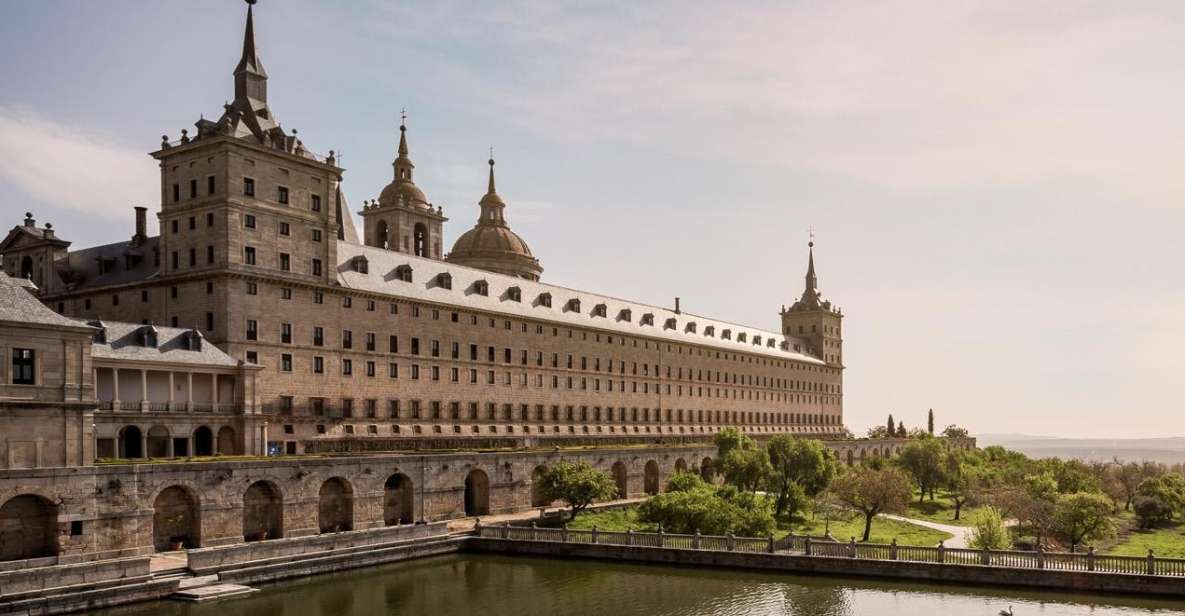
El Escorial isn’t just a pretty day trip. It’s Spain’s ideology made stone and schedule. The monastery and royal complex was created for the monks of the order of St. Jerome, but it also became a place where rulers wanted their image, beliefs, and artistic taste to live forever.
What I like about visiting on your own is that you control your pace. Some rooms feel like you’re walking through a planned statement: order, authority, devotion. Other spaces feel more human—decorative art, chapels with detailed finishes, and garden areas that break up the scale of the complex.
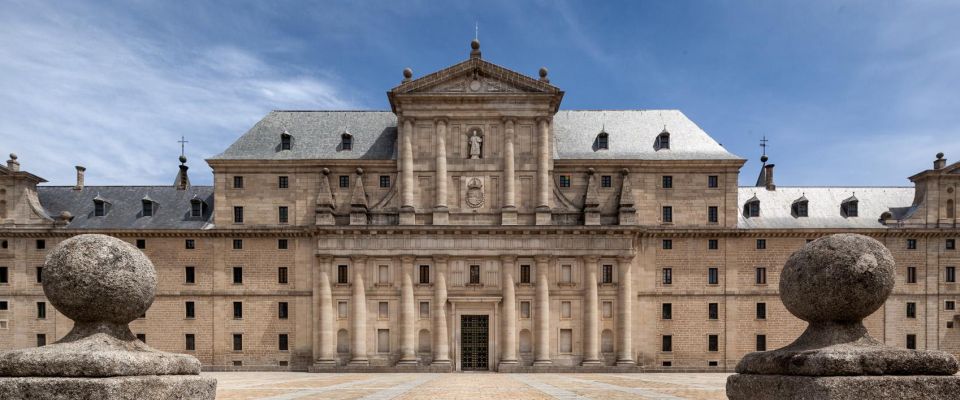
And yes, there’s that strange emotional split. From the outside, the site can look plain or even prison-like. Then you step inside and the decorations, frescoes, and royal touches hit you. That contrast is part of the charm.
If you connect the dots—Philip II’s reign, the Spanish Golden Age, and how art from Italy and Flanders shows up here—you’ll leave feeling like you understood what the building was trying to accomplish.
You can also read our reviews of more tours and experiences in San Lorenzo De El Escorial.


Price and Value: Is $21 Worth It?
At around $21 per person for admission, this isn’t a bargain ticket, but it’s also not pricing itself like a luxury experience. The value comes from what you get: entry to the monastery complex and the time-saving advantage of an express security check.
That express part matters more than it sounds. Monasteries and palaces often have tight entry flow. If you show up and spend extra time at security, your visit shrinks fast—especially because most rooms and basilica spaces benefit from a calm, unhurried walk-through.
That said, there’s a caution to keep in mind. Some people have felt the online price can end up higher than what they expected to pay on-site. So the real question is this: do you want smoother entry and fewer headaches, or are you comfortable taking a chance with lines?
My practical advice: if you’re visiting during busy periods or you’re time-pinched in Madrid, the online price feels like a reasonable trade. If you’re flexible and can handle waiting, you might compare options—but be prepared that wait times can be real.
Getting There from Madrid Without Losing Your Day
The simplest way to plan this day trip is to think like a walker, not like a cab rider. You can get to the area in under an hour by train from Madrid, then you’ll face the final stretch: a 25–30 minute uphill walk from the station to the monastery.
That climb is not “walking in the park,” but it’s also not a deal-breaker for most people who can handle steady stairs and slopes. If you’re dressed for winter or rain, bring layers. Cold and fog don’t stop the beauty here; they just change the mood, making the complex feel even more dramatic.
If you’re using public transit, your timing matters. You want enough daylight or good visibility to enjoy the gardens and outer views, not just sprint for the interior rooms.
Also, don’t count on a taxi-from-the-platform escape if you mis-time your arrival. The site sits above the station, so plan on that walk and you’ll arrive less stressed—and enjoy the approach.
What Your Ticket Lets You Do Inside the Monastery
This is an entrance ticket, so the core experience is the inside access: Renaissance buildings, chapels, town squares, and garden areas within the Royal Site complex.
Because there’s no guide included, your visit becomes a choose-your-own-route day. That’s not a downside if you like moving at your own speed. But it does mean you should plan to spend real time in the major spaces instead of rushing from room to room.
Here’s the kind of structure that works well:
Start with the big visual anchors—spaces tied to Philip II’s program. You’re looking for the main religious and ceremonial rooms, then follow the flow toward smaller decorated areas like chapels. The site’s layout is described as largely unaltered, which is a gift: it means you’re not just looking at a museum copy. You’re seeing a complex that has kept its core organization for centuries.
Expect to see artwork influences that reflect cross-European taste—Italian and Flemish artistic forms are part of the story here. If you keep that in mind while you walk, you’ll notice why the decoration feels both formal and detailed.
The visit also includes the parts of the site meant to serve different purposes: monastery functions, royal presence, and a palace-like side of the complex. That mix is what makes it more than a single building.
Basilica and Courtyard Rooms: Where the Power Shows
One of the biggest targets in the complex is the Basilica erected in 1574. Even if you don’t know the timeline, the basilica functions like the spine of the site. It sets a tone: solemn, monumental, and very intentional.
When you’re standing inside, pay attention to how the building moves you between spaces. The way the complex is organized helps you understand its role during Philip II’s reign—religion and rule linked together.
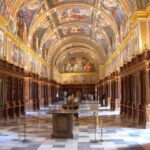
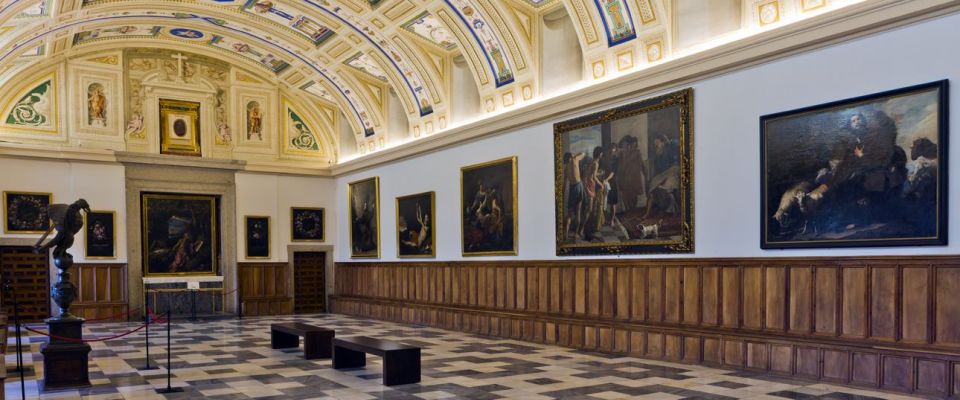
Don’t skip the smaller religious rooms either. The site includes chapels, and they’re often where decoration feels most concentrated. Even if you only spend a short time in each one, the cumulative effect builds. You start to see the ideology expressed through art and design choices.
And because you’re doing this self-guided, you can pause when something catches your eye. That’s often the difference between walking past details and actually absorbing them.
A practical consideration: basilica and chapel lighting can make some surfaces harder to see clearly in low light. Bring your patience for taking a few extra looks at frescoes and ornamentation.
Royal Spaces and the Crypt Connection
This is where the visit becomes personal in a surprising way. The complex includes residential and royal associations, and Emperor Charles V and his wife once lived there. That piece matters because it reframes the monastery. You’re not only dealing with monks and worship—you’re dealing with how rulers used this site as a stage.
Then there’s the crypt, which houses royals associated with those who used the place. This is the part many people remember because it adds emotional weight to the architecture. After all the scale and ceremony upstairs, the crypt gives you a different temperature—literal and emotional.
If you’re going without a guide, the crypt and the royal rooms become even more important. They act like story checkpoints. You can look around, then connect the dots to the reign and the monastic setting.
I’d suggest giving this section extra time. It’s easy to treat it like a stop along the way, but it’s the one area where the “who” of El Escorial becomes visible.
Gardens, Views, and the Sierra de Guadarrama Payoff
El Escorial isn’t only stone. The experience includes gardens and outdoor areas, and they’re described as maintained and beautifully presented. Even when the day is foggy or cold, the gardens still provide a calmer pace.
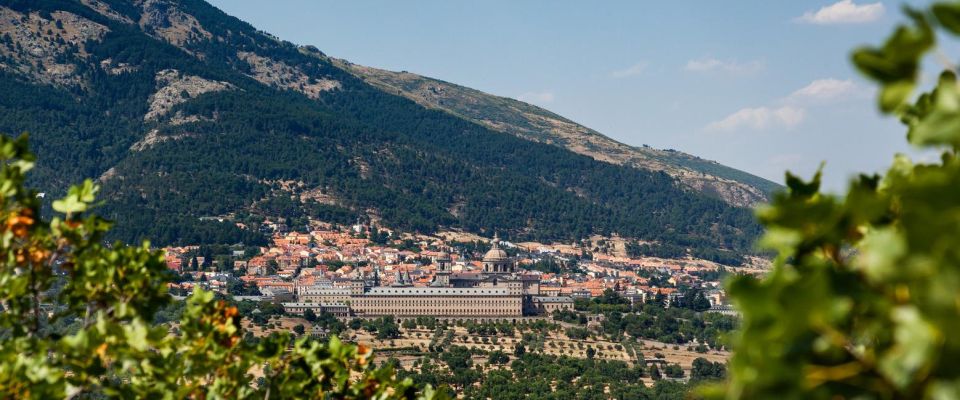
If the weather cooperates, the outdoor parts can feel like a reward. On clear days, you can enjoy big views over the surrounding region, including the Sierra de Guadarrama and sightlines toward the Valley of the Fallen’s basilica.
These viewpoints change how the complex feels. Inside, you’re in a planned world. Outside, you see the geography that made the location attractive in the first place.
Practical tip: don’t schedule your gardens as an afterthought. If you treat them like a quick walk at the end, weather can ruin your plan. Start thinking about outdoor time early so you can adapt if the skies clear.
Also, wear shoes with grip. The walk from the station is uphill, and outdoor paths can be slick in winter conditions.
Art and Design: Italian–Flemish Influences and Juan de Villanueva
The complex reflects the Spanish Golden Age mindset: the desire to be both devout and culturally connected. The site is known for Italian and Flemish artistic influences blending together, which helps explain why the decoration doesn’t feel like one single national style.
This blend is one reason El Escorial can feel richer than you expect. If you only look for “Spanish Renaissance,” you might miss how the influences show up in how details are handled.
The experience also notes the role of architect and artist Juan de Villanueva in the artistic works you’ll encounter. When you see his name tied to the complex, think of it as part of how Spanish patrons supported a European-minded approach to art and architecture—not isolated, but connected.
Since your ticket is self-guided, you won’t get someone narrating the artistic reasoning. So use what’s provided and keep an eye out for areas where decoration feels unusually intentional—ornamentation, fresco focus, and the way art supports the building’s purpose.
If you like architecture and design, this is one of the best places in the Madrid area to spend a full day. The site gives you enough variety that you won’t feel like you’re repeating the same room type over and over.
Who Should Book (and Who Might Find It Frustrating)
This entrance ticket is best for you if:
- you want self-guided freedom inside a major Spanish royal complex
- you’re interested in Philip II-era Spain, monastic history, and Renaissance art
- you like walking and can handle a 25–30 minute uphill approach from the train station
- you appreciate architecture where the layout is largely unaltered, so the experience feels close to the original plan
It may not be a good match if you:
- have mobility impairments, since this is listed as not suitable for people with mobility impairments
- strongly prefer guided interpretation for history and art (because no guide is included)
- hate the idea of navigating independently through multiple spaces like basilica, chapels, palace-like areas, and gardens
One more practical point from experience patterns: some people have expected a guide and been disappointed. Here, a guide is not included, so don’t rely on one showing up. If you want guided narration, double-check you booked the right type of tour before you go.
Should You Book This El Escorial Entrance Ticket?
If your goal is a high-value day trip that gets you inside a major Royal Site of San Lorenzo de El Escorial, this ticket makes sense. The price is reasonable for admission, and the express security check is the kind of small advantage that helps you actually enjoy the rooms instead of losing time at entry.
I’d book it if you:
- can handle a self-guided visit
- want to spend time in the basilica, chapels, royal connections, and the crypt
- like pairing architecture with outdoor views in the same day
I might skip it if you:
- want a guided explanation included with the ticket
- need mobility accessibility accommodations
- are very budget-sensitive and would rather gamble on paying on-site instead of using the express entry
My bottom line: book this if you want to see the real spaces of Philip II’s world with your own rhythm. Plan your route ahead of time, allow extra minutes for the key rooms, and don’t treat the gardens like a quick bonus. The complex rewards a calm, patient pace.
FAQ
How much is the Royal Site of San Lorenzo de El Escorial entrance ticket?
The price is listed at $21 per person.
How long is the visit?
The duration is 1 day. Starting times depend on availability.
What does the ticket include?
It includes the admission ticket to the Royal Site of San Lorenzo de El Escorial.
Is a guide included with this activity?
No. A guide is not included.
Does the ticket help you avoid waiting at security?
Yes. It includes skip-the-line through an express security check.
Is the ticket refundable?
No. This activity is non-refundable.
When will I receive my booking confirmation?
You should receive a booking confirmation within 48 hours after purchasing.
Is the site suitable for people with mobility impairments?
No. It is listed as not suitable for people with mobility impairments.
Where is the Royal Site located?
It’s in the Community of Madrid, Spain.