REVIEW · SAN LORENZO DE EL ESCORIAL
San Lorenzo de El Escorial Monastery: Private Tour
Book on GetYourGuide →Operated by Isabella Trébede - Licensed Guide · Bookable on GetYourGuide
El Escorial hits hard in 2.5 hours. In a private setting with licensed guide Isabella Trébede, you get real context for the art and power of the Habsburgs, plus skip-the-line entry that saves time. I especially like how the tour ties big-name works into specific rooms, so Titian, El Greco, Velázquez, and Luca Giordano do not feel like random labels.
One thing to plan for: this site is not accessible. Expect lots of steps, so wear grippy shoes and be ready for a steady climb, even if the pace is eased.
In This Review
- Key highlights at a glance
- Why El Escorial feels different from other day trips
- Meeting up, finding the right entrance, and getting through security
- Private guide with Isabella Trébede: what makes the tour work
- Inside stop 1: basilica details and the mass closure wrinkle
- Inside stop 2: the library frescoes and the main staircase
- Inside stop 3: Royal Pantheon and the Habsburg family story
- Inside stop 4: Hall of Battles and the mural paintings you remember
- After the interiors: Renaissance gardens and Sierra del Guadarrama views
- Price and value: what $79 buys you in real terms
- What to bring, what you can’t bring, and how to stay comfortable
- Who this tour suits best (and who should rethink it)
- Should you book the San Lorenzo de El Escorial private tour?
- FAQ
- What is the duration of this El Escorial private tour?
- What does the tour include?
- Do I need to arrange transportation from Madrid?
- Where exactly do we meet the guide?
- What languages are offered?
- Is this tour wheelchair accessible?
- What should I bring with me?
- What items are not allowed during the visit?
- What happens if the basilica is closed for masses?
- Are there any security checks?
- Is there an option to cancel or pay later?
Key highlights at a glance
- Skip-the-line entry plus priority entrance to get inside faster than the general queue
- Isabella Trébede’s storytelling that keeps the art and politics connected, in clear English or Spanish
- Hall of Battles and the library frescoes as the two must-see visual stops
- Royal Pantheon details that connect Habsburg family drama to what you’re looking at
- Renaissance gardens and Sierra del Guadarrama views to round out the visit with fresh air
Why El Escorial feels different from other day trips
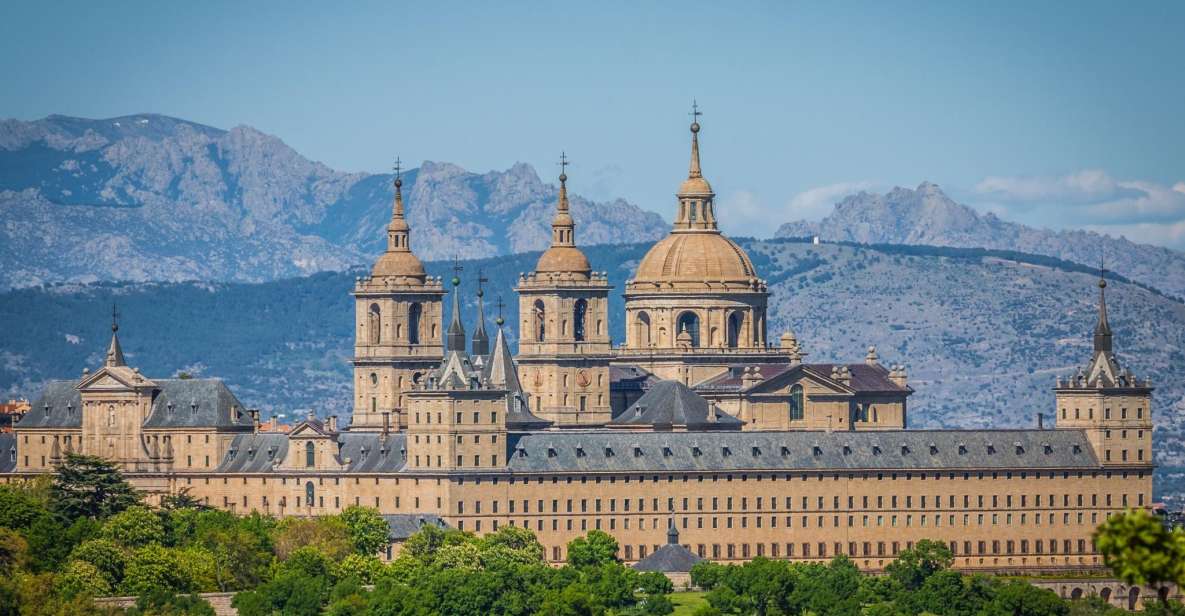
El Escorial is one of those rare places where architecture, religion, and imperial ambition all share the same walls. Even though the visit is only about 2.5 hours, the building’s layout keeps moving you from power to devotion to art, without long stretches of aimless wandering.
This is also a UNESCO World Heritage Site, but the point isn’t the badge. The point is that you’re walking through a whole worldview. The monarchy used this complex to project authority, and the interiors are built to make that message land.
And yes, it’s a major day trip from Madrid. Just know it’s an indoor-and-stairs kind of outing, not a casual stroll. If you like seeing how masterpieces are framed by their original spaces, you’ll enjoy this more than a quick photo stop.
You can also read our reviews of more tours and experiences in San Lorenzo De El Escorial.



Meeting up, finding the right entrance, and getting through security
You’ll start at the entrance with a Spanish flag above it, right in front of the Oficina de Turismo. The guide carries a Isabella Trébede tote bag, which makes it easier to spot your group quickly.
There’s no hotel pickup included, so you’ll want to build your own travel time in from Madrid. I recommend arriving early enough to take the stress out of it, since the monument requires airport-style security for everyone.
Also plan for bags. Backpacks and big bags need to go into free individual lockers, using a €1 coin. If you show up with something oversized, you’ll lose time at the start. Bring only what you truly need for two and a half hours.
Practical tip: comfy shoes matter here. The tour notes that you’ll climb many steps, even though the guide takes it easy.
Private guide with Isabella Trébede: what makes the tour work
This is a private group tour, which changes the feel right away. You’re not stuck listening to a script that fits everyone and no one. You can ask questions, and the guide can steer you toward what you care about—history, art, symbolism, or just how the building is organized.
Isabella Trébede is the licensed guide for this experience, and the standout theme is clarity. The tour is designed around understanding what you see, not just looking at it. That matters at El Escorial, because the complex has layers: royal power, religious practice, and artistic patronage all overlap.
The tour also provides individual headsets, so you don’t have to strain your ears while walking through busy rooms. That’s one of those small comforts that makes a big difference in a place where sound bounces off stone.
Inside stop 1: basilica details and the mass closure wrinkle
The basilica is where the religious context becomes impossible to ignore. You’ll see how the space supports worship, ceremony, and authority at the same time—exactly the kind of connection you miss when you rush through on your own.
There’s one real consideration: the basilica is closed during masses. On Sundays and religious holidays, that can mean it’s closed the entire morning. If that happens, your guide will shift the time to the library or the Chapter Rooms.
I like how this is handled. It avoids the common day-trip problem where your plan gets cut short and you end up disappointed. Instead, the visit adapts while still keeping you in the core artistic and ceremonial spaces.
What to watch for: don’t treat the basilica as just a pretty room. Think of it as the anchor of the whole complex, the place that sets the tone for everything else you’ll see.
Inside stop 2: the library frescoes and the main staircase
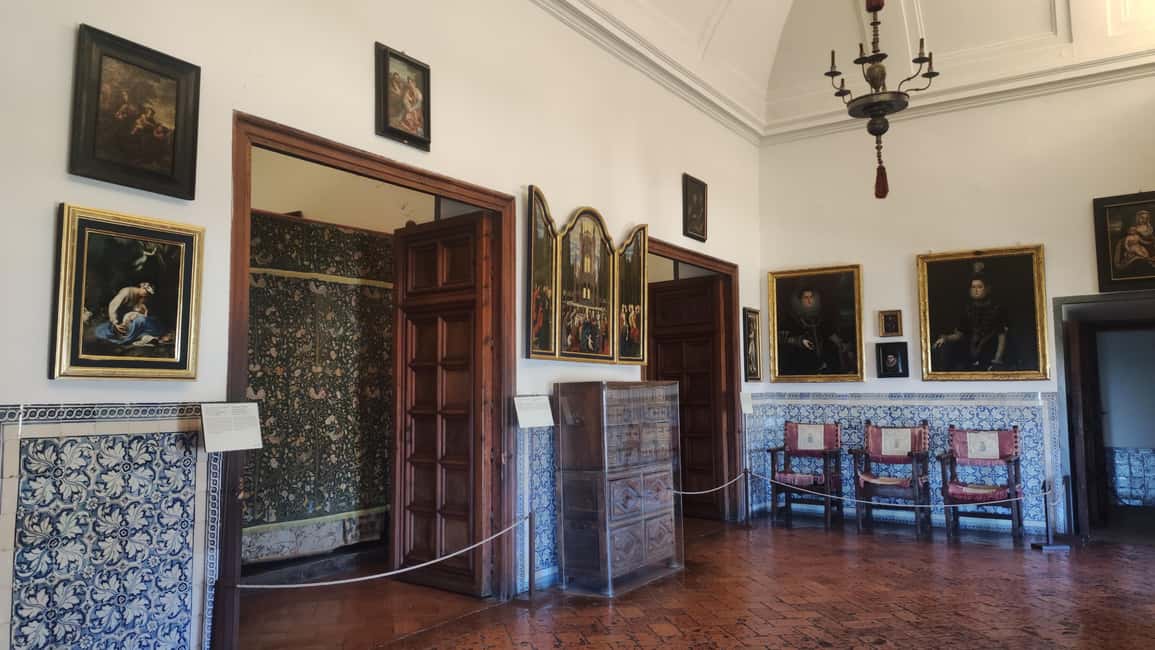
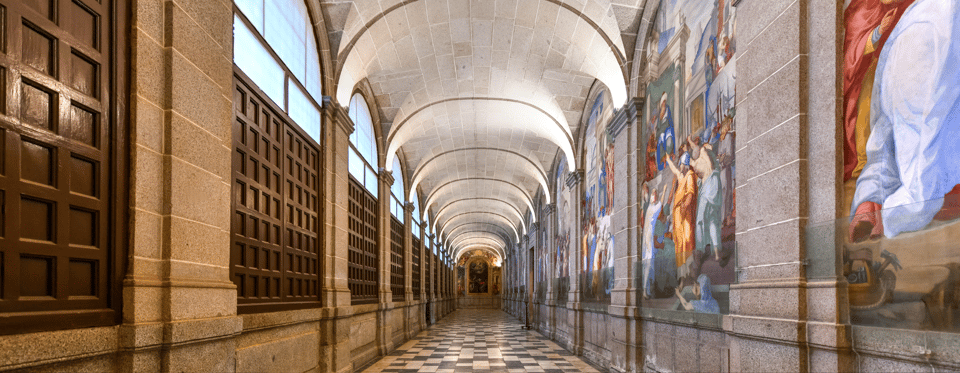
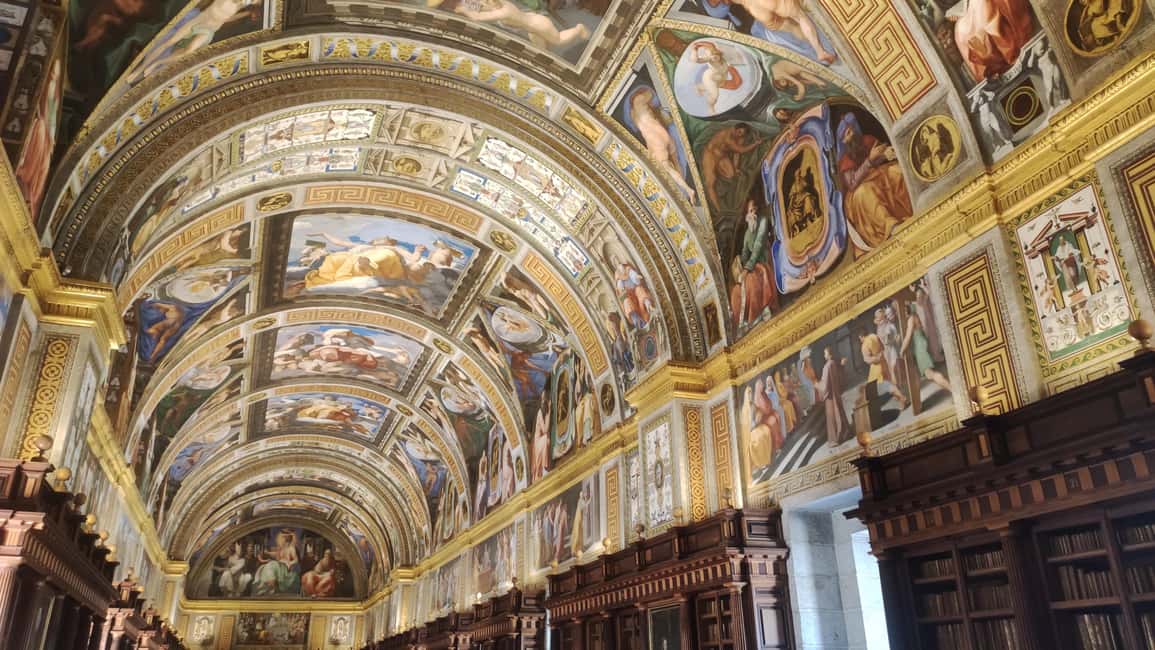
If there’s one place where El Escorial feels like a brain and not just a palace, it’s the library. The tour frames it as the finest example of Phillip II Humanism and his taste for science and arts.
That wording is useful, because it gives you a lens. You’re not only looking for beauty. You’re looking for how the monarchy wanted knowledge to be organized, displayed, and respected. The building isn’t neutral: it’s making an argument.
Two standout elements here:
- The impressive frescoes inside the library
- The main staircase, which gets special attention during the walk through
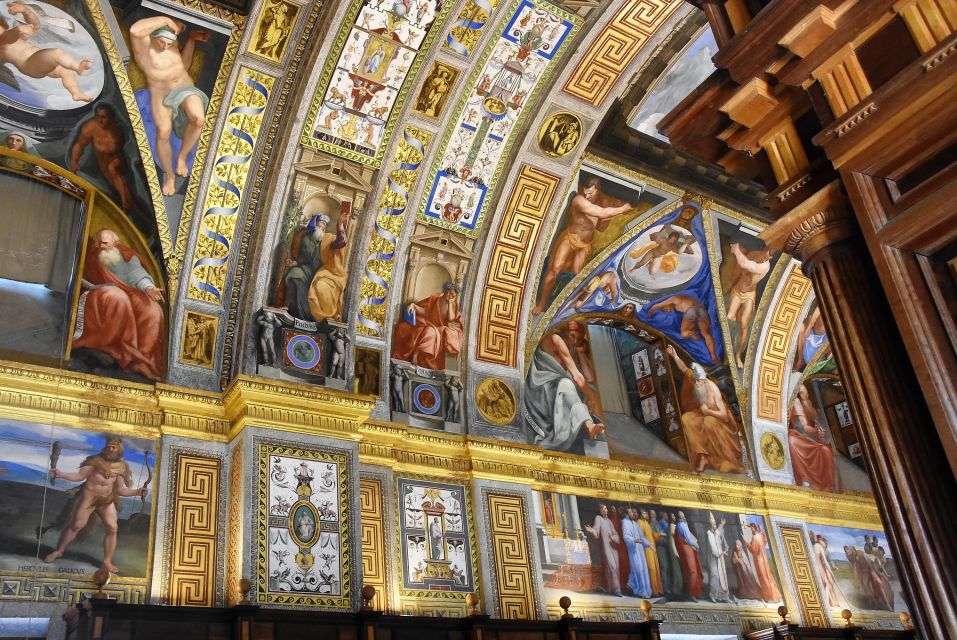
The frescoes can be visually overwhelming on first glance. A guide helps you slow down and connect what you’re seeing to the broader themes: learning, power, and the way art was used to legitimize authority.
Also, if the basilica closes due to mass, this is where the visit may expand. So even if your first plan changes, your art time should still be strong.
Inside stop 3: Royal Pantheon and the Habsburg family story
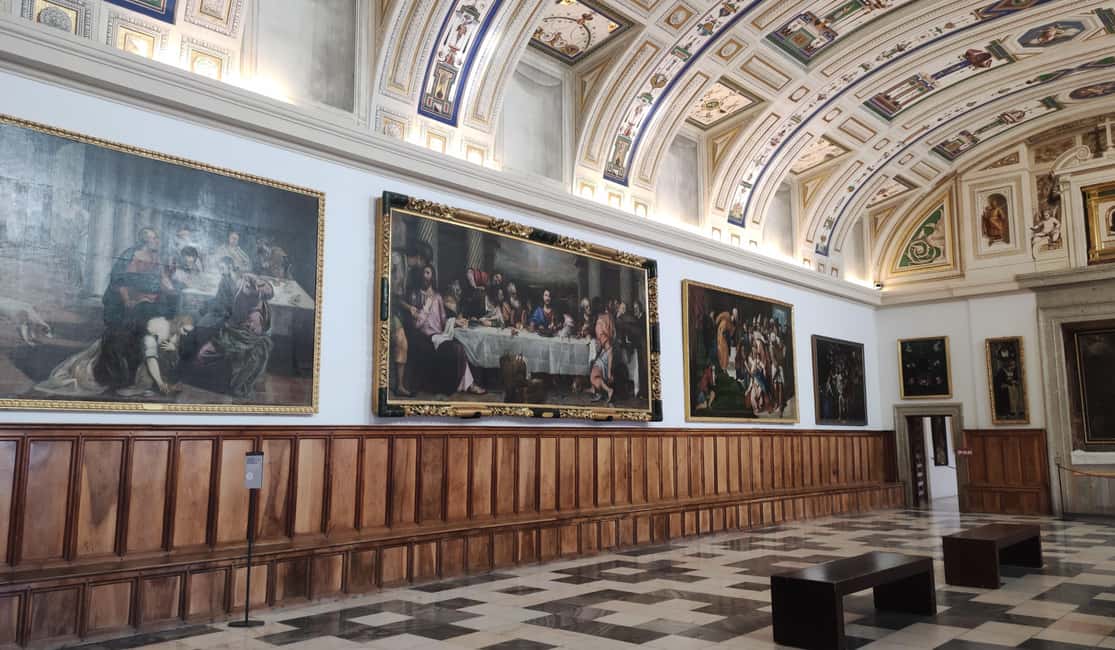
The Royal Pantheon is where the monument turns personal. You get the story behind major characters tied to the Habsburg dynasty, including John of Austria, described here as the bastard son of Emperor Charles V.
That detail matters because the Pantheon is not just about who is buried. It’s about how dynasties managed legacy—who belongs, how reputation survives, and how religious and political power overlap.
When you’re standing inside, it’s easy to think of tombs as static. The guide’s role is to bring the narrative back to life, so the space becomes a map of relationships and historical stakes.
If you like political history, this part rewards your attention. If you don’t, it still works because the Pantheon’s storytelling is directly tied to what you’re seeing in front of you.
Inside stop 4: Hall of Battles and the mural paintings you remember
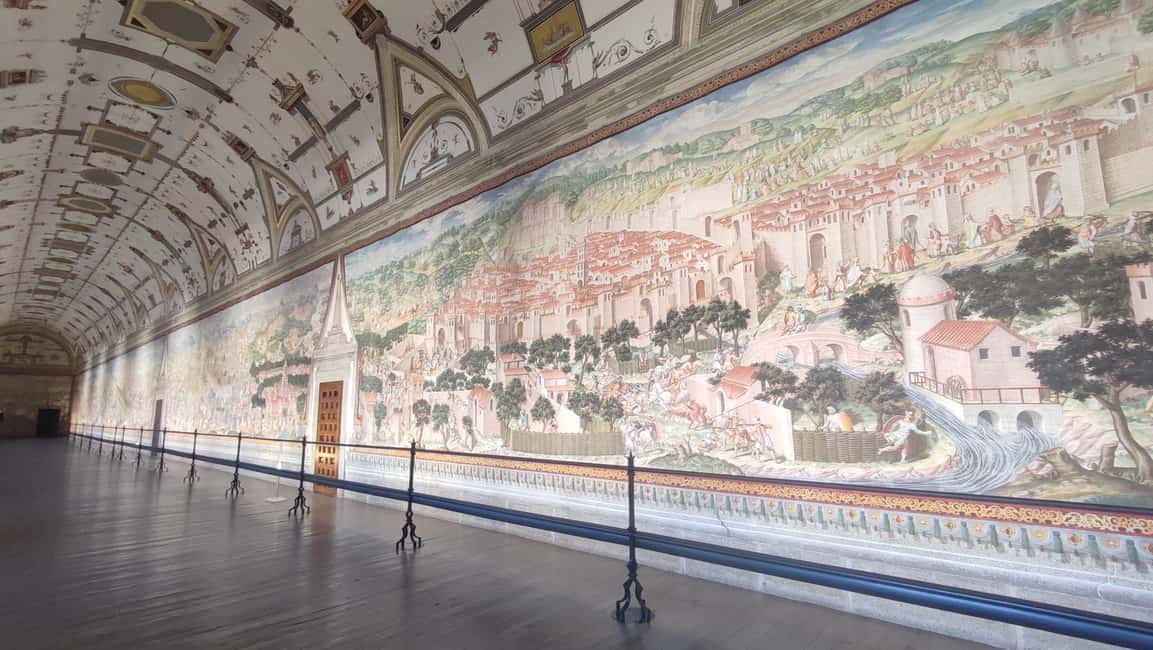
The Hall of the Battles is the kind of room that sticks with you. The tour ends at this stop inside the monument, and the reason is clear: the mural paintings are the headline.
This isn’t art hung politely on a wall. It’s large-scale painting designed to make an impression and frame history as something worth remembering and repeating. When you see it in context, the hall feels like visual propaganda with serious craftsmanship.
The best advice I can give you is to give your eyes time. Don’t rush to the next angle. Look for how the murals pull your attention across the space, and notice how the room’s size shapes what you perceive.
By the time you reach the Hall of Battles, you’ll already have the framework from the basilica and library stops. That makes the murals hit harder, not easier.
After the interiors: Renaissance gardens and Sierra del Guadarrama views
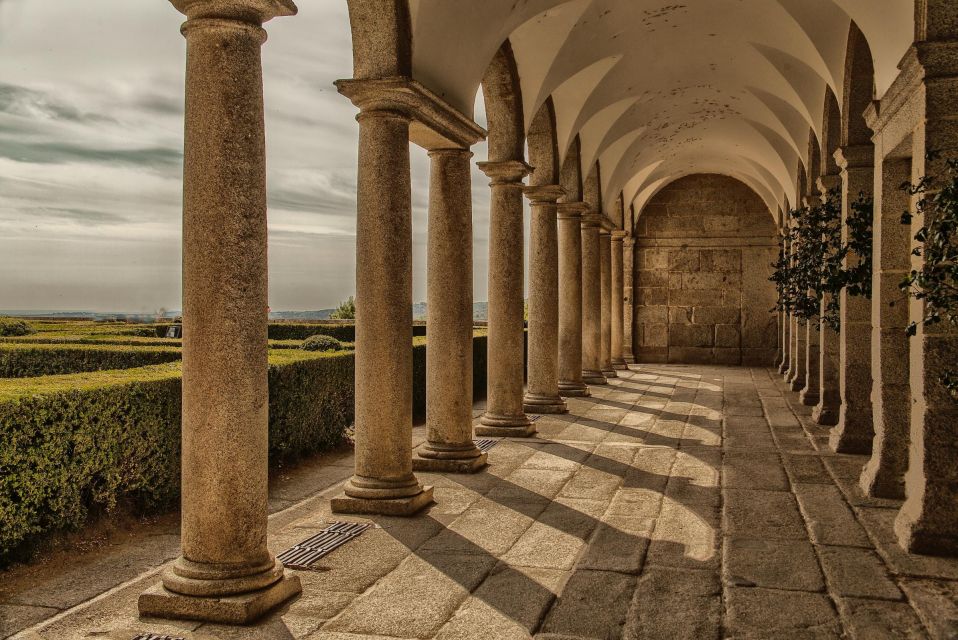
Once you finish inside, you’re not left with just stone and ceilings. The tour continues into the Renaissance gardens created for the kings and the monks of the monastery.
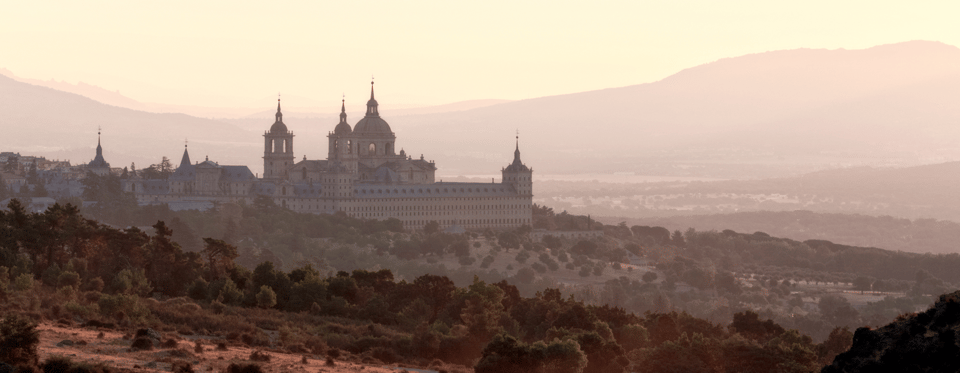
This is a smart ending. After crowded interiors and visual density, the gardens let your brain reset. You can breathe, walk a bit, and connect the complex to the surrounding setting in the Sierra del Guadarrama mountains.
You’ll get panoramic views of the forest and the mountains that surround San Lorenzo de El Escorial. If you’re lucky, the tour notes you might even spot the peacocks that live in the gardens.
This part also gives you a different feeling of the place: less ceremonial, more lived-in. It’s where you understand the monastery isn’t only for the pageantry inside; it’s also a working environment shaped by landscape and routine.
Price and value: what $79 buys you in real terms
At $79 per person for a private 2.5-hour tour, you’re paying for several practical upgrades at once:
- A licensed guide (Isabella Trébede)
- Skip-the-line tickets included (listed as €12 per person)
- Individual headsets so you hear comfortably during the walk
In other words, you’re not just buying facts. You’re buying time saved at the entrance, better audio, and a guide who can answer questions while you’re moving.
Does that price make sense if you’re the type who hates guided tours? Maybe not. But if you want El Escorial to make sense—especially the art connections and why each room exists—then $79 starts to look fair. You’ll see more value in the guidance than in the number of rooms alone.
Also remember what’s not included. Food and drinks aren’t provided, so you’ll want to plan your own snack or water outside the monument experience. Transport isn’t included either, so your day-trip cost depends on how you get there from Madrid.
What to bring, what you can’t bring, and how to stay comfortable
Bring your passport or ID card. The tour also notes that seniors (+65) and kids between 12 and 16 must present valid ID (or a copy) at entry.
Wear comfortable shoes. The tour is not accessible and involves many steps. Even with an eased pace, you’ll still be climbing.
What’s not allowed:
- Pets
- Luggage or large bags
- Food
- Bikes
- Baby carriages
And for your comfort: use the free individual lockers for backpacks and big bags, with a €1 coin.
If you’re sensitive to crowds, the headsets and private format help a lot. You’ll spend more time listening and less time trying to locate the guide in a flow of people.
Who this tour suits best (and who should rethink it)
This tour is a strong fit if you want:
- A guided walkthrough of major spaces inside El Escorial
- Clear explanations of how art and power connect
- Skip-the-line entry to maximize your short day
It’s also a good match for couples or small groups who want to ask questions. Private format means the pace can fit you better.
You should rethink it if:
- You use a wheelchair or need full accessibility (the tour states it’s not accessible)
- You don’t do well with lots of steps
- You prefer a self-guided visit where you can wander slowly at your own rhythm
For families, minors must be accompanied by an adult, and infants under 5 are free as long as they appear in the booking.
Should you book the San Lorenzo de El Escorial private tour?
If your goal is to leave El Escorial understanding what you saw, this is an easy yes. The tour concentrates on the rooms that matter most, and it gives you the interpretive thread to connect the art, the monarchy, and the religious setting.
It’s also good value for the time you have. Two and a half hours is long enough to hit the library, basilica, Pantheon, and Hall of Battles, and still finish with gardens and mountain views instead of collapsing into a half-day disappointment.
Just be honest about your mobility. If steps are a challenge, this isn’t the right plan. If you can handle stairs and want guidance that makes the place click, book it and enjoy having your questions answered in plain language by Isabella Trébede.
FAQ
What is the duration of this El Escorial private tour?
The tour runs for about 2.5 hours. Starting times depend on opening hours, so you’ll want to check availability for the slot you prefer.
What does the tour include?
It includes a licensed tour guide, skip-the-line tickets (listed as €12 per person), and individual headsets so you can hear the guide clearly.
Do I need to arrange transportation from Madrid?
Hotel pickup or transportation is not included. You’ll need to handle getting to and from the meeting point on your own.
Where exactly do we meet the guide?
Meet at the entrance with a Spanish flag above it, directly in front of the Oficina de Turismo. The guide will be carrying a Isabella Trébede tote bag.
What languages are offered?
The live tour guide is available in Spanish and English.
Is this tour wheelchair accessible?
No. The activity states it is not accessible and not suitable for wheelchair users.
What should I bring with me?
Bring a passport or ID card. Comfortable shoes are also recommended since the tour involves many steps.
What items are not allowed during the visit?
Pets are not allowed, and you also can’t bring luggage or large bags, food, bikes, or baby carriages.
What happens if the basilica is closed for masses?
The basilica closes during masses. On Sundays and religious holidays, it can be closed the entire morning. If it’s closed, your guide will extend the visit at the Library or the Chapter Rooms.
Are there any security checks?
Yes. All visitors must pass through airport-style security, so plan a little extra time to get through it smoothly.
Is there an option to cancel or pay later?
The tour offers free cancellation up to 24 hours in advance for a full refund, and it also offers a reserve now & pay later option for flexibility.