REVIEW · AVILA
Ávila: Tour privado por Murallas y Casco Histórico
Book on GetYourGuide →Operated by ¡Quiero Ávila! · Bookable on GetYourGuide
Medieval walls have a way of resetting your brain. In Ávila, you’ll walk through the city’s past by following its main monuments and characters, with the walls as your nonstop backdrop. I like that the route stays focused and walkable, and you get help spotting what matters in real time.
Two things I love: the chance to admire Ávila’s walls and towers up close, and the way the tour connects Romanesque sites to the people who shaped medieval Spain. The second big plus is how the guide weaves the story through key stops, from the Romanesque basilicas to the Gothic cathedral tower that also served defensive needs.
One consideration: this is a walk-heavy experience in the historic center, so plan for comfortable shoes and a slower pace if you’re sensitive to cobblestones and uphill stretches.
In This Review
- Key Highlights You’ll Actually Feel on This Walk
- Why Ávila’s Walls Change the Way You See the City
- Entering the Old Town Through the Walls
- Basílica de San Vicente: Romanesque Beauty You Feel When You Step Inside
- Catedral del Salvador: Gothic Height With a Defensive Job
- Santa Teresa’s Story Starts Here: Casa Natal Visit
- Palacio de Polentinos: Where Military Life Meets Artful Architecture
- Santa Teresa Square and the Romanesque Charm of San Pedro
- Private Tour Value: What $188 Means for a Group Up To 4
- What to Bring (and What to Skip)
- Who This Tour Is Best For
- Should You Book This Private Walls and Old Town Tour?
- FAQ
- How long is the Ávila private tour?
- What is the meeting point for the tour?
- Is this a private tour?
- What language is the live tour guide?
- Which sites are included in the walking route?
- Are cameras allowed during the tour?
- Is the tour wheelchair accessible?
Key Highlights You’ll Actually Feel on This Walk
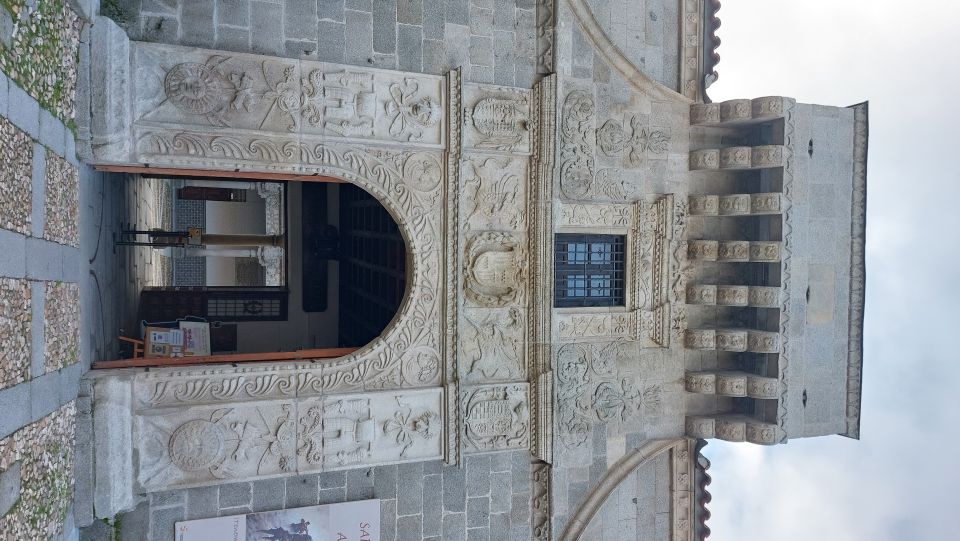
- Best-preserved city walls in Europe: you’ll see towers and long wall stretches that define Ávila’s look
- Basílica de San Vicente’s inside-light effect: robust exterior, bright interior with stops from crypt to cenotaph
- Catedral del Salvador’s dual purpose: a tall Gothic landmark tied to both worship and city defense
- Santa Teresa’s birthplace stop: you’ll connect Ávila to an international religious figure whose influence crossed borders
- Palacio de Polentinos and the military archive: a 16th-century palace tied to army life and today’s military museum
- Santa Teresa Square + San Pedro: you end in the city’s nerve center with another Romanesque jewel
Why Ávila’s Walls Change the Way You See the City
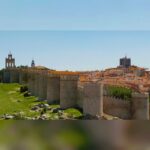
Ávila’s walls aren’t just decoration. They’re a living framework for everything else you’ll notice as you walk—where power sat, how the city defended itself, and why the medieval skyline looks the way it does.
You’ll focus on the towers and the long curtain walls that give the city its identity. That matters because it turns the sights into a system, not a checklist. Once you’ve got the wall lines in your head, the rest of the historic center makes more sense.
You can also read our reviews of more tours and experiences in Avila.



Entering the Old Town Through the Walls
The start point is right by the Puerta de San Vicente, so the tour begins in the middle of the medieval vibe instead of at some far-off landmark. From there, you’re guided through the historic center with the walls as your reference point.
What I like here is the pacing: a 2-hour private tour is long enough to hit real highlights but not so long that you lose the thread. You’ll be looking at stonework and layout while the guide connects it to the city’s story.
If you’re the type who wants to understand what you’re seeing, this approach is a strong fit. If you only want photos, note that cameras are not allowed, so your best “souvenir” here is memory (and notes).
Basílica de San Vicente: Romanesque Beauty You Feel When You Step Inside
The Basílica de San Vicente is described as the pearl of Ávila’s Romanesque architecture, and the tour is built around that idea. It’s also tied to archaeology, since construction began in the 12th century on a site with many archaeological remains.
Here’s the key contrast the guide points out: the exterior is robust, while the interior is lighter and more beautiful than you’d expect. That shift is part of what makes Romanesque buildings so compelling—you come in expecting “heavy stone,” then you find spaces that feel intentional and expressive.
The visit includes the areas from its crypt to its cenotaph, with the guide explaining the secrets hidden in its walls. Even if you don’t consider yourself a church expert, this is the kind of stop that makes you look closer at carvings, layouts, and what certain spaces were meant to hold.
Possible drawback: because it’s an interior-focused stop, you’ll need to be comfortable moving and looking attentively for a bit indoors. If you prefer outdoor-only sightseeing, consider whether you want a cathedral-and-basilica portion in your tour.
Catedral del Salvador: Gothic Height With a Defensive Job
Next comes the Catedral del Salvador, described as the first Gothic cathedral built in Spain. That’s a big claim, and the tour helps you understand it without drowning you in dates.
The cathedral’s tall, solitary tower is treated as a clue to something bigger: it has a double function. One role is as a house of God, and the other is tied to the defense of the city. You’ll also hear why the famous cimorro is integrated into the wall as another part of the fortification system.
This stop is valuable because it shows the medieval mindset in a practical way. Worship and survival were not separate categories in these cities—they were built into the same structures. After the walls and towers start clicking in your mind, the cathedral reads like a continuation of the defense line, not an isolated monument.
Santa Teresa’s Story Starts Here: Casa Natal Visit
At the Basílica Casa Natal de Santa Teresa, the tour shifts from architecture to biography. You’ll learn about Santa Teresa, described as the most relevant and international woman in Ávila, and a figure who influenced and transformed not only the city and Spain, but also crossed borders and became a reference in the Catholic Church.
This is the emotional center for many people on the route, because it answers the question: why does this city matter beyond its stones? The guide ties her importance to the place itself, so you’re not just seeing a building—you’re walking through a story that people still recognize today.
If you like tours that mix “what you see” with “why it happened,” this is the best place to slow down. The point isn’t to memorize details; it’s to understand what makes the monuments meaningful in a broader cultural sense.
Palacio de Polentinos: Where Military Life Meets Artful Architecture
The Palacio de Polentinos is highlighted as the best and most beautiful example of Avila’s 16th-century palace architecture. The catch is that it’s not a “palace for leisure” in the way people sometimes imagine—this one is linked to military life.
The tour explains that it was the former quartermaster academy of the army, and today it houses the General Military Archive of Ávila as well as a museum of the Army. In other words, you’re standing in a building where military administration and records live on, not just a shell with decorative history.
Why this works on a 2-hour tour: the walls tell you the city’s defensive logic, the cathedral shows the overlap of faith and defense, and this palace adds the institutional side of power. Put together, the stops form a coherent picture.
Santa Teresa Square and the Romanesque Charm of San Pedro
You finish in Santa Teresa Square, in the nerve center of the city and a meeting point for locals and visitors. That location helps the tour feel complete: you’re not only moving from monument to monument—you’re stepping into where daily life meets history.
The square includes the Church of San Pedro, also described as a jewel of Avila Romanesque. Ending here is practical, too. You’ll likely find it easier to continue exploring after the tour because you’re in a central spot rather than at the edge of the old town.
Private Tour Value: What $188 Means for a Group Up To 4
This tour costs $188 per group up to 4 for 2 hours. On paper, that can look “high” if you’re comparing it to cheap bus tours. But private guiding changes the math.
If you book with 2 people, you’re paying more per head than a public tour. If you book with a full group of 4, it can feel like a bargain for what you get: a tailored private walk, a Spanish-speaking live guide, and a route that hits multiple major landmarks without wasting time.
I also think the price makes sense for the type of sights involved. You’re not just looking at a single church. You’re covering walls, Romanesque interiors, a Gothic cathedral tower with defensive symbolism, a Santa Teresa birthplace site, and a military-history palace.
And there’s another quiet value: the guide can keep the story coherent in a short time. That’s hard to do on a crowded group tour where everyone has their own pace and priorities.
What to Bring (and What to Skip)
Bring comfortable shoes. That’s the main practical advice given, and it’s the one that will save your feet most on cobblestones and uneven historic-center surfaces.
A few things to skip:
- Cameras are not allowed on this activity
- Baby strollers are not allowed
Wheelchair access is listed as available, so if you need mobility support, you should be able to plan around the tour format.
Also, the tour guide is Spanish. If you’re not comfortable in Spanish, you might want to check whether you’ll feel fully included during the explanations.
Who This Tour Is Best For
This is a great choice if you like medieval cities and want the walls to be part of the story, not just a backdrop. It also suits you if you prefer short, focused walks where someone else helps you connect monuments to characters and themes.
You’ll likely enjoy it most if you’re interested in:
- Romanesque architecture and how it changes from outside to inside
- the blend of religious and defensive design in medieval Spain
- Santa Teresa as a historical and international figure
- military history tied to real buildings, not just textbooks
If your travel style is more “one big attraction per day,” you might find the stop density a bit intense. But if you want a strong overview with meaningful interpretation, this is built for you.
Should You Book This Private Walls and Old Town Tour?
Yes, if you want a guided walk that explains why Ávila looks the way it does—starting with the walls and then moving into Romanesque and Gothic highlights. The structure of the tour makes the city feel connected, not random.
Also, if you’re booking with up to 4 people, the price-to-time ratio is hard to beat for a private experience. And the guide experience seems to matter here; one past guest specifically praised Oscar for doing an excellent job and keeping the tour comfortable.
One final check: remember no cameras. If photography is your main goal, this might annoy you. If your goal is understanding and memory, you’ll get more from the storytelling than from your camera roll.
FAQ
How long is the Ávila private tour?
It lasts 2 hours.
What is the meeting point for the tour?
You meet next to the Puerta de San Vicente.
Is this a private tour?
Yes, it’s a private visit, priced per group up to 4 people.
What language is the live tour guide?
The live tour guide is Spanish.
Which sites are included in the walking route?
The tour includes the walls, Basílica de San Vicente, Catedral del Salvador, Basílica Casa Natal de Santa Teresa, Palacio de Polentinos, and ends at Santa Teresa Square near the Church of San Pedro.
Are cameras allowed during the tour?
No. Cameras are not allowed.
Is the tour wheelchair accessible?
Yes, the tour is listed as wheelchair accessible.