REVIEW · MADRID
10-Day Andalusia and Morocco from Madrid
Book on Viator →Operated by VPT Tours · Bookable on Viator
Two countries in ten days feels fast. This Madrid-start trip strings together Andalusia and Morocco with guided walks, key monuments, and bus comfort that keeps the days moving.
I especially like the tight pairing of guided big hitters with real free time. Seville and Cordoba are handled by local guides, then you get breathing room for meals, strolls, and optional extras like flamenco. I also like that the onboard Wi-Fi and air-conditioned coach mean you’re not baking between stops.
One watch-out: the Morocco hotel situation can be hit-or-miss. In particular, the Rabat hotel has been described as being in a darker area, so if you prefer walking under bright streetlights, factor that in.
In This Review
- Key points I’d plan around
- Price and value: what $1,797 gets you (and what it doesn’t)
- Day 1 to 2: Caceres to Seville’s highlights, with optional flamenco
- Day 3 in Cordoba: Mosque-Cathedral time, plus the Jewish Quarter walk
- Day 4: White Villages and Ronda, then down to the Costa del Sol
- Day 5 and 6: Tangier ferry to Rabat, then Fez’s Medina maze
- Day 7: Chefchaouen’s blue streets, then Tangier and dinner
- Day 8: A free morning in Morocco, then back to Spain by ferry
- Day 9 and 10: Granada’s Alhambra and Toledo’s Mirador del Valle
- The bus, the pace, and the logistics that can make or break your trip
- What worked especially well: guides and the food-and-hotel rhythm
- Who this tour fits best (and who should choose something else)
- Should you book this Andalusia and Morocco trip from Madrid?
- FAQ
- What time does the tour start?
- Where is the meeting point in Madrid?
- How long is the tour?
- What’s included for meals?
- Are ferries included?
- Is Wi-Fi available during the trip?
- Which cities have guided sightseeing with a local guide?
- How much luggage can I bring?
- Do I need passport details before traveling?
- What is the cancellation window for a full refund?
Key points I’d plan around
- Seville + Cordoba with local guides: walking routes through the oldest streets, not just quick photo stops.
- Route of the White Villages and Ronda: scenic villages plus dramatic viewpoints in one day.
- Rabat to Fez transfer with the big sights: Hassan Tower and Mohamed V’s mausoleum, then Fez El Bali’s medina maze.
- Chefchaouen for the blue-street fix: a focused walk to Outta El Hamman Square, with free time.
- Alhambra and Generalife plus Toledo: two of Spain’s most famous historic settings in the final stretch.
Price and value: what $1,797 gets you (and what it doesn’t)
At about $1,797.71 per person for roughly 10 days, you’re paying for three big things: transport over long distances, multiple guided city experiences, and lodging with meals. This isn’t a backpack-only style trip. It’s more “managed route” than “choose-your-own adventure.”
The included value adds up in practical ways. You get air-conditioned coach travel with Wi-Fi onboard, breakfast for 9 days, dinner for 8 nights, and fast-ferry tickets for the Strait of Gibraltar crossings. You also get a multi-lingual escort plus local guides in Seville, Cordoba, Fez, Rabat, Granada, and Toledo.
What’s not included is just as important. Lunch is only included for 2 days, and everything else is on you. Optional activities (like flamenco shows, and the Sacromonte caves) are also extra. So budget for lunches, souvenirs, and any optional tickets you choose.
You can also read our reviews of more tours and experiences in Madrid.


Day 1 to 2: Caceres to Seville’s highlights, with optional flamenco
Day 1 starts with an 8:00 a.m. departure from the meeting point in Madrid (C. de Ferraz, 3, Moncloa – Aravaca). You’ll head toward Extremadura first, landing in Cáceres for time in the Plaza Mayor and the preserved medieval quarter. If you like old-town streets that feel walkable instead of staged, this stop works as a mellow opener before the bigger cities.
Then you continue south to Seville, where dinner and accommodation are included.
On Day 2, Seville is the main event with a guided tour that hits the big “first look” spots: María Luisa Park, Plaza de España, the cathedral exterior and the Giralda bell tower, plus the Santa Cruz neighborhood of tight alleys and little squares. If you want to stretch the morning, there’s an optional add-on for a Guadalquivir river panoramic moment (Gold Tower and Expo 92 are part of the view). Another optional choice is time at the Maestranza bullring.
In the evening, there’s an optional flamenco show. Even if you’re not a flamenco superfan, I’d treat this as a low-effort cultural win—Seville is where the vibe starts.
Day 3 in Cordoba: Mosque-Cathedral time, plus the Jewish Quarter walk
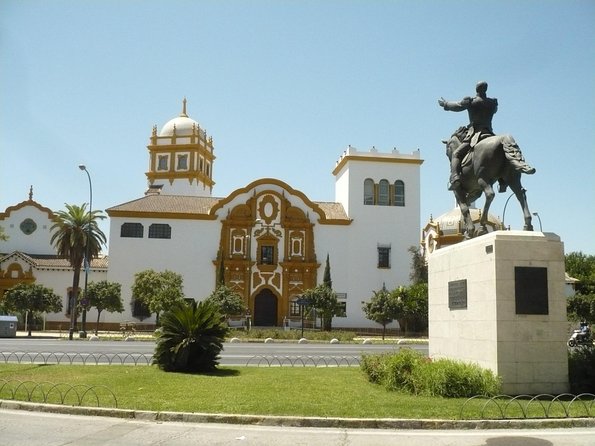
Day 3 moves to Cordoba with breakfast included. The best part here is the walking tour flow: you start at the Almodóvar Gate, then go through the Jewish Quarter, and finish at the Mosque-Cathedral (the famous Mezquita).
That sequence matters. It’s one thing to arrive at a landmark; it’s another to move through the surrounding streets first so the place feels earned. You get the rhythm of Cordoba—the narrowness, the maze-like turns, and the mix of old layers—before you reach the main monument.
After the guided portion, you get afternoon leisure, which is helpful because Cordoba can make you want to linger. Dinner and accommodation follow.
Day 4: White Villages and Ronda, then down to the Costa del Sol
Day 4 is built for scenery and drama. You’ll travel along the Route of the White Villages and include Ronda with free time. Ronda is famous for cliffside views and steep streets, so even a short window can feel like more than a drive-by if you’re intentional about where you stand and what you look at.
After that, you continue to the Costa del Sol for dinner and accommodation. This stretch is useful because it sets you up for the Morocco crossing the next day. It also gives you a change of pace: after inland historic cores, the coast is more relaxed.
Day 5 and 6: Tangier ferry to Rabat, then Fez’s Medina maze
Day 5 starts in Costa del Sol and heads to the ferry crossing of the Strait of Gibraltar to Tangier. Morocco begins with a change in feel right away: you’re arriving into a different pace, a different language environment, and new street texture. From Tangier, you continue to Rabat, with a stop for free lunch in Assilah. Assilah is known for being pleasant to wander, so this lunch break can be a small highlight if you like coastal old towns.
In the afternoon you reach Rabat for dinner and accommodation.
Day 6 is two major beats: Rabat’s signature monuments, then Fez as the big “step back in time” experience.
In Rabat, you visit Tour Hassan, the unfinished mosque structure dominating the esplanade, and the Mausoleum of Mohamed V, where the royal guard is part of the ceremonial scene in traditional dress on horseback. If monuments are your thing, this day delivers clear “don’t miss” stops.
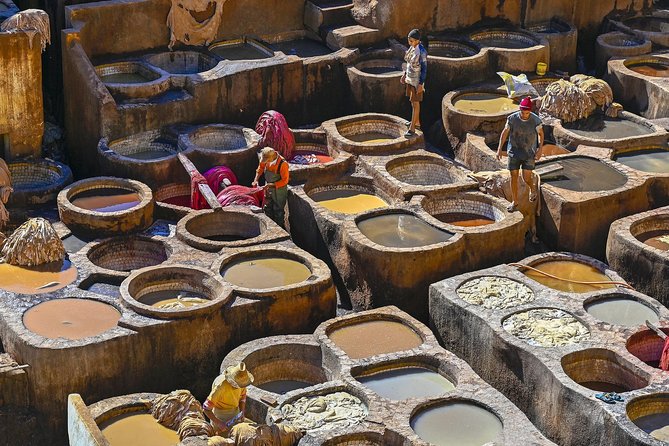
Then you continue to Fez, described as Morocco’s intellectual and religious capital. You’ll get a panoramic view that includes the royal palace area and the Dar Al-Makhzen’s seven gates, then head into Fez El Bali, a UNESCO World Heritage medina. The itinerary notes the scale—785 mosques and more than 2,000 squares, streets, and alleys. Translation for your planning: it’s big, and it moves like a labyrinth. You’ll want to accept that you won’t see everything. The goal is orientation and key highlights, not checking every lane.
You also have lunch in a typical restaurant and then move into accommodation for the night.





Day 7: Chefchaouen’s blue streets, then Tangier and dinner
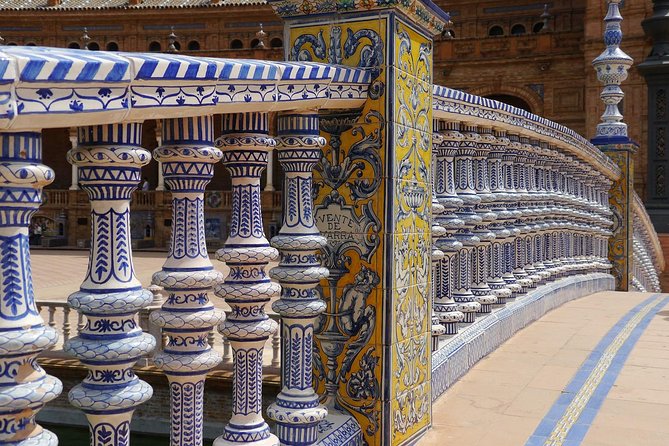
Day 7 gives you a focused trip to Chaouen / Chefchaouen, one of Morocco’s most recognizable settings. The key moment is walking along the blue-painted streets toward Outta El Hamman Square, with free time once you arrive.
This is the day to slow down a little. Chefchaouen works best when you stop chasing angles and instead enjoy the street-level experience: doors, stairs, small viewpoints, and the steady rhythm of people moving through the alleys.
After that, you head to Tangier for dinner and accommodation.
Day 8: A free morning in Morocco, then back to Spain by ferry
Day 8 is lighter on structure: breakfast first, then a free morning until the departure time to board the ferry back to Spain. After you cross, you’re transferred to the Costa del Sol, where dinner and accommodation are included again.
This day is valuable because it prevents Morocco fatigue from turning into burnout. You’ll still feel the travel days adding up, but you get a window to refresh, buy a few last items, and reset before heading back toward Andalusia for Granada and Toledo.
Day 9 and 10: Granada’s Alhambra and Toledo’s Mirador del Valle
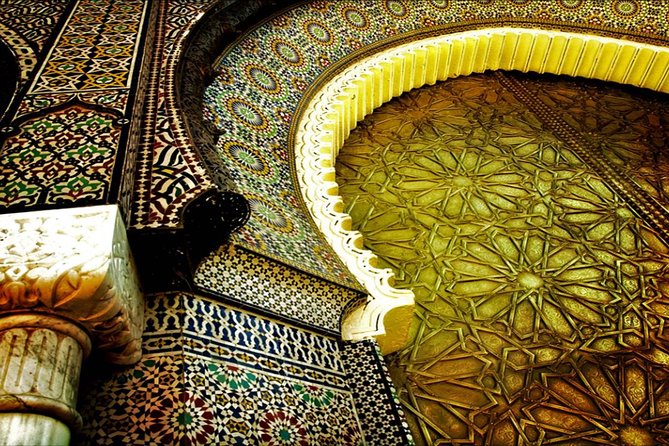
Day 9 is Granada, and it’s handled as a major cultural day. After breakfast, you travel to Granada to visit the Alhambra and Generalife, former residence of Moorish kings with fountains, gardens, and arches. The guide-led approach matters here because the Alhambra is a complex site—you want the story and the layout in your head to avoid wandering in circles.
Dinner and accommodation follow. There’s also an optional choice: the caves of Sacromonte and an evening typical flamenco show. If you’re choosing just one extra, I’d lean toward whatever fits your interests in music and performance rather than trying to do everything.
Day 10 closes the route in Toledo, billed as the Imperial City. You’ll have breakfast, then travel to Toledo for lunch and a panoramic view from Mirador del Valle, plus a walk through the old town. It’s a fitting finale: after Fez and the medina maze, Toledo offers a different kind of old-world density, but in a way that’s easier to digest as a final day.
Then you continue back to Madrid and end the trip at the same meeting point.
The bus, the pace, and the logistics that can make or break your trip
This tour runs on an air-conditioned coach with Wi-Fi onboard, which is a real comfort detail on long travel days. Still, the overall pace is “see a lot” rather than “sleep in and wander slowly.” Ten days is enough to hit major highlights across Spain and Morocco, but it means you’ll be moving most days.
Group size matters too. It’s set with a maximum of 50 travelers, and you’ll travel with a multi-lingual tour escort. That usually keeps the schedule organized, but it also means you should expect a bit of waiting at times—especially around border/customs moments.
Two logistics items are especially worth planning for:
- Luggage limit: only one piece of luggage per person is allowed. If you’re traveling with extra bags, you’ll want to simplify.
- Passport + customs: you’ll need mandatory passport details to complete booking, and you clear customs using your own luggage.
There’s also a note that the Morocco portion can be modified without substantial variation. I’d interpret that as contingency flexibility (not a total route rewrite), but it does mean you shouldn’t plan any highly time-sensitive personal reservations on top of this.
What worked especially well: guides and the food-and-hotel rhythm
A big strength here is the way guides show up in the experience. The program’s standout is having professionals guiding in the major cities rather than dumping you into sites with only a map. One example that comes through is the conductor/guide Mohamed Arhoun, described as professional and attentive—someone who provided lots of information during walks and stayed focused on the group.
Food and lodging are also described as generally solid. The phrase that keeps showing up is good hotels, good food, and good service. That’s not always guaranteed on long cross-border routes, so it’s a meaningful plus.
The one exception to weigh is the Rabat lodging note. One specific concern was a hotel located in a darker area. If nighttime walking or getting back to the hotel after dinner makes you uneasy, ask the operator what the neighborhood is like, or pack a bit of extra caution.
Who this tour fits best (and who should choose something else)
This is a great fit if:
- you want guided highlights in multiple cities rather than solo navigation the whole time
- you like combining Spain’s historic centers with Morocco’s medina culture
- you prefer scheduled transport and included meals to reduce planning stress
It might be less ideal if:
- you want lots of independent roaming without a tight route
- you’re very sensitive to travel-day movement (this is not a slow trip)
- you don’t like the idea of group pacing in busy sites like Fez El Bali or the Alhambra
If you’re comfortable moving through big places with a guide for the essentials, this tour hits a strong balance of structure and time to breathe.
Should you book this Andalusia and Morocco trip from Madrid?
If your goal is a high-impact route—Seville, Cordoba, White Villages/Ronda, then Rabat/Fez/Chefchaouen, and finishing with Alhambra and Toledo—this is a sensible package. The included meals, guided city days, air-conditioned transport, and ferry crossings make it feel like real value for what you cover.
My advice: book it if you like getting your bearings fast and you’re okay with a schedule. If you’re the type who hates being herded, you might prefer a slower Spain-only trip or separate Morocco planning. And if Rabat’s hotel location would bother you, ask questions upfront so the one known weak spot doesn’t surprise you.
FAQ
What time does the tour start?
It starts at 8:00 a.m. from the meeting point in Madrid.
Where is the meeting point in Madrid?
The tour starts at C. de Ferraz, 3, Moncloa – Aravaca, 28008 Madrid, Spain.
How long is the tour?
The duration is 10 days (approx.).
What’s included for meals?
You’ll get breakfast for 9 days, dinner for 8 nights, and lunch for 2 days.
Are ferries included?
Yes. Fast-ferry tickets are included for the Strait of Gibraltar crossings.
Is Wi-Fi available during the trip?
Yes. The coach includes free Wi-Fi onboard.
Which cities have guided sightseeing with a local guide?
Local guide sightseeing is included in Sevilla, Cordoba, Fez, Rabat, Granada, and Toledo.
How much luggage can I bring?
You’re required to bring only one piece of luggage per person.
Do I need passport details before traveling?
Yes. Passport details are mandatory to complete the booking.
What is the cancellation window for a full refund?
You can cancel up to 6 days in advance for a full refund. If you cancel less than 6 days before, you may not receive a full refund.